
In an Abusive Relationship, There Are Not Two Sides to the Story
Though it actually does take two to tango…
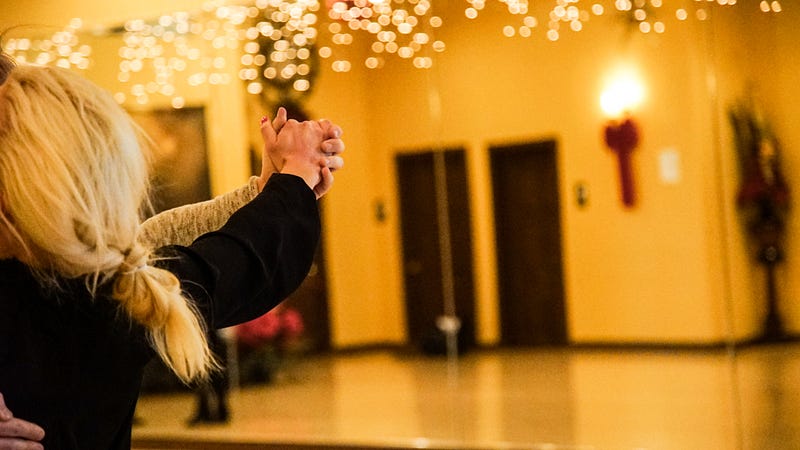
I used to be a professional ballroom dancer, teacher, and choreographer. My oldest son was a competitive ballroom dancer for over a decade and won the U.S. National title…twice.
Because of our combined dancing experience, I can unequivocally state that, yes, it does take two to tango.
How this morphed into a phrase that is equivocal to “he said/she said” I’ll never know. In this scenario, any relationship is presumed to be like a tango, thus it takes two to make things go right (and now I’ll be singing that song for the rest of the day). When things go wrong, however, the presumption continues that blame is divvied up equally between both parties since — just like a tango — any accomplishment is dependent on each party contributing their fair share.
When it comes to an abusive relationship, however, there are no two sides to the story. There is only the truth. There is an abuser and there is a victim of that abuser. The abuser possesses and wields control over a victim in the effort to enable his abuse to continue. A victim is powerless (or believes herself to be) and exists in a place of darkness where walking on eggshells and living in a state of heightened fear and dread becomes the accepted standard.
In an otherwise healthy relationship in which two people decide to part ways, there very well may exist a difference in opinion on the reasons leading up to the breakup, with both parties taking responsibility to whatever degree necessary. In an abusive relationship, where the power dynamic is skewed to benefit the abuser, any attempt to invoke a “he said/she said” analogy is victim-blaming. And suggests that in some way a victim had a role to play in her own abuse.
Within any abusive relationship, there is an element of secrecy that is necessary for both parties to maintain. An abuser keeps his abuse behind closed doors because of the need to keep up the charade while out in public (abusers, especially narcissists, operate on a core sense of shame and cowardice, thus it’s crucial that no one ever discover who they really are).
A victim is compelled to keep what is happening to her behind closed doors for a variety of reasons that may include her own shame and embarrassment for what she’s enduring, threats made by her abuser for her to keep quiet, and/or her conditioning to somehow believe she deserves it or isn’t worthy of anything better.
This attempt to subdivide an abusive relationship into sides of a story only complicates the healing process for a victim once she escapes and becomes a survivor of abuse. The guilt and shame she feels for her experience are then multiplied when facing a society that loves to blame the victim. When we ask her, “Why did you stay?” or “Why did you put up with it?” we are inserting the possibility that there is indeed another side to her story, and therefore maybe she did have some responsibility in her own pain and suffering.
As both a former dancer and a survivor of abuse at the hands of a diagnosed narcissist, I’m here to tell you that while the tango does require the equal effort of two people to be successful, abuse operates on a basis of inequality, and essentially “works” only if there is an oppressor and an oppressed. In short, abuse is not some fucking dance where two people are enjoying themselves. And there are not two sides to how this story is to be told. There is only one side: The truth.
If you are a survivor of abuse and have begun the long road of healing, don’t ever let someone pull you into this narrative where you’re having to defend your experience. You’ve been through enough, so now is the time to rid your life of any victim-blamers who continue to retraumatize you by suggesting you had something to do with your own abuse.
That way you’ll have the room in your beautiful new life — free of abuse — to actually start living again, enjoying yourself again, maybe even taking a dance lesson or two…
Tango, anyone?
***
Want to get expert help, tips, and strategies on recovering and healing after narcissistic abuse? Then join the thousands who have signed up for what’s basically free coaching in your inbox and receive your Real Love Does Not Abuse poster to remind you of what you truly deserve in a relationship. Plus I’ll tell you how to snag a free copy of my bestselling book, “You’re Still That Girl: Get Over Your Abusive Ex for Good!” www.suzannaquintana.com