
Improved Listicle Rock and Roll Hall of Fame Ranking — 16 to ∞

I have been writing a serious of articles regarding this article from Vulture magazine
In the previous article in this serious I introduced a new ranking method, where it was not sequential artist by artist, but some artists grouped at the same position
This was explained in the following quote:
This is the essential point of these articles, it is just extremely unlikely that the ordering of importance of 240 artists should ever result in a direct linear 1 by 1 ranking, some spots will be shared by multiple artists.
Following that insight we filled the top 15 rankings based on influence of the Rock and Roll Hall of Fame Inductees, covering a total of 47 bands.
In this article I was going to do some more rankings but when I look at where we got to, and what is left, it doesn’t seem to make any sense.
First off — let’s discuss how the ranking works. In Wyman’s original article he says:
The rankings below are made on the basis of the appropriateness of each artist’s induction, not their baseline quality or my personal fondness for the artists in question. In other words, was the act influential? Were they the first? Are they simply brilliant at whatever it is they do? Those to me are considerations that make for a hall of fame band. (There are a few bands I personally like a lot on the bottom half of the list.) I have one further criterion, too: Was their career worthy of being in a hall of fame? There are some acts, a few fairly influential, whom I’ve downgraded, basically for being dinks. You may disagree, but it’s my list.
And he notes the Hall of Fame reasons for induction are:
Besides demonstrating unquestionable musical excellence and talent, inductees will have had a significant impact on the development, evolution and preservation of rock & roll.
I don’t really like Wyman’s way of ranking, because of course these qualities are difficult to quantify and qualify — the amount of influence a band has had is difficult to determine, and the quality of a band is bound to be somewhat subjective, although of course one should attempt to follow the rules for judging the quality of art laid out in this article
So personally I like to focus mainly on the influence, and the quality comes second.
With that in mind let’s put influences in 3 categories —
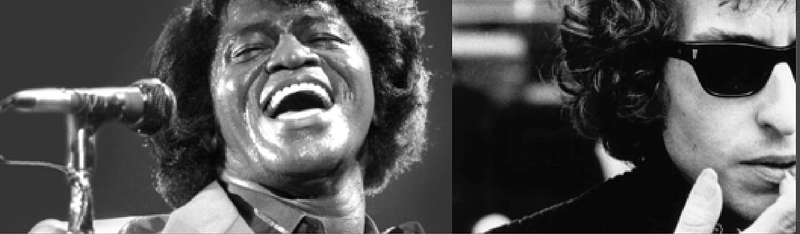
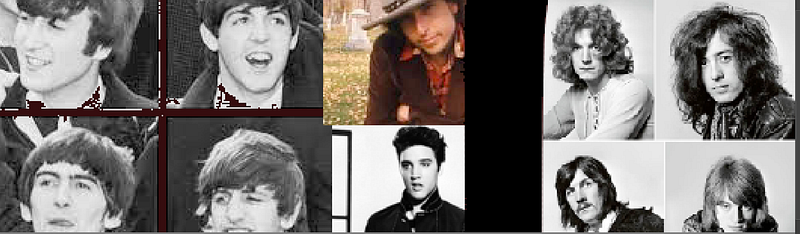
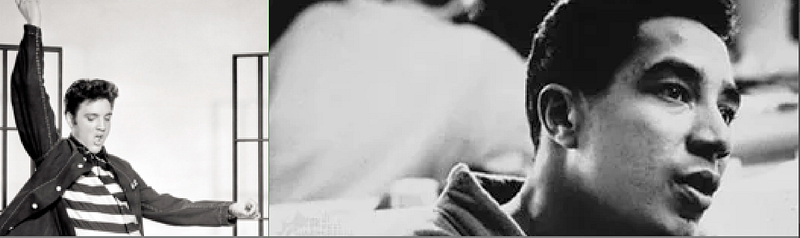
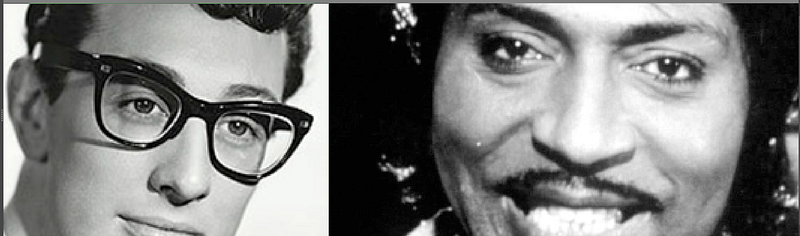
essential (without this you might not even have had the people they influenced, or things would have been noticeably different even with a cursory investigation).
Examples
strong (not essential for the people that were influenced, but maybe some important works would not have existed or existed in quite a different form — the creators would have seemed pretty much the same, but some creations would have disappeared).
replaceable — these are the nice to have influences, they probably don’t influence at the level of a song or an album or anything noticeable to anyone paying attention, but maybe a guitar riff might have sounded different or it would have ended up sounding the same, just gotten at through a different route. But because they exist they were the ones who took over that influence, and despite their replaceability they deserve some credit.
Now you may have noticed I did not put any examples in the strong and replaceable sections. The reason for that became actually apparent to me as I was writing the first draft of this article (in case you are wondering that means this is not the first draft; it is, in fact, the second. )
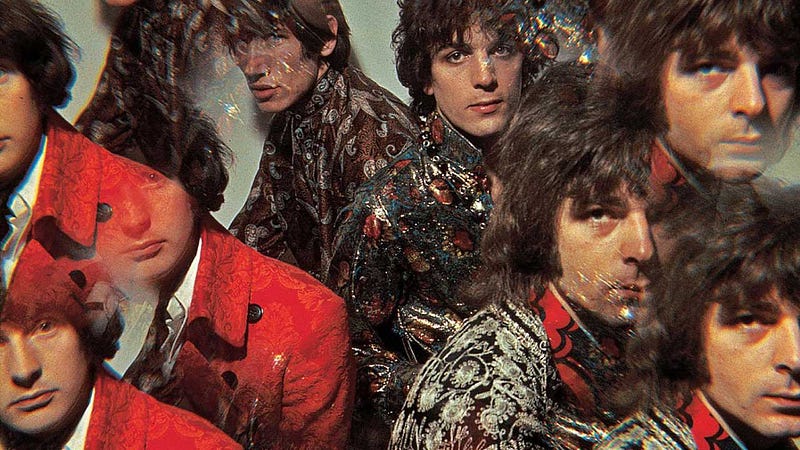
In the starting my #16 ranking I picked as the first band Pink Floyd — here is what I was going to write about them:
The original article’s entry on Pink Floyd was as follows:
Inventing progressive rock was a dumb idea, but it was their dumb idea. Their improbable journey included penny-loafer cut-rate psychedelia to the sonic ’70s landmarks that fuel their legend to this day, and talent so irrepressible they had some of the most unusual hit singles of the era.
Frankly I should probably have ranked those guys at 15 or 14 so they might go up later. These rankings are supposed to be a combination of quality and influence and I tend to rank influence as more important for a hall of fame, but that’s just me.
All that said there are some people in this world, I’m not one of them, very devoted to the idea of a greatest of all time, the GOAT of martial artists, The GOAT of Movies, The GOAT of tv shows, and of course the GOAT of rock bands.
Now there are some bands that it would just be ridiculous if you announced you thought they were the GOAT, for example Aerosmith, but it might be understandable if you announced they were your favorite. Understandable is perhaps doing a lot of work in that previous sentence.
Let’s try again — if someone said “Aerosmith is my favorite band” I would probably say “ok” and exert superhuman effort not to roll my eyes. But if they said Aerosmith is the Greatest of All Time I would probably screech out “Da fuck” and depending on my level of self-control at the moment punch them.
Pink Floyd is a band that a good number of people think is the Greatest of All Time (of course as always this metric tends to track to when people were in high school and first got high, but it is still a thing) and it is a totally defensible thing for people who believe in a concept like that to claim it for the Floyd. I hear you think Pink Floyd is the greatest, I say “cool, but I don’t really believe in a greatest” and then we can discuss the things that are great about Pink Floyd.
What is not so great about them is that this is a band that in their heyday in the 70s had all the pretension of The Beatles while also lacking all of the lack of pretension of The Beatles, a deadly combination for impressionable minds. Listening to them for an hour could lead to the Stooges for the rest of the day in a rebellion against all the pretension, mirroring in the small the process that led to punk rock in the 70s itself.

Basically almost everyone in the first 15 was someone that you could sort of see someone saying was the greatest of all time and not consider them a completely hopeless case — admittedly Jerry Lee and Bo Diddley would be someone chosen by the generation preceding the Beatles but at that point whoa, they really did look like GOAT contenders.
The only act who really stands out as obviously not the GOAT was Al Green, who I actually only put that high in deference to Wyman’s original ranking. As I also noted in the 3rd article in this series I don’t really want to go too much against Wyman’s ranking, other than to not do things completely sequentially, unless I find something extremely crazypants (in other words the Great Queen Scandal!!)
So all this taken into consideration I will make a #16 containing the rest of the groups that one can potentially categorize as essential influences (the first of a genre for example) or that could reasonably be made a GOAT argument about.
16. Pink Floyd — The Stooges — The Yardbirds— Fats Domino — The Shirelles — The Grateful Dead — Creedence Clearwater Revival — Black Sabbath
Again, Fats Domino doesn’t seem like someone who would make a GOAT argument last beyond the Beatles, but I think you can potentially categorize him as essential for the generation that came after, and that is why I put him here. But really if I were to categorize him personally I would think he is probably a strong influence. He is at position 16 because it is better to let someone than it is to put them down. As is well known Lady Madonna is a Fats Domino inspired bit.
The Stooges in the original review:
The Stooges are Ur–almost everything noisy and confrontational that came after them, dumb metal to punk. Iggy is an unnerving icon and true seeker, from the gutter to Dinah to his later life as a leathery-thin showman, raconteur, and pretensioso. These guys don’t speak to me, but they did whatever it was they did with a fervor — deaf, literally and figuratively, to the pleas of anyone who told them to do something different.
So that is some argument for an essential influence, the ur-almost everything noisy and confrontational
The Yardbirds ranking this high is I think part of that whole influence on contemporaries angle I talked about in the previous list:
…are at this level because they were the close second tier of their contemporaries. These groups were incredibly influential not just on the ones who came after them, but on those contemporaries. People always talk about influences that came before — but just as the contemporaries of a teenager are likely to be a bigger influence than their parents the contemporaries of an artist will probably push them farther than those initial influences ever could.
And if we are considering the GOAT aspect, they had three of Rock’s most important guitarists in their group , so I think it seems reasonable to rank them this high if not higher (Note: I was going to say biggest guitarists but I don’t actually have their measurements). Wyman originally ranked them at 82, Rolling Stone ranked them at #89 in their list of 100 greatest artists of all time — which that list should probably be taken apart a bit and given the treatment — though it is amusing for the people on the list who are not in the hall (despite the influence of Rolling Stone on the Hall of Fame which Wyman talks a lot about in the original Vulture article.)
The Shirelles didn’t merit much of an entry in the original article. So I will quote their Wikipedia entry which is not quite so parsimonious.
They have been credited with launching the girl group genre, with much of their music reflecting the genre’s essence. Their acceptance by both white and black audiences, predating that of the Motown acts, has been noted as reflecting the early success of the Civil Rights Movement.
And
named one of the 100 Greatest Artists of All Time by Rolling Stone in 2004. Two of their songs, “Will You Love Me Tomorrow” and “Tonight’s the Night”, were selected by Rolling Stone on its list of the greatest songs of all time. In 2022, their debut album Tonight’s the Night was selected by the Library of Congress for preservation in the National Recording Registry as being “culturally, historically, or aesthetically significant”.
Which I think secures their spot here quite nicely.
The last three here — The Dead, CCR and Sabbath are being referred to in this sentence by abbreviations for their names and everybody when you use them know who you’re talking about (ok maybe the Dead need some more identification for people not in their subculture but still, even at the periphery if you said in the 70s, 80s, or 90s I’m going to follow the Dead people knew to ask you to bring them back some good drugs at the end of the tour). That use of abbreviations is by itself a nearly overwhelming argument for their primacy.
Basically each of those groups have had a significant population of people who would say they were the GOAT, although probably not any more (actually maybe Sabbath still does)
The Grateful Dead invented the jam band that was permanently on tour being followed by a devoted user base, the business model of a few bands since.
Black Sabbath, in the original article’s description
Sabbath’s reputation and lingering image always transcended their actual work, albums, or presence in the actual 1970s. The argument for them is that they were responsible for the devolved (!) side of heavy metal — one chord, delivered with what at the time seemed to be pulverizing speed — which would arise again and again among folks for whom Zeppelin was too darn flowery. The argument against was articulated by Lars Ulrich as he inducted them: “If there was no Black Sabbath, I could possibly still be a morning newspaper delivery boy.”
Some damning sentiments for sure; but to damn Sabbath is, given their oeuvre, to praise them.
Creedence (this band has two identifying abbreviations, how cool is that) never created a new genre, but of the three they are the one that still could arguably be considered the GOAT based on nothing but listening to their top roster of hits — or watching any movie about the Vietnam war, for which they evidently wrote the soundtrack.
Alright now I will put in a small #17 about some strong influences.
17. Martha and the Vandellas — Paul McCartney — John Lennon — George Harrison
The Shirelles come first due to the rules of primacy, but Martha and the Vandellas come next due to another important rule — that of the relevance of the timeless.
Let’s compare some Girl Groups.
Here are some of the Supremes top songs
- You Can’t Hurry Love
- Someday We’ll Be Together
- Baby Love
- Come See About Me
- You Keep Me Hangin’ On
- Stoned Love
- Stop! In the Name of Love
Really great examples of the Motown Girl Group sound and of Berry Gordy’s influence.
Here are some of the Shirelles top songs
- Will You Love Me Tomorrow
- Mama Said
- Baby It’s You
- Soldier Boy
- Dedicated To The One I Love
- I Met Him on a Sunday
Impressive
Here are Martha and The Vandellas
- Dancing in the Street
- Heat Wave
- Nowhere to Run
- Jimmy Mack
- Love
- I’m Ready For Love
- Quicksand
- My Baby Loves Me
Now the main difference between these three groups can be explained in an observation of how their music is used in the movies — all of the Supremes and all of the Shirelles music if it were being used in a movie that movie would probably be about the 60s (unless the usage were somewhat ironical)
Some of Martha and the Vandellas music would be about the 60s — for example overhead shot of teeny-boppers running to the malt shop — song playing “Jimmy Mack”
But let’s say you are making an action movie and you want to pump up the adrenaline. You might just pay out for Nowhere to Run.
Both Heat Wave and Dancing in the Streets also share in this ability to transcend their time (Dancing in the Streets less so), and let’s not forget Dancing in the Streets when first released was thought of as an incitement to riot and prompted one of the greatest answer songs in Rock and Roll history — The Rolling Stones Street Fighting Man. Rolling Stones rank real high, again we need to rank Martha and the Vandellas high due to the obvious influence here.
This timelessness of the music is not an argument about quality it is definitely an influence argument, someone nowadays totally unfamiliar with this music for some reason and hearing Baby Love or Will you Love Me Tomorrow or Jimmy Mack will think huh those are some old sounding songs, but hearing those three Martha and the Vandellas songs mentioned above will think damn, someone is tearing it up.
That said, while lots of people might have liked Martha and the Vandellas I doubt very many would think they were the GOAT — those people disposed to choosing a sixties Girl Group as the GOAT would probably have chosen the Supremes. And in the 60s I don’t think anyone would have taken that as a non-ridiculous idea because the Girl Groups were not in the running, and after the 60s nobody would have considered it non-ridiculous because they all sounded outdated.
Those Guys who were once in the Beatles
The guys who were once in the Beatles can never be considered the GOAT, because anyone liable to do that considering would of course choose the Beatles. Anyone who persisted nonetheless would again be treated as absurd.
Wyman put Lennon at #44, McCartney at #77 and George Harrison at #224 which are again all defensible choices and in fact I am willing to admit my choice here is more of a reach and Wyman may be totally correct and I am totally off.
In some ways, the guy that is the most defensible for Wyman’s viewpoint, George Harrison, is most defensible for my viewpoint.
Here’s the quote from the original article:
This induction is sort of a joke. After Bangladesh and All Things Must Pass — that is to say, after 1971 — Harrison’s solo career was a steady downward slide. You won’t hear this in the four(!)-hour Scorsese documentary, but his Dark Horse tour was a fiasco, his solo records were uniformly mediocre, and that big late-career hit (“Got My Mind Set on You”) was a cover. Harrison was a fabulous part of the fabulous Beatles and he’s deservedly well-loved. The Concert for Bangladesh film is highly enjoyable to this day. But he’s not an important artist as a solo figure.
Evidently not a Traveling Wilburys fan, then.
Harrison has 4 important qualities that make him influential solo for Rock and Roll, many of which are not musical.
First without the concert for Bangladesh would Live Aid have happened? I discussed this kind of critical what-if-ism in the earlier listicle 3 article:
There will always be a first, because that is just how time works. But of course if you have been preceded by someone and you are naturally inclined to do something similar to what those before you have done, you will probably become familiar with their work and as such you will be influenced by them
Which is about musical influence anyway, but in the case of Concert For Bangladesh and Live Aid I mean it.
I remember reading somewhere the idea that Bob Geldof was the perfect musician to organize Live Aid because he was not particularly important , but still well enough respected that others would value his opinions and ideas, that because of his minor status people would not let their egos get in the way. I think that is true, but also due to his minor status it would not have come together and been made to work if it were not for being able to point to Concert for Bangladesh. In short George Harrison is probably the most influential person for Rock and Roll’s version of charity.
Musically My Sweet Lord, aside from being a great song, is one of the few songs by a white guy (in Rock and Roll) that is spiritual and believing in a God of some sort that is not also absolute dreck. I don’t think that made it especially influential as I just noted all the other white guys doing God stuff are dreck, but it existed as an important counterpoint to the two other ex-Beatles who share this rank, Harrison’s spirituality and charity functioned as a critique of both McCartney’s being in the pleasant suburban rock star business post breakup, and Lennon’s thorn in the side activism which in a lot of ways seemed self-absorbed and unlikely to ever do anything. George Harrison did things, and that elevates him.
In the original article for Vulture Wyman spent a lot of time haphazardly dinging people points for not being moral enough, but never elevated anyone for being better than the rest, which if you can’t do the second — don’t do the first.
My Sweet Lord of course has some other influential points for it, which I will now quote from Wikipedia on this matter:
Later in the 1970s, “My Sweet Lord” was at the centre of a heavily publicised copyright infringement suit due to its alleged similarity to the Ronnie Mack song “He’s So Fine”, a 1963 hit for the New York girl group the Chiffons. In 1976, Harrison was found to have subconsciously plagiarised the song, a verdict that had repercussions throughout the music industry.
That’s perhaps not a great thing to influence the industry with, but it was an important factor in developments industry-wide — if it can happen to George Harrison you better believe it can happen to whatever new act you sign. Also just put this in:
Many artists have covered the song, most notably Edwin Starr, Johnny Mathis and Nina Simone. “My Sweet Lord” was ranked 454th on Rolling Stone’s list of “the 500 Greatest Songs of All Time” in 2004 and 460th in the 2010 update and number 270 on a similar list published by the NME in 2014. It reached number one in Britain again when re-released in January 2002, two months after Harrison’s death.
I mean, aside from everything else on All Things Must Pass that song pushes you pretty high. I’m not going to argue more on Harrison, other than to note that Wonderwall Music seems to have been somewhat influential, and All Those Years Ago and the Traveling Wilburys don’t seem as big a joke as the Vulture ranking would has us believe.
I’m not going to talk much about McCartney here, as I intend to do a stronger focused article on him later (here is that article https://readmedium.com/ae6ca0b58f09), but I think the influence of McCartney and Lennon cast a long shadow over much of the 70s until punk arrived.
Lennon is the most easy to see, his life and his murder in 1980 making the most shocking death for a couple generations of Rock and Roll fans. McCartney stands in contrast to Lennon, Lennon stayed the vision of the artist as revolutionary, but McCartney became the artist as businessman. People don’t respect McCartney’s decision as much, but it certainly seems more levelheaded.
I think McCartney is probably a good model and strong influence on all those singer-songwriters of the 70s, and a march back to the professional musician of previous generations, still a rock star, but not one who needed to destroy himself. Which I guess for a lot of people equals sell out, but the dirty little secret of death is that most people would rather sell out if it meant self-preservation.
And now I think I have to cancel this ranking — as we go into the middle of the rankings we would have a large number of strong influencer bands grouped together without any particular reason other than they were somewhat influential and things would probably be a bit different if they hadn’t existed but not impressively different.
As much as I noted that Queen should be up higher than Wyman’s original ranking (putting them together with AC/DC) would Rock and Roll have been very different without them? I doubt it.
Wyman was able to persevere and rank all the groups and write an interesting article on how the Hall of Fame is a big flaming turd and Jann Wenner its twin given human form, despite the obvious damage it did to his sanity, but of course he had access to all the money, sex, and drugs being a big time Vulture rock critic gives you in achieving this sisyphean task.
So given that I want to keep my sanity intact for the coming psychic wars with the followers of Ayhua I’ll step off here, noting one again the main innovation of this series of articles is to rank artists grouped because it is just ridiculous to assume that everyone falls into a neat sequence.
This article was written by IG Agent 19.
Related Articles
Two articles of critical theory that may be interesting for this are
Previous Articles in this series:
where the whole project is laid out
Where the poor rankings of Stevie Nicks and Queen are handled.
Where we did our first 15 rankings
Listicle Ranking Focus — Elvis Costello
Focus on Elvis Costello vs. Bob Dylan as lyricist
medium.com
A tightly focused article on Elvis Costello and his influence.
Some other Music articles that may be of interest
All this stuff can of course be tracked at


