
Impressive Women of History: Scientists and Inventors
This is the second in a series on impressive women. You can read the first installment about soldiers, warrior queens, and pirates here. Too often the lives of interesting and important women, women who contributed to history and made their mark in various ways, have been pushed to the sidelines or forgotten. This series aims to rectify at least some of that. Reference materials are listed at the bottom.
How many woman scientists and inventors can you name? For many people, that list consists of Marie Curie and Jane Goodall. If you’re really savvy you might know that 40s film star Hedy Lamarr, considered one of the most beautiful women in the world, was also a scientist. During WWII she co-invented a frequency-hopping communication system that was the precursor to WiFi, Bluetooth, and GPS. The invention received a patent but the technology was not used by the US Navy until the 1960s. Lamarr and her co-inventor were posthumously inducted into the National Inventors Hall of Fame in 2014.
But, given how rarely we learn about women scientists in school, or anywhere else for that matter, you might well believe that until the past few decades, there really weren’t any — with the exception perhaps of Curie. But this isn’t remotely true. In fact, there are so many women scientists and inventors that I’d like to bring to your attention, that I’m planning to do a second installment of this story. The truth is, some of the most well-known scientific discoveries ever were made by women but then at least some of the time, a man or men took credit for their work and so their names were overlooked.
Rosalind Franklin
Rosalind Franklin was a British chemist whose work inspired and informed that of Watson and Crick, the scientists whose names are now synonymous with DNA. Unbeknownst to Franklin, Watson and Crick had seen some of her unpublished findings and used them in conjunction with their own data to develop their theory. “Franklin is best known for her work on the X-ray diffraction images of DNA while at King’s College London, particularly Photo 51, taken by her student Raymond Gosling, which led to the discovery of the DNA double helix for which Francis Crick, James Watson, and Maurice Wilkins shared the Nobel Prize in Physiology or Medicine in 1962. Franklin’s contribution was not acknowledged, but after her death Crick said that her contribution had been critical.”
Ada Lovelace
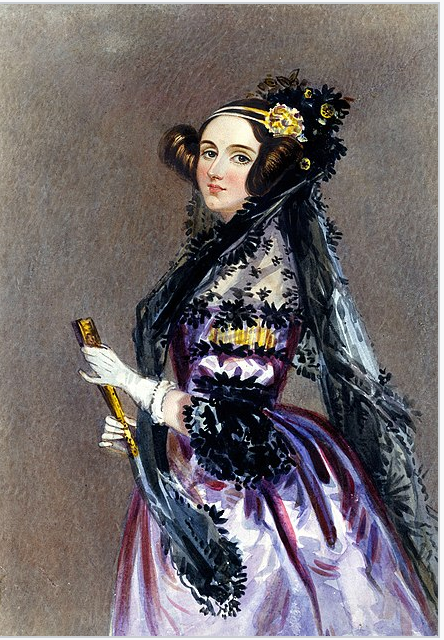
Ada Lovelace, in full Ada King, countess of Lovelace was originally named Augusta Ada Byron, Lady Byron. She was the daughter of the famous poet Lord George Gordon Byron. “Her mother, Lady Byron, had mathematical training (Byron called her his ‘Princess of Parallelograms’) and insisted that Ada, who was tutored privately, study mathematics too — an unusual education for a woman.” She was assisted in her advanced studies by mathematician-logician Augustus De Morgan, the first professor of mathematics at the University of London.
Lovelace became an associate of Charles Babbage after she met him at a party when she was 17 years old. Babbage created a prototype of the first digital computer, and she went on to write the first instructions for programming it. Although Lovelace is recognized in some circles as the first computer programmer, for the most part, she has been overlooked by history because Babbage created the machine. She was, however, the first to express the potential for computers outside of mathematics.
Nettie Stevens
Nettie Stevens was an American geneticist, whose main area of interest was sex determination. At that time, around the turn of the 20th century, most people believed that a child’s sex was determined by the mother in possible conjunction with environmental factors. Stevens got a late start as a scientist, spending most of her early career as a teacher, but at age 39 she began working as a research assistant for Edmund Wilson.
“While studying the mealworm, she found that the males made reproductive cells with both X and Y chromosomes whereas the females made only those with X. She concluded that sex is inherited as a chromosomal factor and that males determine the gender of the offspring.” Wilson published a paper on the findings before her, and is largely credited with having made this discovery although, “Stevens is generally considered to have made the larger theoretical leap (one which was ultimately proven correct).”
Marie Tharp
Marie Tharp, who was born in 1920, was the daughter of a soil surveyor so she developed an early interest in both cartography and geology. Despite the relatively few opportunities for women in the sciences at that time, Tharp was able to pursue a master’s degree in geology due to the fact that so many young men were off fighting WWII. She also earned a master’s degree in mathematics as well.
After working briefly for the petroleum industry, Tharp got a job at Columbia University’s Lamont Geological Laboratory. Although there had been some notice of the fact that different continents looked like they might possibly have once fit together, the notion that they could move was considered unlikely. Lamont lab founder Maurice “Doc” Ewing did not want his scientists confined to the lab and launched a project to explore the bottom of the sea — something made easier by the new sonar technology.
Women were not allowed on Navy ships, so Tharp stayed behind, crunching the numbers that were sent back to her from the field by geologist Bruce Heezen. It was incredibly detailed and time-consuming work in a time before computers but Tharp relished it and she said in a 1999 essay she felt that “The whole world was spread out before me.”
Tharp eventually came across evidence that the huge chain of mountains she was mapping was a place where the oceanic crust was spreading apart. It took her nearly a year to convince Heezen, who initially dismissed her findings as “girl talk” (can you imagine…?).
He only changed his mind when evidence of earthquakes beneath the rift valley she had found was discovered — and when it became clear that the rift extended up and down the entire Atlantic. Today, it is considered Earth’s largest physical feature.
When Heezen — who published the work and took credit for it — announced his findings in 1956, it was no less than a seismic event in geology. But Tharp, like many other women scientists of her day, was shunted to the background. Source
Florence Parpart Layman
Florence Parpart Layman was born in January 1873. In the early 1900s, Florence Parpart worked for the Eastern Sanitary Street Cleaning Company in New Jersey as a stenographer. “The first invention credited to Parpart is a street sweeper designed to automate the process of cleaning city streets. Parpart filed two patents for this invention (№649,609 in 1899 and no. 762,241 in 1901), both of which listed Hiram D. Layman as co-inventor despite his being only an investor.”
Layman was the company’s general manager and they later married. After their marriage, he would continue to be listed first on her patents, even though it is generally acknowledged that Parpart was the sole inventor. “It was a common practice during the late 19th and early 20th century for women inventors ‘to add a man as co-inventor as a form of partial assignment by patent in order to facilitate investment and commercialization and minimize anti-woman bias and stigma.’”
In 1914 Florence Parpart Layman invented and obtained a patent for the first electric refrigerator and she marketed it and sold it to American companies. It seems at least in this instance that her husband was supportive and not trying to take credit for her work — attaching his name to the patents only to ensure that they were more widely accepted.
Each of these women contributed to our greater understanding of the world or invented things that are an integral part of our lives. It’s unfortunate that their names are not more widely known and that their discoveries have often been obscured or were not properly credited. I enjoyed learning more about each of these impressive women of history and the scientific discoveries that they made and I hope that they will in time get more of the credit that is due them.
Coming soon — Impressive Women of History: More Scientists and Inventors as well as Impressive Women of History: Politicians and Social Reformers
© Copyright Elle Beau 2023