
LIVING IN FRANCE
I’m Lured By Romantic Notions Of Medieval Village Life — A Tiny Timbered Cottage, Cobblestones & Hollyhocks, History In The Air
And then reality intrudes — tour buses and invading hordes trampling the flowers, peering through the mullioned windows
We’ve just returned from a few days in the Aveyron — pastoral scenes of cows, sheep, cornfields and Roquefort cheese caves replacing the endless scenes of vineyards in the Languedoc where we live.
One of our stops was the medieval hilltop village of Sévérac-le-Château which I’d read about in one of the Aveyron tourist brochures —rich medieval heritage, noble residences side-by-side with modest dwellings, 15th century this, 13th century that — all my kind of thing. But we needn’t have driven far from home to indulge my interest in ancient history. Two of my favourite places for forays into the past — Saint-Guilhem-le-Désert and Minerve — are both within an hour’s drive.
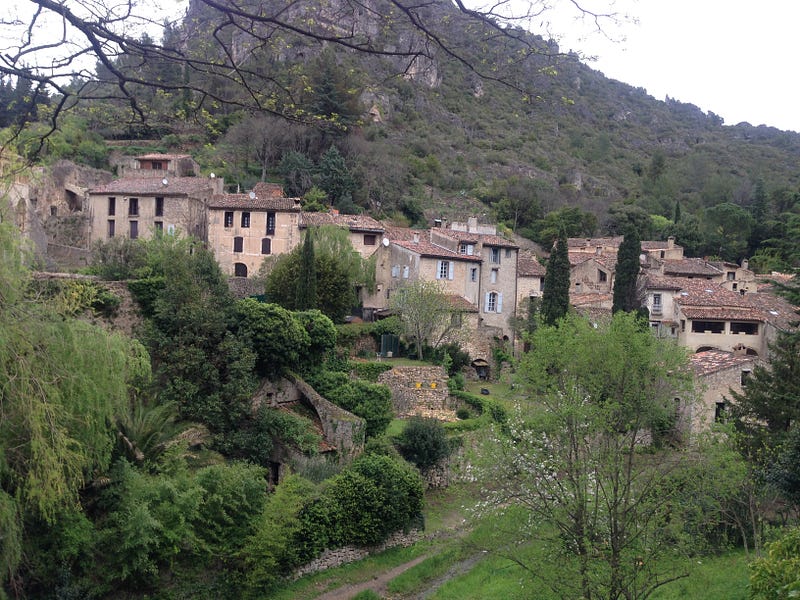
In fact hilltop villages, many dating back to the 12th century and beyond, and perched high atop rocky outcroppings are part of the scenery of France. Drive anywhere in this country and you’ll inevitably spot one rising improbably from the surrounding fields and pastures. They fascinate me. If time allows and pulling off the autoroute doesn’t involve a lengthy detour, as is often the case in France — I usually succumb to their lure.

We arrived in Sévérac-le-Château about noon and the outdoor cafes along the main street outside la cité (the village) were beginning to fill. Ancient villages are well aware of the needs of modern tourists — parking lots, souvenir shops, local produce and eating spots.
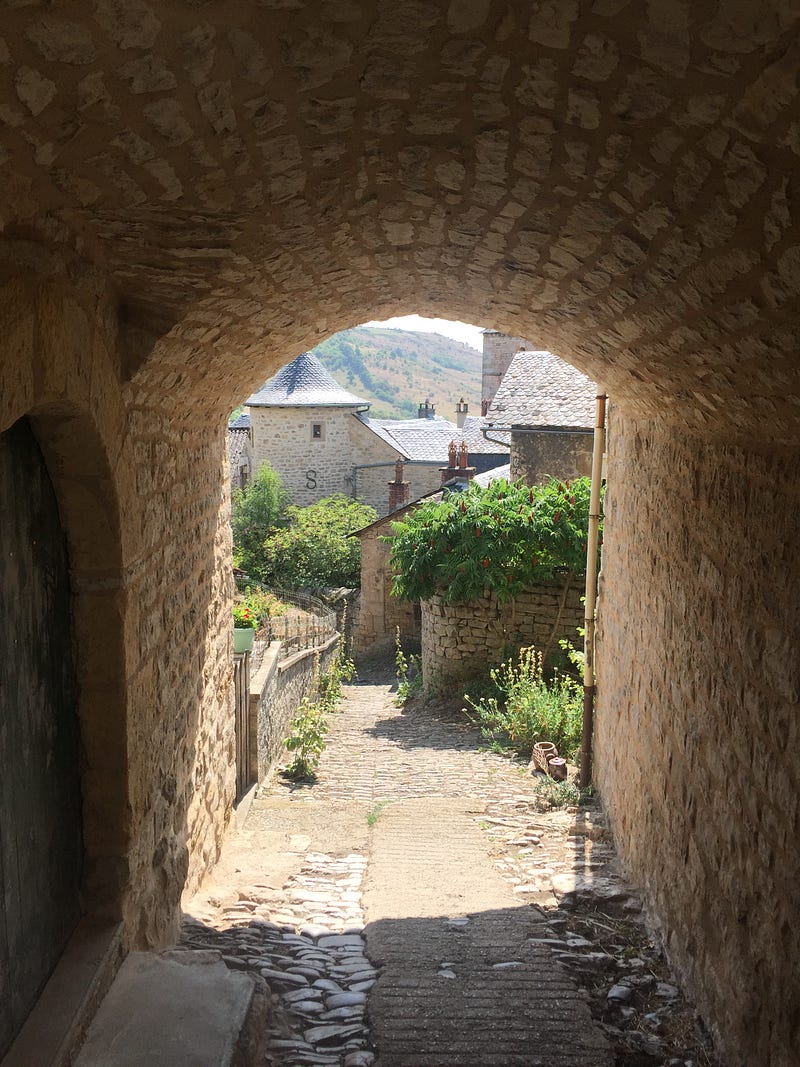
But I ignore all that, pass through a pair of fortified gates, complete with some evil-looking metal spikes, and enter a maze of narrow cobblestone streets that wind around the hillside and up to the partially restored chateau at the top.
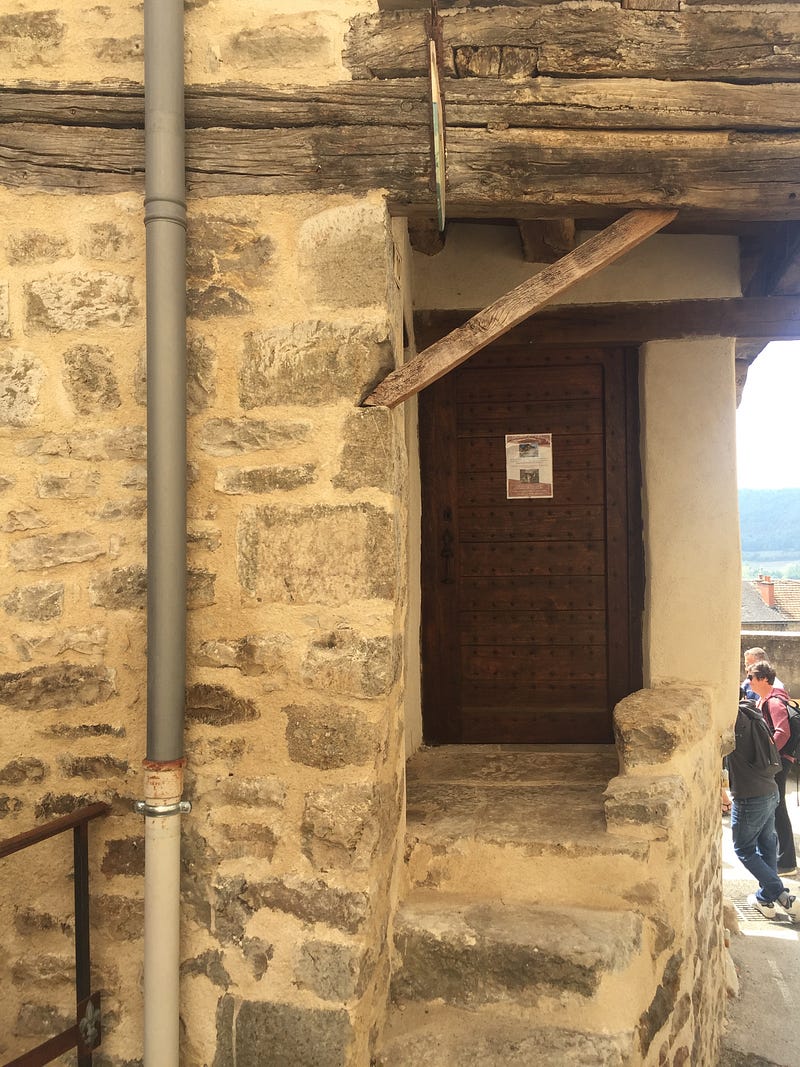
As always happens, I fall into a dreamy reverie of what it might be like to live in one of these villages. I love the quirkiness, the lack of uniformity — one small house leaning slightly drunkenly into its far grander neighbour, a flight of narrow stone stairs leading up to a crumbling brick wall. Timbered beams, crumbling stone, hollyhocks sprouting everywhere.
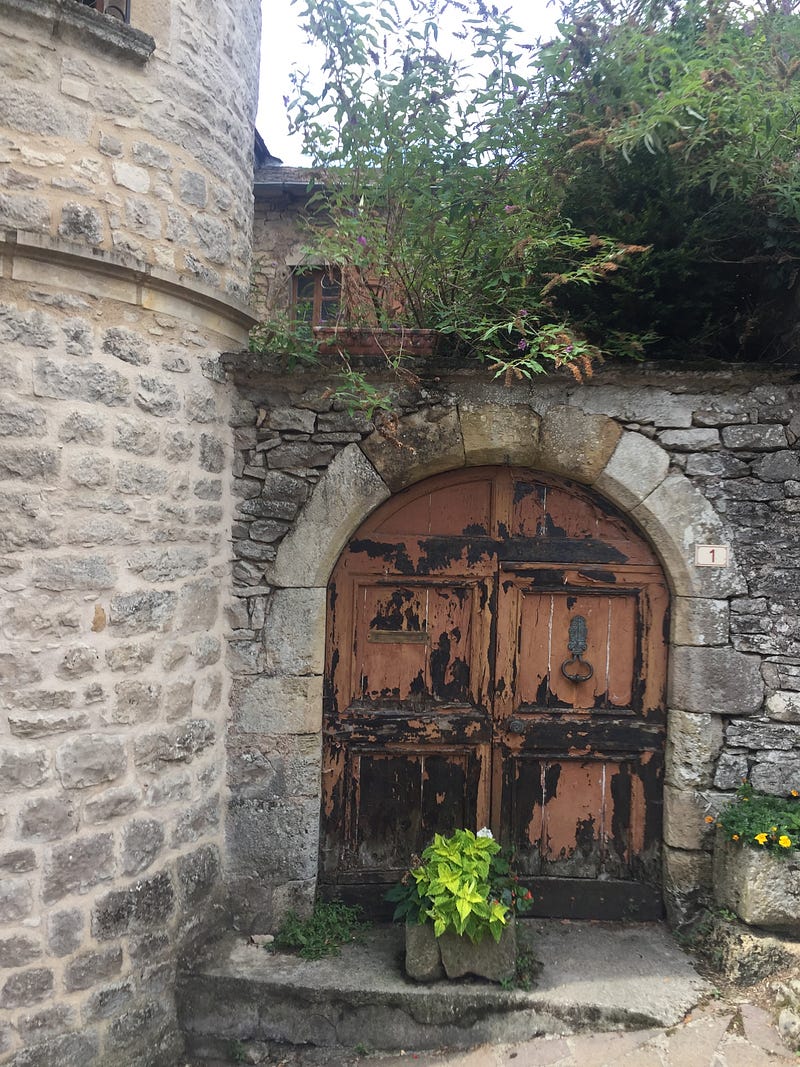
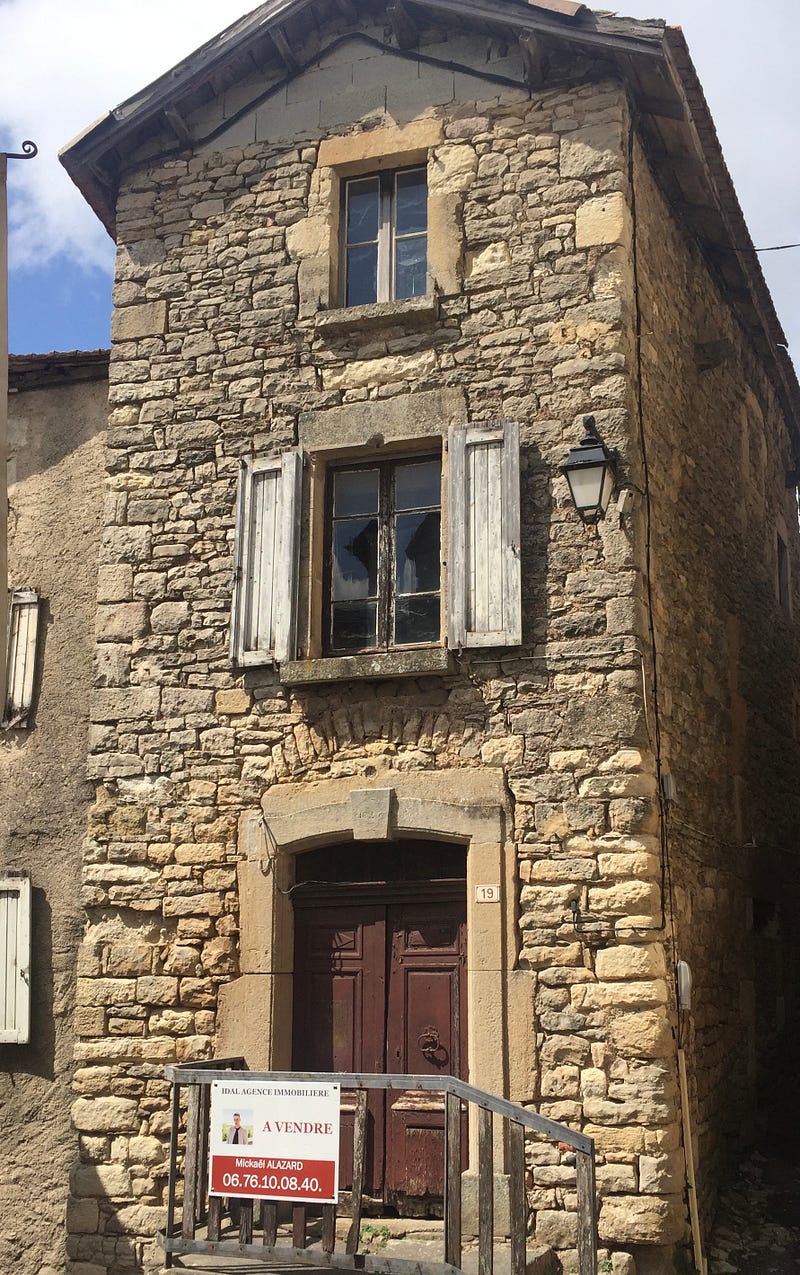
Over there, tucked into a tiny alley, the heavy wooden door of the Maison de Jeanne, one of the oldest houses in the Aveyron. And, further along, a more contemporary touch — an immobilier (real estate) sign on a house for sale. Intriguing, but not exactly my style — a bit austere, I’m more the wisteria-covered cottage and mullioned windows type.
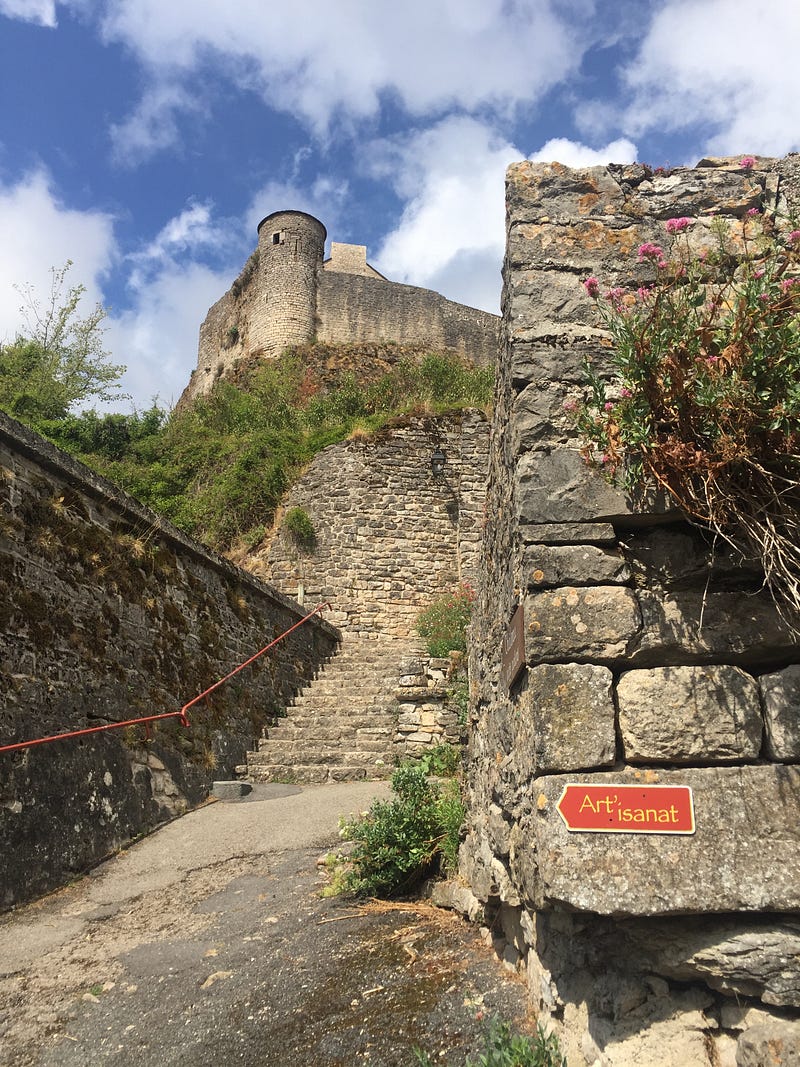
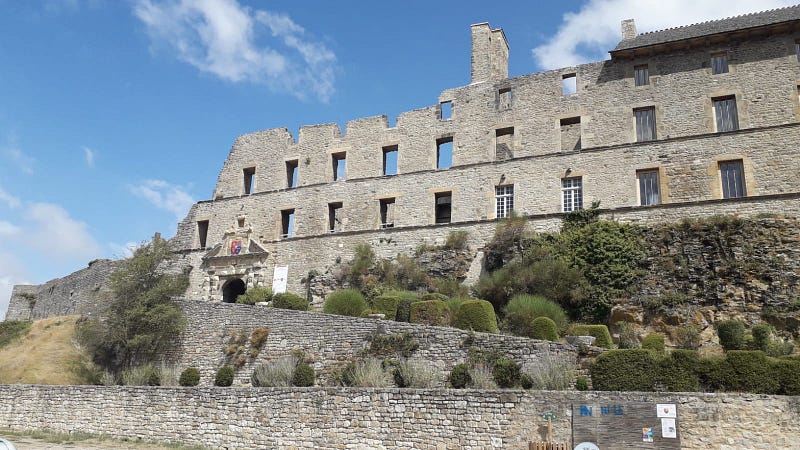
Through the village and up the hill. As we approach the chateau, the climb grows steeper. No need for gyms or exercise bikes in these ancient places. But physical fitness takes a back seat when survival is at stake and the hilltop locations of these villages were purely defensive.
From feudal lords who controlled large swathes of the country, to marauding soldiers and religious wars, one enemy or another was always out to pillage, burn and destroy.
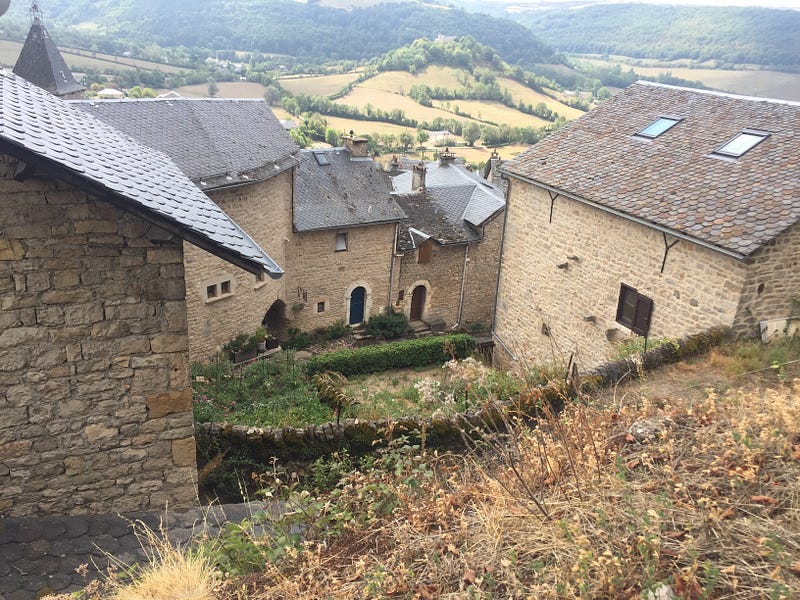
It’s hard to reconcile bloody feuds with the peaceful scene I see from the top of the hill. In the shadow of the chateau, goats graze under a bright blue sky, the sun is warm and the air smells of cut grass, maybe wildflowers too. I look out over the village rooftops to the patchwork fields and meadows of the Aveyron countryside stretched out below.
On a visit to Burgundy a few years ago, I climbed to the top of a hillside overlooking a similarly pastoral scene. A plaque suggested imagining armies steadily approaching and the fear villagers must have felt as they frantically tried to defend and protect.
Hard, but not impossible to picture. I need only think about Ukraine — and then wonder if anything ever really changes.
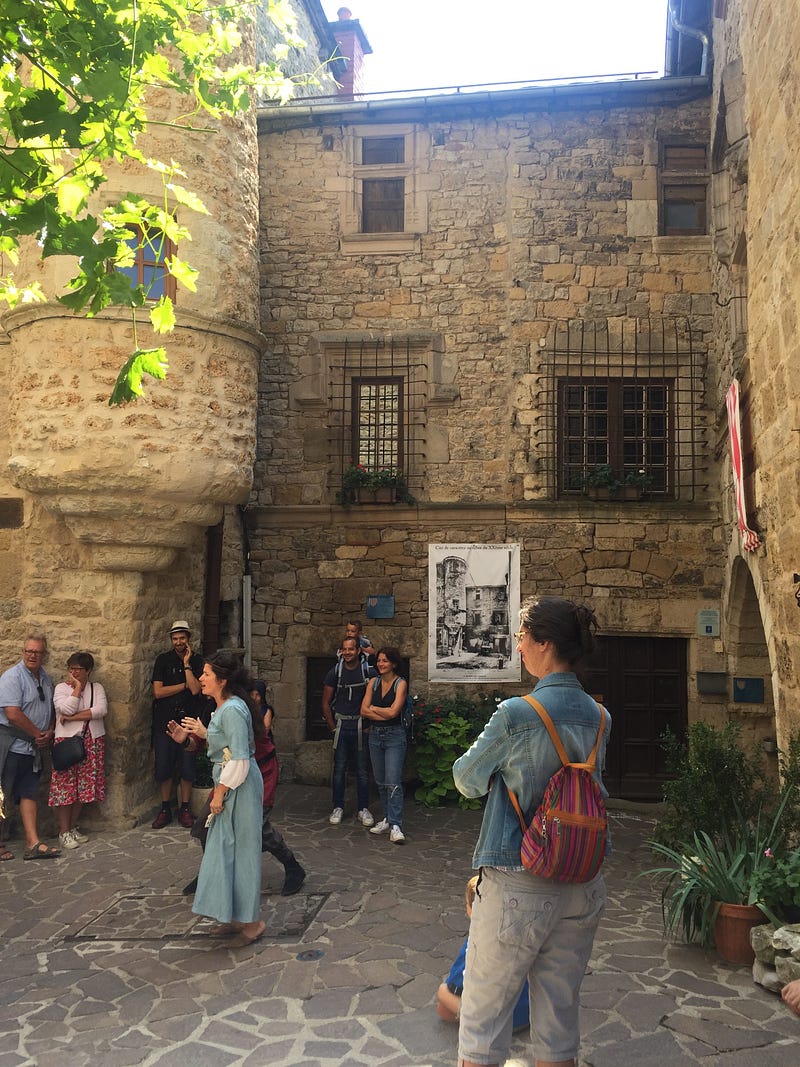
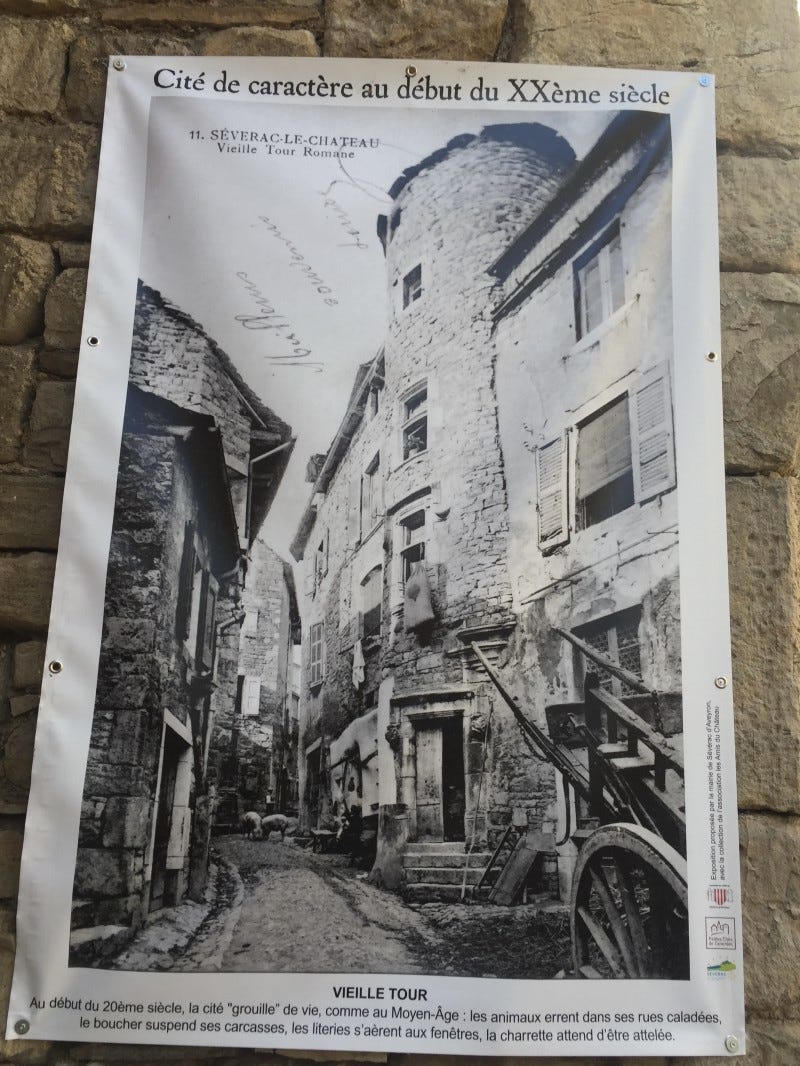
Back down the hill, costumed performers were entertaining crowds outside the Maison de Jeanne. The tourist brochure notes that Jeanne’s house hosts medieval events in July and August and that an American tourist once posted a photo of the house on social network and received nearly two million views in a couple of days.
Moving on to the cafe where we shared a table with a couple of bikers, French, who removed their helmets and jackets from the chairs so that we could sit down. They were eating, I asked if the food was good. They both smiled and nodded. But no nod to medieval culinary traditions, whatever they might have been, servers were working non-stop to serve up contemporary fare of pizzas and burgers with cheese from nearby Roquefort.
Across the road, a line had formed outside the shop selling ice cream and when we returned to our car, the parking lot was full.
From Carcassonne’s La Cité to Brittany’s Mont-Saint-Michel ancient locations beguile, but modern commerce prevails. Where armies once invaded, tourists now arrive in cars and busses.
Plus ça change, plus c’est la même chose
The more things change, the more they remain the same.
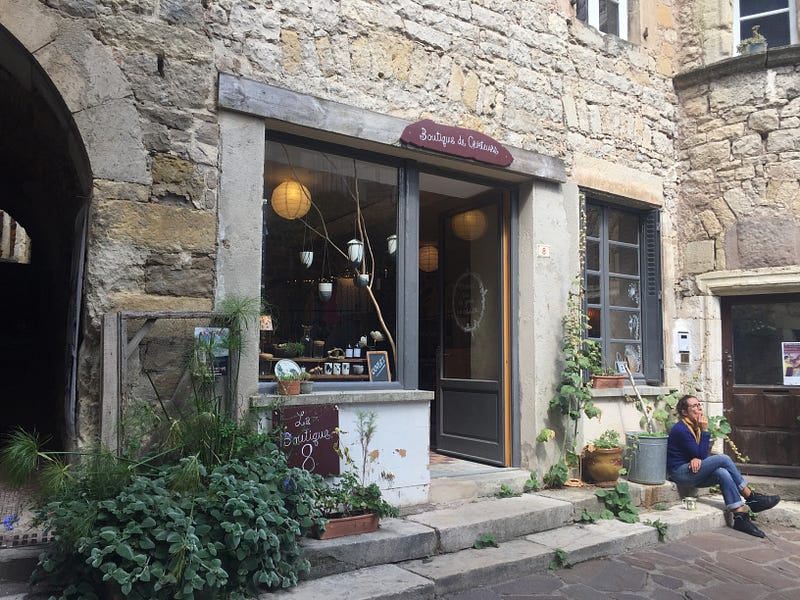
I’m sure I’ll always be intrigued by these ancient villages, but I think my motto should be — nice place to visit, but I don’t think I’d want to live there.
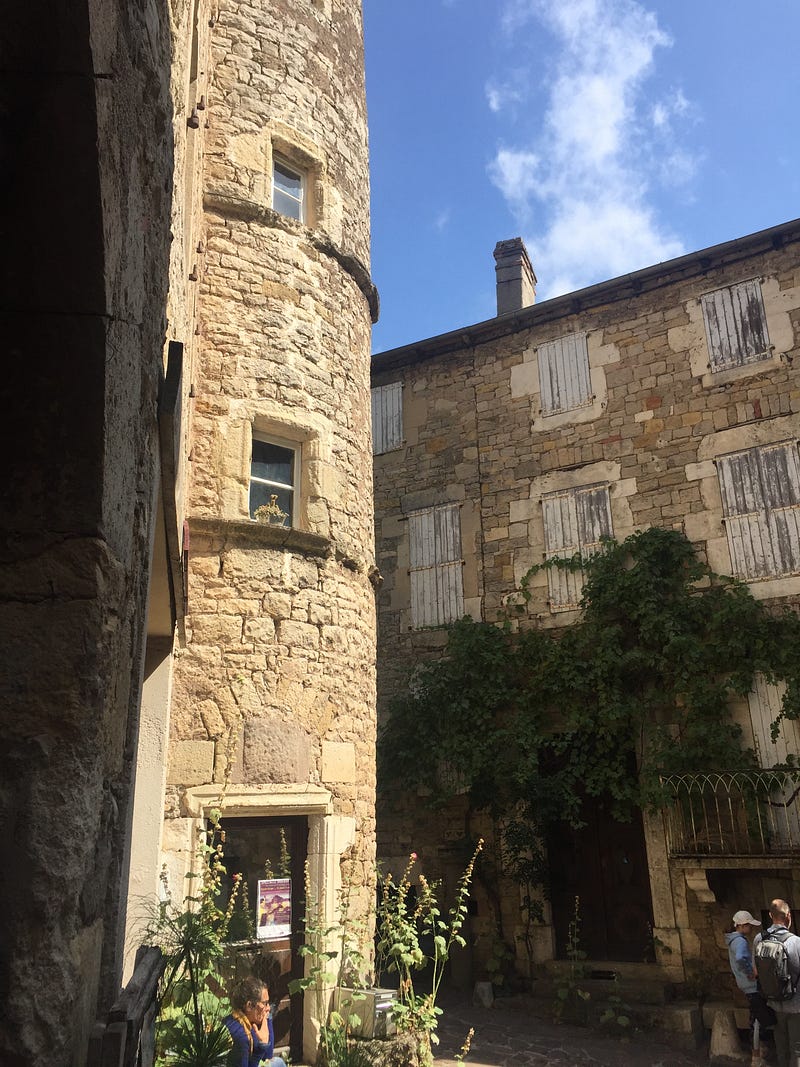
A few more photos from Sévérac-le-Château
I hope you enjoyed this story — a couple of links if you’d like to read more about my life here in France.
I have loads of other stories about life in France — my decision to move here and the adventures I’ve had in the nine years since. Please stay tuned for more!


