avatarJanice Macdonald

Free AI web copilot to create summaries, insights and extended knowledge, download it at here

2836

Abstract

olours adorned with branches of rosemary and bay leaves. And the tomatoes, delicious and almost comically misshapen, bear no resemblance to the perfectly round and tasteless red orbs in the supermarket produce department.</p><p id="56c8">I’ll make <i>ratatouille</i>, I decide. Later in the evening, when it’s cooled off a bit. Meanwhile, I’m entertained by the mouths on the tomatoes. If they could talk, I think they’d do that pouty Gallic thing like the woman in the boulangerie.</p><figure id="4078"><img src="https://cdn-images-1.readmedium.com/v2/resize:fit:800/1*Gbgyp-bS7xMFVl4PPLsdQQ.jpeg"><figcaption>Tomato lips? (author’s photo)</figcaption></figure><p id="14d8">Summer is the time of village fetes, outdoor concerts and <i>fetes du vin (wine </i>festivals.) Languedoc is the biggest wine-producing region in France with more vines than people. In the vineyards, grapes are turning purple under the hot sun. By September, the <i>vendange</i> (harvest) will begin. The busiest time of year for the vignerons, but now in late summer there isn’t much to do but wait. It’s too hot anyway, so they go on vacation (like most of France) or set up their stalls at the festivals.</p><figure id="6420"><img src="https://cdn-images-1.readmedium.com/v2/resize:fit:800/1*VFFV9im02fQt86GEUHf4jw.jpeg"><figcaption>Fete du vin, Faugere (author’s photo)</figcaption></figure><p id="00a8">Five euros buys you a glass, usually imprinted with the name of a winery, and unlimited sampling from a dozen or more domains. It’s all low-key and friendly. The vignerons are often friends or neighbours — one of the pleasures of living in a winemaking village.</p><p id="39e8">We have our favourites — the rosé that this one makes, that fantastic red from the guy down the road. We sample and chat with the winemakers, then decide we’re hungry. Another five euros buy a plate of local oysters from the <i>coquillage</i> (shellfish) man who also stops in the village square on Thursdays. I sometimes buy mussels from him.</p><p id="a56b">But it’s July I say — isn’t there something about not eating oysters unless there’s an R in the month? The <i>coquillage</i> man stops shucking oysters and does a version of the boulangerie woman’s Gallic shrug. No need to worry, he says, because today we have refrigeration that they didn’t have in the past.</p><p id="f22e">Reassured we buy the oysters which go down very well with the white wine we’re sampling.</p><figure id="5dfa"><img src="https://cdn-images-1.readmedium.com/v2/resize:fit:800/1*TaWr9n3z1bSESZA7zsHSig.jpeg"><figcaption>Village festival (author’s photo)</figcaption></figure><p id="18ad">Music is a big part of Languedoc's summer life. Village festivals are great venues for little-known local bands, some better than others, but <i>ç’est pas grave</i> (it doesn’t matter.) These crowds are f

Options

ar more likely to sing along than complain. French folk songs, American rock, usually from the seventies. Some of this, some of that.</p><p id="5d42">A few years back a British woman in my village started once a month jazz evening. She’d wanted something to liven up winter nights when the village goes dormant along with the vines. She set up chairs in the living room of her huge house, located a few jazz players willing to perform and spread the word.</p><p id="4fc5">The evenings proved so popular that she opened up her back garden — it could be confused with a small park — and started summer jazz concerts which became even more popular than the winter events. After a pause during Covid jazz is now back and part of the summer scene.</p><figure id="a65b"><img src="https://cdn-images-1.readmedium.com/v2/resize:fit:800/1*o8ybmQPHjP1ax956pDRR2A.jpeg"><figcaption>Summer jazz concert (author’s photo)</figcaption></figure><p id="e0f1">By August the summer heat will be less intense. Or at least that’s what people say — the days are a little shorter, fewer hours of blazing sunshine. Meanwhile, there’s a shady spot in the garden where we sometimes drink our morning coffee or spend lazy Sunday afternoons with a chilled bottle of Languedoc’s version of champagne.</p><p id="bd2a">It’s called Blanquet-de-Limoux and it’s older — created in 1531, one hundred years before champagne — and, in keeping with the general way of life in Poor Man’s Provence, far less expensive.</p><p id="b149">So I may have escaped to cooler regions in previous years, but I’m happy to say that even in the summertime heat the living in Languedoc is easy. Easier still after a chilled glass of the region’s bubbly.</p><figure id="2384"><img src="https://cdn-images-1.readmedium.com/v2/resize:fit:800/1*5yYQe-jbOow1ElC-S5pi3A.jpeg"><figcaption>Sunflowers in my garden. In French, tournesol because they turn (tourn) towards the sun (sol) (Author’s photo)</figcaption></figure><div id="2861" class="link-block"> <a href="https://janicemacdonald.medium.com/membership"> <div> <div> <h2>Join Medium with my referral link — Janice Macdonald</h2> <div><h3>As a Medium member, a portion of your membership fee goes to writers you read, and you get full access to every story…</h3></div> <div><p>janicemacdonald.medium.com</p></div> </div> <div> <div style="background-image: url(https://miro.readmedium.com/v2/resize:fit:320/0*27V-9IU9BDCOe45D)"></div> </div> </div> </a> </div><figure id="e33b"><img src="https://cdn-images-1.readmedium.com/v2/resize:fit:800/1*_E6dDjd81veT-FA_SYkoaQ.jpeg"><figcaption>Languedoc road, late summer (author’s photo)</figcaption></figure></article></body>

PhotoLIVING IN FRANCE

Summertime & The Living Is Easy — Time To Enjoy The Simple Pleasures Of Languedoc Village Life

It’s too hot to do much, so don’t
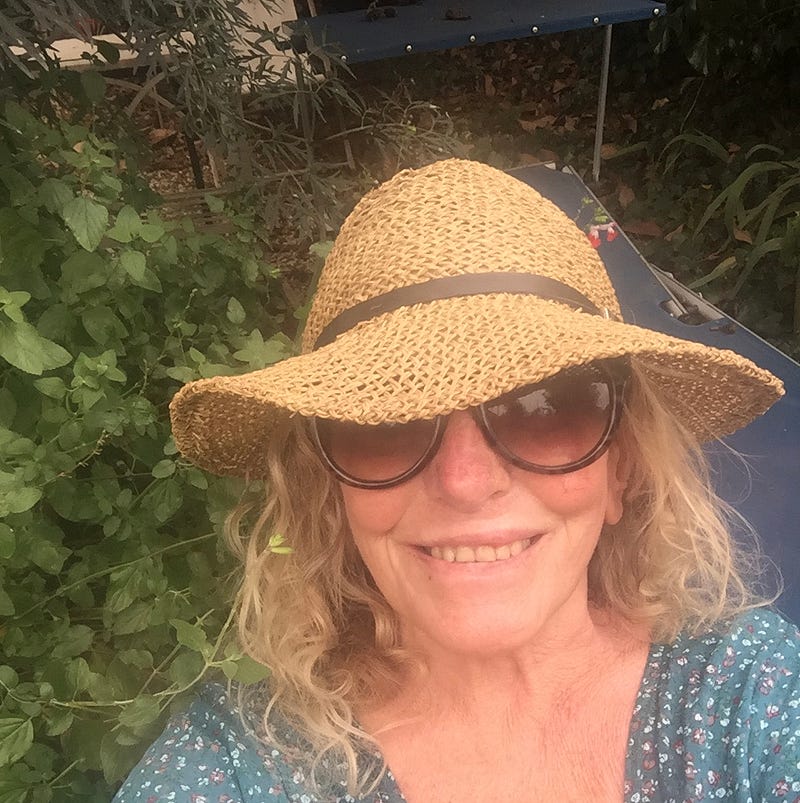
Languedoc summer heat demands a straw hat (author’s photo)

It’s hot, the way summers are in the Languedoc. A little hotter this year? Maybe. In the village boulangerie, there’s talk about the vagues de chaleur heat waves. Since 1947 there have been forty-four across France — the last just a few weeks ago. They’re getting more numerous, everyone says so. Scientists too.

But what can you do? The woman behind the counter does that thing the French do. The Gallic shrug and a poochy exhalation. (Sorry, that’s the best I can manage. Try this though — stick your bottom lip out and blow.)

It’s hot in the boulangerie and the tray of baguettes still steaming from the oven make it even hotter so she carries the tray to the window sill so that the bread can cool outside. Sometimes she leans out of the open window to chat to whoever is passing by — also I suspect to have a quick smoke.

On the way home, I run into one of my neighbours. She speaks no English, but is tres bavarde, meaning she’d talk the hind legs of a donkey. Funny expression that. It happens that a couple of donkeys live in the field across the road. I never realised that donkeys make such a horrible racket — imagine the sound of loud and lengthy orgasms. But since they both have their hind legs maybe my neighbour has never stopped to chat.
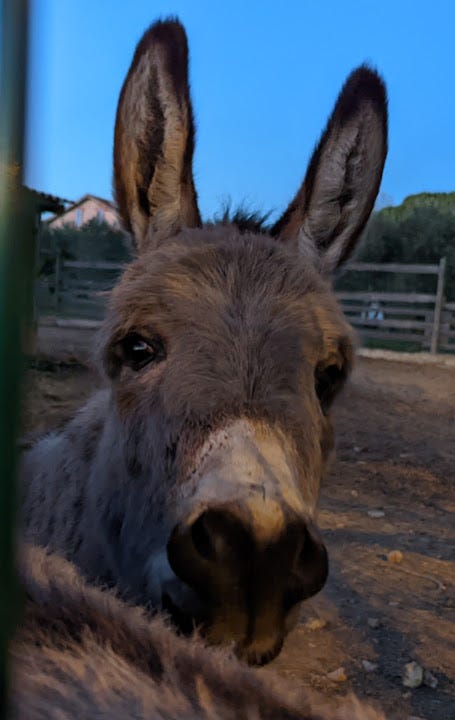
The village donkey, hind legs intact (Bill Calhoun, photo)

Her brother grows vegetables in the next village which every summer my neighbour sells to people in this village. She tells me she has aubergine, (eggplant) courgettes, (zucchini) tomates and haricot verts (green beans ) all of which I understand. Then she gets onto quantities and my French fails me. Last year, I mistakenly ordered three tons or some ridiculous amount of haricot verts. This year, I know better.

“Très très peu,” I tell her “Juste pour deux personnes.” (Very, very little. Just enough for two people.
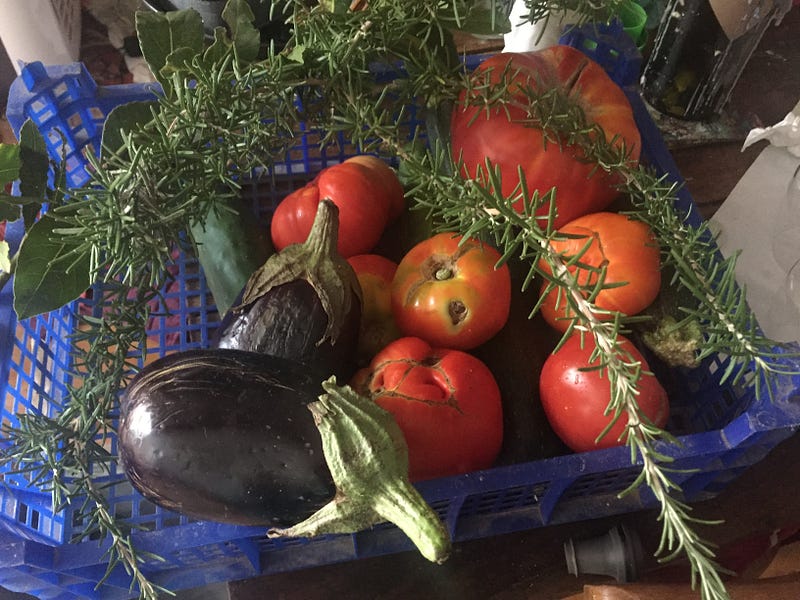
A bit of kitchen art (author’s photo)

She brings them over later and I’m enchanted — a painter’s palette of colours adorned with branches of rosemary and bay leaves. And the tomatoes, delicious and almost comically misshapen, bear no resemblance to the perfectly round and tasteless red orbs in the supermarket produce department.

I’ll make ratatouille, I decide. Later in the evening, when it’s cooled off a bit. Meanwhile, I’m entertained by the mouths on the tomatoes. If they could talk, I think they’d do that pouty Gallic thing like the woman in the boulangerie.
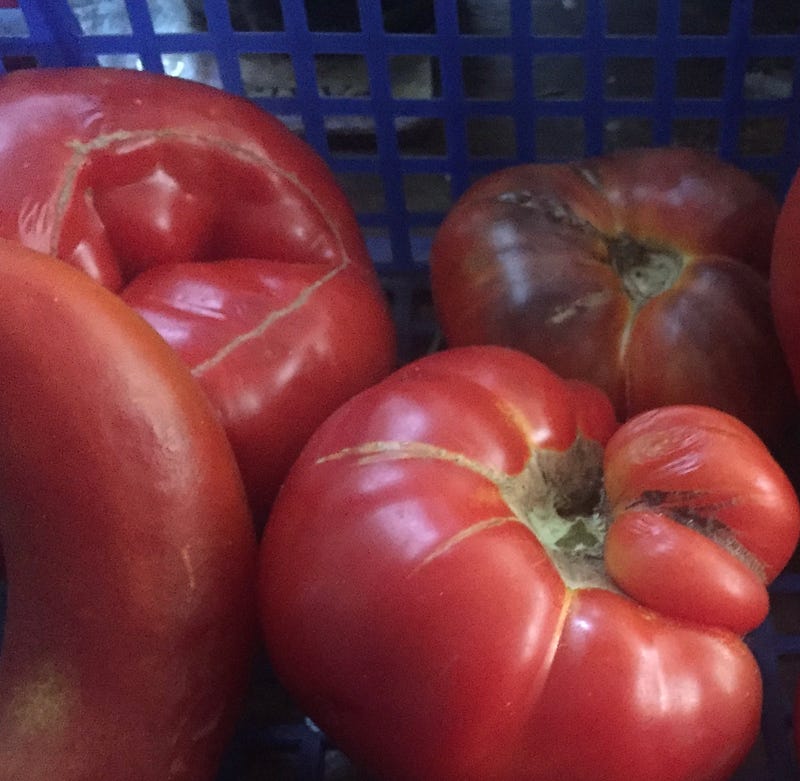
Tomato lips? (author’s photo)

Summer is the time of village fetes, outdoor concerts and fetes du vin (wine festivals.) Languedoc is the biggest wine-producing region in France with more vines than people. In the vineyards, grapes are turning purple under the hot sun. By September, the vendange (harvest) will begin. The busiest time of year for the vignerons, but now in late summer there isn’t much to do but wait. It’s too hot anyway, so they go on vacation (like most of France) or set up their stalls at the festivals.
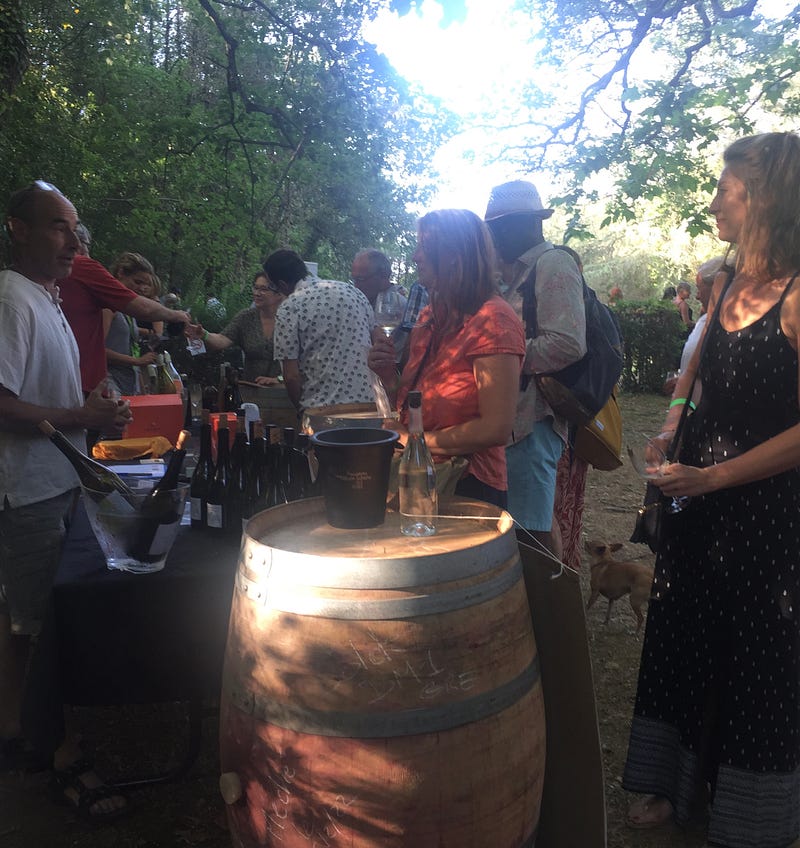
Fete du vin, Faugere (author’s photo)

Five euros buys you a glass, usually imprinted with the name of a winery, and unlimited sampling from a dozen or more domains. It’s all low-key and friendly. The vignerons are often friends or neighbours — one of the pleasures of living in a winemaking village.

We have our favourites — the rosé that this one makes, that fantastic red from the guy down the road. We sample and chat with the winemakers, then decide we’re hungry. Another five euros buy a plate of local oysters from the coquillage (shellfish) man who also stops in the village square on Thursdays. I sometimes buy mussels from him.

But it’s July I say — isn’t there something about not eating oysters unless there’s an R in the month? The coquillage man stops shucking oysters and does a version of the boulangerie woman’s Gallic shrug. No need to worry, he says, because today we have refrigeration that they didn’t have in the past.

Reassured we buy the oysters which go down very well with the white wine we’re sampling.
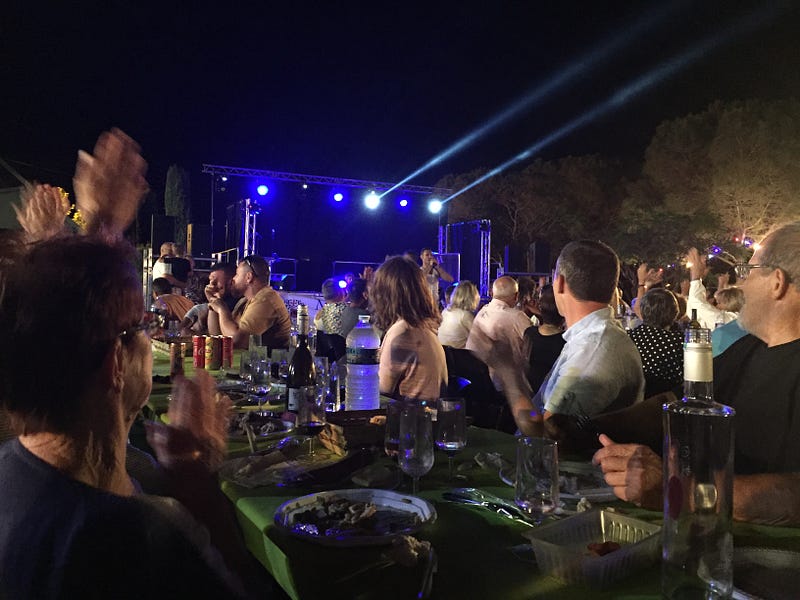
Village festival (author’s photo)

Music is a big part of Languedoc's summer life. Village festivals are great venues for little-known local bands, some better than others, but ç’est pas grave (it doesn’t matter.) These crowds are far more likely to sing along than complain. French folk songs, American rock, usually from the seventies. Some of this, some of that.

A few years back a British woman in my village started once a month jazz evening. She’d wanted something to liven up winter nights when the village goes dormant along with the vines. She set up chairs in the living room of her huge house, located a few jazz players willing to perform and spread the word.

The evenings proved so popular that she opened up her back garden — it could be confused with a small park — and started summer jazz concerts which became even more popular than the winter events. After a pause during Covid jazz is now back and part of the summer scene.
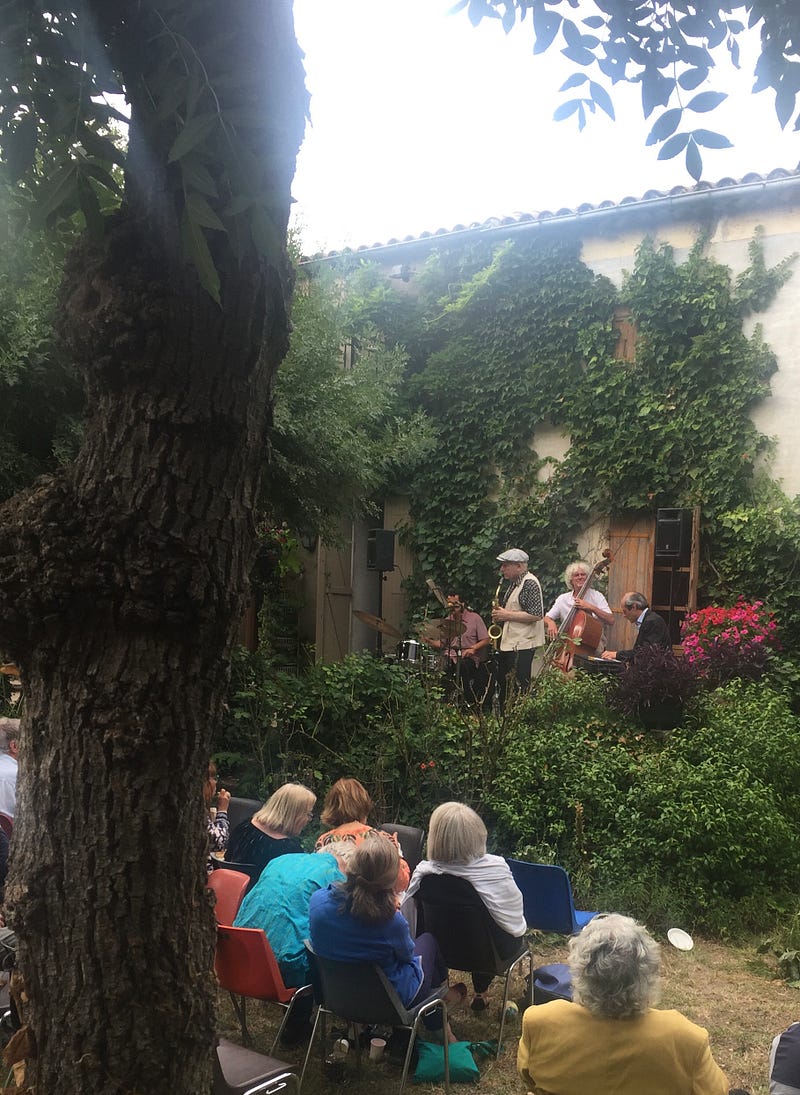
Summer jazz concert (author’s photo)

By August the summer heat will be less intense. Or at least that’s what people say — the days are a little shorter, fewer hours of blazing sunshine. Meanwhile, there’s a shady spot in the garden where we sometimes drink our morning coffee or spend lazy Sunday afternoons with a chilled bottle of Languedoc’s version of champagne.

It’s called Blanquet-de-Limoux and it’s older — created in 1531, one hundred years before champagne — and, in keeping with the general way of life in Poor Man’s Provence, far less expensive.

So I may have escaped to cooler regions in previous years, but I’m happy to say that even in the summertime heat the living in Languedoc is easy. Easier still after a chilled glass of the region’s bubbly.
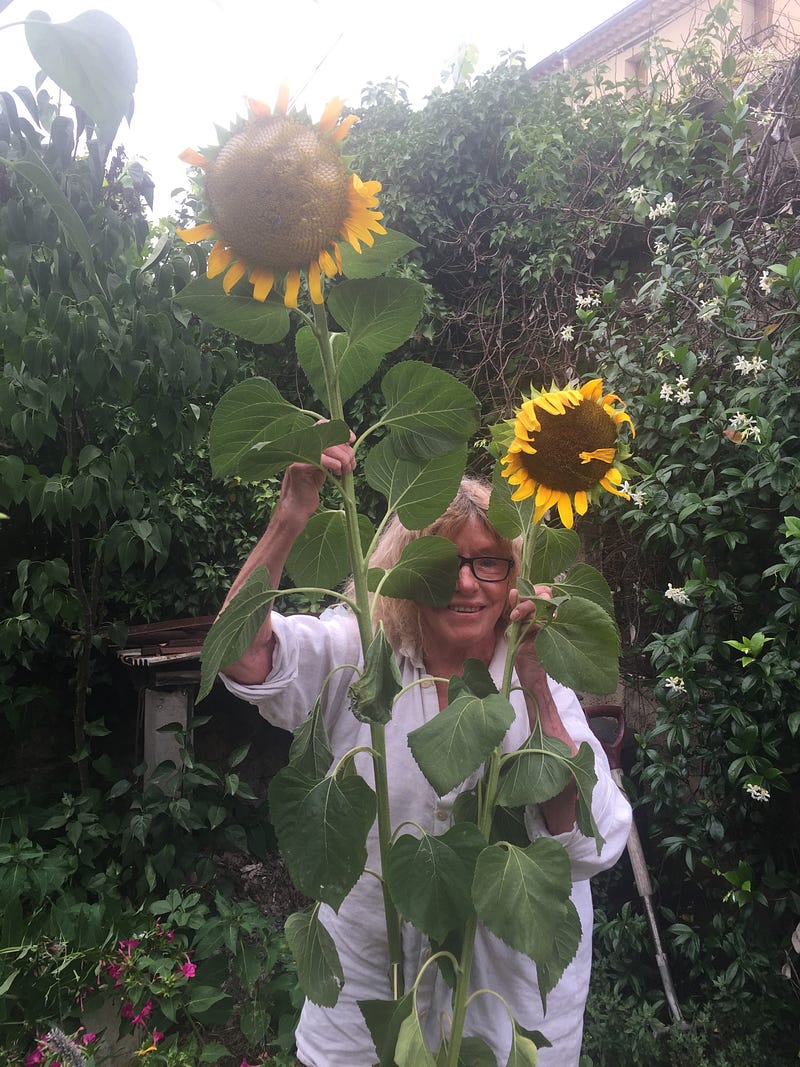
Sunflowers in my garden. In French, tournesol because they turn (tourn) towards the sun (sol) (Author’s photo)
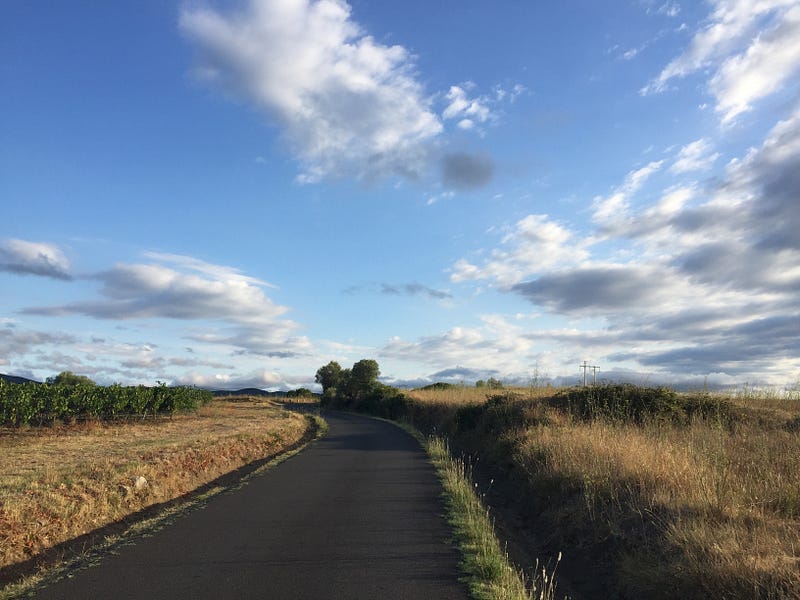
Languedoc road, late summer (author’s photo)
France
Summer
Languedoc
Wine
Photography
Recommended from ReadMedium