I'm Adding These 4 Exercises to my LONGEVITY BLUEPRINT
Time for you to build a bulletproof body!
When you open YouTube and Google, in today’s fitness sphere, you have a whole new range of exercises that pop up.
Some make sense, and some simply waste your time and effort.
I’ve been working out for a long period, and my workouts have evolved. Who knows, it might just look completely different next year! I’ve gone through multiple injuries, and as a result, I’ve had to change my workouts so that I am having an effective yet safe workout.
These are some of the exercises that I found that have helped me deal with my injuries, even completely reversing them
The Mighty Bulgarian Split Squat
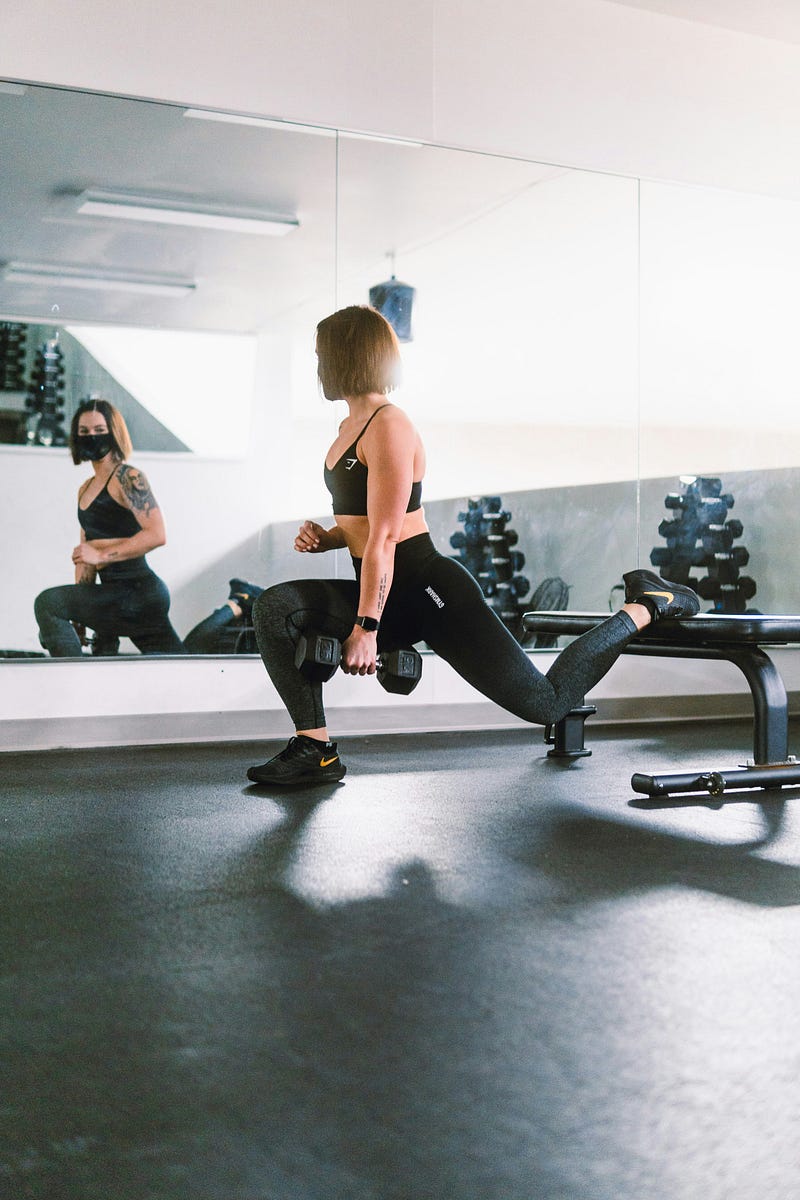
Two years back, I started getting knee pains from doing squats and other activities. It might have been due to poor form or some other issues. I could also feel that I was swaying towards my left side during the return motion doing squats, probably due to a muscle imbalance.
I had read about the importance of doing unilateral movements to improve stability and balance, as well as to fix muscle imbalances.
Enter the split squat.
Hated by most, but loved by me.
This became my new go-to movement when it came to the lower body.
When I first started doing them, I immediately almost tripped and fell! There goes my balance.
But over time, I mastered the movement and started adding more and more load to the movement.
I then traded in squats for split squats instead. Some of the benefits of this insane movement included:
Increased stability and balance
It is always important to make sure you have your stability in check especially when you start getting older.
Falls become more apparent as you age and you wouldn't want to be a victim of that.
Less load on the spine
To me, the other main difference when it came to split squats vs squats was the non-usage of the spine. Sure this might mean you're not doing much for your back (I have a better exercise for this one coming up next), but it also means you can fully focus on training those quads without the worry of injuring your spine.
Fixing muscle imbalance
Needless to say, this is a unilateral movement, so muscle imbalances can easily be fixed by paying more attention to the weaker side.
Hip mobility
Now this one is a big one. We tend to sit in front of a screen all day in that seated position, which vastly reduces our hip mobility. As a result, we become a lot less flexible and can suffer from more injuries.
Doing split squats, you can go much deeper than your normal squat and work your hip flexors at the same time. We want to be taking care of our hips as we get older.
Strengthen your knee
To work on your joints you need to work on the muscles around them. The closest muscle to your knee on your quad is the VMO muscle, and the split squat works that effectively.
And this makes stronger knees.
You are still primarily targeting the same muscles as you would when you do a squat, so I’d rather do something more functional while building muscle. Killing two birds with one stone!
The sets and reps for this that I usually do are either 3 sets of 15 with a lighter weight or 4 sets of 8–10 with a heavier weight.
The great thing about this exercise is the ease of progressively overloading the movement because all you need is a pair of dumbbells or kettlebells!
Variation
A variation to this was something I came across recently from a YouTuber that is gaining a lot of traction. I think by reading the title you would have probably guessed that I was going to talk about Ben Patrick, AKA the Knees over toes guy.
I do the ATG (ass to grass) squat from time to time to improve my mobility, and I found this video to be very informative.
Back Extensions
I’ve always had this in my arsenal from many years ago and it's a fantastic way to train an important body part your lower back. Once again, this is an exercise that focuses on your hip-hinging movement, similar to the one above.
There's not much to go on about, but one thing to note is not to let your back round!
As with the deadlifts and squats, we want to keep the back straight and work the muscles surrounding them.
If done properly, you will feel your glutes and hamstring getting worked on as well.
I usually progressively overload with this by holding a weight near my chest and performing the same action.
The sets and reps that I perform are usually for 3 reps, having 12–15 reps per set.
Squat University does a fantastic tutorial on this, so watch this for more information on the form of the exercise!
External Rotators
Now this was straight out of the Ben Patrick playbook.
I get shoulder issues from time to time after doing pushing motions like the bench press or shoulder-specific exercises.
It was annoying and terrifying at the same time.
You need your shoulders to perform many movements as they are directly attached to different muscles and assist in varying movements.
The thought of not being able to move things or being immobile from the arms scared me.
Which was why I had to find a way to bulletproof my shoulders.
External rotators to be more specific help with:
Keeping your shoulders healthy
Improving of posture
Strengthening of the Infraspinatus muscle → the muscle that attaches to your shoulder blade and your arm bone
And improves overhead lifting and reaching overhead
All these movements are important and shoulder health when moving or doing daily activities is important as you age.
I tend to focus on my posture when I do this by keeping my body straight and always feel like I need to fight back the motion. Ben explains it well in this video.
I’ve honestly seen major improvements with my shoulder after performing these and I feel like I am definitely on the right track with shoulder health.
My sets and reps for this one are 3–4 sets with 8–10 reps.
Calf raises
I'm unfortunately on team no-calves, so initially I was spamming these bad boys to try and see some progress on them.
Short answer: I didn't see much increase in size.
But, as I was researching more into exercises that help with improvements in the body, the calf raise kept on coming up and I got curious then.
Maybe all those calf raises were not done for nothing!
After some research, I figured out why you might want to add them to your arsenal, even if they are not a priority. But before that a bit of anatomy.
The calf is made up of two main muscles, the Soleus and the Gastrocnemius muscles. To summarise:
- The standing calf targets more of the Gastro-muscle
- While the seated one targets more of the Soleus muscle.
I tend to add them both in my workouts to get the best of both worlds.
Now to the juicy bit on why they are important.
Increased stability and mobility
I think you’re seeing a similar pattern here with different parts of the body!
Calf raise causes ankle flexion due to the movement pattern.
As a result, you are improving your ankle mobility due to the deep range of motion that your feet are going through, and that deep stretch that you get in your joints and tendons, including your Achilles.
These muscles are also important for balance and coordination, helping you to stay upright and maintain proper form when you are doing different exercises like running and jumping.
As a runner, I find this very important since it helps with my running movements as well. Strong calves will give you an added advantage with running, giving you strong muscles and strong ankles.
My sets and reps for this one are usually 3 sets for 12–15 reps.
To feel the burn on these, what I like to do is to hold the top for a 1-second pause before coming back down.
A simple demo of how to perform them can be found below.
If you do not have the seated machine in your gym, you could even do them at the tip of your chair, or use a pair of dumbbells as well on your knees!
Keep moving
At the end of the day, all of our problems feel like results from first-world problems. I probably would not expect people during the hunter-gatherer era, or people who live in farms to have these issues as much as us.
If there is one main takeaway from all of this, the idea is to keep moving.
Making sure that you are active and out and about is a strong and effective way in making sure you are keeping yourself healthy.
Use this as a toolbox to improve certain movements in your everyday life and I’m sure you’ll start seeing a notable difference in your body!
Stay Fresh!
If you would like to know more about how to start a training program, be sure to check out my article here!


