I bought a YouTuber's training program so you don’t have to
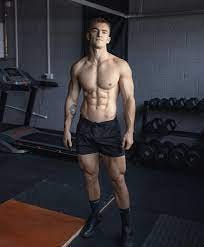
Let’s face it. We’ve all been there, in that slump, looking at our bodies, thinking it’s time to change. YouTube has become a plethora of fitness content. But sometimes it just feels like it’s not enough, given the information overload and paradox of choice regarding how to start your fitness journey. Guilty as charged, I was one of them too. Until I decided to have a “f*ck it” moment and bought a workout program, hoping it would be a worthwhile investment. And I’m glad to say I think it paid off.
Joey Delaney
Within the YouTube fitness sphere, one influencer that caught my eye was Joe Delaney. His physique, way of life, and content captured my attention, and to be honest, who wouldn’t want to have a body like his?
I’ve been hitting the gym consistently for the past 1–2 years, eating relatively well on average, but have not seen any sizeable differences since then. Perhaps it could have been the way I was training or not following a proper program. So I figured, let’s check out one of these programs to see what it’s all about.
The Training Program
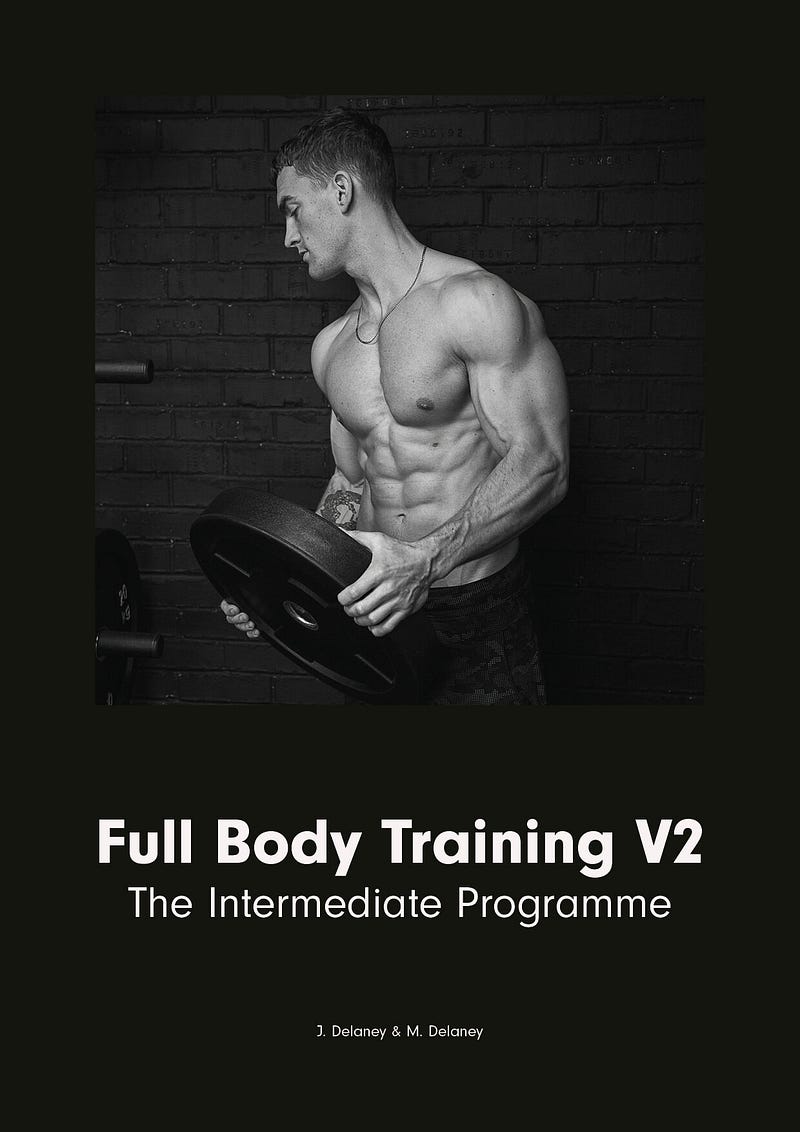
I bought this for around 15 pounds at the time and opted for the intermediate one since I have some experience navigating around the gym. Immediately, what I was doing was completely different from what was in the book. Let’s delve into some general ideas.
Volume
This refers to the quantity of reps and sets, both for a specific exercise or a workout as a whole.
Intensity
this refers to how close one can get to their maximum effort during a working set of an exercise.
Frequency
This refers to how often resistance training sessions occur. It can refer to overall training frequency or, more commonly, the frequency of targeting specific muscle groups.
Load
Pretty self-explanatory, relating to mainly the weight of exercises and the amount of stress on your muscles as a result. Overall load comes into play here which refers to the total amount of load that goes into the
Joe drives an important point in this program which is that we should try to find a balance that provides something manageable but effective, and at the same time make sure that we have enough time for recovery. This brings me to my next point.
PPL vs. full-body
I think most people by now are attuned to what these different splits refer to, with PPL being push, pull, legs, and full body involving training your entire body in one way or another for each session. In this program, Joe adopts a full-body split to allow ample time for recovery. Honestly, I’m not sure why I didn’t think about this sooner. The idea is that there’s a limit to how much productive work a muscle can do within a training session. Instead of following a PPL routine where you might be overworking certain muscles, leading to diminishing returns, why not give your all to just one body part per session and then move on to the next one, doing the same? However, the whole point of this is to build muscle at the end of the day, and that requires another important factor.
Progressive Overload
To put it very simply, progressive overload means gradually increasing the training stimulus over time. In most scenarios, this can involve increasing training volume, frequency, or intensity. The choice of what to increase depends on how you want to structure your program. For example, if you have a limited number of days to train, you might focus on increasing volume and intensity. Other examples would be variations or combinations of these three elements.
At the end of the day the aim is to increase the demands you are putting on your muscles.
Periodization
Now this is where things might get a bit more complex. the idea of this was completely new to me but it made sense after figuring out what it meant. In simple terms:
Periodization involves dividing a training program into distinct phases, each with its specific objectives, all working together to achieve the overall goal of the program.
In our case, this overall goal is to build more muscle, or in other words hypertrophy. However, within this, there are two kinds of hypertrophy. We have Sarcoplasmic and myofibrillar. Fancy words, but in essence what they refer to is engaging in metabolic stress and mechanical tension. The former is done by hitting more reps while the latter is done by lifting heavier weights. And so this then debunks the age-old question about reps and sets. The debate about strength vs building muscles and reps. Turns out the answer is to do both! That seems to be the best way to achieve hypertrophy.
In order to achieve maximum hyptrophy, we need to ensure we are training across a variety or rep ranges per muscle group
In his program, Joe goes about using this method called undulating periodization, which refers to adjusting the load and intensity across weeks, as opposed to a linear periodization, where you gradually increase your load/intensity/frequency over time. This was a bit different for me, but after going through the program, I felt that the linear one was much easier for me to track my progress. That being said, it could be a good idea to switch things up every once in a while for a block period.
RIR
The last topic to cover in the program is called RIR, or reps in reserve. This method measures the intensity of your workouts and aids in choosing the appropriate weight by assessing how many more reps you could have performed at the end of a set. Initially, gauging this might seem challenging, but with time and practice, you can determine the correct weight.
If the weight is too light or easy, it won’t provide sufficient stimulus for muscle growth. Conversely, if the weight is too heavy, fatigue sets in, reducing overall performance and the ability to maintain intensity throughout. For example, if your goal is to complete 10 reps and your RIR is 2 at the end of those 10 reps, you should feel like you could have pushed for 2 more reps.
One might wonder, “Why not set all reps at RIR 0?” The temptation might be there, but it’s crucial to consider the total number of working sets and whether you can sustain that level of intensity throughout. This serves as a useful benchmark. Generally, RIR tends to decrease for subsequent sets since muscles become more fatigued over time. It’s a rough gauge, and I found it challenging to follow, so I developed my method of tracking, which I’ll discuss later on.
Lessons from the program
I followed this program for the entire 10-week training period, and it brought about an interesting change for me, particularly due to the undulating periodization, which introduced varying sets and reps each week. Despite being on a cut, I did notice some positive results. However, there were a few drawbacks.
- The training blocks, especially the 5-day-per-week blocks, proved quite lengthy for me. Balancing that level of intensity alongside work and other commitments, including running (which I’ll delve into in another article), posed a challenge.
- Additionally, the RIR system was a bit difficult for me to grasp initially. I was still getting used to it, and there were instances where I felt I could have pushed myself harder.
I decided to then take the important things from this and implement them in my system.
My program
Based on my previous program some changes that i made were like this:
- Switch from PPL to a full-body program
- Followed a linear periodization for easy tracking
- Stuck to 5–6 exercises a session with a 4-day gym week. So I was adjusting the intensity and training volume.
Here is an example of how my week looks
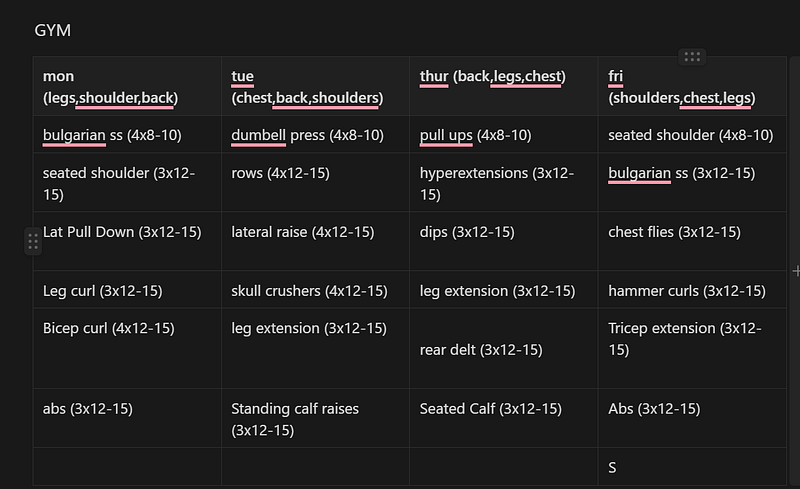
Now, this approach aligns with my current focus, but it can vary for each person. My goal is to target each body part at most twice per session while incorporating variety in reps and sets. Regarding intensity, I adopt a progression method. For instance, if I’m doing Bulgarian split squats with 4 sets of 8 reps, my natural progression is to add one more rep to each set, making it 4x9, and so on. Once it reaches 4x10, I choose the next weight and restart from 8 reps. This progression method results in increased volume, contributing to progressive overload. I’ve found this approach effective, and while my program may evolve based on my future goals, it’s currently working well for me overall. Let me know your thoughts on this approach.
To track my workouts, I use a free app called Hevy. It's free to use though it comes with added features if you opt for the paid version. I;ve found it to work fantastic for me when it comes to tracking my progress for workouts, be it the session itself or an individual exercise. But do what works for you! Some people keep it old school and get the pen and notebook out as well!
Final thoughts
Fitness is a journey for me and I am still learning a lot of new things along the way. This program taught me a lot more about how I can approach fitness as a whole. Remember to treat your program to how you want to do it, and at the end of the day, it's important to find something that you can sustain for a long time. Fitness is a journey and go enjoy it!


