
If You Only Watch One Documentary in 2020, Watch This
I’ve watched it twice in one week.
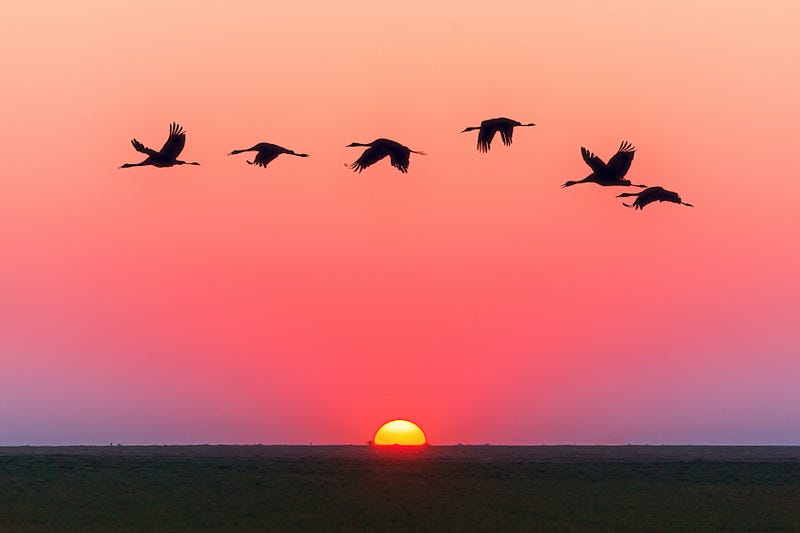
“The world is not as wild as it was. Well, we destroyed it. […] We have completely destroyed that world. The nonhuman world is gone.”
— David Attenborough
I don’t have a TV. Neither do I have a Netflix, Amazon Prime, Disney+, or any other subscription. I’m a writer and apart from a YouTube channel I have very little clue about what goes on in the world of moving pictures. I’d rather read a book.
But last week, a friend sent me a screenshot of David Attenborough’s A Life on Our Planet, along with a compelling “Stop what you are doing and watch this now!” I did.
A few days later, I watched it a second time. And since my girlfriend hasn’t seen it, I’ll watch it a third time with her as well.
I’m not the only one enthralled by it. David Attenborough has set a new record for obtaining a million followers on Instagram in under five hours. Not too bad for a 93-year-old.
He has spent almost 70 years filming the natural wonders of our planet, producing the most extensive and beautiful documentaries about nature in existence. He has traveled many million miles from the freezing glaciers of the arctic to the sweltering heat of the African Savannah. A Life on Our Planet is his witness statement.
With beautiful pictures and a mesmerizing voice, Attenborough tells a painstakingly obvious story we’re all oblivious to.
Planet Earth is dying.
If this sounds apocalyptic to you, here are the facts as quoted by him.
We humans and our domestic animals constitute a mind-blowing 96% of the weight of all mammals on earth. The rest, “from mice to whale”, account for only 4%. An astonishing 70% of the mass of birds are domestic ones — mainly chicken. But breeding animals in overwhelming numbers isn’t enough to satisfy our appetite. We reduced 30% of the world’s fish stock to critical levels.
As Attenborough says “This is now our planet, run by humankind, for humankind. There is little left for the rest of the living world.”
Our population doubled within the last 50 years, while the numbers of wild animals have more than halved since the 1950s. More. Than. Halved.
But animals aren’t the only ones affected. Humans cut down up to 15 billion trees per year — almost twice as much as homo sapiens in existence.
Fewer plants to absorb carbon dioxide and the rapid burning of fossil fuels accelerate climate change. 2019 has marked another record for ocean temperatures as they absorb about 90% of the excess heat of global warming. Arctic summer sea ice shrunk by 40% in 40 years.
I could easily double this list. Coral bleaching, water shortage, and the Pacific Garbage Patch three times the size of France shouldn’t be forgotten, but I’ve made my point.
There have been five global mass extinctions in the last 540 million years. Humans mark the sixth.
I’m no hippie who waves Save our Planet signs in front of government buildings. But looking at these numbers, I definitely should.
What we’re doing right now is unsustainable per definition. In many cases, we’ve gone past the point of no return. And for another million species, we’re dangerously close.
Biodiversity is crucial to the complex ecosystem keeping our planet alive. We’re shooting ourselves in the foot. We’re destroying our own living grounds and the ones of our children.
It’s high time to act. But most of these changes are hard to come by yourself. You can go vegan and avoid plastic, but what good is it if whole countries increase their meat consumption, cut down rainforests, and produce almost 10 million tons of plastic waste per year?
I’ll show you how you can have an impact and change the world — with very little effort at all.
The Festival Without Trash
For the last two years, I’ve been to Ozora, a huge Psytrance festival in Hungary. Describing the event in all its facets and details would take an article on its own.
I’ve been to lots of festivals in my life and they all were littered with trash in less than a day. Empty beer cans, condoms, cigarette butts, plastic wrappers, everything. Except for this one.
When I first saw it, it blew my mind. 60,000 people. At a festival. Partying their face off. No trash. How?
They don’t have a super-intelligent system. There are cleanup teams, but very few given the size. Instead, the solution is much simpler than you expect.
Everyone cares.
Everyone picks up after themselves and puts in a tiny little bit of effort. And all of these efforts together create an amazing whole. Big cultural change is the sum of many small individual efforts.
But changing individuals isn’t easy. If you’ve ever shared an apartment, you know how hard it can be to teach someone how to load a dishwasher properly. Changing the lifestyle of all the humans on this planet for sure won’t be an easy task. Or will it?
The Math of Change
We humans are hardwired to compare ourselves to others. We want to be part of our social group and adhere to its norms, like wearing a button-down shirt to formal events.
At the same time, we’re all individuals. You do you, I do me. We don’t like to be told what to do.
You can tell someone to pick up their trash but it won’t change them. When you’re not around, they’ll throw it on the ground again.
People can only change themselves. You can only inspire them to do so by changing yourself. And that’s all you need to do.
Not everybody will clean up just because you do. That’s not how it works. But that’s how it starts.
Big change either is the result of one big effort or the sum of many small ones. You can either plant 350 million trees in one go or get 350 million people to plant one each.
You can’t solve the world’s problems singlehandedly. But you can start small. Start with yourself.
Cut down your shower time. Take your bike instead of the car. Use your backpack instead of single-use bags when shopping. Practice love, tolerance, and acceptance.
This won’t end the world’s problems instantly. But it will inspire others to make a change. And that is how you start a movement.
ESG funds invest in companies based on their environmental, social, and good-governance impact. According to Bloomberg, they’re one of the fastest-growing asset classes in the US, surpassing a total volume of $30 trillion in 2018. Big finance has turned its eyes towards a more sustainable future. Not too bad for something that started with a couple of hippies eating vegan and shouting Save our Planet.
You’re Responsible for the Future — Yours, and the World’s
“The best time to plant a tree was 20 years ago. The second best time is now.”
— Chinese Proverb
In a perfect world, we would’ve taken action decades ago. We would’ve stopped deforestation, hunting endangered animals, and polluting the oceans with plastic that will be around for hundreds of years. Now we have to make up for it. To change the future, you have to act in the present.
I know you’re busy and have real, tangible problems. You have hours to work and bills to pay. We all do.
Nobody is coming to save you and nobody is coming to save the world. But you’re the one living on it, and so will your children.
I don’t ask you to go out of your way and beyond to rid the world of all its demons. But what I’m asking you is to play your part and inspire others to do so as well.
That is how you save the world without much effort.
Niklas Göke recently said that humanity’s biggest challenge is our attention. He’s right. In a world of readily available information, our attention is the bottleneck.
But if a 94-year old man who could long have retired spent weeks and months to conclude his life’s work, you can spend an hour and 23 minutes watching it. You’ve wasted your time with less meaningful endeavors before.
A picture is worth a thousand words. And even though I prefer books over screens any time, I’m now asking you to watch David Attenborough’s A Life on Our Planet. See if it moves you just as much as it moved me. Share it with others, and inspire them as well. Do something meaningful.
You can’t save the world on your own, but you can play your part in making it a better place.
I help men find direction, create a meaningful life, and build better relationships by being more authentic. Sign up for my free 5-minute newsletter and become part of the Authentic Men Tribe!
Our planet is amazing, and I’ve been fortunate enough to hitchhike around large parts of it. Here’s what I have learned: