avatarLinda Caroll

Free AI web copilot to create summaries, insights and extended knowledge, download it at here

3243

Abstract

teracy-rate/">14% of Americans</a> read at high school literacy rates or above. 4% are non-literate. Which means 82% of adults in America have grade-school reading levels. You must write with clarity.</p><p id="5f35" type="7">“If it’s not clear you might as well not write it. You might as well stay in bed.” — William Zinsser</p><h1 id="ad67">2. Simplicity</h1><p id="5fb0">In 2009, Zinsser was teaching writing to students to whom English was a second language. Many were concerned that their vocabulary might be a problem. He assured them it would not.</p><p id="c4ec">The best writing, he said, uses short words and simple sentences. So he read them sentences he’d loved from well known books.</p><blockquote id="0718"><p>“Oh, Mr. Zinsser, you’re so funny,” a bright young woman from Nigeria told me. “If I wrote sentences like that, people would think I’m stupid.”</p></blockquote><p id="6868">It’s not just ESL students that struggle with simplicity. There’s a mistaken idea that stuffy writing is good writing. If you write in the world of academia, go for it. But if you’re not writing academia? Simplify.</p><p id="3afd">The most common mistakes, he says, are using words that are too big or too flowery and sentences that are too long.</p><p id="85dc" type="7">“Simple is good. Writing is not something you have to embroider with fancy stitches to make yourself look smart.” — William Zinsser</p><h1 id="e894">3. Brevity</h1><p id="b2f9">Most people don’t realize how much excess has crept into their writing, Zinsser says. We write like we talk, which is to say we ramble.</p><p id="b6b7">He tells a story of the writer who brought him an 8 page essay and he asked the writer to cut it in half. After wailing that it can’t be done, the writer took it home, cut it in half and it was much stronger.</p><p id="7626">Don’t say numerous if you can say many. Don’t say assistance if you can say help. Don’t call someone an individual. Say man, woman, or person.</p><p id="09b2">A tip his students found helpful was this; one thought per sentence.</p><p id="be8b">You have to learn how to cut your writing before you can learn to build it back up again, without the excess words that serve no purpose.</p><p id="5ac3" type="7">“Short is always better than long. Short sentences are better than long sentences. Short words are better than long words.” — William Zinsser</p><h1 id="2932">4. Humanity.</h1><p id="383c">You are the only product you have to sell, Zinsser says. Never try to be someone you’re not. Don’t put on airs, or try to sound superior.</p><p id="b71a">Zinsser once <a href="https://www.nytimes.com/2015/05/13/arts/william-zinsser-author-of-on-writing-well-dies-at-92.html">told a writer</a>, “<i>You’ll notice that I stopped marking this halfway through. What you’ve written is interesting only to you.</i></p><p id="1eed">There’s a dance to writing. You need to be interesting, but you also need to be you. If you would never say “moreover” in a sentence, don’t write it, either. But above all, you need to hang on to your humanity.</p><p id="548c">You need to be you.</p><p id="a2d2">John Rosenberg, editor of Harvard Magazine, once described his first few weeks in Zinsser’s class as “almost traumatic.”</p><p id="8d

Options

70">But after weeks of severe paring down of papers, he and his fellow students began to find their own voices</p><p id="b481" type="7">“Be yourself. Never try in your writing to be someone you’re not. Your product, finally, is you. Don’t lose that person by putting on airs, trying to sound superior.” — William Zinsser</p><h1 id="7dd0">Many writers tell you what to do. Zinsser also tells you why. And that makes all the difference.</h1><p id="0e67">There’s no shortage of great books about writing. Stephen King, Ray Bradbury, Anne Lamott, Natalie Goldberg, to name a few.</p><p id="b438">Many writers give great tips. Use active verbs, not passive. Get rid of adjectives. Don’t use purple prose. Start with a bang.</p><p id="6b11">Zinsser tells you why.</p><p id="202e">If you only ever read one book about writing in your life, make it this one.</p><p id="acfc" type="7">“Writing is hard work. A clear sentence is no accident. Very few sentences come out right the first time, or even the third time. Remember this in moments of despair. If you find that writing is hard, it’s because it is hard.” ― William K. Zinsser, On Writing Well</p><h2 id="58af">You might also like…</h2><div id="fad8" class="link-block"> <a href="https://readmedium.com/10-ways-to-avoid-bad-writing-according-to-a-new-york-literary-agent-b6e16f3c830f"> <div> <div> <h2>10 Ways to Avoid Bad Writing According To a New York Literary Agent</h2> <div><h3>Good writing is subjective. Bad writing is obvious once you know what to look for.</h3></div> <div><p>medium.com</p></div> </div> <div> <div style="background-image: url(https://miro.readmedium.com/v2/resize:fit:320/1*UBouuULt8YB_yLdnpdURCg.jpeg)"></div> </div> </div> </a> </div><div id="5fdf" class="link-block"> <a href="https://readmedium.com/10-unconventional-writing-tips-from-pulitzer-winning-writers-8454e64b300f"> <div> <div> <h2>10 Unconventional Writing Tips from Pulitzer Winning Writers</h2> <div><h3>You’ll notice they’re not the typical advice</h3></div> <div><p>medium.com</p></div> </div> <div> <div style="background-image: url(https://miro.readmedium.com/v2/resize:fit:320/1*V8zIWRBHFBlGF0z2DInw_g.jpeg)"></div> </div> </div> </a> </div><div id="9631" class="link-block"> <a href="https://readmedium.com/26-weak-words-that-water-down-your-writing-and-how-to-fix-them-5d2ee79e8613"> <div> <div> <h2>26 Weak Words That Water Down Your Writing and How to Fix Them</h2> <div><h3>The point isn’t to be a pedantic jerk. It’s to find the fluff that has your name on it.</h3></div> <div><p>medium.com</p></div> </div> <div> <div style="background-image: url(https://miro.readmedium.com/v2/resize:fit:320/1*WuVJ1JyL1zdFaUFKE9vEGg.jpeg)"></div> </div> </div> </a> </div></article></body>

If You Only Read One Book On Writing, Make it This One

4 rules from a Yale writing professor

Image by Pexels from Pixabay

He didn’t think many students would take his class. The college had even capped it at 15 students. And then, 170 students signed up.

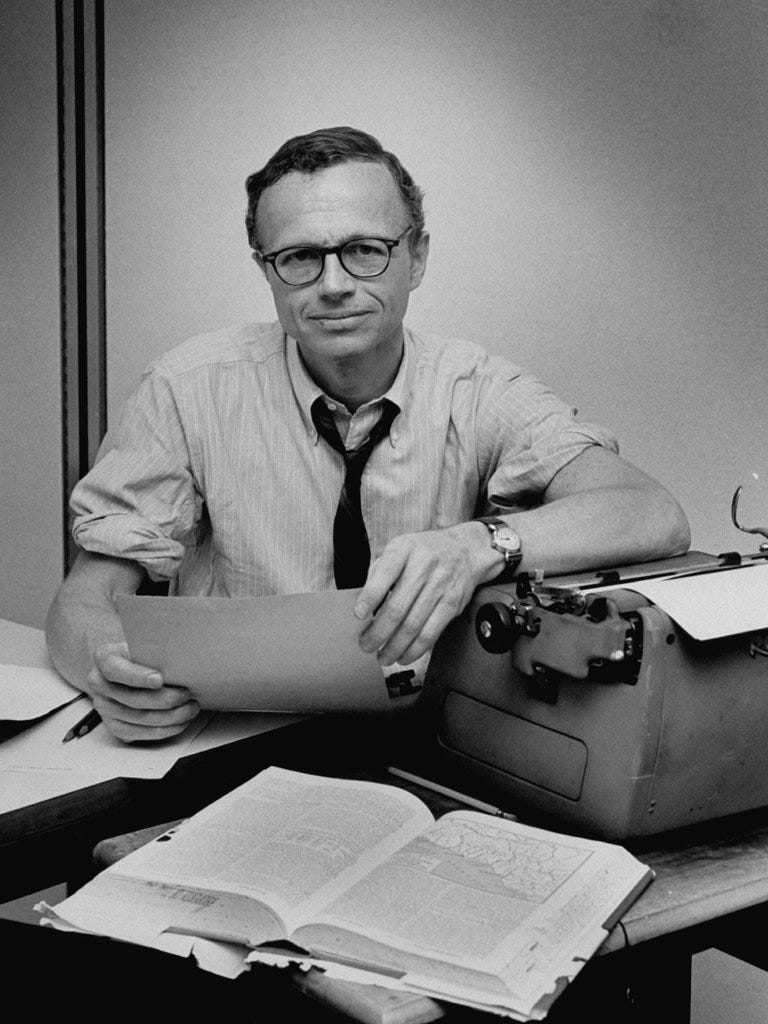
Before he became a Yale professor, Bill Zinsser had the kind of life many writers dream of. He didn’t just get paid to write, he got paid well. Hop over to Hollywood to interview a celebrity? Sure, no problem.

But then he discovered teaching and found his real love. After working for years as a columnist, magazine writer, and movie critic, he realized his real love was teaching writing. “To pass along what I knew,” he said.

Bill Zinsser taught that writing class for 9 years, until the school asked him to consider making it into a book.

Teaching and writing aren’t remotely the same, he discovered. When you’re teaching a class, there’s interaction and opportunity for feedback that wouldn’t exist in a printed book. He wrote, edited and rewrote.

On Writing Well sold over 1.5 million copies, and became a classic on the craft of writing, used in many college writing classes.
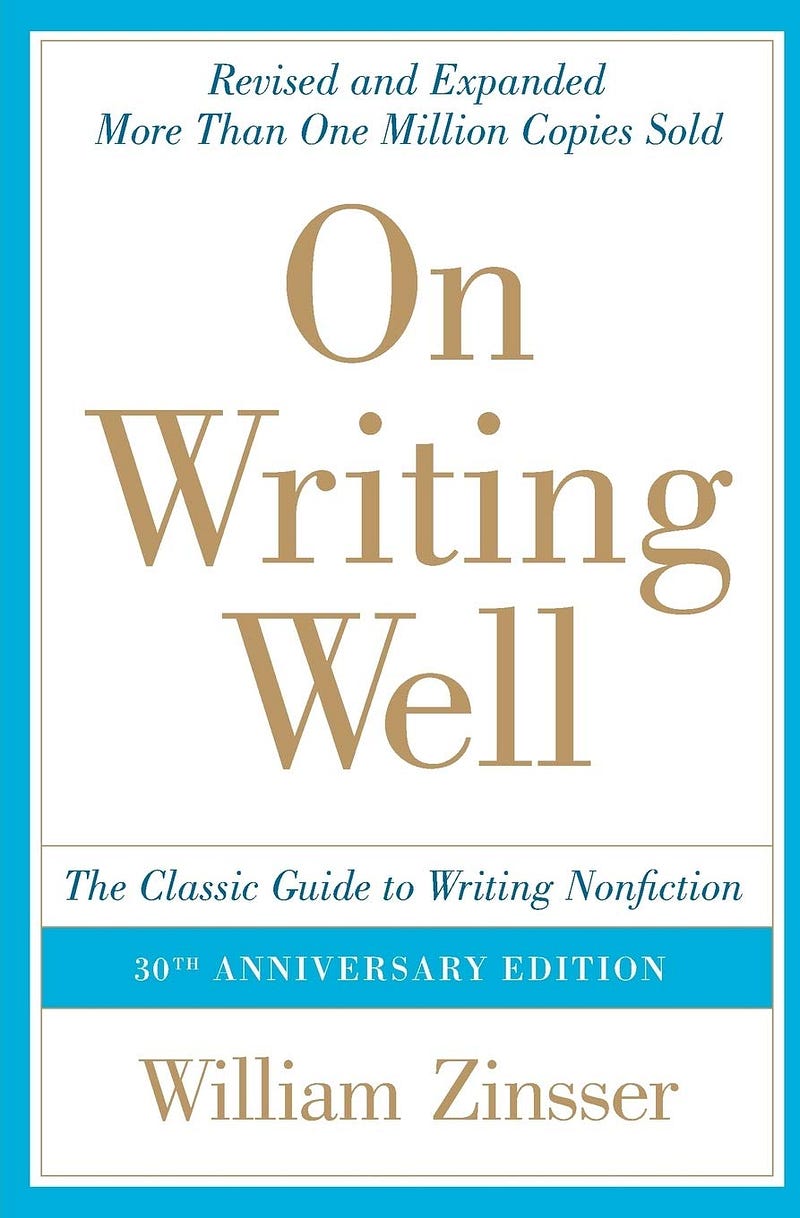
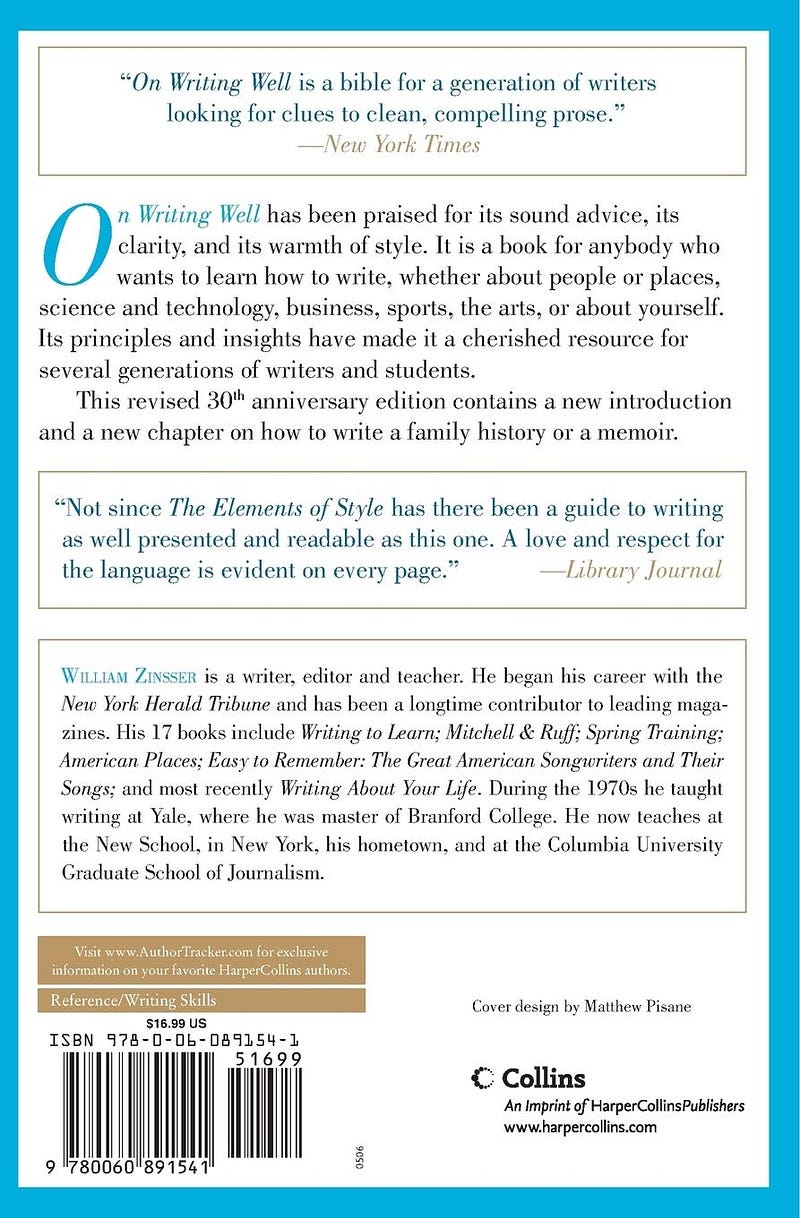
On Writing Well, images via Amazon

The 4 principles of good writing…

Bill Zinsser believed clutter is the disease of American writing. We are a society strangling in unnecessary words, circular constructions, pompous frills and meaningless jargon, he said.

He believed there are four principles of good writing. Applied, the principles help eliminate the clutter that spoils what could have been good writing.

1. Clarity

The point of writing is to express, not impress. The irony is that when you express something clearly, you do impress the reader. They get it.

Ernest Hemingway wrote at a fourth grade reading level. The grade level isn’t the point. It’s that when we imagine talking to a child, we speak clearly and plainly so they can understand.

When a child can understand, everyone else can, too.

Only 14% of Americans read at high school literacy rates or above. 4% are non-literate. Which means 82% of adults in America have grade-school reading levels. You must write with clarity.

“If it’s not clear you might as well not write it. You might as well stay in bed.” — William Zinsser

2. Simplicity

In 2009, Zinsser was teaching writing to students to whom English was a second language. Many were concerned that their vocabulary might be a problem. He assured them it would not.

The best writing, he said, uses short words and simple sentences. So he read them sentences he’d loved from well known books.

“Oh, Mr. Zinsser, you’re so funny,” a bright young woman from Nigeria told me. “If I wrote sentences like that, people would think I’m stupid.”

It’s not just ESL students that struggle with simplicity. There’s a mistaken idea that stuffy writing is good writing. If you write in the world of academia, go for it. But if you’re not writing academia? Simplify.

The most common mistakes, he says, are using words that are too big or too flowery and sentences that are too long.

“Simple is good. Writing is not something you have to embroider with fancy stitches to make yourself look smart.” — William Zinsser

3. Brevity

Most people don’t realize how much excess has crept into their writing, Zinsser says. We write like we talk, which is to say we ramble.

He tells a story of the writer who brought him an 8 page essay and he asked the writer to cut it in half. After wailing that it can’t be done, the writer took it home, cut it in half and it was much stronger.

Don’t say numerous if you can say many. Don’t say assistance if you can say help. Don’t call someone an individual. Say man, woman, or person.

A tip his students found helpful was this; one thought per sentence.

You have to learn how to cut your writing before you can learn to build it back up again, without the excess words that serve no purpose.

“Short is always better than long. Short sentences are better than long sentences. Short words are better than long words.” — William Zinsser

4. Humanity.

You are the only product you have to sell, Zinsser says. Never try to be someone you’re not. Don’t put on airs, or try to sound superior.

Zinsser once told a writer, “You’ll notice that I stopped marking this halfway through. What you’ve written is interesting only to you.

There’s a dance to writing. You need to be interesting, but you also need to be you. If you would never say “moreover” in a sentence, don’t write it, either. But above all, you need to hang on to your humanity.

You need to be you.

John Rosenberg, editor of Harvard Magazine, once described his first few weeks in Zinsser’s class as “almost traumatic.”

But after weeks of severe paring down of papers, he and his fellow students began to find their own voices

“Be yourself. Never try in your writing to be someone you’re not. Your product, finally, is you. Don’t lose that person by putting on airs, trying to sound superior.” — William Zinsser

Many writers tell you what to do. Zinsser also tells you why. And that makes all the difference.

There’s no shortage of great books about writing. Stephen King, Ray Bradbury, Anne Lamott, Natalie Goldberg, to name a few.

Many writers give great tips. Use active verbs, not passive. Get rid of adjectives. Don’t use purple prose. Start with a bang.

Zinsser tells you why.

If you only ever read one book about writing in your life, make it this one.

“Writing is hard work. A clear sentence is no accident. Very few sentences come out right the first time, or even the third time. Remember this in moments of despair. If you find that writing is hard, it’s because it is hard.” ― William K. Zinsser, On Writing Well

You might also like…

Writing
Books
Creativity
Advice
Self
Recommended from ReadMedium