
10 Unconventional Writing Tips from Pulitzer Winning Writers
You’ll notice they’re not the typical advice.

When I was writing The first sentence in the Pulitzer winners of the last 10 years, I got curious about the writers. When you read a sentence that whacks you in the face, how do you not wonder about the person who wrote it?
I am a spy, a sleeper, a spook, a man of two faces.
How do you read words like that and not wonder about the person who wove those words into magic?
Or, George Washington Crosby began to hallucinate eight days before he died.
I wondered if Pulitzer winners talk about writing.
It almost seems a rite of passage, you know? Bradbury, Stephen King, Hemingway — many famous writers end up writing books about writing.
Hello, rabbit hole.
Dear Pulitzer winner. Do you have tips? (short answer. yes)
Reading these tips, you’ll notice there’s none of the typical advice.
Not a single one of the Pulitzer winners is droning on about adverbs, or adjectives or the pace of your writing.
None. Not one.
The reason crept up on me, like the smile on the old Grinch's face.
We learn in levels…
If you take an art class on how to make sunlight and shadows look realistic, they’re not going to teach you that red and blue make purple. That’s beginner stuff and if you’re in the advanced class, you already know it.
Most writing tips are written for novice writers because a lot of writers still make novice mistakes when they’re writing books and submitting to agents and publishers. That’s why they get rejected.
Pulitzer winners are on a different level. You don’t win a Pulitzer if you’re still making novice mistakes.
It’s like all that novice stuff has fallen off their radar. It’s not even part of the conversation.
So the advice they give is on a different level, too. Less about technical skills and more about catching the muse.
10 Unconventional Writing Tips from Pulitzer Winning Writers
The rabbit hole was deep and long, but filled with light. Enjoy!
1. Pulitzer, 2019: Richard Powers, The Overstory
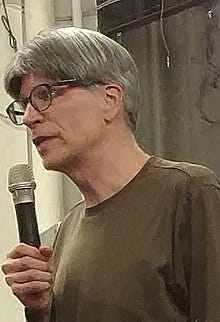
The best thing for a writer to learn is how to be still and pay attention, whether it’s paying attention to the way people talk, behave or treat each other.
Richard Powers is an intensely private man who’d rather not talk to people at all, much less give us writing advice. He always thought he’d be a scientist, not a writer, but a black and white photo changed all that.
He’d gone to the Boston Museum of Fine Arts because admission was free until noon on Saturdays, and there it was — August Sander’s 1914 black and white photo of three farm boys heading to a dance.
The photo haunted him. He saw an entire story in that old photo, and within 48 hours he’d quit his job and started writing his first novel, Three Farmers on Their Way to a Dance.
He figured he had enough money to write the story, and then he’d have to go get a real job again.
When his book was released to critical acclaim, he refused to speak to the press and didn’t do any interviews until after his 3rd book was published. When he started talking, he gave one piece of advice. Pay attention.
Anton Chekhov wrote, “Don’t tell me the moon is shining; show me the glint of light on broken glass” — and isn’t it the same thing? Don’t tell me he was mean or angry, but let him kick the dog or punch the wall so I can see it for myself.
But of course, many writers don’t, and the reason they tell instead of show is exactly as he says. They aren’t paying attention. To life, to details.
When you pay attention, you don’t need to tell me you’re sad, or a character is grieving, because you’ll know how to show me. But you can’t show instead of telling if you’re not paying attention in the first place.
When we pay attention, the world fuels our writing.
Be present, practice attention, and the story you are working on will feed on everything in front of you. — Richard Powers
2. Pulitzer, 2018: Andrew Sean Greer, Less
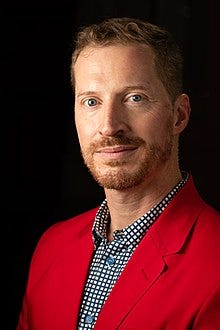
Pitch from your strength
Andrew Greer was putting pajamas on his dog when he found out he won the Pulitzer. He tweeted that he was shocked.
If you ask him about writing, he’ll give you two tips. The first one he credits to Ernest Hemingway. Stop when you know what’s happening so you can pick up where you left off the next day.
More fun, he loves to tell the story of a college professor, who called him aside and said “Whitey Ford always pitched with his left hand.” He laughs, and says it made no sense to him because he wasn’t a sports fan.
His teacher explained that Whitey Ford was left handed, which still left him with a blank look on his face. Finally, the teacher explained. Look, you want to be clever, you want to be cool, but emotion is what you’re good at. Pitch from your strength.
Not earth shattering, but a good reminder.
Because you know what we do, right?
We look at what’s popular, what’s trending, like popularity is a crystal ball predicting the path to success. We see that self help is popular, or confessionals, or whatever, and think that’s what we need to write, too, if we want to reach the top. Because that’s what “the public” wants, right?
It doesn’t work that way.
The truth is, the people who reach the top have found their strength, and just because what they’re writing is their strength doesn’t mean it’s yours or mine. I couldn’t write a confessional to save my life. I’m not made that way.
When you emulate someone else, the very best you can be is a good copy and a good copy never shines as brightly as a unique voice. We’d be far better off to find our strength, our vein of gold, as Julia Cameron calls it.
For writers: don’t hold back. Be weird. Be sentimental. Be melodramatic. Take the risk of being not-cool, not-hip. — Andrew Sean Greer
3. Pulitzer, 2017: Colson Whitehead, The Underground Railroad
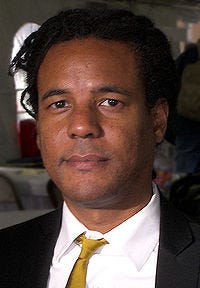
Give yourself a chance to learn how to write…
When Colson Whitehead was 10 or 11, he decided he wanted to be a writer because a writer wouldn’t need to wear clothes or talk to people and he could spend all day making things up in his head.
Trouble was, his writing was awful, he says.
He was trying to apply for creative writing classes to help him write better, but the applications required submitting a story. So he’d write a story and then his applications would be rejected because the story was awful.
So he decided to write a book. You can guess how that went down.
His first novel got so many rejections, he began to seriously consider alternate career paths. Trouble was, he couldn’t think of anything else to do, so he just kept writing.
After winning the Pulitzer, he said he’d been sitting on the idea for that particular book for 15 years, but he waited. He waited because he felt he didn’t have the writing chops to do the story justice.
But if you keep learning, you get better, he says.
So he wrote other stories. Other books. To give himself time to learn the writing skills he believed he needed for the story he wanted to tell.
That’s the trick, right? Learning.
A lot of people think if they just put words down and spell them right, that’s all there is to it. Seems to me those are often the same people complaining about curation jail or going on Facebook and asking why their story got rejected and where else to submit it.
You want to know how to get out of curation jail? You want to know how to get stories accepted instead of rejected? Write better.
I get some stories curated, but there’s lots that don’t get curated, too. When I look back at them months later, I can always see why. Honestly, they just weren’t very good. Certainly not stand out of the crowd good.
Often, the problem is that the writer isn’t seeing what they story is. They think their experience is the story. It usually isn’t.
If we learn to take a step back and ask what’s the story here, then we can see how our experience fits into the story. We can all string words together somewhat coherently, but writing things people want to read is a skill that we need to learn.
The story is more important than you. — Colson Whitehead
4. Pulitzer, 2016: Viet Thanh Nguyen, The Sympathizer
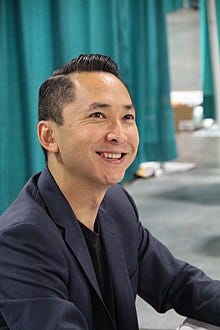
In order to be a writer, you only need to do 2 things: one is to write and the other is to endure
Can you imagine taking an entire summer to write one sentence? That’s how long it took Viet Thanh Nguyen to figure out the opening sentence for his Pulitzer winning novel.
“I am a spy, a sleeper, a spook, a man of two faces.
Once he found the voice of the spy, the rest of the novel came together.
In a post-Pulitzer speech at Boston University, he said when he was 20, he had a vision — the dream of being a writer — but he didn’t have a voice yet. It would take him 20 years of writing, struggling and enduring to find his voice.
What an emotionally loaded pair that is, voice and endurance.
So many writers throw in the towel long before they find their voice. Mostly because they think voice somehow stems from their personality or who they are, instead of their ability to string words together to convey ideas effectively.
If only they knew voice is a product of skill and that skill is usually fed by endurance, perhaps there’d be fewer writers who die with their stories still untold.
All it takes to be a writer is literally to write thousands of hours and literally endure hundreds of rejections and the daily indignities of people not caring about what you do. If you can do those two things and have a minimum of talent, you can become a writer. — Viet Thanh Nguyen
5. Pulitzer, 2015: Anthony Doerr, All the Light We Cannot See
Be curious about everything. Yes, everything!
Ask any acclaimed writer what questions they get asked most, and one of them is inevitably— where do you get your ideas?
For a writer, ideas are tools of the trade and a lack of ideas is what we love to call writer’s block.
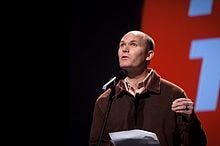
Anthony Doerr got the idea for his Pulitzer winning novel on the subway. He was riding the subway in NYC, listening to some guy talking on his phone. The subway went underground, the call dropped, and the man pitched a fit.
It got him thinking about what a miracle it is that we can hear people without wires in the first place. So he started reading the history of radio communication, and a tidbit he read about radios and propaganda in Europe led to the idea for his story.
Writing, he says, is about being able to look beyond yourself and enter other worlds. Curiosity, he says, is the door to those other worlds.
As a child, he was curious by nature, but it wasn’t until he was a writer that he realized how deeply curiosity would fuel his writing.
When he was writing his novel, he found himself full of questions. If a blind girl was sitting at a train station, what sounds would stand out to her? What would be a normal meal for people to cook when they were on war rations?
Those kinds of questions, he believes, add rich detail to a story, make it real and believable — and they come from curiosity.
As I was reading interviews with Doerr, I couldn’t help think of the many times I’ve read articles peppered with conjecture or opinion presented as fact, as though “I believe” and “I heard” are sufficient replacement for the few minutes it would have taken to check, if the writer had been curious.
Writing is just an excuse to go discover interesting things. — Anthony Doerr
6. Pulitzer, 2014: Donna Tartt, The Goldfinch

Stick to the routine that works for you, even if it makes you antisocial
According to the self-growth gurus of the internet, Donna Tartt is doing it all wrong. She sleeps irregular hours, eats at irregular times, and sometimes she’s up writing in the middle of the night.
She doesn’t network, and prefers to avoid social engagements entirely whenever humanly possible. Even just knowing that she has a dinner engagement that night can ruin her entire day of work.
She doesn’t tweet, she’s never uploaded anything to Instagram and you can’t like her on Facebook because she doesn’t use it.
I’m a lone wolf, she says. My desk is where the work happens. To really work well and to think about the kinds of things that I need to think about, I need to spend large amounts of time alone.
On top of that, she’s doing writing wrong, too. She’s only written 3 books and the first two took a decade each. So much for the publishing standard of cranking out a book every 2–3 years to stay current and popular.
Everything takes longer than I think it will, she sighs. It’s the sad part of life.
And yet her second book won the WH Smith Literary Award and her 3rd book won the Pulitzer prize.
She’s a great reminder that we all need to ignore what everyone tells us to do and march to the beat of our own drummer.
The truth is that there’s no one way or method that works for every one and we need to find what works for us regardless of what works for someone else.
You can’t do your best work using someone else’s process or technique. The young ‘uns say you do you.
It’s for every writer to decide his own pace, and the pace varies with the writer and the work. — Donna Tartt
7. Pulitzer, 2013: Adam Johnson, The Orphan Master’s Son
Hard workers become great writers…
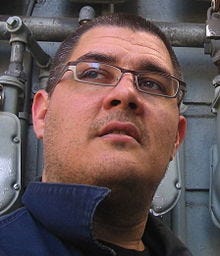
Adam Johnson’s wife calls him the biggest lunkhead to win a Pulitzer. He took a creative writing class in college because he heard it was an easy A, and instead, found his calling.
Today, he’s a Pulitzer winner and teaches creative writing at Stanford.
Talent, he believes, is something you create. It comes from hard work.
Before college, he worked in construction, working with ex-cons and drifters. All day long, they’d tell stories. War stories, prison stories and drug stories and the thing that struck him was that what really mattered was whether the story was captivating or not — could you tell a compelling story?
He believes we’re all fundamentally the same, no matter where we are. We follow our path, try to grow and have the same basic human needs. So the power of a story, he thought, lies in the details that make it compelling.
He uses an excel sheet to record his writing, noting the time he wrote, how long he wrote and whether it was any good. He calls it data mining his writing practice. From that, he’s learned where and when he does his best work, and can see his own patterns.
There’s another spreadsheet for research.
While most of us will never do the amount of documentation Johnson does, I really like that he connects labor and talent. So many people misunderstand talent and think it’s innate and some elusive thing they don’t have.
We see an exceptionally skilled painter or writer and say we don’t have that talent. How many times have we said “I wish I was that talented…”
In fact, what we’re calling talent is skill that comes from hours and hours of hard work.
When you truly grasp that skill comes from hard work, it becomes achievable instead of elusive. To me, that’s incredibly encouraging.
I am a big believer in labor over talent. I think talent is something you can create. — Adam Johnson
8. Pulitzer, 2011: Jennifer Egan, A Visit From the Goon Squad
Read at the level at which you want to write
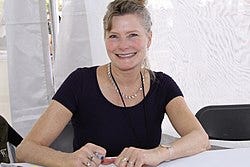
When young writers ask Jennifer Egan for advice, she tells them to read. Not to read more, as many people suggest, but to read books that are at the level we want to write at.
Reading is the nourishment that lets you do interesting work, she says.
For example, Fifty Shades of Grey started out as Twilight fan fiction. Did the reading affect the writing? Most definitely!
There’s a belief that says we’re the sum total of the 5 people we interact with most, and reading is the literary equivalent of that. What you read feeds how you write. Consciously, to some degree, but also subconsciously.
How literally we take that influence is up to us, I think. Fan fiction is the most literal interpretation, but Egan says she learned how to swap back and forth among scenes by reading Marcel Proust.
More subtly, a fact, tidbit or scenario read in a book can also be the seed.
Colson Whitehead (Pulitzer, 2017) says that he read about the Underground Railway in a school textbook and at first thought it was a place. When he learned what it really was, it inspired the idea for his Pulitzer winning novel.
Interestingly, I think much of the advice given by acclaimed writers works well together. Pair up Doerr’s “curiosity” advice with Egan’s suggestion on reading at the level you want to write, and it seems to me that inspiration is anywhere you happen to look for it. Sometimes, even in another book.
We live in a moment and a culture when reading is really endangered. There’s simply no way to write well, though, if you’re not reading well. — Jennifer Egan
9. Pulitzer, 2010: Paul Harding, Tinkers

Don’t write your books for people who won’t like them.
When Paul Harding won the Pulitzer, The New York Times called him Mr. Cinderella. Cinderella, indeed. It was his first book.
Tinkers opens with an old clock maker laying on a bed in his living room pondering on his life and his father while his family waits for him to die. He wrote it bit by bit, on scraps of paper over a couple of years.
When he was done, he sent the manuscript to a bunch of agents and editors in New York and the rejections started to roll in immediately. Most sent form letters, but a few took the time to personally respond.
No one wants to read a contemplative book, they said. Where’s the action?
They lectured him on what “people” want to read today, so he tossed the manuscript in a drawer, where it stayed for almost 3 years.
When he finally pulled it out again, he sold it to a small indie press for a tiny $1,000 advance. It barely sold 7,000 copies.
But the people who liked it didn’t just like it, they loved it. And they spread the word until it reached the ears of someone connected to the Pulitzers.
After the win, the book sold half a million copies almost instantly and just continued selling.
It’s an interesting lesson for writers, isn’t it? Because it’s so easy to try to write for the masses. To look around and see what has mass appeal, and try to emulate that.
But the truth is that a small group of devoted and die hard fans can often lift us higher than a mass audience that has only casual and fleeting interest before moving on to the next hot thing.
Give yourself wholly to the kind of book you want to write and don’t try to please readers who like something different. — Paul Harding, Tinkers
10. Pulitzer, 2009: Elizabeth Strout, Olive Kitteridge
Find your voice
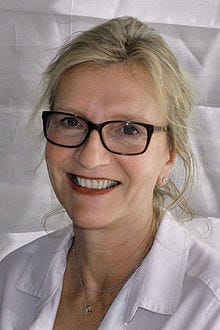
Elizabeth Strout had been writing for 15 years before her first book was published. When it came out, she went into her basement and pulled out the big box of rejection letters she’d been collecting and threw it away.
She fondly remembers one letter that rejected her work, but told her to keep writing, because she’s better than “most of” what comes across their desk.
For a long time, she says, she was trying to write ‘like a writer.’ It’s the same as an actor trying to act like an actor, she says. You can’t do it. You have to embody the person, whether that’s a character or a position.
Voice is a slippery slope at the best of times, whether you’re writing fiction, non-fiction or op-ed. Many writers seem to be stuck in writing “like a writer” and haven’t yet begun finding their voice.
If you get past the stage of writing “like a writer,” it seems the next step is discovering what voice means. Novice writers think it comes from their personality, or who they are.
Voice is how you arrange words on the page.
If you gave 10 different writers the exact same scenario and 500 words to work with, you’d quickly see what voice is. Because given the exact same scene to develop, 10 writers or 100 writers would string the words together in a different way. That’s voice.
Developing voice is simply developing your skill with words, and it’s a skill worth working on.
I love arranging the words and having them fall on the ear the right way and you know you’re not quite there and you’re redoing it and redoing it and there’s a wonderful thrill to it. But it is hard. — Elizabeth Strout
Before You Go…
If you enjoyed this, you might like my Friday emails on writing & marketing. https://lindac.substack.com/


