avatarKrasi Shapkarova

Free AI web copilot to create summaries, insights and extended knowledge, download it at here

4655

Abstract

t see your image or read your catchy sub. So make your title a good one. Not too long. Not too short. No clickbait. As much as we hate to admit it, titles that explain plainly what the article is about, perform much better than those with a more creative flair. Maybe if we get big enough, that will change.</p><p id="fdea"><b>Subtitle</b>. This is the place to give the reader an additional bit of information on the scope and focus of your article. A place to editorialize why you think this is important or to explain further what you’re trying to say.</p><p id="08cc"><b>Featured Image</b>. We discuss photography more below, but your featured image should be a high-quality image placed directly after the header (Kicker, Title, Sub).</p><p id="b743"><b>Body</b>. Medium has given us a fair number of formatting tools, but we suggest you use them sparingly. We’ve all seen articles where it looks like the author was trying to show off every tool available. They look like a cross between an internet recipe and an either-grader’s book report. They’re unreadable. The purpose of the tools is to make your article easier to read, not harder. Don’t get enamored with over-formatting your story.</p><p id="54c9"><i>Subheads</i> should be used to break up sections, and page breaks (three little dots) should be used to break up long sections.</p><p id="2bc6"><i>Callouts</i> are great when used judiciously (one or two), but they shouldn’t replace the actual text of the article. If it’s part of your article, it should be <i>in</i> the article.</p><p id="f594">Unless you have a good reason, we don’t like to see <i>bullets</i> or <i>numbered</i> lists. This isn’t Buzzfeed.</p><h2 id="ce4e">Photography</h2><p id="18f7">We can’t tell you how seriously we take aesthetics regarding messaging. Many writers don’t seem to share our visual requirements, but we firmly believe when articles are well presented, they are more readily consumed. This is decades of branding experience talking.</p><p id="2c2d"><b>Black and White (NEW)</b>. We have decided to go fully black and white from now on, for several reasons. One, it helps to provide some cohesion between disparate imagery. Two, it’s an homage to the newspaper days of old. We want Rome to look and feel different.</p><p id="3148"><b>Cover Image</b>. This is basically the only image we care about. If your article is more pictures than words, then this isn’t the right place for your piece. We’re all here to read what you have to say, not look at pictures. The cover image appears on the publication’s home page and affects how the entire operation is judged, so we can’t have one shitty image ruin the bunch.</p><p id="62bd"><b>Quality</b>. This might sound subjective, and part of it is, but your image should be of the highest quality. If you’re not a photographer, it probably shouldn’t be one of your own. With rare exceptions, it should never include large type and shouldn’t be overly busy. Choose simple, dynamic, evocative images that help illustrate the story you’re trying to tell. Think conceptually, not literally.</p><p id="3c19">Images must be at least 1280x720 and preferably 1920x1080 or larger. We prefer a 16:9 or even 2:1 aspect ratio, but will settle for landscape (horizontal). Portrait (vertical) or square are unusable as feature images and will not be accepted. This all has more to do with how it looks on the front page of the magazine as opposed to how it looks in your individual story. Your article is a reflection on the entire publication, so make them good.</p><p id="697f"><b>Copyright</b>. We don’t really care what you think you know about <i>Fair Use</i>, but it doesn’t exist in this context. This is a commercial enterprise and is only loosely defined as editorial. Legacy publications have licensing deals with groups such as AP and Reuters. They don’t just grab images off the web. The rule of thumb is this: If you don’t own it, someone else does, and you can’t use it without permission. Any photography you use to illustrate your story must be royalty-free or licensed to you and sourced with the proper credit. No exceptions. Medium has built-in access to <a href="https://unsplash.com/"><b>Unsplash</b></a>. Start there.</p><h2 id="d3e9">Style</h2><p id="dd82">We don’t get too pointy about things like <b>AP Style</b>, but we’re still pretty traditional when it comes to journalistic prose. It’s best to keep paragraphs relatively short, but not too short. There seems to be a fine line between the never-ending paragraph and the writer who appears to be writing in iambic pentameter. Too long, and it feels tedious. Too short, and it feels jumpy. St

Options

rive for a bit of flow.</p><p id="fdce">Be professional. Don’t introduce yourself. Don’t acknowledge that you’re writing this for Medium or Rome. Present your ideas concisely and clearly.</p><p id="4bce">We don’t subscribe to the notion that we all need to dumb our writing down for sixth graders to read. We don’t think sixth graders will be that big of a problem for us. We assume our readers are well-educated, high-information voters who are passionate about politics. That doesn’t mean it should read like stereo instructions, but this isn’t <b>School House Rock,</b> either. Make it interesting. Challenge people.</p><h2 id="9f27">Bookends</h2><p id="4aa6">The two most important parts of your article are the beginning and the end. You could argue this is getting into personal style, but we would argue that we’re talking about the basics of a quality article. If your opening sentence doesn’t grab the reader, they’re gone. If the rest of your opening paragraph doesn’t follow, it won’t go much better. Your introduction should introduce the reader to the premise of your article. The rest of the article should be spent providing examples proving your case and further explaining your theory.</p><p id="7227">Finally, you need an ending. There’s nothing worse than reading a good article that ends like the author was suddenly taken hostage. Think as much about your ending as you do your opening. Your opening encouraged the reader to read it, but the ending will decide if they remember it.</p><h2 id="11b4">Proofing</h2><p id="d272">We all make inadvertent errors when writing, and it’s easy to miss our own mistakes. We suggest using <a href="https://www.grammarly.com/"><b>Grammarly</b></a> or some other proofreading software, to at least catch your obvious mistakes. We don’t want to be your proofreader. We barely want to be your editor. We want to be your publisher. We expect you to do the work of making your writing as error-free as possible.</p><h2 id="3d8b">Sourcing</h2><p id="08cd">If you’re quoting another author, article, or study, you must provide links to your sources. In Medium, you can do this by using the ^ symbol, sometimes called a carrot. Press shift+6 and then the number of the footnote, such as this.¹ Once the superscript appears, you can highlight it and provide the URL in the space provided. Find more info <a href="https://readmedium.com/citations-and-footnotes-on-medium-3713cc665722">here</a>.</p><h2 id="2c9c">Politics</h2><p id="eaba">This is a publication dedicated to politics. Not memoir, travel, or blueberry muffin recipes, although if that’s your bag, you should check out our sister publication <a href="https://medium.com/ellemeno"><b>Ellemeno</b></a>. Here we are writing about government, political parties, elections, and the relative insanity of trying to govern people. Think of it as a publication dedicated to cat herding.</p><p id="bf31">We are not a partisan publication exactly, but it’s fair to say we lean hard left. If you have a balanced, well-thought-out piece making a case for something that flies in the face of progressive politics, by all means, submit it. But it must be factual and not some cockamamie conspiracy theory.</p><p id="e721">We reserve the right not to publish any article for any reason, but we’d prefer to keep our own ideology out of it. If it’s well-written and equitable, no matter how critical, then it’s fair game.</p><p id="3e8b">As a general rule, we think you should write about what you know. Unless you have a really solid handle on the political landscape of a country you don’t live in, you should probably avoid it. If you’re going to be critical, you’d better be accurate.</p><h2 id="3cbc">Becoming A Contributing Writer</h2><p id="d29e">If you’d <i>still</i> like to be added as a contributing writer, send a link to an unpublished draft you’d like us to publish to <a href="mailto:[email protected]">[email protected]</a>. If we think it’s a good fit, we’ll add you as a writer. We want to find the best writers and this isn’t for everyone.</p><div id="408a" class="link-block"> <a href="https://medium.com/rome-magazine"> <div> <div> <h2>Rome Magazine</h2> <div><h3>A political magazine dedicated to the intersection of truth and reality.</h3></div> <div><p>medium.com</p></div> </div> <div> <div style="background-image: url(https://miro.readmedium.com/v2/resize:fit:320/1*TPFRdkXgnPhhxHgmE-L_7w.png)"></div> </div> </div> </a> </div></article></body>

Monthly Challenge | Street Art | Bulgaria

If You Love History, Culture, and Street Art, You’ll Love Plovdiv

Favorite art encounters from walking around a favorite city
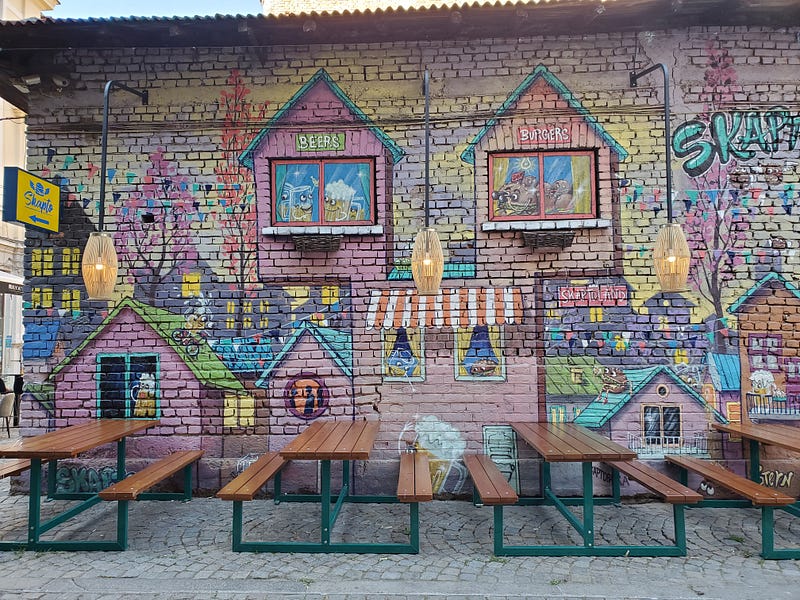
Photo by Krasi Shapkarova

Selected as one of two European Capitals of Culture in 2019 (the other being the Italian city of Madera), Plovdiv charms with its laid-back vibe, ancient history, cultural initiatives, and of course, street art.

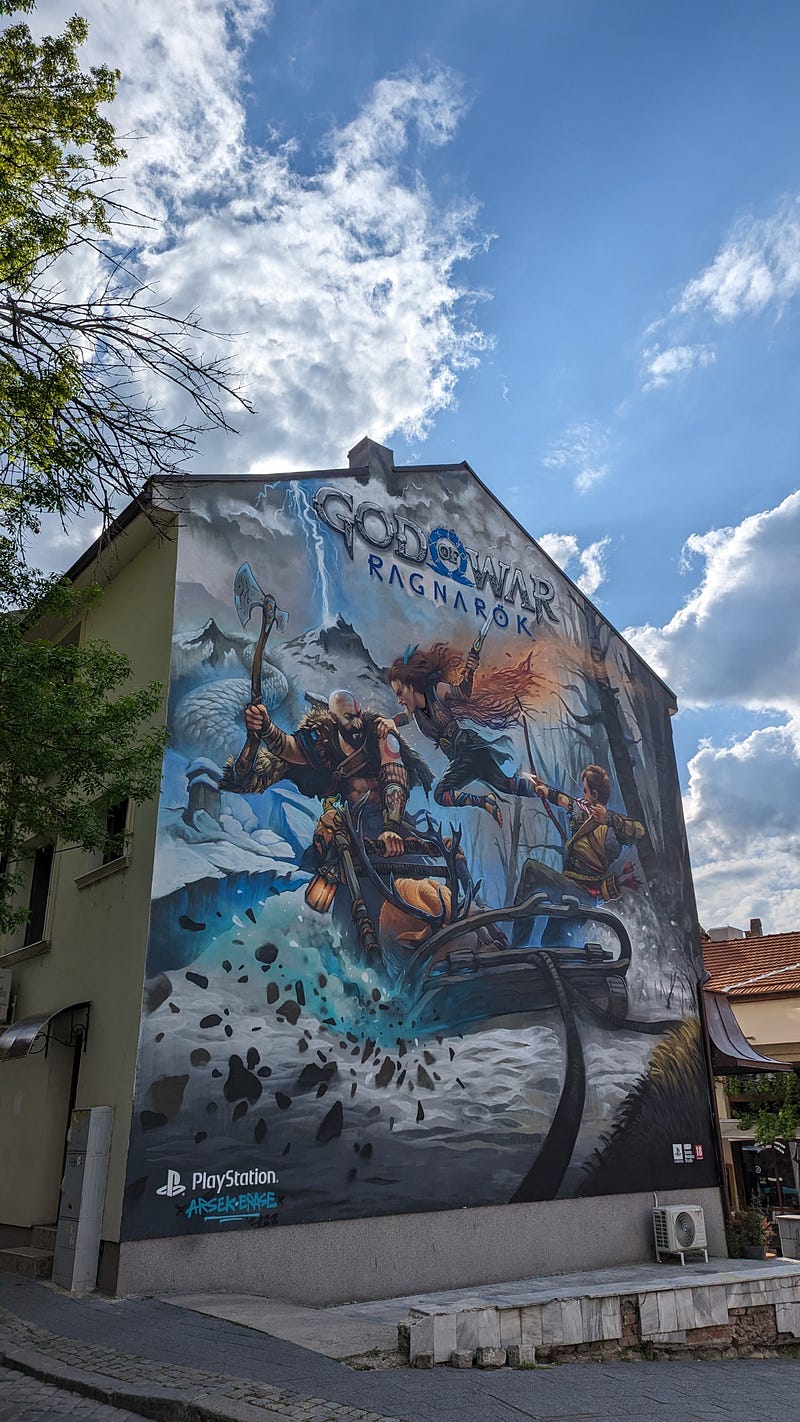
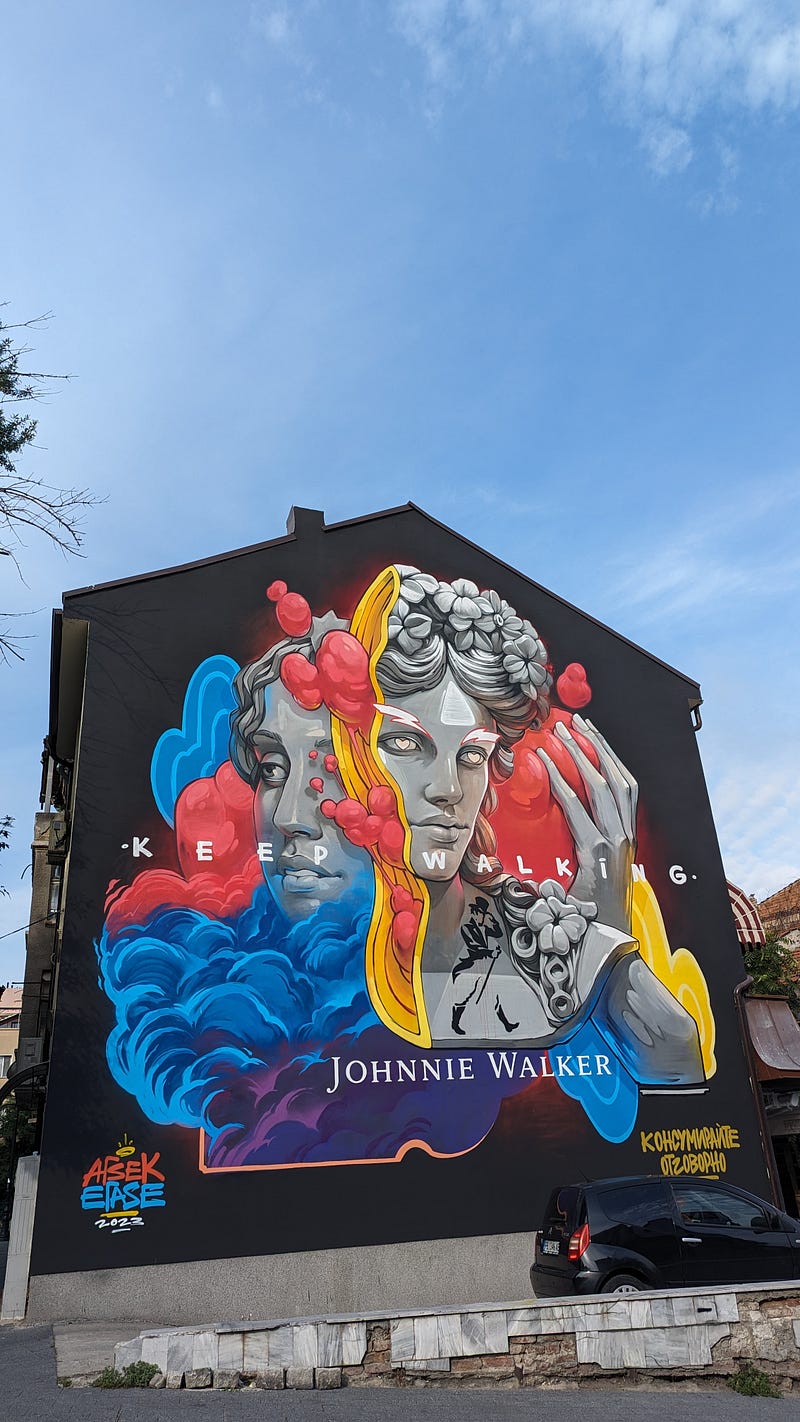
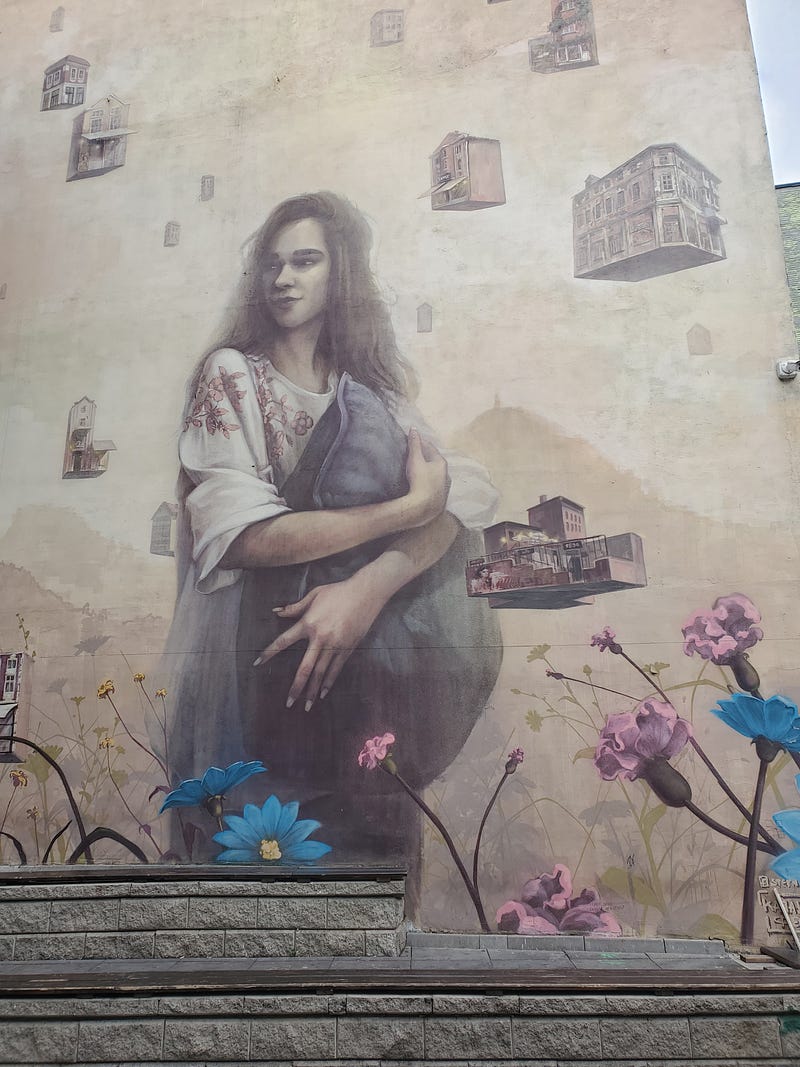
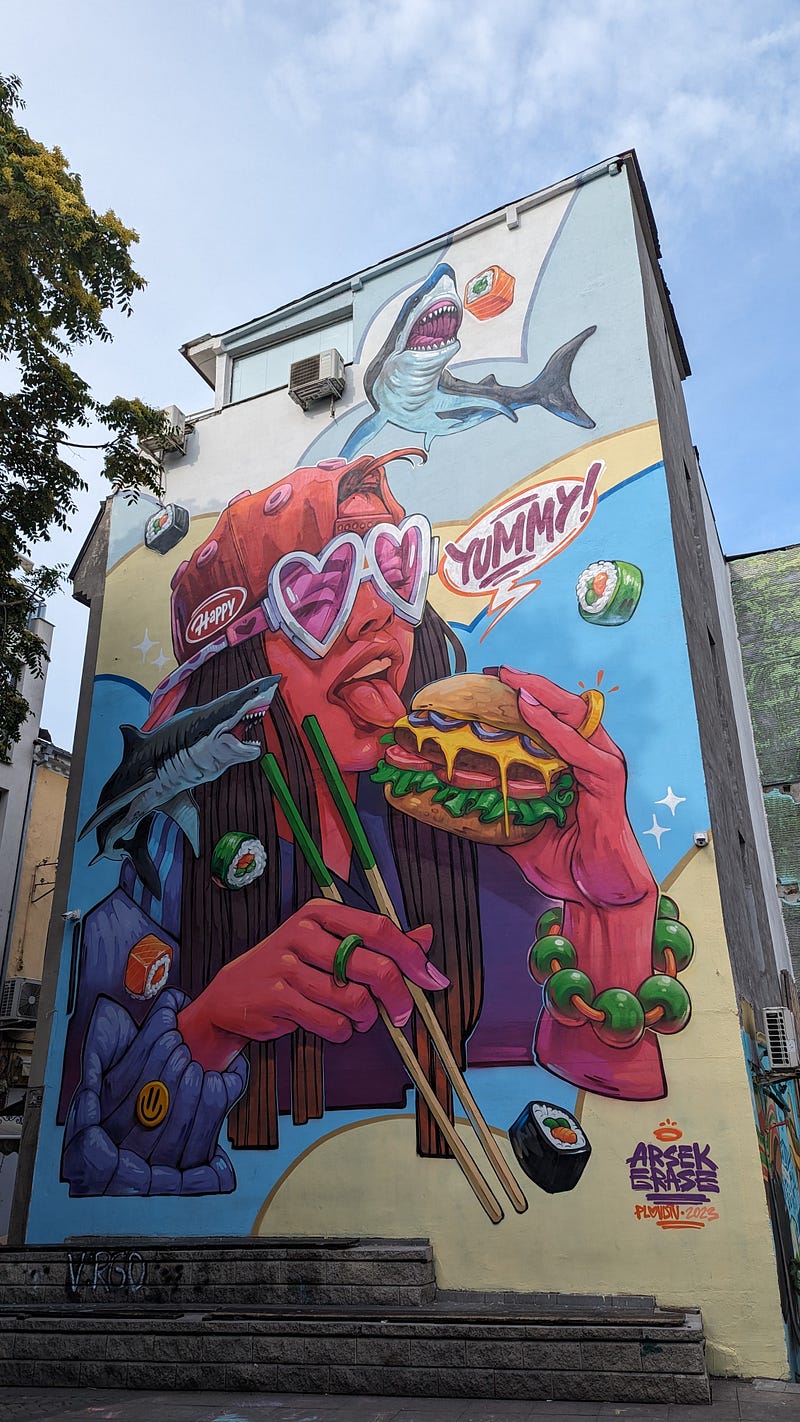
To enjoy all of the above, a visit to Kapana Creative District is a must. Close to the city center, hosting tons of arts & crafts festivals year-round, and almost fully pedestrian, this area is a favorite to walk around.

The place was the center for artists and craftsmen of all kinds dating back 5 centuries, but it was pretty much neglected until a decade or so ago when the city revived and transformed it as part of the preparations for Plovdiv becoming the European Capital of Culture 2019.
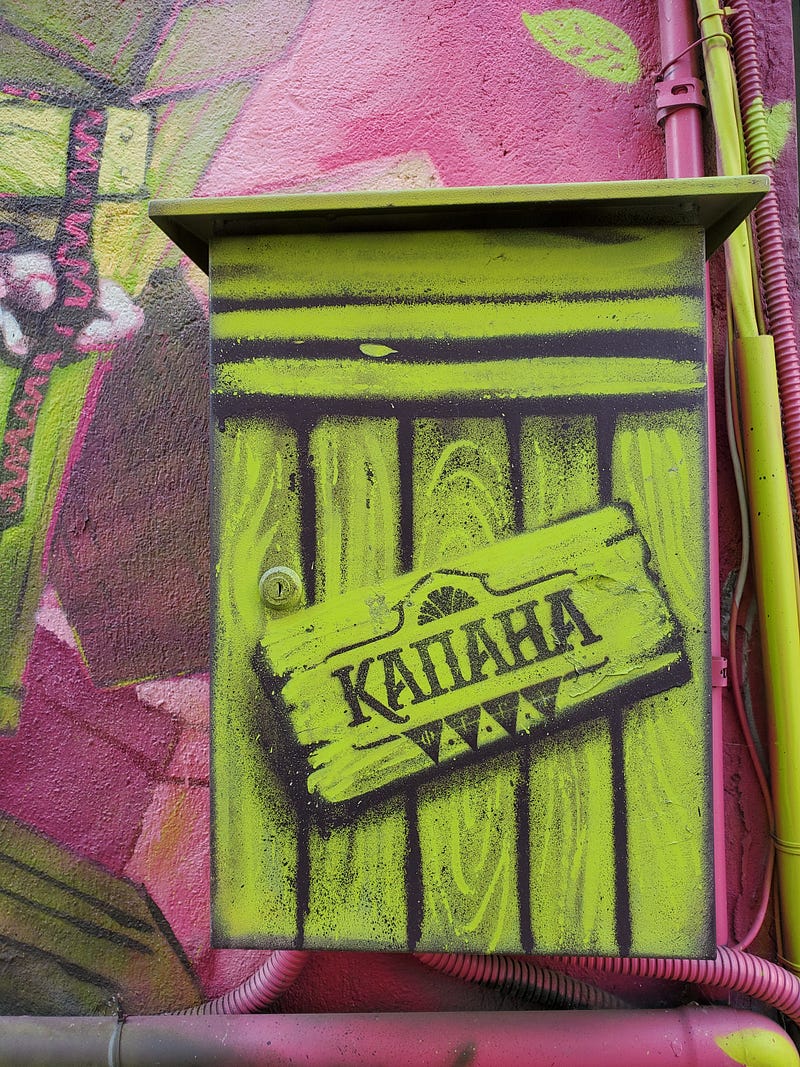
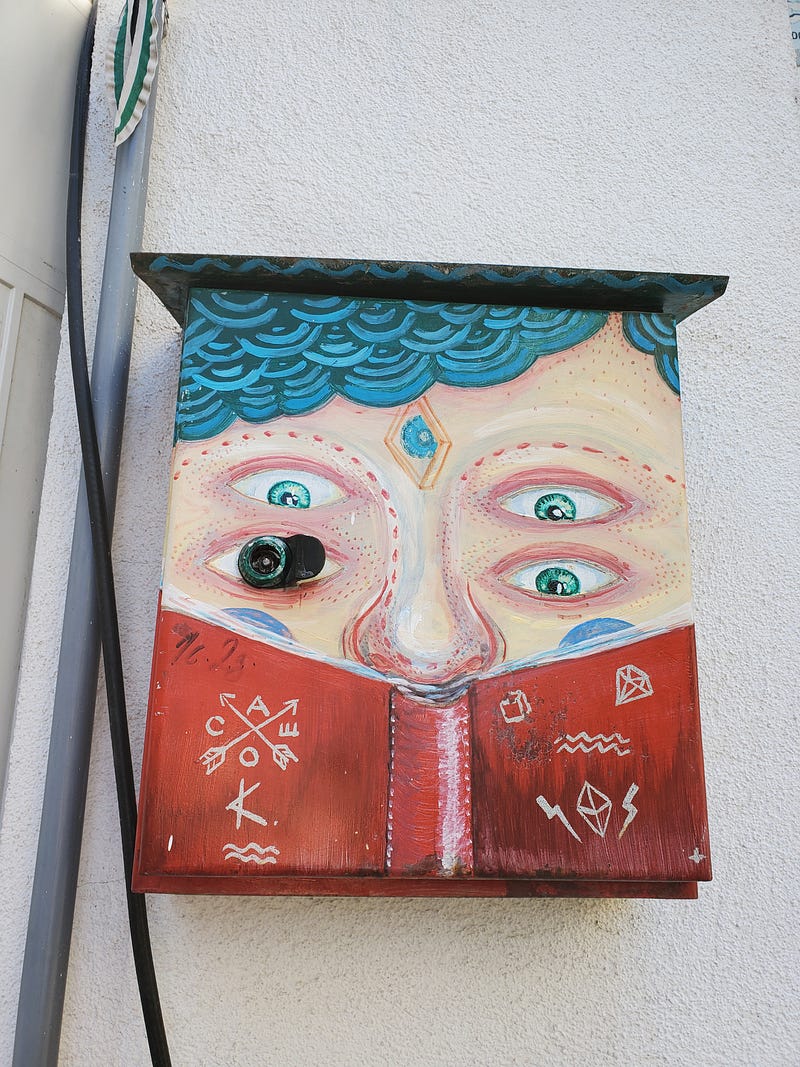
Photos by Krasi Shapkarova

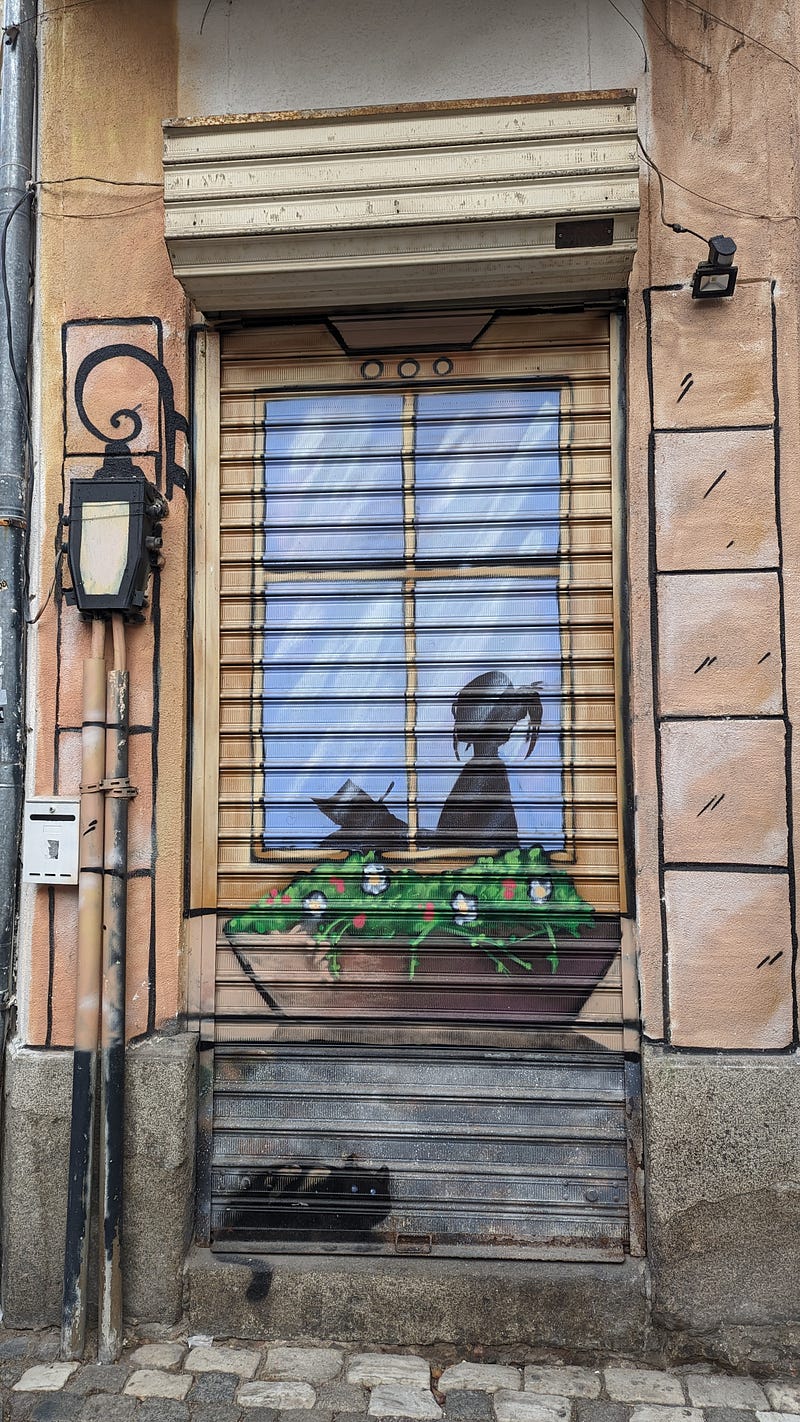
Kapana means “trap” and you can’t help but love getting lost in the winding, cobblestoned streets full of colorful murals, cafes, and restaurants, tiny shops selling handcrafted items, and bakeries.

Speaking of the latter, the photo below captures a mural right next to my favorite one — the Kapana Bakery.
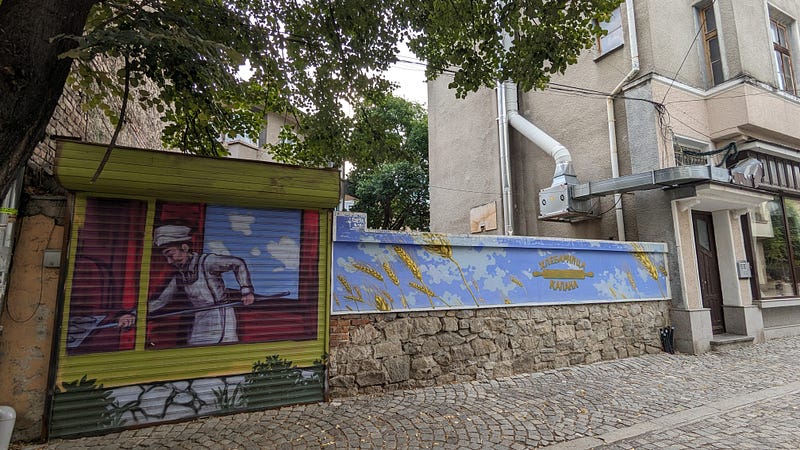
Photo by Krasi Shapkarova

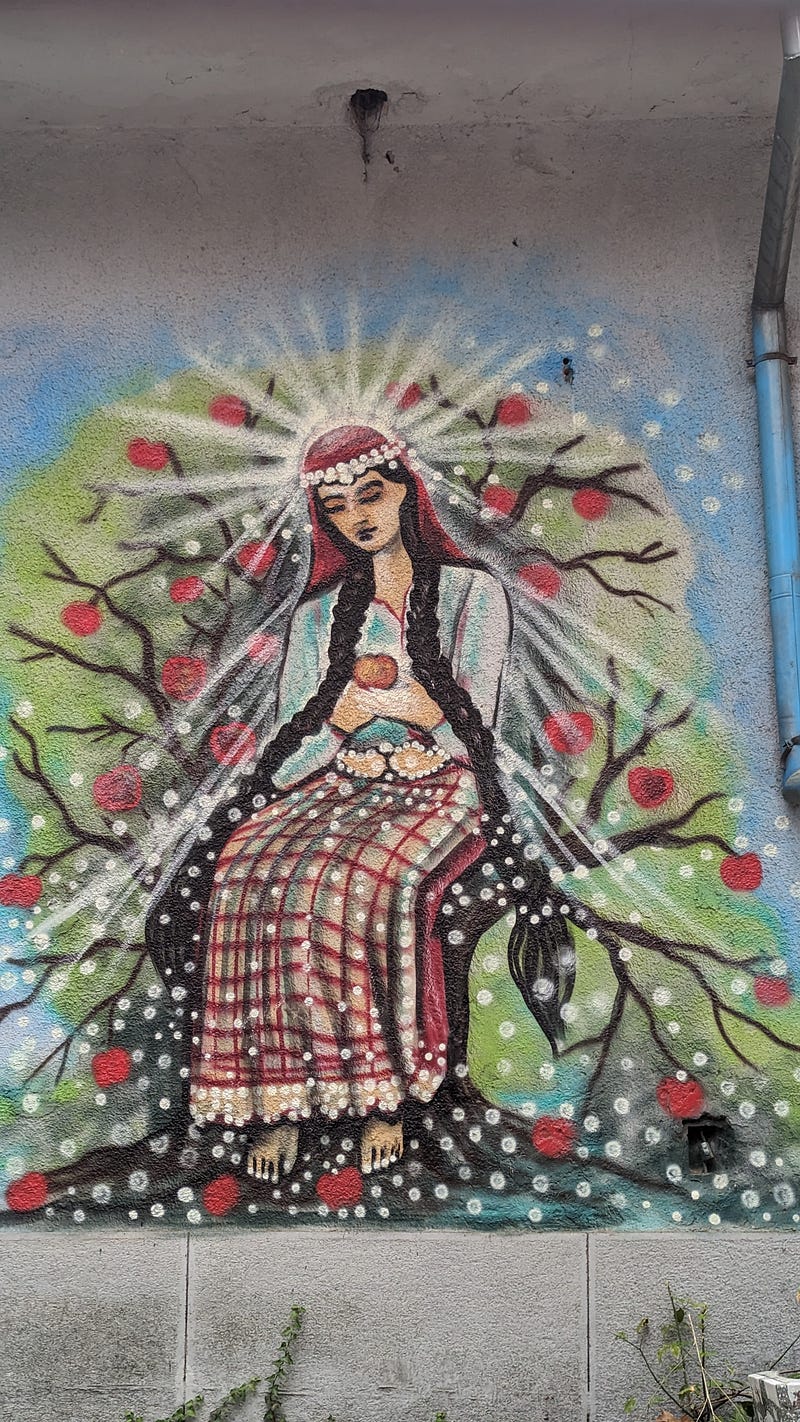
A trend I’ve noticed on some of my recent visits to the city has to do with murals on school walls. Not only do these bring a smile to my face when I pass them on my daily walks, but I also want to believe they make the students’ experience more fun and teach them to appreciate diverse forms of art before the world tries to teach them what is and isn’t art.
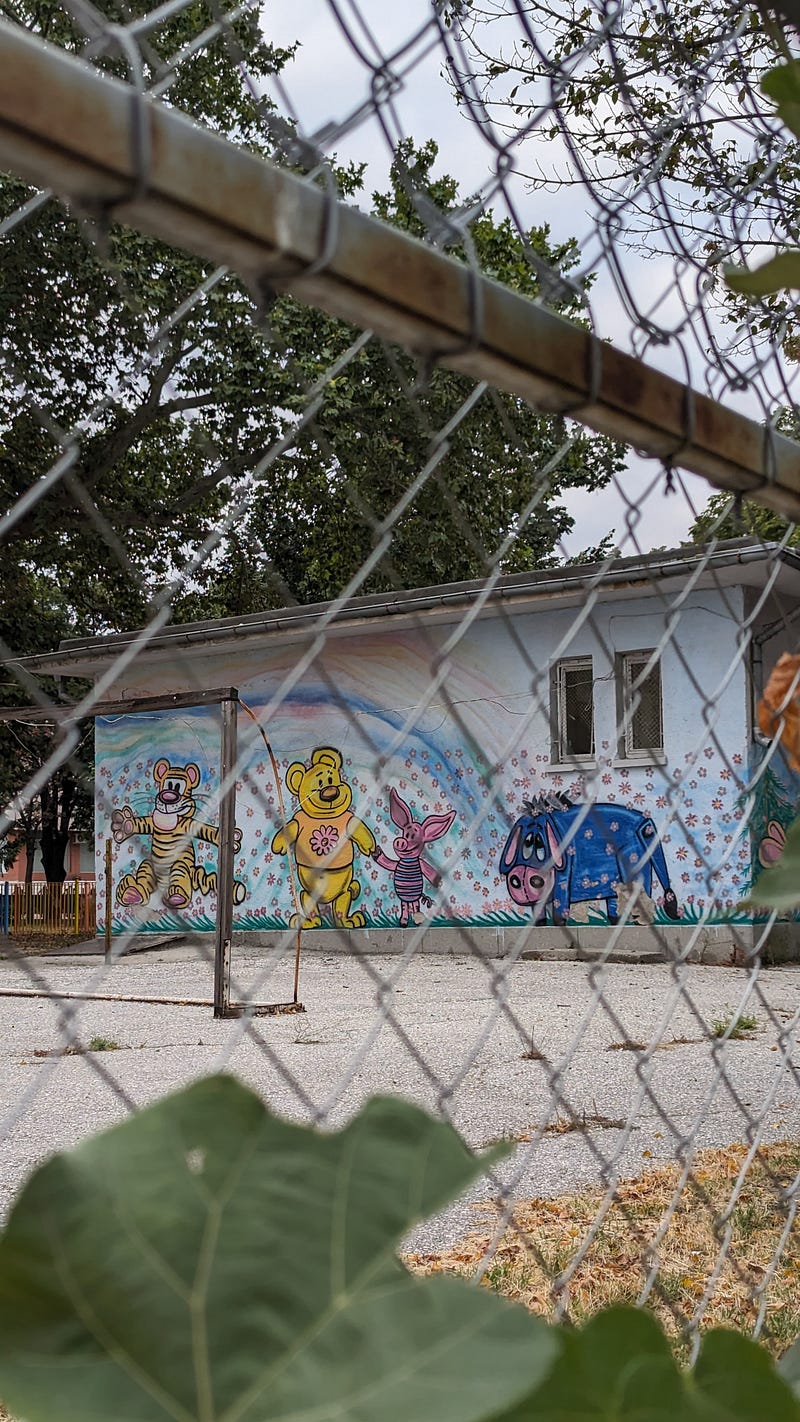
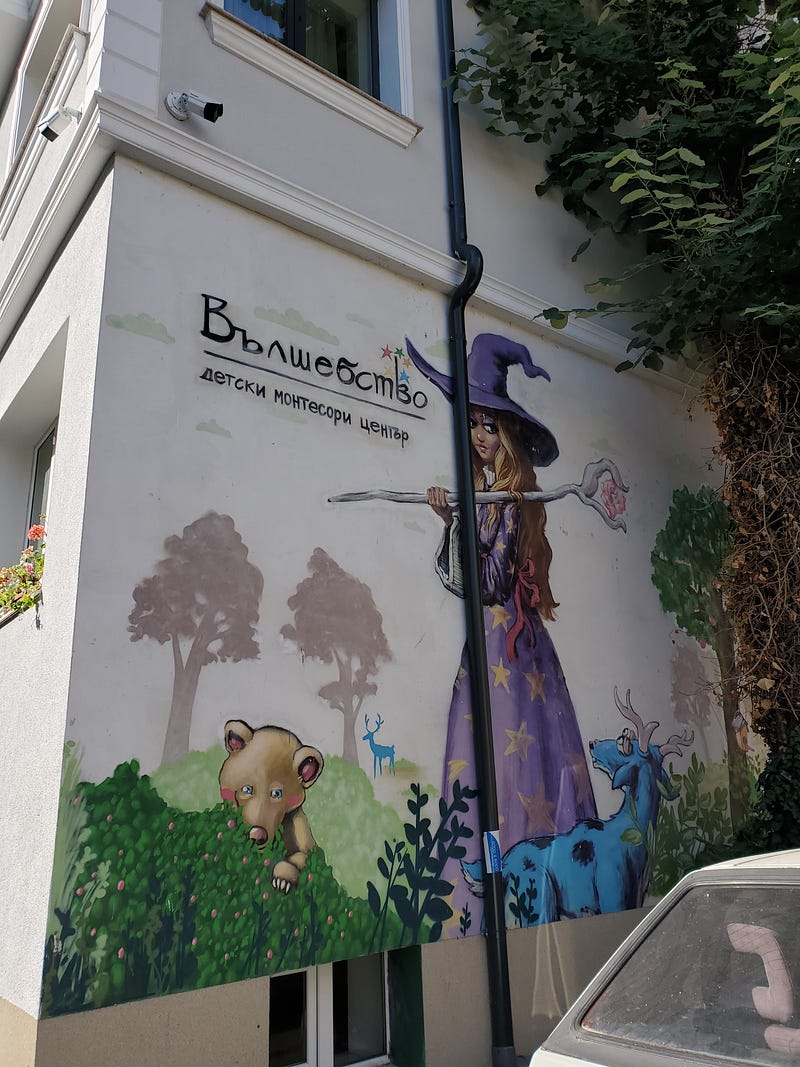
Photos by Krasi Shapkarova

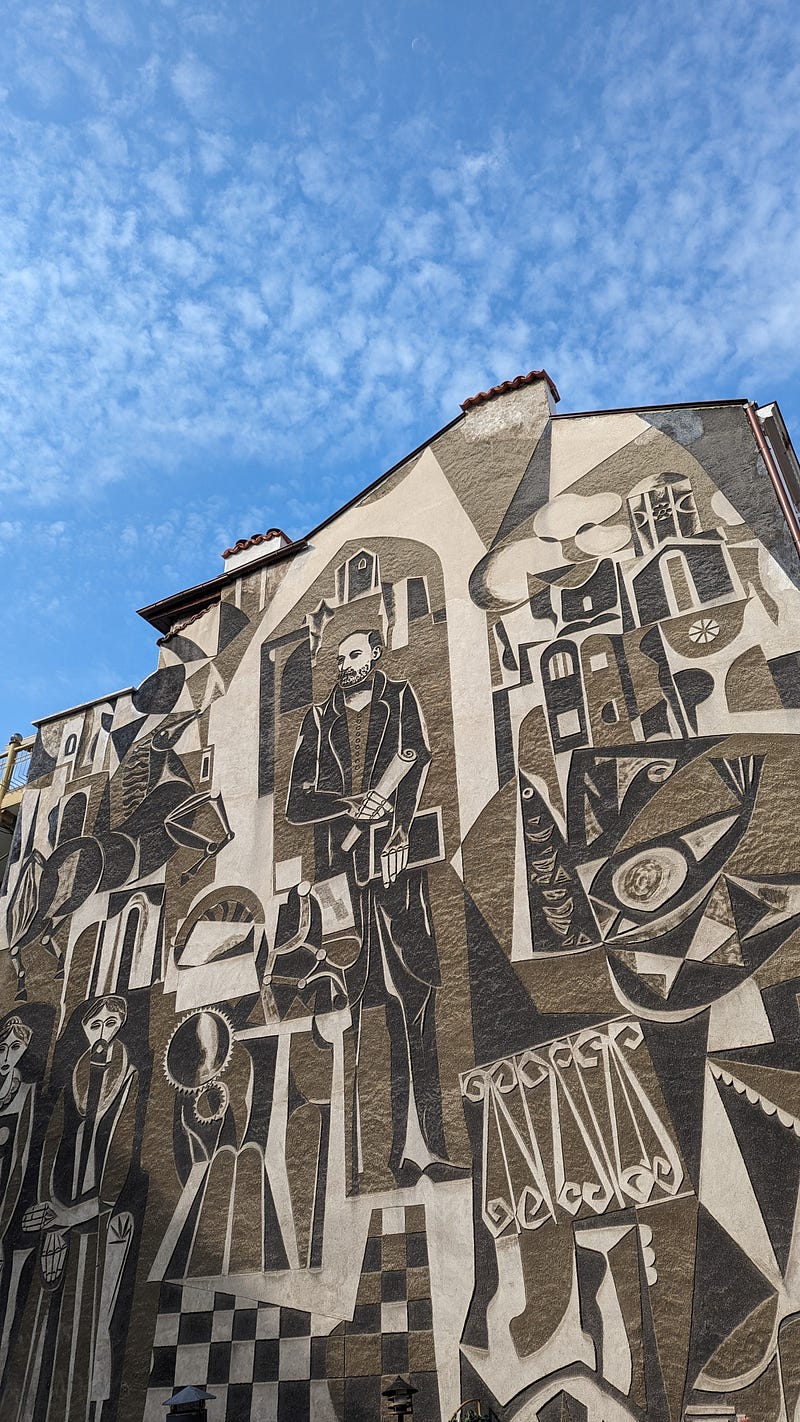
If you didn’t know this already, Plovdiv is a city built around 7 hills (I’m thinking of writing an article about them!), and as you venture up them, don’t be surprised if you come across graffiti as well as chalk drawings on many of the rocks around. The one below is of Ivan Vazon, a well-known and respected Bulgarian poet, novelist, and playwright.
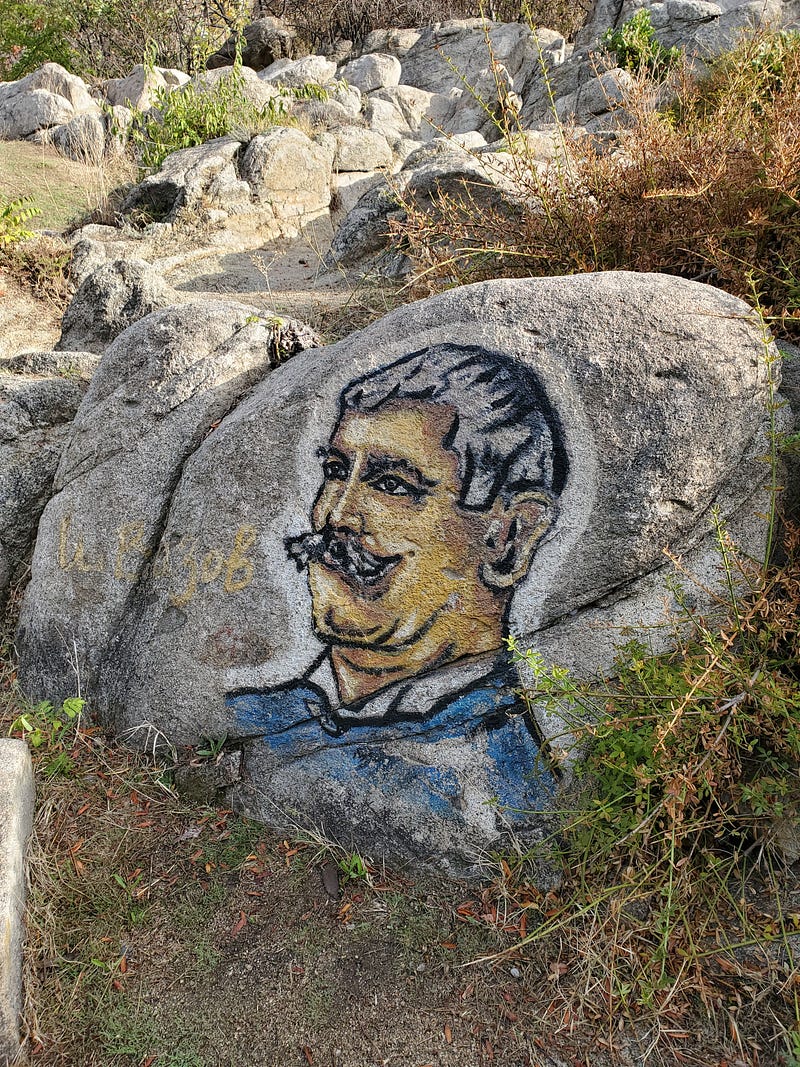
Photo by Krasi Shapkarova

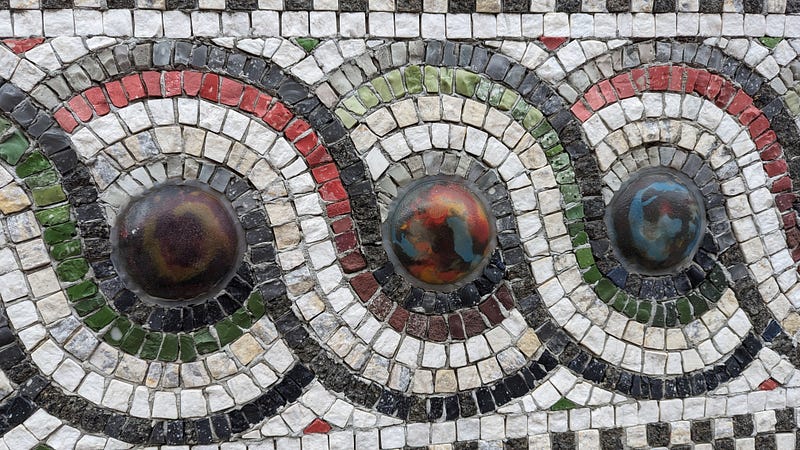
In addition to traditional street art (wow, did I just describe street art as traditional???), walking around Plovdiv will treat you to a plethora of creative expressions, some modern and some ancient, like the colorful mosaic below.
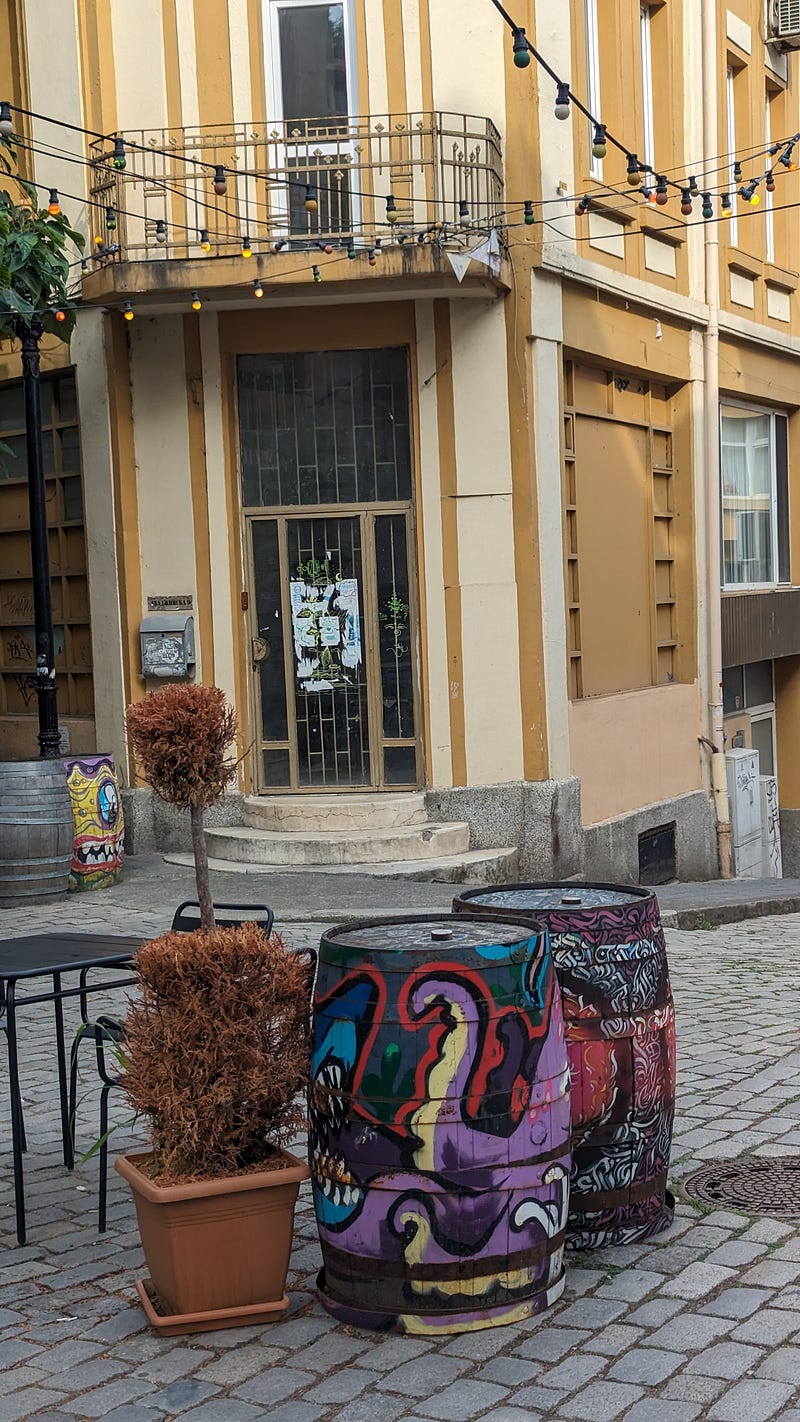
Photos by Krasi Shapkarova

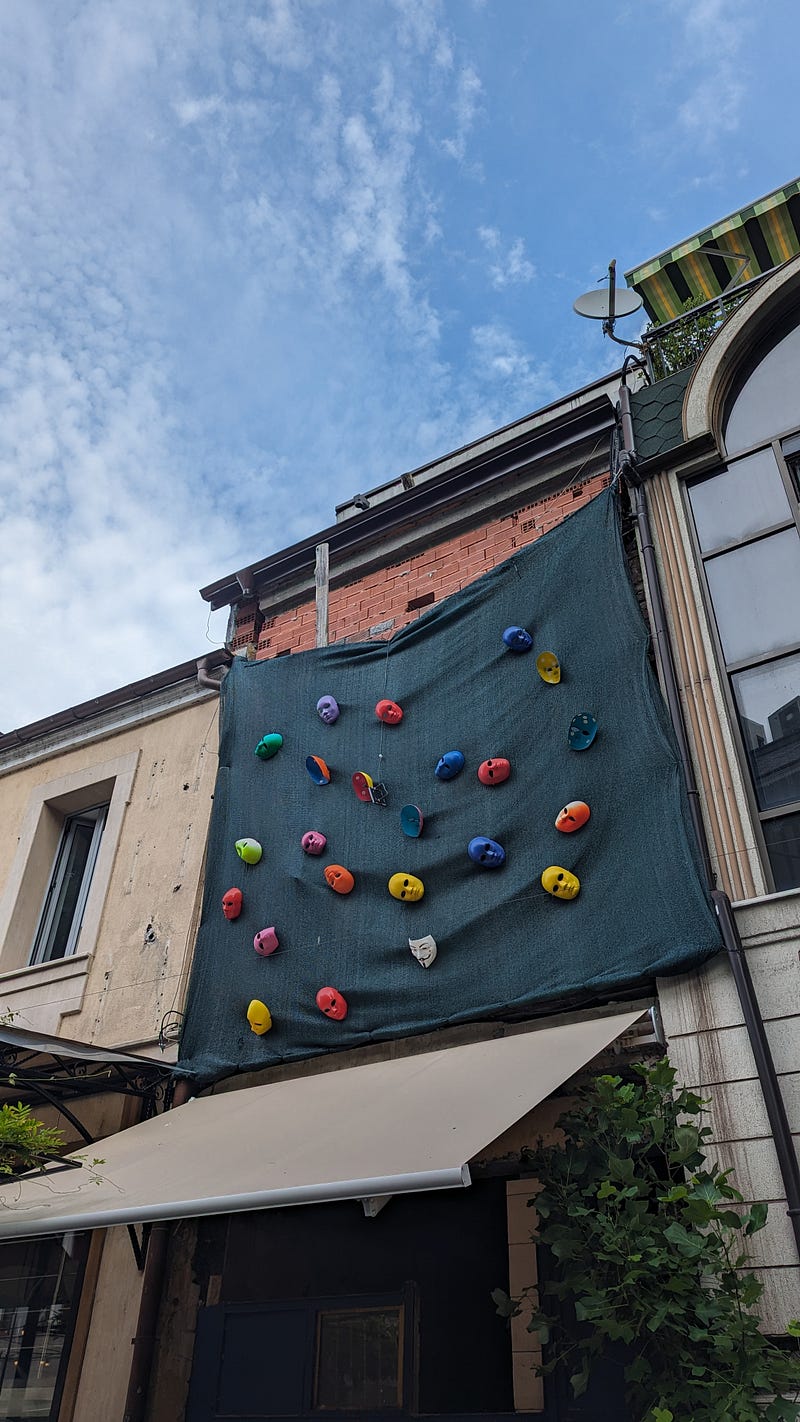
A favorite art piece to come across on my walks are these pop-up exhibits — there are at least four at any time around the city center. The one below is found by the Tsar Simeon City Garden. The exhibits cover all kinds of topics — art, agriculture, architecture, medicine, history, culture — in both Bulgarian and English, and they are quite educational.
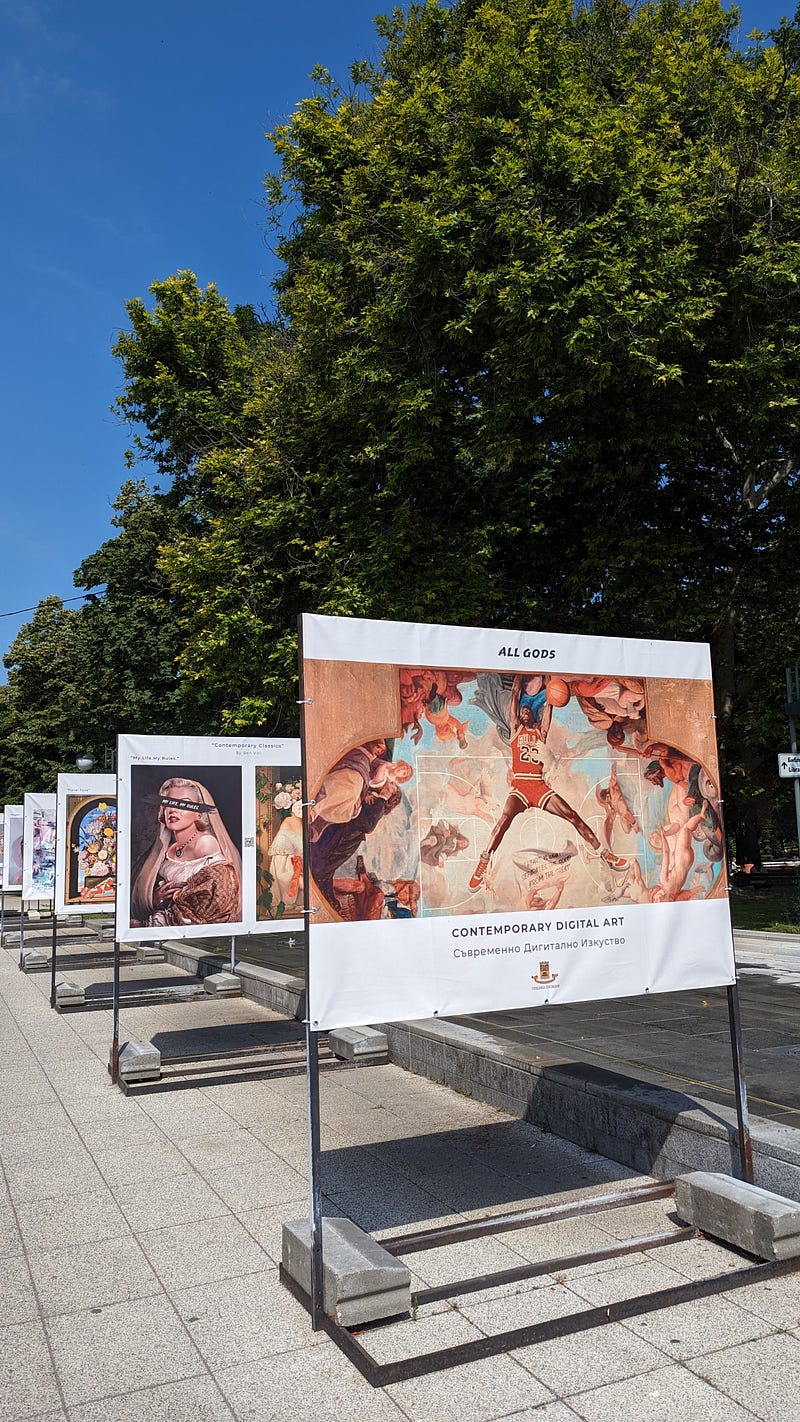
Photo by Krasi Shapkarova

An important reminder on my most recent walks has been the fact that street art is transient. For example, my article’s featured image comes from the Kapana Creative District, but you’ll no longer find it. As I discovered this summer, the mural is now gone, replaced by giant windows for a new restaurant being built.

Sometimes street art is replaced by other street art, as is the case with the next set of images. On the left, you can see what I captured on my walks last year, and on the right, you can see what I captured on my walks this summer, in the same spaces.
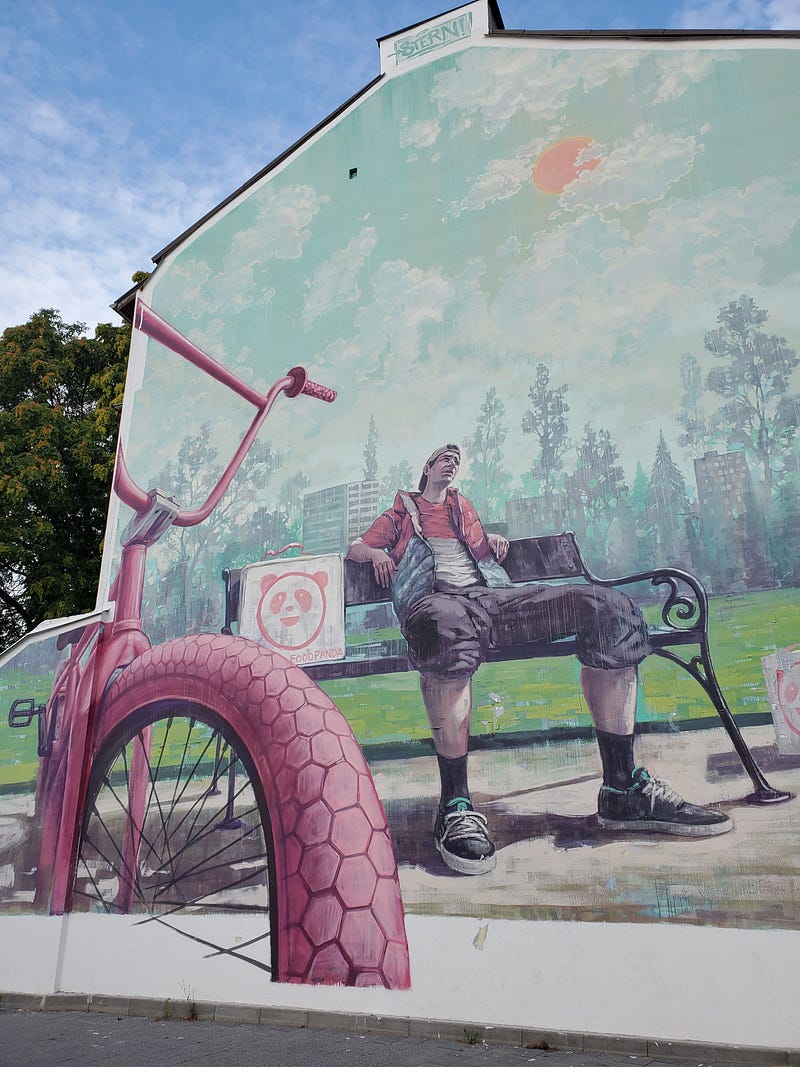
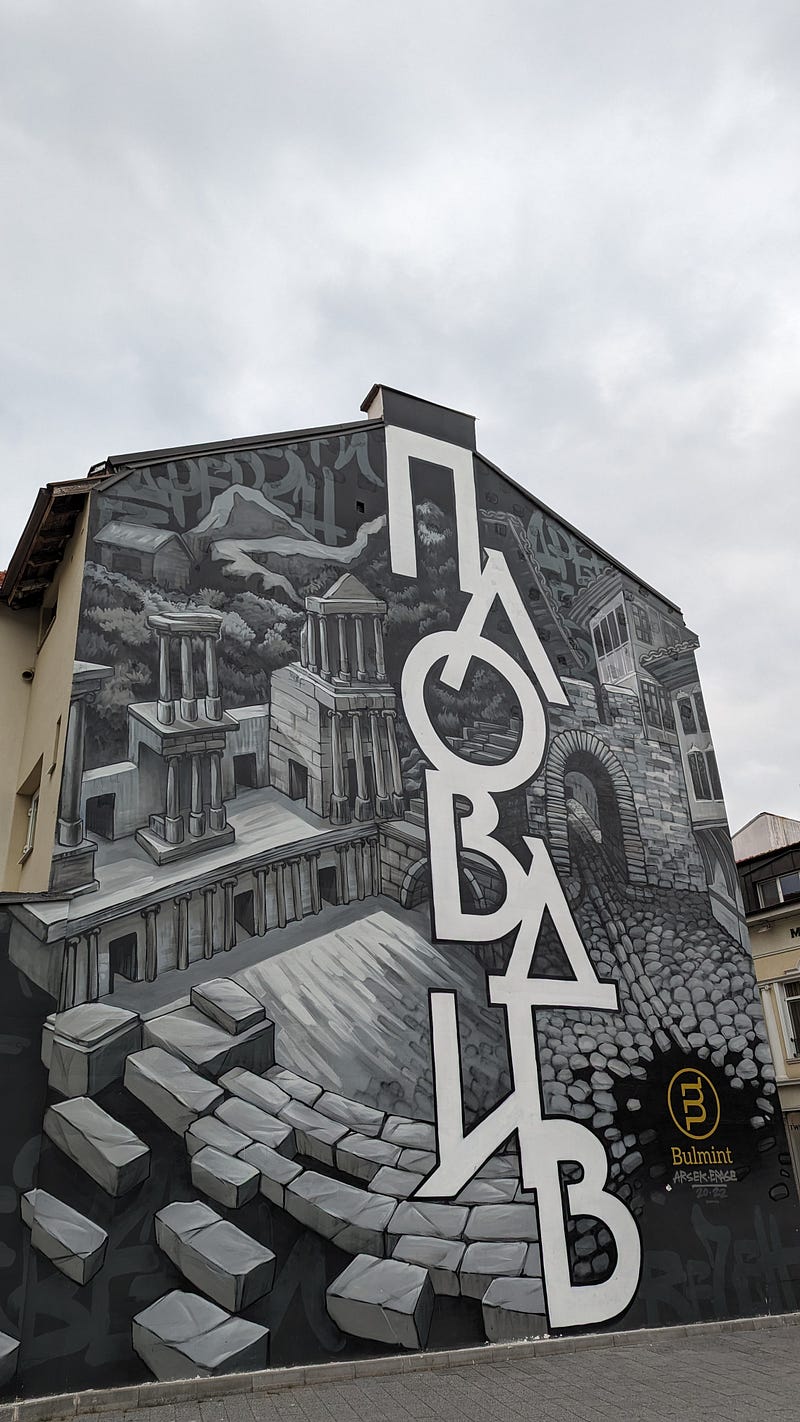
All photos by Krasi Shapkarova

I’m personally enjoying Plovdiv becoming a city of art and culture and ever-changing street art. It’s like I’m in a new location each year I visit, and I only hope that the art remains a key feature as the city keeps developing.

To wrap up my article, I leave you with my favorite piece of art. As an avid reader, it sure speaks volumes to me :)
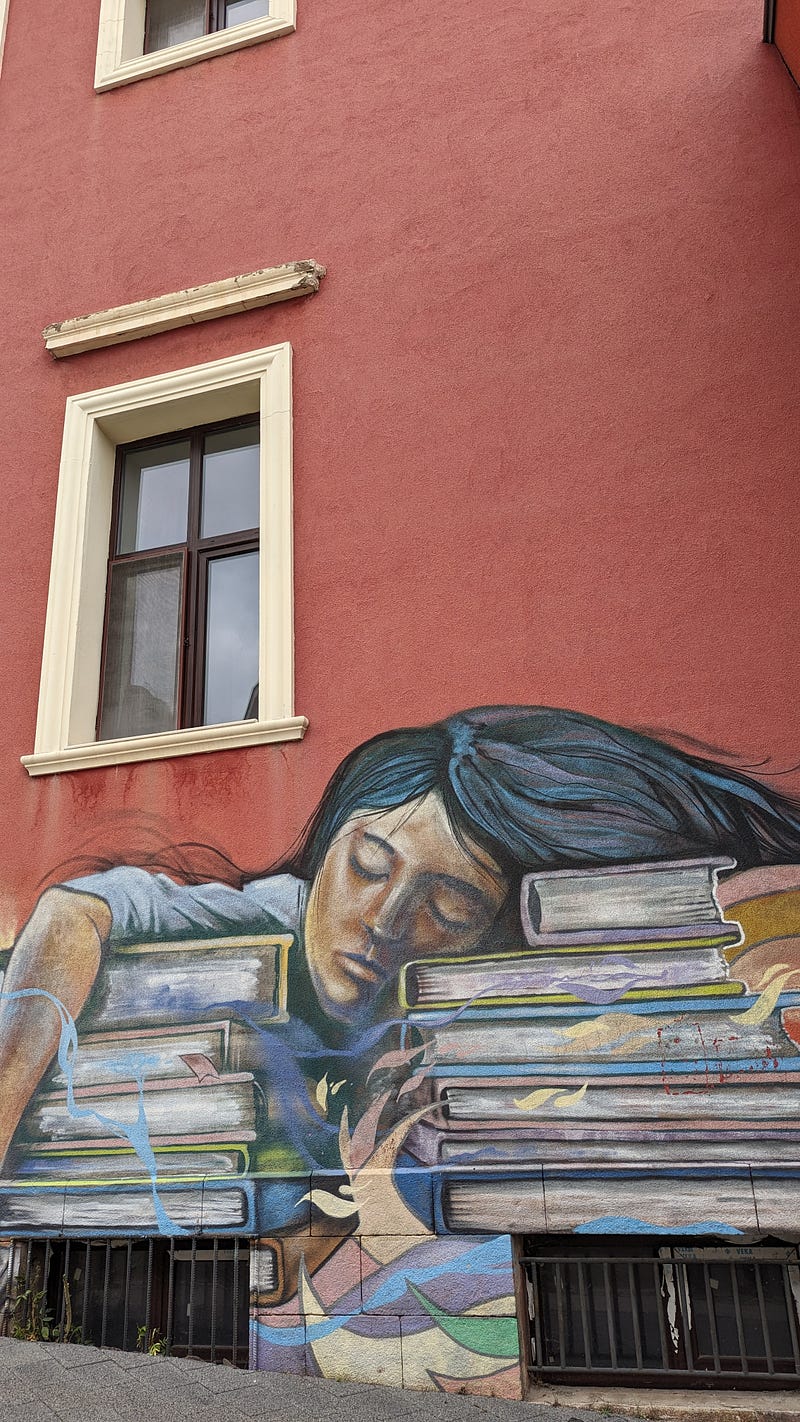
Photo by Krasi Shapkarova

I’m a street art aficionado, and it’s safe to say I’m thoroughly enjoying all submissions for this month’s challenge.

One that stood out is Mario López-Goicoechea’s thought-provoking piece on London street art. It’s frustrating when growth and development often mean losing the exact characteristics that made an area unique and interesting to begin with.

I’d also like to give a shoutout to Catherine Duchesne. Her article reminded me of visiting Clyfford Still’s museum in Denver, CO and learning that the abstract expressionist didn’t assign titles to his works because he wanted people to find their own meanings. Noticing how your interpretations shift across multiple visits can also be a great way to reflect on how your values and perspectives change over time.

Want to get to know me more? Connect with me on Instagram!

Thank you for stopping by :)

Street Art
Bulgaria
Monthly Challenge
Slow Travel
Plovdiv
Recommended from ReadMedium