
If I Was Forced to Follow only One Workout Program for The Rest of My Life
A fully customizable one that you can use irrespective of your training experience
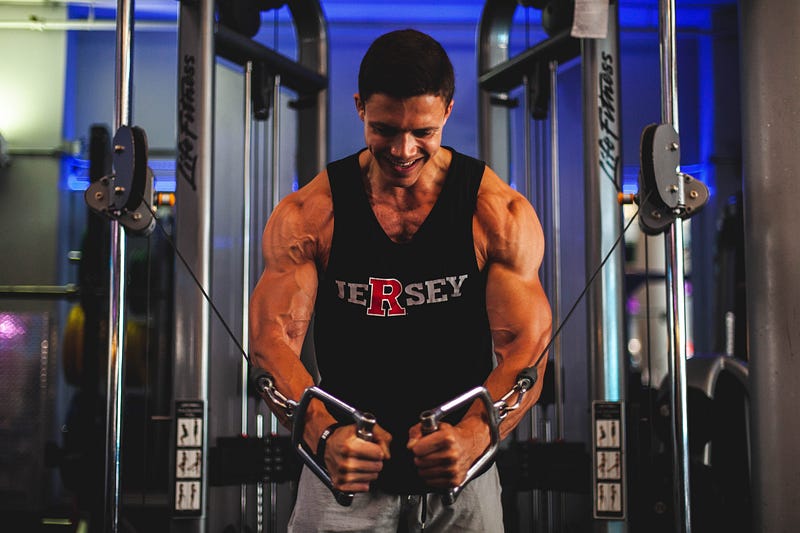
When I first started working out, I followed whatever my “mentor” did — basically a bro-split where we trained one muscle group a day and skipped legs.
And well, the results were subpar to say the most. Around the 2 year mark, I decided to get serious about fitness and after quite some research, I switched to a different workout program and haven’t looked back even once since.
I don’t think I’ll ever switch to anything else. This program has unarguably given me the best results in terms of muscle and strength.
I’ll go into the program and before doing that, give science-backed reasons to attest to its effectiveness.
The Workout Program
The workout program I’ve been following for the most part of the last two years is a primary 6 days a week Push Pull Legs (PPL) based one. But I’ll also provide 5, 4, and 3 days a week variants that I personally use whenever I can’t workout 6 days a week.
Before going into the details of the workout program, here are a few science-backed reasons why this program works so well:
- Optimal frequency. Every muscle group is hit at least twice a week. A meta-analysis of the relevant studies by Schoenfeld et al. found training every at least muscle twice a week to be superior to training them only once.
- Adequate time for recovery. Every muscle group is trained once every 48 to 72 hours which has been found to be optimal by a study by James Steele et al. after comparing the effects of 24, 36, 48, 72, and 96 hours of rest on performance.
- Optimal volume. The number of total sets per week is based upon Renaissance Periodization’s hypertrophy volume recommendations. These landmarks are optimal and derived from empirical and scientific evidence.
- Progression scheme. Muscle and strength gain is a result of the body’s adaptations to resistance training. So, to continually gain muscle and strength, it’s essential to progressively overload. This program’s progression scheme takes care of that.
I hope my experience and the backing research were enough to convince you. Now, without any further ado, let’s get into the workout program.
Getting Into It
I have given set ranges to adjust workout volume based on training experience. This is important as too much volume can lead to overtraining causing recovery issues, muscle breakdown, and in extreme cases, Rhabdomyolysis and Necrosis — in other words, muscle damage and death.
If you are a beginner, use the lower bound of the range. If you are an intermediate like me, stick to the middle of the range and if you are an advanced trainee, use the higher bound.
Also, I have linked every exercise to a tutorial video to make it easy for you and to make sure that you use the proper form.
A few pieces of advice:
- Do not ignore the warm-up. Warming up is crucial to prevent injuries and prepare you physically and mentally for the workout. A few weeks back, I severely cramped my hamstring when I skipped the warmup as I was in a “hurry.”
- Stay hydrated. You don’t have to down a gallon, just have a few sips of water after every set. When I recently blacked out midset due to inadequate hydration, it was only through sheer luck that I didn’t get injured.
- Use proper form to prevent injuries and maximize progress. For years, I made the mistake of “ego-lifting” or lifting with bad form. Only when I cleaned up my form, did my rate of progress drastically increase.
- Listen to music. I legit cannot get through a workout without music. Putting on my headphones and blasting some EDM or metal psyches me up, relieves boredom, and makes me go harder. Research has also shown the same.
The 6-Day PPLx2 Variant
You can perform this in either the Push-Pull-Legs or the Legs-Push-Pull fashion. Regarding the rest days, you can do either PPL-rest-PPL or PPLPPL-rest.
Each workout will take anywhere between 75 to 90 minutes. In my experience, the Push days take the longest and the Leg days the least.
Push:
- Warmup with this excellent routine.
- Barbell bench press on the first push day / Barbell overhead press on the second push day — 2 to 5 sets of 5 reps followed by 1 AMRAP set of 5+ reps.
- Barbell Overhead press on the first push day / Barbell bench press on the second push day — 2 to 4 sets of 8–12 reps
- Incline barbell bench press or Incline dumbbell bench press — 2 to 4 sets of 8–12 reps
- Pec deck fly or Dumbbell fly or Cable crossover — 2 to 4 sets of 8–18 reps
- Close grip bench press or Tricep pushdowns — 2 to 4 sets of 8–15 reps
- Dumbbell overhead tricep extension or Cable overhead rope extension or Barbell skull crushers — 2 to 4 sets of 8–15 reps
- Egyptian lateral raises or Dumbbell lateral raises or Single arm leaning dumbbell lateral raises — 4 to 7 sets of 15–20 reps
Pull:
- Warmup with this excellent routine.
- Barbell deadlift on the first pull day / Barbell rows on the second pull day— 2 to 5 sets of 5 reps followed by 1 AMRAP set of 5+ reps.
- Lat pulldown or Weighted pullups — 2 to 4 sets of 8–12 reps
- Seated cable rows or Seal rows or Chest supported rows — 2 to 4 sets of 8–12 reps.
- Dumbbell alternating bicep curls or Seated incline dumbbell curls or Preacher curls — 2 to 5 sets of 8–12 reps
- Rope hammer curls or Dumbbell hammer curls or Single-arm cable hammer grip cable curls — 2 to 5 sets of 8–12 reps
Legs:
- Warmup with this excellent routine.
- Barbell back squats — 2 to 4 sets of 5 reps followed by 1 AMRAP set of 5+ reps.
- Romanian or Stiff leg deadlift — 2 to 4 sets of 8–12 reps.
- Standing calf raises/ Donkey calf-raises/ Seated calf raises —3 to 6 sets of 8–20 reps.
- Leg press or Quad extensions or Hack squats or Front squats — 2 to 5 sets of 8–12 reps.
- Lying hamstring curls or Seated hamstring curls — 1 to 4 sets of 8–12 reps.
The 5-Day UL+PPL Variant
You can run this in the PPL-UL or UL-PPL order. Regarding the rest days, you can rest in between PPL and UL or complete PPL-UL then rest 2 days and repeat.
Each workout will take anywhere between 75 to 90 minutes with the ‘Upper’ workout taking longer, maybe 90 to 120 minutes.
Upper:
- Warmup with this excellent routine.
- Barbell rows SUPER-SETTED with Barbell bench press— 2 to 5 sets of 5 reps followed by 1 AMRAP set of 5+ reps.
- Lat pulldown or Weighted pullups SUPER-SETTED with Barbell Overhead press — 2 to 4 sets of 8–12 reps.
- Seated cable rows or Seal rows or Chest supported rows SUPER-SETTED with Pec deck fly or Dumbbell fly or Cable crossover — 2 to 4 sets of 8–12 reps.
- Close grip bench press or Tricep pushdowns SUPER-SETTED with Dumbbell alternating bicep curls or Seated incline dumbbell curls or Preacher curls — 2 to 5 sets of 8–12 reps.
- Dumbbell overhead tricep extension or Cable overhead rope extension or Barbell skull crushers SUPER-SETTED with Rope hammer curls or Dumbbell hammer curls or Single-arm cable hammer grip cable curls — 2 to 5 sets of 8–12 reps.
- Band pull-apart or Face-pulls — 3 to 7 sets of 15–25 reps.
Lower: Same as the Legs workout of the PPLX2 program
Push: Same as the second Push workout of the PPLX2 program
Pull: Same as the first Pull workout of the PPLX2 program
Legs: Same as the Legs workout of the PPLX2 program
The 4-Day ULx2 Variant
You can do this either UL-rest-UL-rest-rest or U-rest-L-rest-U-rest-L or in any other fashion. The only manner I don’t recommend is UL-rest-rest-rest-UL as this is highly non-optimal.
Each Upper workout will take between 90 and 120 minutes while the lower ones will take between 60 and 90 minutes.
Upper 1: Same as the Upper workout of the UL+PPL program
Lower 1: Same as the Legs workout of the PPLX2 program
Upper 2:
- Warmup with this excellent routine.
- Lat pulldown or Weighted pullups SUPER-SETTED with Barbell Overhead press— 2 to 5 sets of 5 reps followed by 1 AMRAP set of 5+ reps.
- Barbell rows SUPER-SETTED with Barbell bench press — 2 to 4 sets of 8–12 reps.
- Seated cable rows or Chest supported rows SUPER-SETTED with Incline barbell bench press or Incline dumbbell bench press — 2 to 4 sets of 8–12 reps — 2 to 4 sets of 8–12 reps.
- Dumbbell overhead tricep extension or Cable overhead rope extension or Barbell skull crushers SUPER-SETTED with Rope hammer curls or Dumbbell hammer curls or Single-arm cable hammer grip cable curls — 2 to 5 sets of 8–12 reps.
- Close grip bench press or Tricep pushdowns SUPER-SETTED with Dumbbell alternating bicep curls or Seated incline dumbbell curls or Preacher curls — 2 to 5 sets of 8–12 reps.
- Band pull-apart or Face-pulls — 3 to 7 sets of 15–25 reps.
Lower 2: Same as the Legs workout of the PPLX2 program
The 3-Day FBX3 Variant
There are two full-body workouts — A and B. You work out on Monday, Wednesday, and Friday. The weekends are off and you alternate workouts A and B.
So, if you did A-rest-B-rest-A-rest-rest the first week, you would do B-rest-A-rest-B-rest-rest the second week.
Full body A:
- Barbell back squat — 3 to 6 sets of 5 reps.
- Barbell rows SUPER-SETTED with Barbell bench press — 2 to 4 sets of 8–12 reps.
- Lying hamstring curls or Seated hamstring curls — 2 to 4 sets of 8–12 reps.
- Lat pulldown or Weighted pullups SUPER-SETTED with Pec deck fly or Dumbbell fly or Cable crossover — 2 to 4 sets of 8–18 reps.
- Close-grip bench press or Tricep pushdowns SUPER-SETTED with Dumbbell alternating bicep curls or Seated incline dumbbell curls or Preacher curls — 2 to 5 sets of 8–12 reps.
- Standing calf raises/ Donkey calf-raises/ Seated calf raises — 3 to 6 sets of 8–20 reps.
- Band pull-apart or Face-pulls — 2 to 5 sets of 15–25 reps.
Full body B:
- Barbell conventional deadlift — 3 to 6 sets of 5 reps.
- Lat pulldown or Weighted pullups SUPER-SETTED with Barbell Overhead press — 2 to 4 sets of 8–12 reps.
- Leg press or Quad extensions or Hack squats or Front squats — 2 to 4 sets of 8–12 reps.
- Seated cable rows or Chest supported rows SUPER-SETTED with Incline barbell bench press or Incline dumbbell bench press — 2 to 4 sets of 8–12 reps.
- Dumbbell overhead tricep extension or Cable overhead rope extension or Barbell skull crushers SUPER-SETTED with Rope hammer curls or Dumbbell hammer curls or Single-arm cable hammer grip cable curls — 2 to 5 sets of 8–12 reps.
- Standing calf raises/ Donkey calf-raises/ Seated calf raises — 3 to 6 sets of 8–20 reps.
- Band pull-apart or Face-pulls — 2 to 5 sets of 15–25 reps.
Progression Scheme
The progression is simple. On normal sets, try to increase the weight you use every session and on AMRAP sets, either increase the weight or the reps. This is progressive overload through an increase in weekly volume.
Then, every 4 to 6 weeks if you have been training for a few years and every 8 to 10 weeks if you are a beginner, go on a deload week. Basically, reduce the number of sets you perform by 30–40% on every exercise. This is to facilitate recovery and prevent CNS burnout.
So, to summarize — track your workouts using a note-taking app and every session, just try to beat the past one. And once in a while, take a deload.
Final Thoughts
There are hundreds of good workout plans and with some research, you can make a good one yourself. No workout plan is inherently better than the others.
The best workout plan is the one you enjoy and can stick to. This is because, in the long run, consistency beats every other factor.
So, don’t stress out too much. Explore and try out different workout programs and see what fits the best for you. Whatever you choose, stick to it.
“The best workout plan is the one you enjoy and can stick to.”
Want to build the body of your dreams? Grab your FREE copy of 8 Aesthetic Workout Routines

You just read another post from In Fitness And In Health: a health and fitness community dedicated to sharing knowledge, lessons, and suggestions to living happier, healthier lives.
If you’d like to join our newsletter and receive more stories like this one, tap here.


