
I would like to be everyone.
Sylvia Plath on people. (The Commonplace Book Project)
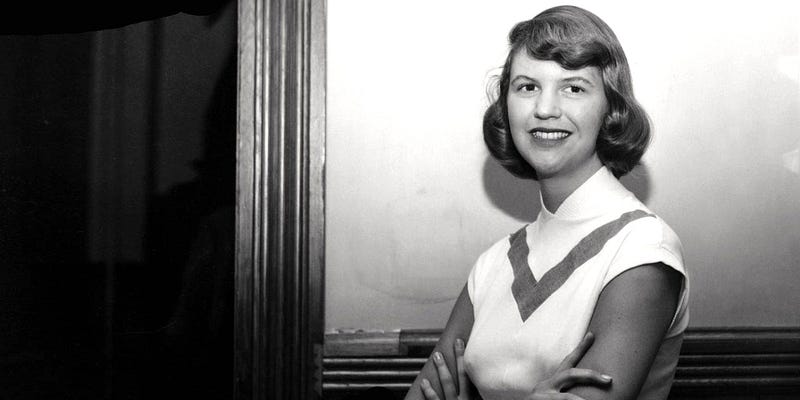
You can find all the posts in The Commonplace Book Project here:
“I love people. Everybody. I love them, I think, as a stamp collector loves his collection. Every story, every incident, every bit of conversation is raw material for me. My love’s not impersonal yet not wholly subjective either. I would like to be everyone, a cripple, a dying man, a whore, and then come back to write about my thoughts, my emotions, as that person. But I am not omniscient. I have to live my life, and it is the only one I’ll ever have. And you cannot regard your own life with objective curiosity all the time.” — Sylvia Plath, The Unabridged Journals of Sylvia Plath
I tried to check The Bell Jar out of the library when I was in the fifth or sixth grade. The librarian steered me away from it. I can’t remember what she said now, but whatever it was, the result was that I didn’t check it out.
And I’ve still never read it. I think this year, I’ll have to change that.
There’s so much tragedy surrounding Sylvia Plath. Her own depression. Her suicide. Her children losing their mother. Then, their father’s lover, who cared for them, killed herself and their step-sister in the same way their mother did. Plath’s work that was destroyed by her husband after her death.
It’s all just a mess of tragedy.
I found this essay interesting — it discusses the violence between Plath and Hughes, with some interjection from her daughter, who was only three when her mother died.
That article includes this from a letter Plath wrote:
I was stamping and he was stamping on the floor, and then he kissed me bang smash on the mouth and ripped my hairband off. . . . And when he kissed my neck I bit him long and hard on the cheek, and when we came out of the room, blood was running down his face.
That interaction is the opening scene from the movie Sylvia, which stars Gwyneth Paltrow as Plath.
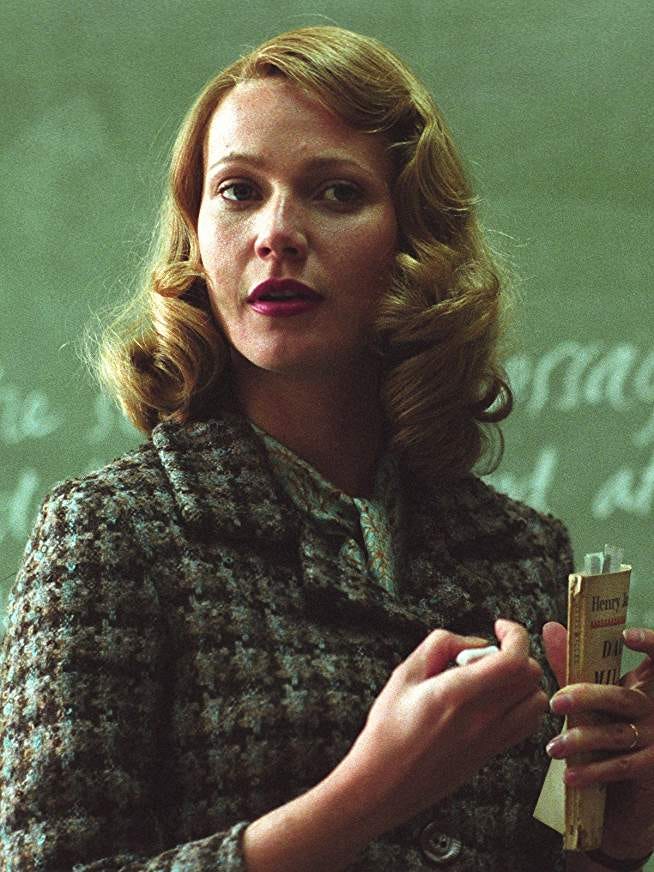
I turned the movie off for a while, though, to listen to this recording of Plath reading her poetry.
Here’s an article in the Atlantic about why Plath is such a part of American culture.
Plath tackled her depression head on. In her only novel. In her poetry. Maybe that’s why I haven’t read The Bell Jar. I struggle with tragedy. Even when I was an angsty teenager, I didn’t seek it out.
Although I’m not sure there’s much reason or good in diagnosing a woman who is dead already, I was fascinated by this analysis of her mental health. The decision at the end is that she did not have the manic episodes associated with bipolar disorder, but that might have been because she killed herself when she was only thirty.
The article suggests it was possible that her depression was tied to Borderline Personality Disorder.
There’s a scene in the movie Sylvia that shows Plath building a bonfire and burning her husbands books and papers while he is off having an affair with another woman (the woman who, later, would use her oven to kill herself and her daughter with Hughes.) It’s followed by her writing feverishly, tears falling down her face, after months (years?) of not feeling able to write at all.
I don’t know how much artistic license was taken there, but it’s a startling visual.
I own a copy of Sylvia Plath’s Unabridged Journals and a book of her letters. For whatever reason, it’s this writing that’s attracted me to her, more than her poetry or her novel.
Today’s Poem:
This is the poem Sylvia Plath wrote after the scene I mentioned in the movie Sylvia.
Daddy by Sylvia Plath
You do not do, you do not do
Any more, black shoe
In which I have lived like a foot
For thirty years, poor and white,
Barely daring to breathe or Achoo.

Daddy, I have had to kill you.
You died before I had time—
Marble-heavy, a bag full of God,
Ghastly statue with one gray toe
Big as a Frisco seal

And a head in the freakish Atlantic
Where it pours bean green over blue
In the waters off beautiful Nauset.
I used to pray to recover you.
Ach, du.

In the German tongue, in the Polish town
Scraped flat by the roller
Of wars, wars, wars.
But the name of the town is common.
My Polack friend

Says there are a dozen or two.
So I never could tell where you
Put your foot, your root,
I never could talk to you.
The tongue stuck in my jaw.

It stuck in a barb wire snare.
Ich, ich, ich, ich,
I could hardly speak.
I thought every German was you.
And the language obscene

An engine, an engine
Chuffing me off like a Jew.
A Jew to Dachau, Auschwitz, Belsen.
I began to talk like a Jew.
I think I may well be a Jew.

The snows of the Tyrol, the clear beer of Vienna
Are not very pure or true.
With my gipsy ancestress and my weird luck
And my Taroc pack and my Taroc pack
I may be a bit of a Jew.

I have always been scared of you,
With your Luftwaffe, your gobbledygoo.
And your neat mustache
And your Aryan eye, bright blue.
Panzer-man, panzer-man, O You—

Not God but a swastika
So black no sky could squeak through.
Every woman adores a Fascist,
The boot in the face, the brute
Brute heart of a brute like you.

You stand at the blackboard, daddy,
In the picture I have of you,
A cleft in your chin instead of your foot
But no less a devil for that, no not
Any less the black man who

Bit my pretty red heart in two.
I was ten when they buried you.
At twenty I tried to die
And get back, back, back to you.
I thought even the bones would do.

But they pulled me out of the sack,
And they stuck me together with glue.
And then I knew what to do.
I made a model of you,
A man in black with a Meinkampf look

And a love of the rack and the screw.
And I said I do, I do.
So daddy, I’m finally through.
The black telephone’s off at the root,
The voices just can’t worm through.

If I’ve killed one man, I’ve killed two—
The vampire who said he was you
And drank my blood for a year,
Seven years, if you want to know.
Daddy, you can lie back now.

There’s a stake in your fat black heart
And the villagers never liked you.
They are dancing and stamping on you.
They always knew it was you.
Daddy, daddy, you bastard, I’m through.
Thanks for reading and clapping (to let me know you enjoyed it!) If you’d like to get these daily doses of inspiration in your inbox, fill out the form below.
Shaunta Grimes is a writer and teacher. She is an out-of-place Nevadan living in Northwestern PA with her husband, three superstar kids, two dementia patients, a good friend, Alfred the cat, and a yellow rescue dog named Maybelline Scout. She’s on Twitter @shauntagrimes and is the author of Viral Nation and Rebel Nation and the upcoming novel The Astonishing Maybe. She is the original Ninja Writer.


