
I Switched From Neovim to Emacs, Here’s Why
Github repo with my dotfiles.
About three years ago I got into using Vim, but quickly I got frustrated by Vimscript and the inability to extend it, eventually landing on Neovim. This was by far the better experience.
The Neovim Experience
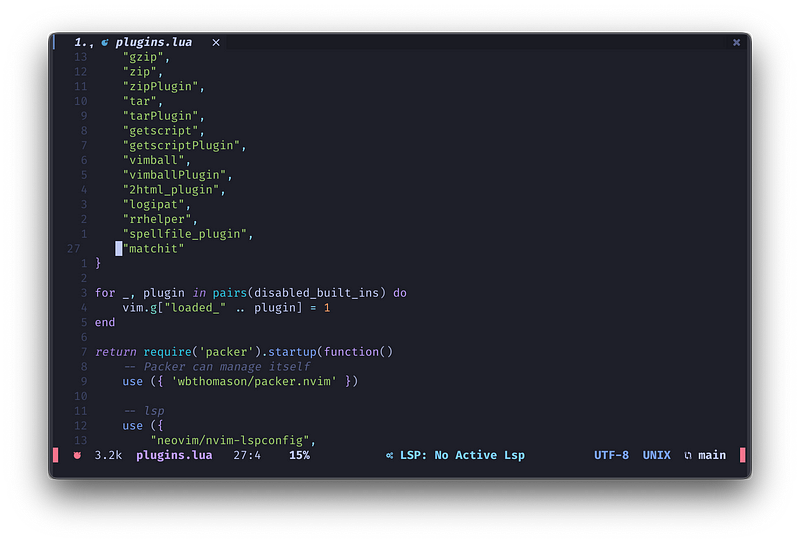
After hours of work put into configuring the text editor, I finally got to a point where I felt at home (and if you interested in what plugins I’m using see this). There is not a point to configuring Neovim like this unless you want to get what best fits you. Some great Neovim configs are, NvChad and LunarVim.
Neovim has many great features including a built in LSP, treesitter, and hundreds of customizable parts. There are not many downsides to Neovim. It’s the sort of the thing one would say, “it just works.”
The Emacs Experience
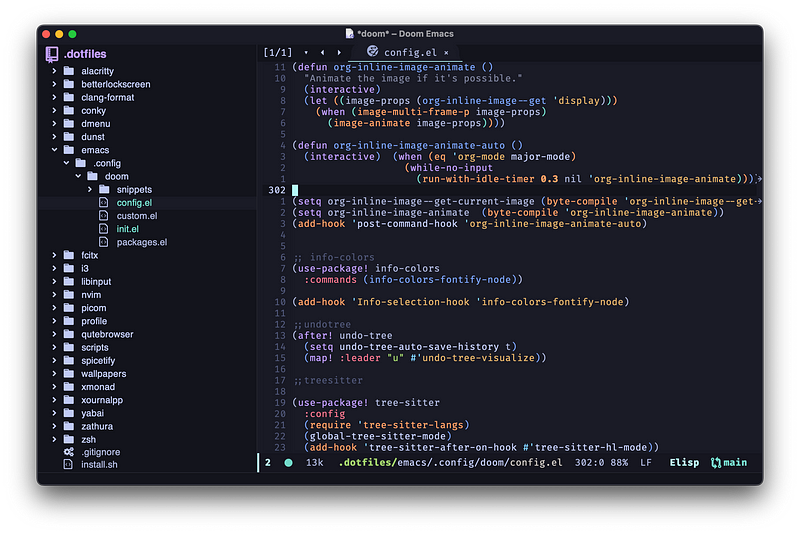
I use Doom Emacs so this is what I will be refering to when I say “Emacs”.
Just like Neovim this also took some time to configure, however I feel that I spent less time configuring this which is inpart due to using Doom Emacs. Doom Emacs is sort of like a costume covering Emacs but also adds extra functionality.
Similarly, Emacs “just works” but it has a bigger range of functionality than Neovim.
Why Emacs
There are many reasons why I chose Emacs of Neovim, but I have only listed my top ones.
1. Org-mode
This was my biggest reason to switch to Emacs: Org-mode. Org-mode makes note taking extremely simple (there a slight learning curve). Without Emacs Org-mode isn’t really anything special, comparing it to Markdown, they are almost indistinguishable (functionality-wise). However, with Emacs, Org-mode, really shines.
Org-mode has a big feature that is quite amazing, it’s exporting. It can be exported in to virtually every format possible. HTML, Markdown, LaTeX, you name it.
2. Org-roam
Org-roam is a plain-text knowledge management system. It brings some of Roam’s more powerful features into the Org-mode ecosystem. (reference)
Org-roam uses the functionality of org-mode with the power of roam notes. It allows me to create a cohesive knowledge base of my notes. I also sometimes call it my “second brain.”
To continue about Org-mode exporting. I use uniorg and vercel to host my notes (still very work in progress) make it look very nice. I would like to add org-roam-ui to it once it supports publishing.
3. More Integrated Feeling
Everything you could want to do on a IDE or even a computer can be done on Emacs. Activities like web browsing, ssh (this is especially good), and irc chats. The fact that I can do my development and take notes in it makes it so nice and seamless to switch between tasks.
4. Magit
Now, Magit wouldn’t be a big reason to switch to Emacs (in my opinion), it does add to the “more integrated feel.”
Magit is a git tool. It has all the functionality that someone could every want and overall I like to use it instead of the terminal. Since it uses keybinds (like the rest of Emacs) it allows for anything to be done quickly especially git commands.
Good, But Where is The Not So Good
1. It’s Slow
Emacs is slow, there is no doubt about that. If you want to use Emacs there is only one choice, get used to it.
I would like to add some notes on why it shouldn’t be that big of a deal. For one if you compare it to an IDE, its still lightling fast. And with all the functionality that it brings to the table I feel like it isn’t a deal-breaker.
2. Configuration
Getting Emacs configured to something that you like will never end. All the new features and breaking updates means that you will have to constantly change your configs. This is just the way Emacs is. But it is possible just never update, but I don’t recommend that.
3. Learning Curve
Emacs’s learning curve will be steep especially if you haven’t used anything Vim based. Though please not be discouraged, it could still be worth the effort. I personally have gained tons of functionality and the ones I have listed here are only a few of many.
Emacs or Neovim or ???
Whatever editor your using, is the one you choose. So don’t feel like you are being forced to switch (whisper: but if your not using something Vim based your missing out). I’ve chose my editor and listed out a few reasons and some possible deal-breakers, so now make your choice to switch or not to switch.
Thanks for reading.
Keep vimming (or emacsing?)


