
I Stopped Saying, “I Love You” To My Husband
One step closer to divorce.
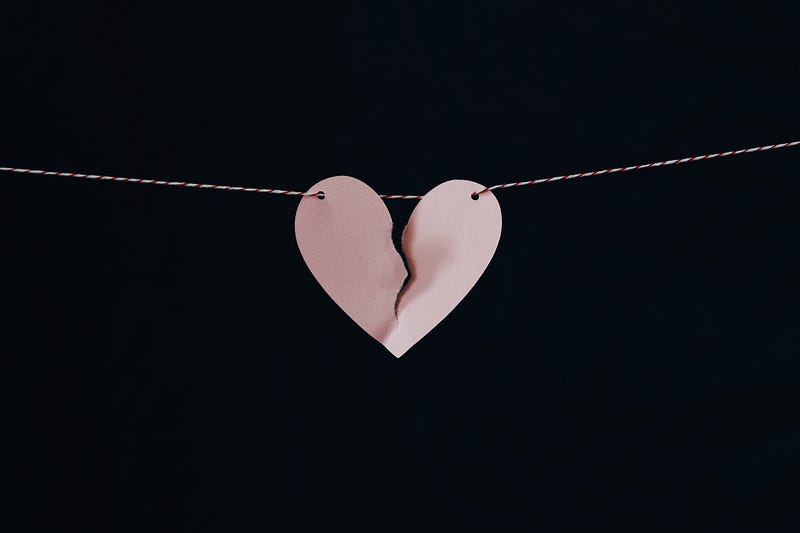
In case you’re new to the saga that is my writing, let me bring you up to speed: I’m in the middle of trying to get my husband to divorce me. He wants to stay married. It’s endless drama night after night.
In last week’s telenovela that is my life, he insisted there was still hope. Joseph is good at spinning my words against me. When I told him (at the guidance of my therapist) to just think about the shorter future, not what life will look like a decade from now, he replied, “Exactly. Let’s see what we can work on in the near future.” Uh, not what I meant.
When he lamented over the destruction of our family, I told him that it doesn’t have to be black or white. This isn’t the Eighties, we can define ending our marriage however we want. We don’t have to throw a bomb on everything and ruin life for the kids. That translated to him thinking the grey area is us getting back together.
I’m failing miserably at this. I don’t want to hurt his feelings. I don’t want to make things acrimonious. My goal for our kids is to stay amicable and friendly, to show them that physical locations may change but the respect and caring among all of us stay the same.
One step I’ve taken to push us forward: I stopped saying, “I love you”.
It’s a habit among couples, to say “I love you” and “I love you, too”. It’s second nature, like when a coworker says “hey, what’s up” as they pass you in the hallway and you reply with an “it’s good, thanks” head nod.
When I shattered Joseph’s world with divorce news, the topic of love came up a lot. I tried to reassure him that he forever has me as a friend and that my love for him that way will never change. He’s the father of my children and there will always be love there for that.
I think that sent the wrong message.
Since Joseph’s attitude has shifted from blame to attempts at winning me back, he says “I love you” frequently. I no longer reply.
It feels like a punch in the face to the person who says it to you. There is a vulnerability to telling someone you love them. To not have it reciprocated is like taking a knife to their heart and turning it counter-clockwise. I die a little inside when I don’t say it; not because I want to say it, but because I know how much it hurts him to not hear it.
This is the first time in almost 20 years of being together that I no longer say it in return. It’s painful. I want to say, “I love you too but not like that, but still a major love that will be in my heart forever!” In the few days since I’ve stopped saying it, I feel myself becoming someone different. My identity for half of my life was tied to the emotions and associated marital role with Joseph. I feel like a balloon newly un-tethered from a post. It’s jarring and different from what I’m used to.
I don’t want him to hurt. I want to take all the pain he’s feeling and transfer it on to me. When he says, “I love you” without receiving a response, guilt creeps in. I know I shouldn’t feel guilty because of my honesty. It just seems like the ultimate betrayal to someone who has pledged their life to you.
When I researched divorce and how to prepare for it, I learned about the endless streams of decisions and financial dealings. I thought the parts that get dragged out are tied to the house, the money, and small assets.
Nowhere did I read about the actual act of convincing the other half that divorce is the best solution. Sure, there are hundreds of articles about reluctant spouses. None of them spoke at length about the painfully long climb to get from Our-Marriage-Is-Crap-Let’s-Keep-Working-on-It to Our-Marriage-Is-Crap-Let’s-Finally-End-It. This process is moving at the speed of a sloth.
My next plan of action is to have a divorce therapist chat with my husband and I. Perhaps this expert can help push this divorce along. I’m not sure how many more times our hearts can break every time I fail to say “I love you”.


