

I Read 24 Non-Fiction Books in 12 Months, These Are My Top 10
Picking the right book to read has never been easier.
On February 1st, 2019, I challenged myself to study 24 books within the next 12 months, resulting in two weeks per book on average. Some days ago, I finished the last one. I used to be an avid reader as a kid and early teen, but at some point in my adolescent years, computer games, booze, lifting weights and girls got the better of me. So I decided to kick things up a notch and challenge myself.
First things first, there is a difference between reading a book and studying it.
Reading is, well, reading a book front to back. It might be fun, it might be interesting, or you might skip the last 100 pages because it doesn’t catch you. While you are likely to remember the key facts or main storyline, most of the information usually is lost within a couple of weeks.
Studying a book, however, is different. For me, it involves taking notes, paraphrasing, re-reading and using a lot of highlighters. I don’t want to only read a book but understand it. I want to extract its information, inject it into my brain and apply the knowledge in my daily life.
If you don’t remember the information you read and it doesn’t have an impact on your life, I don’t see the point of reading at all (at least if you read non-fiction).
That doesn’t mean I don’t read for entertainment purposes sometimes. I do, I enjoy doing it and in my opinion, any good writing should entertain to a point. However, as most of the books I usually read are non-fiction, reading for me is a source of learning, not entertainment.
The books I read during the last year cover a wide array of topics, but most are clustered around the subjects of personal development, productivity, minimalism, and philosophy.
The list below doesn’t necessarily contain “the best books”, but rather the ones that added the most value to my life. And hopefully, they can do so in others’ lives as well.
Without further ado, here is the list. It is in no particular order since I don’t think ranking and comparing books that cover different subjects is a sensible thing to do.
Mark Manson — The Subtle Art of Not Giving a F*ck
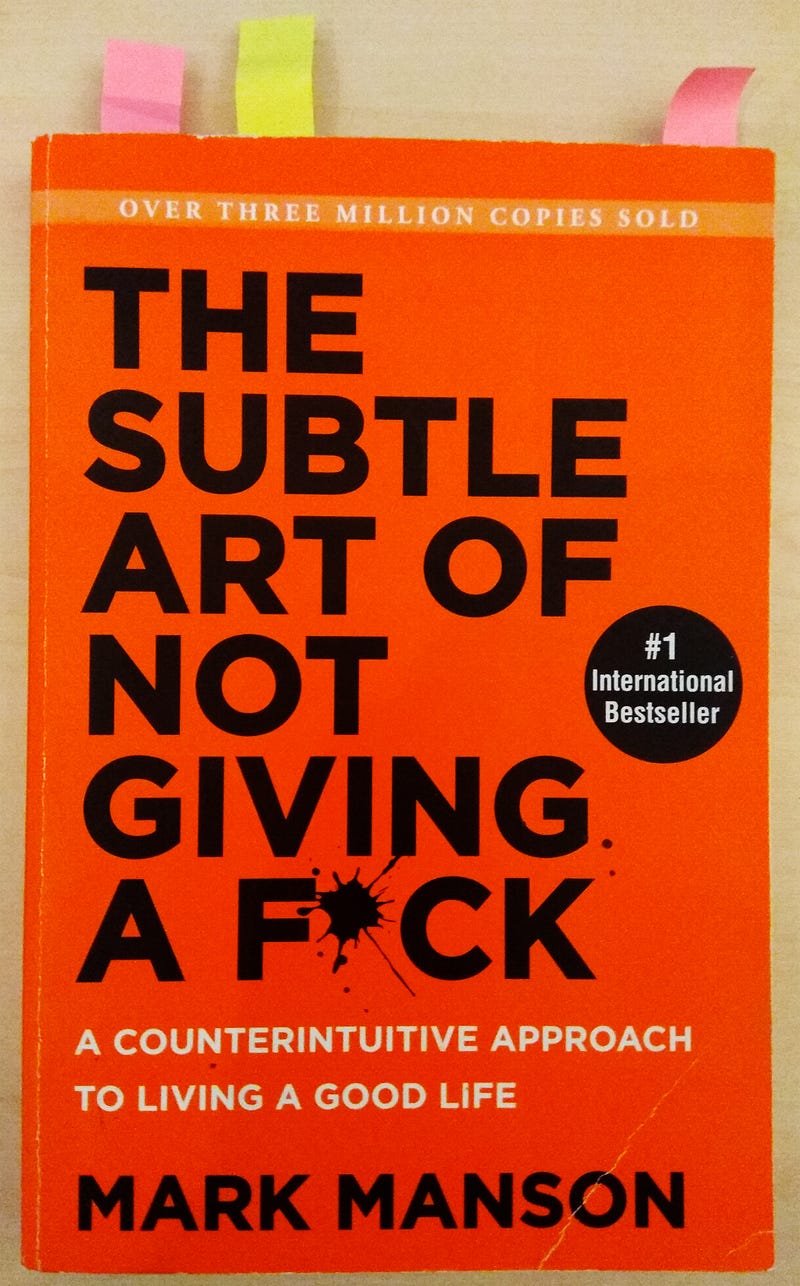
I still don’t know if I was drawn to that book because of the profanity in the title or because of the color of its cover, but I have read it twice over the last twelve months.
In his popular self-help work, Manson clears up with positive thinking and motivational “you can do it” bullshit.
With brutal honesty and without sugarcoating, he paints an unusual picture of the human mind, teaching a lot about finding your personal values on the way.
One of the greatest insights for me has been that the determining factor of your self-confidence is not how you feel about your good sides and what you can do. It rather depends on if you can accept your flaws and what you can’t do. With an interesting mix of scientific research, fart jokes, a little bit of profanity and a ton of brutal and honest truth, it makes for an entertaining, yet at the same time inspiring read.
Bill Bryson — A Short History of Nearly Everything
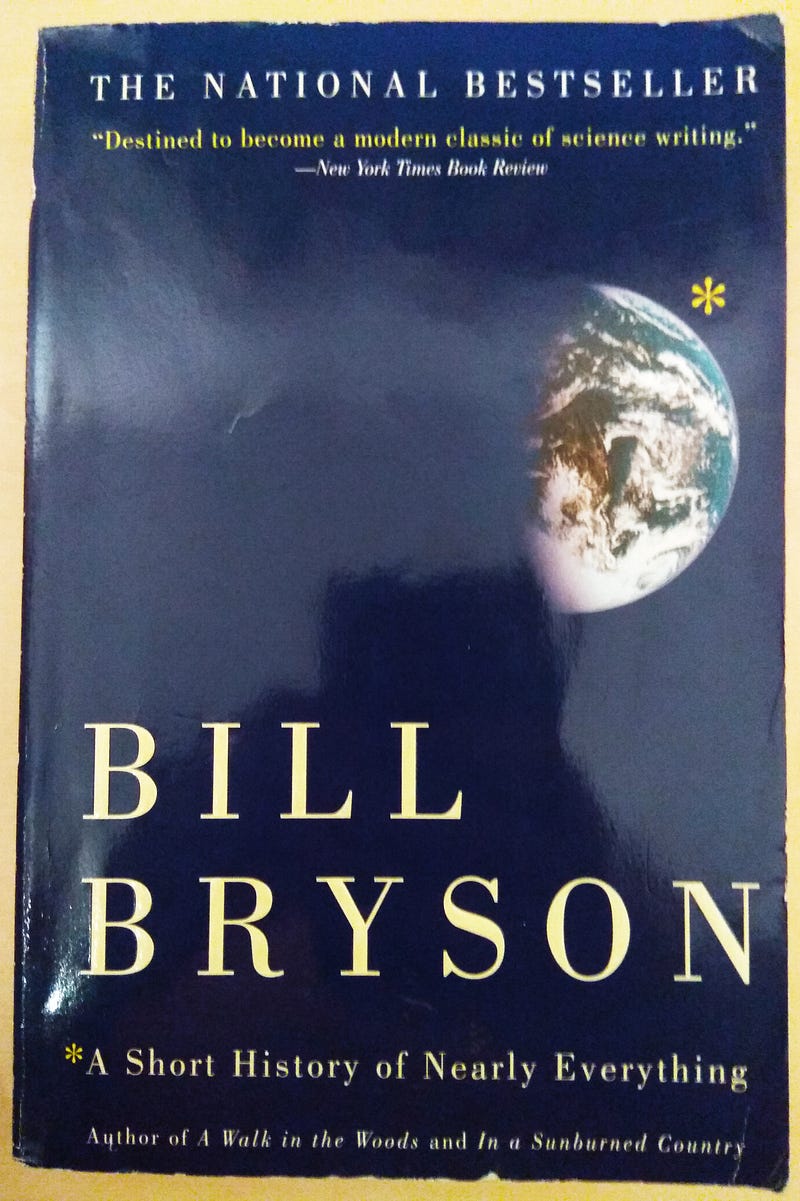
This book is pretty much what the title says. Bryson asks simple, yet fundamental and sometimes incredibly complex to answer questions (such as “How old is the earth exactly?”). He makes a lot of complicated and boring science (such as geology, or “the study of rocks”) understandable and entertaining.
I suppose that you have to be a bit of a science nerd to really like this book. However, if you want to know how we went from Big Bang to you reading this article on your phone or laptop (including lectures on plate tectonics, dinosaurs and unleaded petrol in between), give it a go. It’s stuffed with sometimes hilarious and sometimes shocking anecdotes, which makes it a rather easy read.
Gary Keller/Jay Papasan — The One Thing
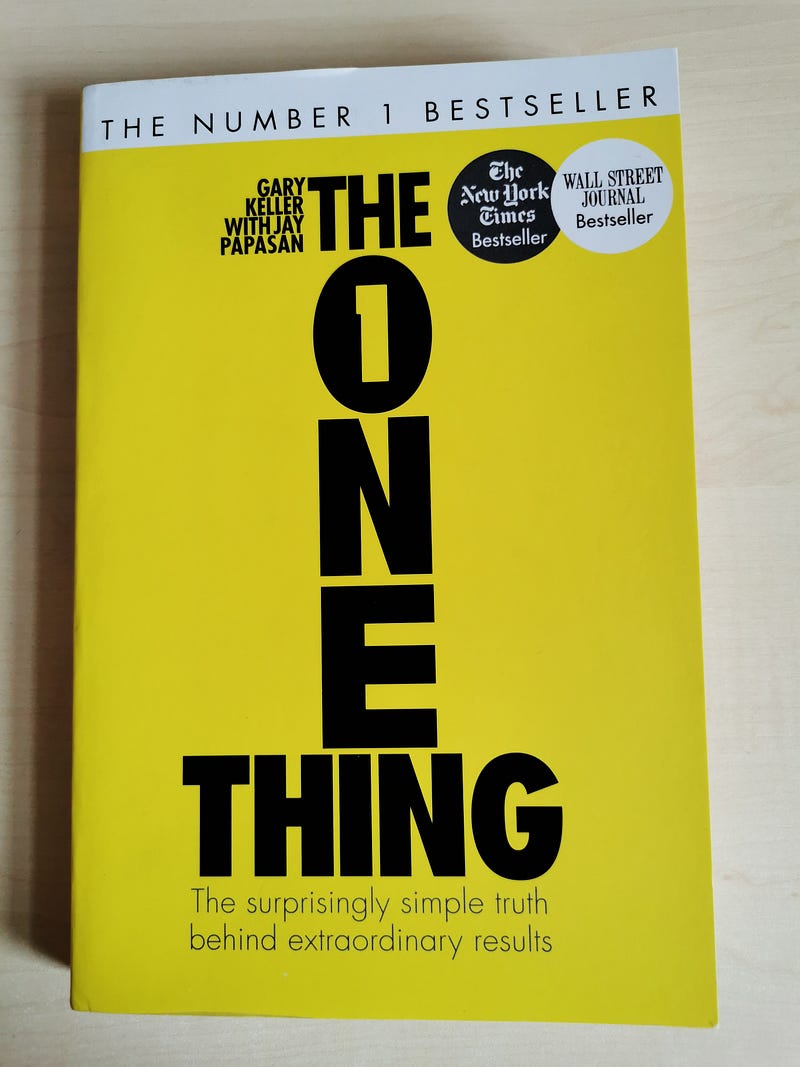
Although the main proposition can be explained in one sentence (“Focus on the one thing that makes everything easier or obsolete”), the real value of this work lies somewhere else. It helps you to align your long-term vision and goals for the future with the present. It enables you to identify the next small step that can be taken to make progress. And as we all know, the first step is usually the hardest.
For anyone who wants to focus their activities and figure out the direction in which to walk in, this is definitely a recommendation.
James Clear — Atomic Habits
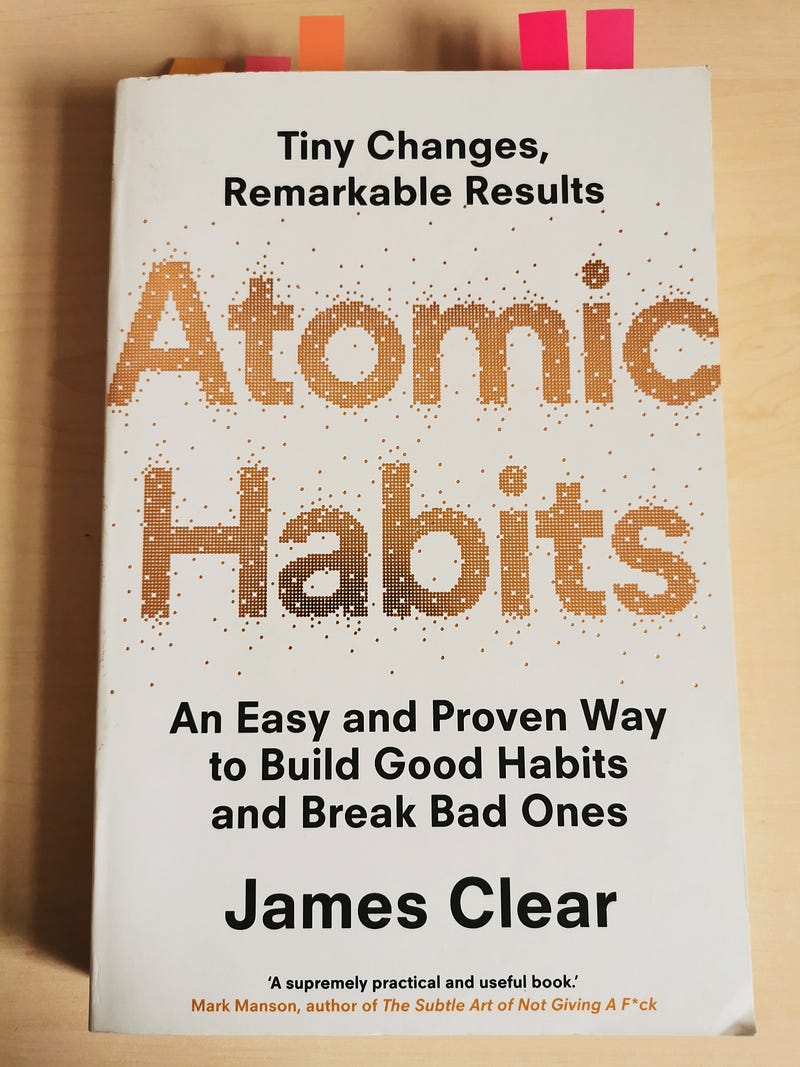
Habits shape your life. They make you who you are. What you do day after day builds your character and ultimately decides what your life is going to be like.
This book features a straightforward, no bullshit approach and plenty of research and anecdotes to back it up. James Clear shows you exactly why habits are so important and what to do to pick up a good habit or drop a bad one. This book has everything (!) you need to do so. It won’t get any easier than this.
Kerry Patterson/Joseph Grenny/Ron McMillan et al. — Crucial Conversations
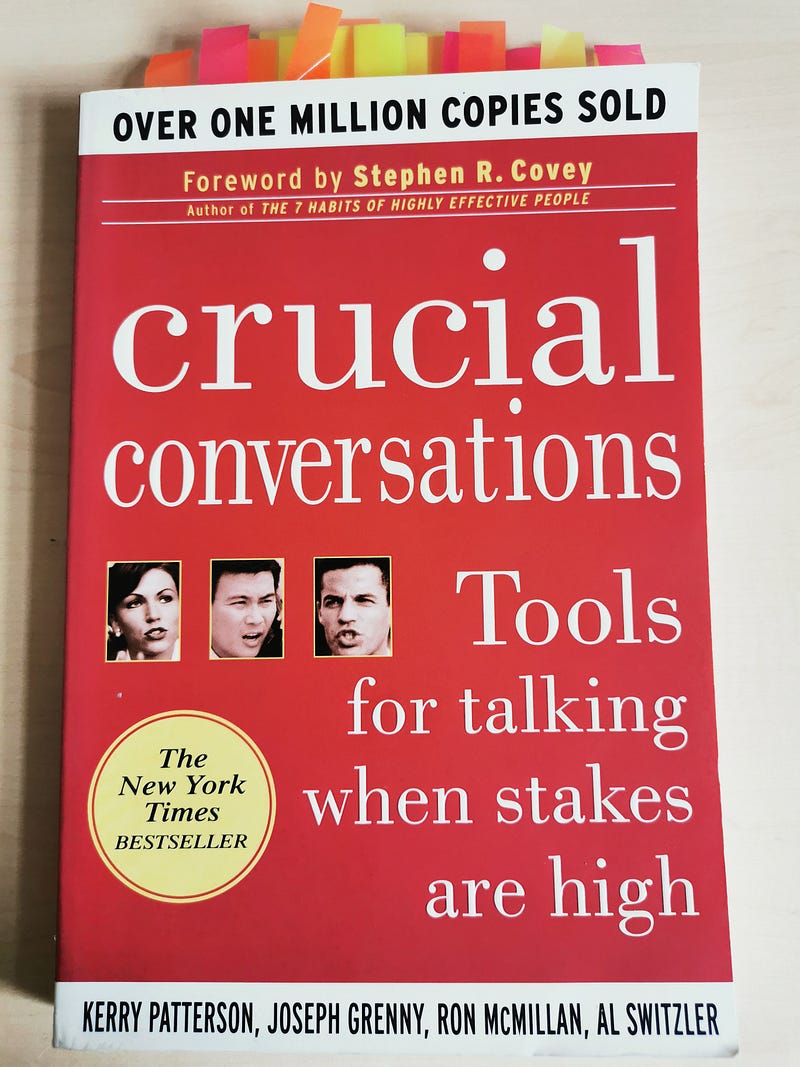
This is the ultimate guide to handle any conversation in which stakes are high, emotions run wild and you have (multiple) different opinions to consider. The kind of conversations that can quickly derail and blow up like a handful of Mentos dropped into a jumbo-size bottle of Coca Cola. Only that the Mentos are flaming torches and the bottle of Coca Cola is a couple of megatons of TNT.
Keeping your cool in a heated discussion at work. Talking to your spouse about the lack of adventure in the bedroom. Handling the puberty issues of your kids. Whatever it is, this book has you covered.
It provides you with a number of crystal clear techniques and blueprints as well as some solid knowledge about conversation dynamics. Plus, the authors have collected a lot of examples to give you a better practical understanding of all sorts of situations.
This definitely is one of the books that you have to study thoroughly instead of just read through, but when you do, your conversation skills are going to skyrocket.
Leo Babauta — The Power of Less
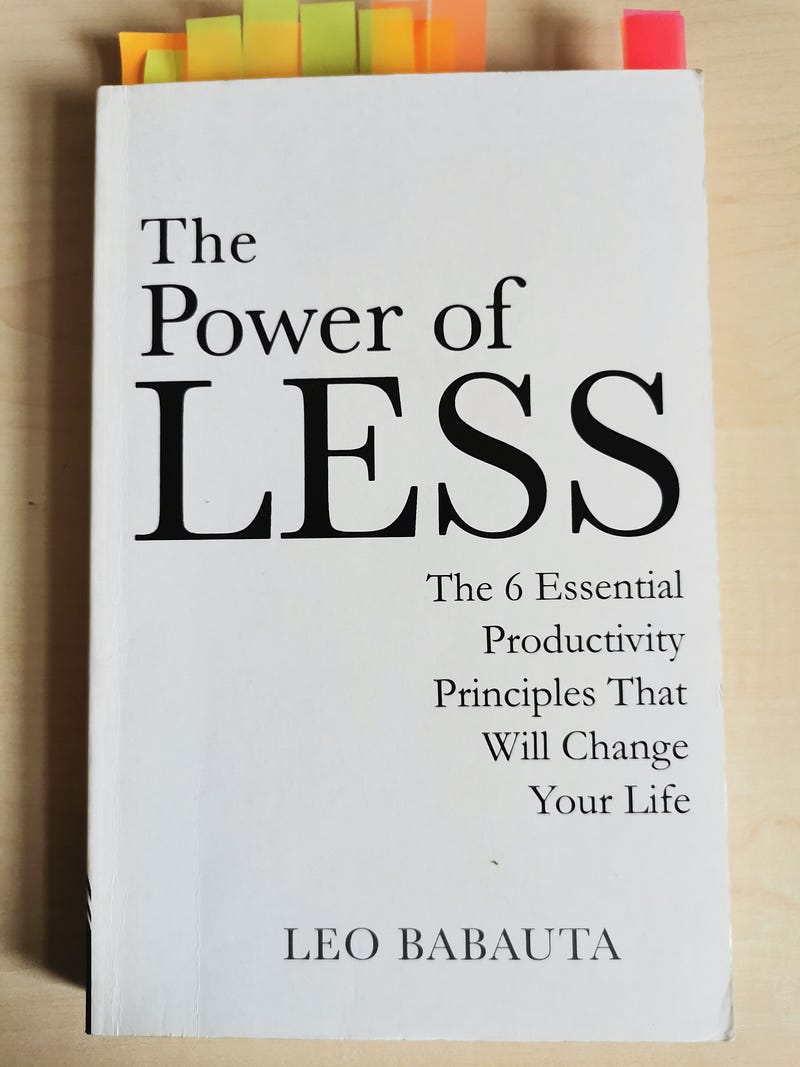
This book is the antidote to a world filled with distractions and overloaded with opportunities and commitments. It shows you how to reduce your schedule and life down to what’s essential and was the inspiration for my article on how to achieve more with less.
Very practically oriented, Babauta gives a lot of examples for how to declutter different aspects of your life. This will allow you to focus on what matters and achieve more with less effort.
For anyone overwhelmed with commitments and things to do, I definitely recommend the read.
John Gray — Men Are from Mars, Women Are from Venus
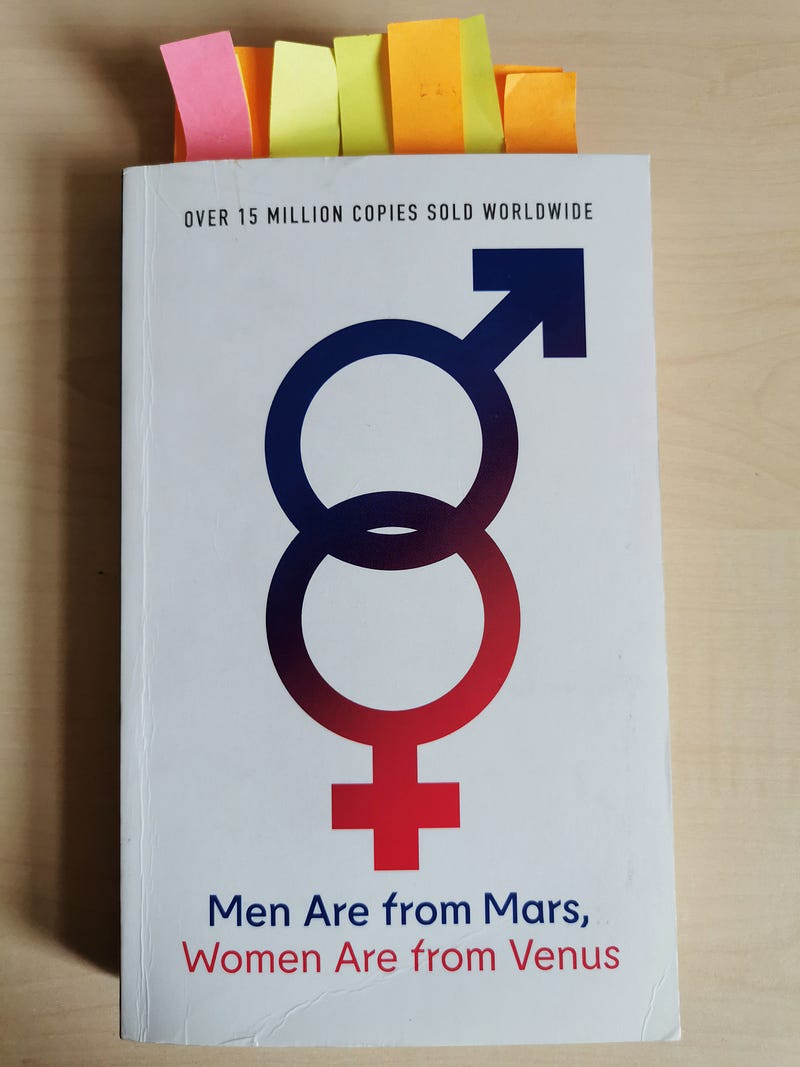
One of the very few books on relationships and sex that I would actually recommend to men and women alike. It explains the differences between the sexes in a calming and insightful way, guaranteeing a lot of “ahhh, that’s why they do that” moments.
For anyone who still can’t get his or her head around some of the things the opposite sex is doing, I definitely recommend the read — with two little remarks.
First, it’s written by an American couple therapist. This means that it is filled with anecdotes, stories and examples from sessions and seminars he conducted. While they help to understand the points made, they do tend to get kind of lengthy. After all, who wants to read about other couples’ problems? So feel free to skip a page or two while going through it.
The book is very heavy on stereotypes, so take everything said with a grain of salt. Specific stereotypes might or might not be applicable to you. But they serve the purpose of explaining the differences and peculiarities of the sexes, and it works well.
Funny enough, after I read the book I bought it for my mum as I figured she might like it. Turns out that she bought the book more than a decade ago and liked it so much that she even referred to it when teaching some of her high school classes.
So if you want to understand the opposite sex and are able to take what you read with a grain of salt and to recognize that the generalizations and assumptions made are merely for educational purposes, I definitely say give this book a go.
Scott H. Young — Ultralearning
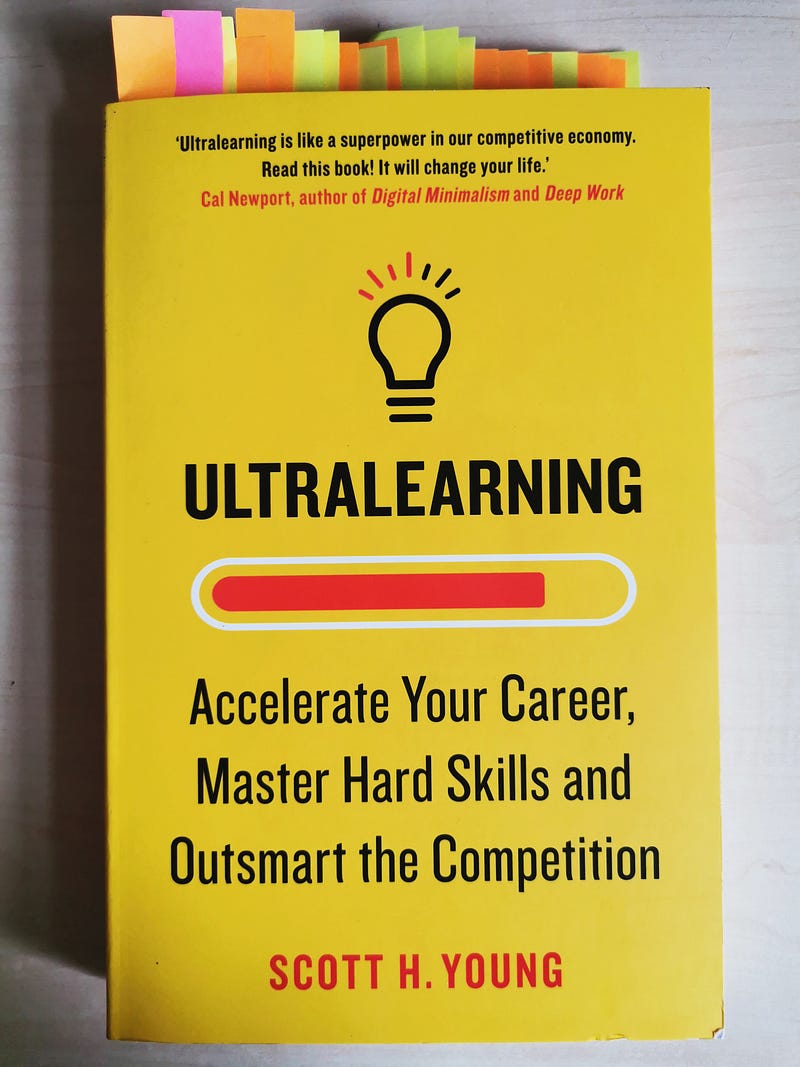
Written by someone who taught himself a 4-year MIT computer science degree within just twelve months, Ultralearning provides you with pretty much everything you need to acquire most hard skills.
Backed by solid science, this book provides you with everything you have to know about learning and acquiring a new skill. From studying for university courses on writing, programming or becoming an architect to becoming fluid in four languages within a year, this will be a tremendous help.
It is a one-of-a-kind book on the art of learning. I recommend it to anyone who is interested in serious growth and acquiring skills crucial for their career or life.
Ryan Holiday/Steven Hanselman — The Daily Stoic
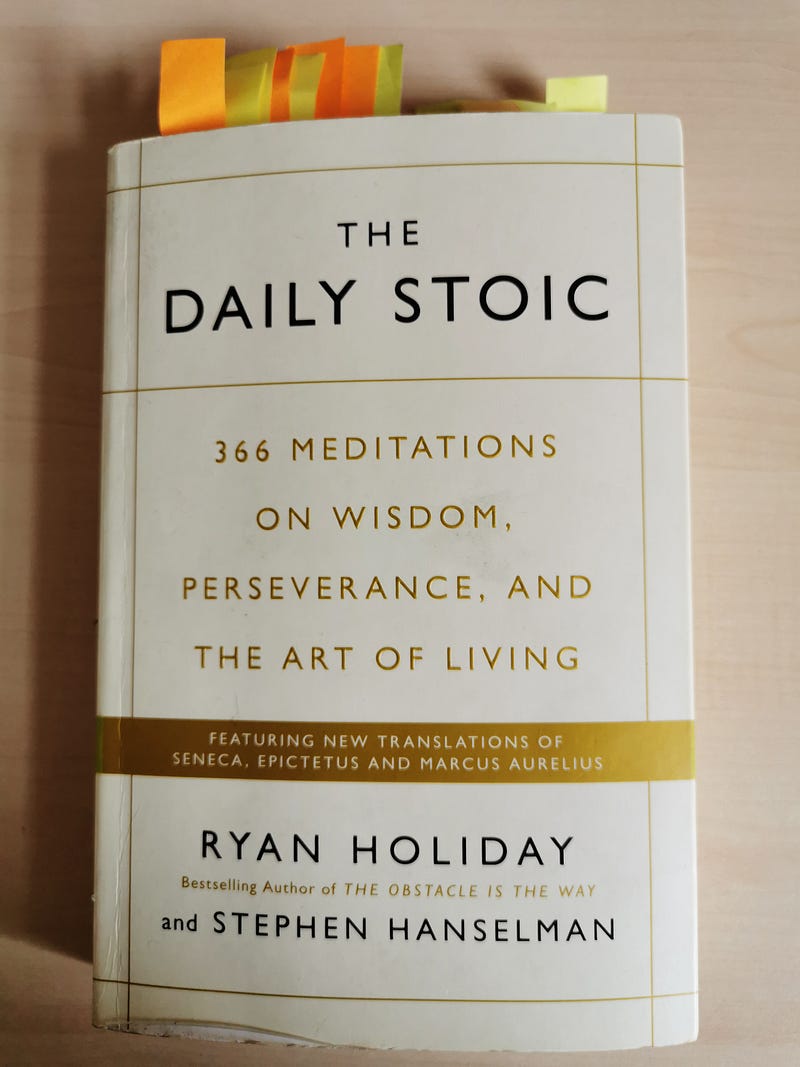
Stoic philosophy is characterized by a unique combination of ancient wisdom and modern-day applicability. What appeals most to me is that it focuses on putting you and your mind in charge.
It makes you independent of external circumstances that are out of your control. The authors managed to translate the original works of people like Marcus Aurelius, Seneca and Epictetus in an accessible, straight to the point and eye-opening kind of way.
The book is special in that you read one page per day, featuring a translation from an ancient script together with an explanation from the authors putting it into the context of our modern world.
It’s great food for thought and an easy access (one page a day, c’mon!) to a very interesting philosophy. Just keep in mind that it will require a good deal of thinking on your part — but it is definitely worth it. Page by page, my mindset shifted and my worldview changed, leaving me more empowered and in charge of my life.
Since reading it, I have put together my nine favorite Stoic lessons — in case you want a little preview of what to expect.
Brian Tracy — Eat That Frog
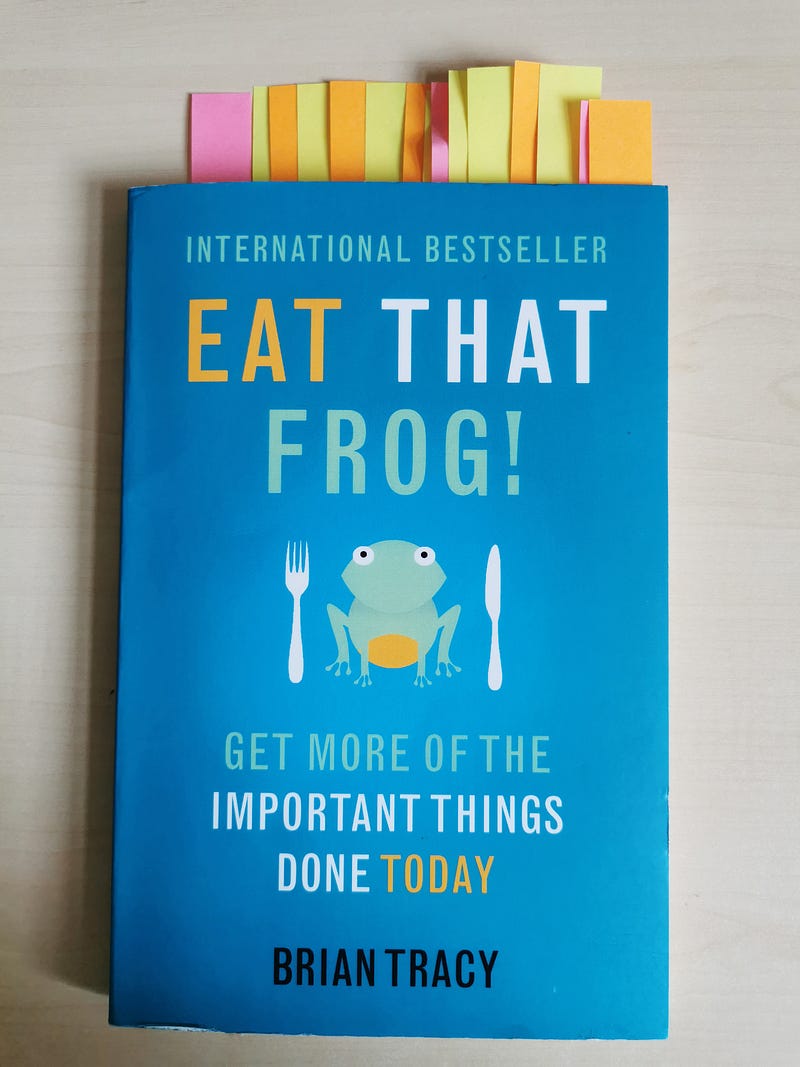
A quick read showing you 21 ways to stop procrastination, focus on your most important tasks and do them right away, before anything gets in between.
The tricks and methods are easy to understand and work well. However, some of them feel slightly repetitive (which list with more than 10 items doesn’t?) It’s kind of ironic that Tracy is all about focusing on your most important tasks while his book could have used some more of exactly that.
Still, the chapters themselves are very concise and straight to the point. Most of the content is solid advice that will help you to narrow down your To-Do-list and get started on what really matters.
If you feel like you procrastinate too much or do too many things with too small a payoff, I definitely recommend reading this one.
This is not an article to boast about how much I read. If I only cared about the number, I could have gone through another dozen or so books (increasing your reading is pretty easy if you know a trick or two).
Rather, I wrote this article to inspire you to think about the areas in your life in which you want to improve. Consider picking up one of these books that align well with them.
What I learned from a year of excessive reading
Studying the above books has brought tremendous value to my life, so I am going to keep on reading as much as I can.
However, I will limit myself to a maximum of 12 books over the course of this year. Also, some of these are going to be books I read before but haven’t memorized completely.
This has two reasons. First, I often felt like I couldn’t take my time to get involved in a chapter or passage. With one book to read every two weeks, it quickly became a race against time. Reading is a lot more fun when you take off this pressure and don’t feel rushed.
Second, I am a big proponent of doing less to achieve more. If you are forced to limit yourself, you will focus on what gives you the highest value and the most bang for your buck, so to speak. I rather want to really understand a few books that I consider impactful than have a superficial knowledge of many insignificant ones.
So now it’s on you. I hope that in this list there was at least a book or two that you found interesting and that can help you improve in life.
If you have any further suggestions for great books to read or want to share your thoughts on the ones listed above, let me know in the comments.
~ Moreno


