I Paid $150 for a 2 Michelin Star Lunch in Japan
Come re-experience it with me
After watching Jiro Dreams of Sushi — a documentary about sushi master Jiro Ono and his renowned Tokyo restaurant Sukiyabashi Jiro— I added a sushi experience at that caliber of excellence to my bucket list.
Throughout the film, I was transfixed by their passion. The men eat, sleep, and breathe sushi. They have dedicated their lives to the pursuit of being better tomorrow than they were today. To them, sushi is not merely a job or a career; it is a muse that they have dedicated their lives to.
In addition to an exquisite analogy comparing a meal at Jiro’s restaurant to a beautiful concerto, the film also does a poignant job highlighting the intricacies, sacrifices, and relationships in this small restaurant. All of which provide a valuable backdrop that only further heightens the passion and dedication.
I had my opportunity to experience sushi of this caliber when my husband and I decided to visit Japan for our honeymoon. Did you know that Japan actually has more Michelin star restaurants than France? That alone should advocate how high the caliber of Japanese cuisine is!
After much deliberation, I actually decided to not eat at Jiro’s restaurant due to many accounts of it being not foreigner-friendly. I’ve written a separate article about this here, but I would like to give the benefit of the doubt to not just Jiro’s restaurant but to any non-foreigner-friendly restaurants in Japan.
Ultimately, I narrowed it down to my top three foreigner-friendly options. Our restaurant of choice to embark on our first high-end, Michelin-star sushi tasting? * drum roll * Sushi Kanesaka!
Taking advice from the travel forums, I asked my hotel to make the reservation on our behalf. Not only was it a super smooth process, but they also included helpful tips with the address translated into English for our GPS, directions on how to get there, and the appropriate dress code to adhere to (no perfume, no sandals, no shorts, no t-shirts, and no tattoos). So helpful and considerate!
When the big day came for our sushi tasting, I was so excited! I couldn’t wait to be in the awe-inspiring presence of a sushi master.
Tucked into a basement in the prestigious neighborhood of Ginza, you take the stairs down and enter into the world of Sushi Kanesaka. You find yourself in an intimate sushi bar with only 16 seats. It’s designed and decorated in a simple yet elegant Japanese style that pairs warm yellow tones with natural wood. It reminded me of being in a Japanese tea house.
Despite the language barrier, the service was prompt, polite, and patient as we worked through the logistics of setting in and ordering the omakase. Hot tea was promptly served, along with hot tea towels for our hands.
There were two other parties of two already seated when we arrived (all Japanese), and I felt like their presence helped to further amplify the experience. To hear the soft chatter of the Japanese dialect was soothing and rhythmic.
Anytime I’m traveling, I love people watching to see both the differences and the similarities in culture. This small, cozy restaurant was a perfect opportunity for me to subtly observe them — and to ensure I wasn’t breaking any major etiquette rules!
Having done plenty of research before coming, I wasn’t surprised by a few things that you wouldn’t normally find in your typical North American sushi restaurant:
- There is no soy sauce or wasabi for you to use. The chef prepares the sushi with the perfect ratio of seasoning and wasabi, and you are meant to enjoy it the way the chef envisioned it.
- You are intended to eat the sushi with your hands. That’s why you are given a moist hand towel at the beginning of your meal. It’s so that you can better appreciate the texture and temperature of the rice.
- Focus on the balance between the fish, the wasabi, and the vinegared rice. The rice is not merely a carb filler; it takes years to learn how to properly make the rice!
- Eat the sushi in one bite. It’s rude to take two (or more) bites!
- The meal ends with a tamago, a sweet egg omelet that acts as a dessert.
I was further pleasantly surprised by the staff continually switching out our green tea. At first, I was confused and tried to show them that I wasn’t finished drinking it. With a few words of English and some gesturing, they were able to convey to me that now my tea was not the right temperature and so they were going to refresh it for me. My, oh my!
So, how was it?
Bite after bite was delicious. In fact, the word delicious is far too small of a word to use and is utterly inadequate to describe the experience.
Before you even receive your sushi, you watch the sushi chef craft each piece. The chef is like a sculptor and the sushi, his medium.
Watching the rhythmic, graceful way he works, you notice how meticulous each detail is and how much practice has gone into perfecting each aspect of the process. You begin to understand why sushi is indeed an art form and why each piece is served individually, one at a time, and given its fair share of time to shine and be appreciated.
You eat first with your eyes and each piece of sushi presented to you is pristine and picture-perfect. It’s one of those moments where it’s hard to believe that you finally have a piece of sushi in front of you that looks just as amazing as the pictures, but you can actually eat and experience it!
Then you pick it up gingerly with your hands. You can feel the temperature and texture of the rice. Warm, soft, balanced. The weight of the carefully sliced fish — not too big and not too small — beautifully draped across the rice as it glistens.
As you bring it closer, you smell it first before you can taste it. The fine notes of vinegar married into the sweet scent of warm rice. The savory aroma from the finishing brush of soy sauce from the chef.
Finally, you place the sushi in your mouth and it’s a symphony of flavors, textures, and temperatures. It meets and exceeds your wildest dreams and hopes for what a single bite of sushi could be. The rice is soft and warm and so full of flavor, a wonderful bed for the richness and freshness of the fish on top, all balanced with the intertwining savory notes from the soy sauce and the crispness of the fresh ground wasabi.
The wasabi was like nothing I had ever tasted. Back home, the wasabi is so strong and harsh. Take too much and your eyes will tear up, you’ll start choking, and your nose will be instantly cleared. If that sounds like the wasabi experience you’re used to, know that that isn’t actually wasabi … that’s horseradish that’s been colored green.
Likewise, the slices of ginger that we were given to cleanse our palettes were so different from the pink pickled ginger I regularly avoid. Again, there was no sharp bite. Instead, it was lightly sweet and citrusy; it tasted fresh with only a slight hint of pepperiness.
I felt like a kid in a candy store in my anticipation for the next piece of sushi. I was internally eager to continue this exquisite meal, while also dreading that the end would eventually come, and I’d have to leave this magical world of sushi.
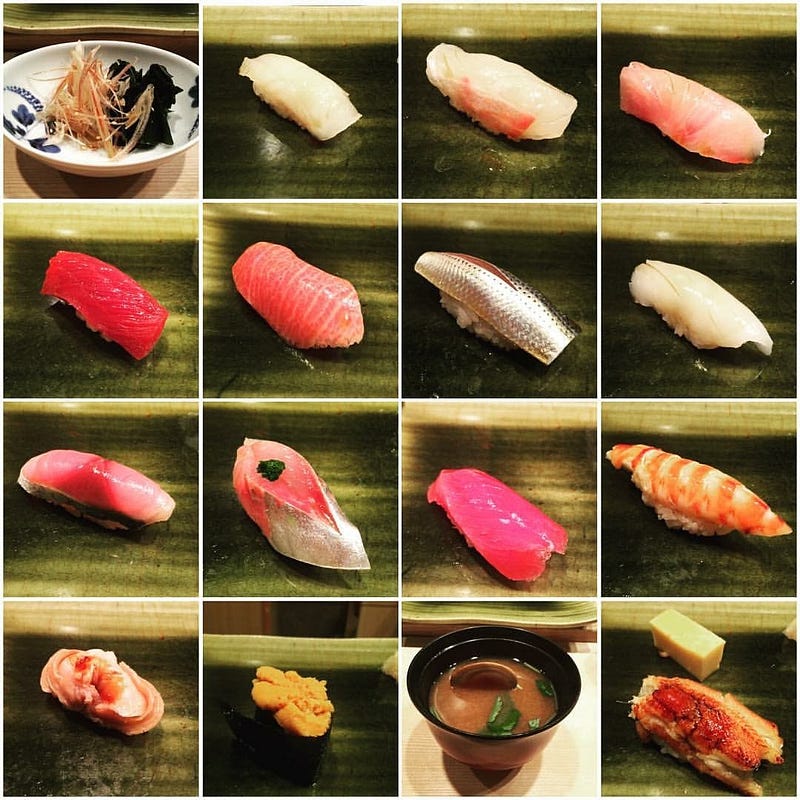
Part of me wishes I knew what each piece of sushi I ate was. Between the language barrier and my own lack of knowledge about all the possible types of fish that could be served as sushi, I wasn’t quite sure exactly what I was eating, but I knew it was delicious.
In a way, not knowing what exactly I ate helps to encase this memory like a jewel in my memory treasure trove with just enough mystique and mystery to give it an enchanting feeling. There’s no menu that can be referred back to given the changing nature of a chef’s omakase tasting. All I have left are my memories and the photo collage I started this article with.
Have I had sushi to that level of excellence since this experience? Sadly, no. At that price point, it’s not quite a walk in the park for my wallet, let alone the additional costs of traveling across the world for the experience.
But I continue to treasure this experience, reflecting on it every once in a while, and sharing it with readers like you. I hope that one day, you get to experience sushi at this caliber of excellence for yourself as well.
Thank you for reading.
If you want to read more of my writings, you may check out the following articles:
- How I Learned to Work Happily in the Same Office as My Husband
- The Humorous and Somewhat Abysmal Encounters of Couch Potato (aka Me) Meets Gym
You can share your outstanding stories and inspire others. Just click the below image and be a writer for The Masterpiece.