
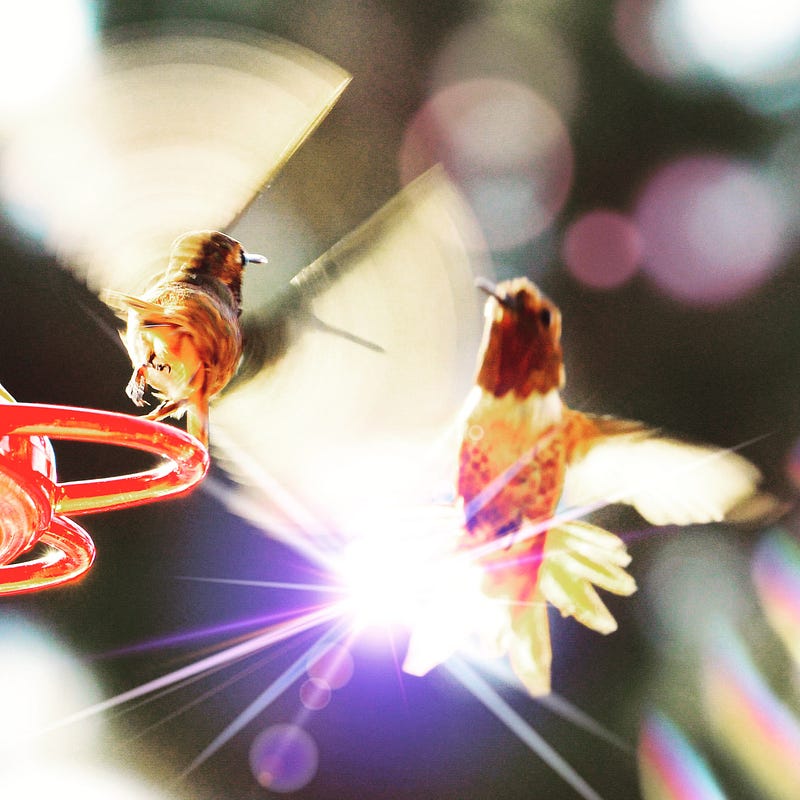
I May be Tiny, but I am Fierce!
The Rufous Hummingbird migration
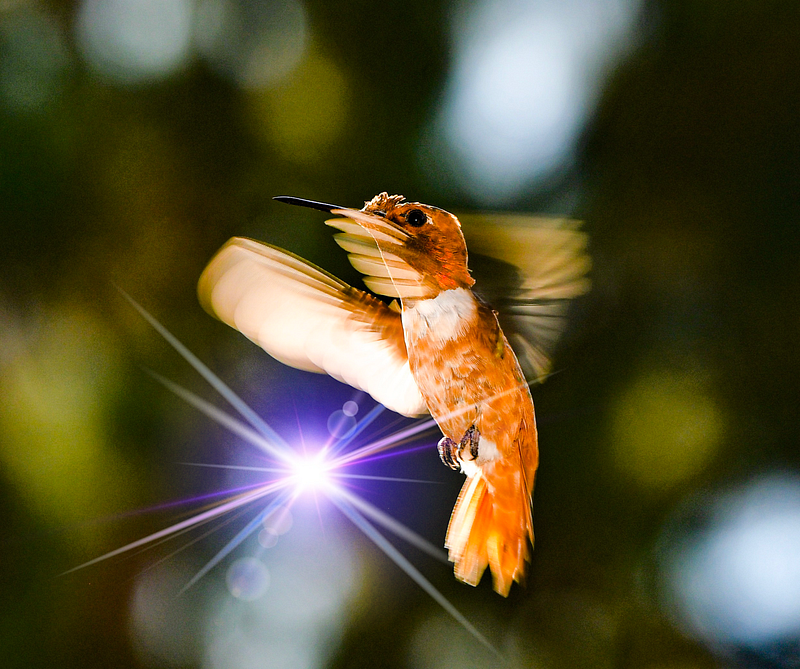
The screech and holler of the Rufous Hummingbird belies its tiny size. Only about 8 centimeters long (3.1 inches), these little birds migrate up to 2000 miles each year in their migration to and from the Mexican state of Guerrero. Some individuals travel as far north as Alaska. Others stop and luxuriate in the Rockies, where flowers are abundant, or in Southern California, where I live.
Each year, they arrive in my yard in two waves. In February, March and April, they pass through on their way north. And then, they appear again in July and stay until about mid-September. Some of them show up in the spring though and just never leave. As you might expect, this throws the established territory lines of the local hummers into complete disarray.
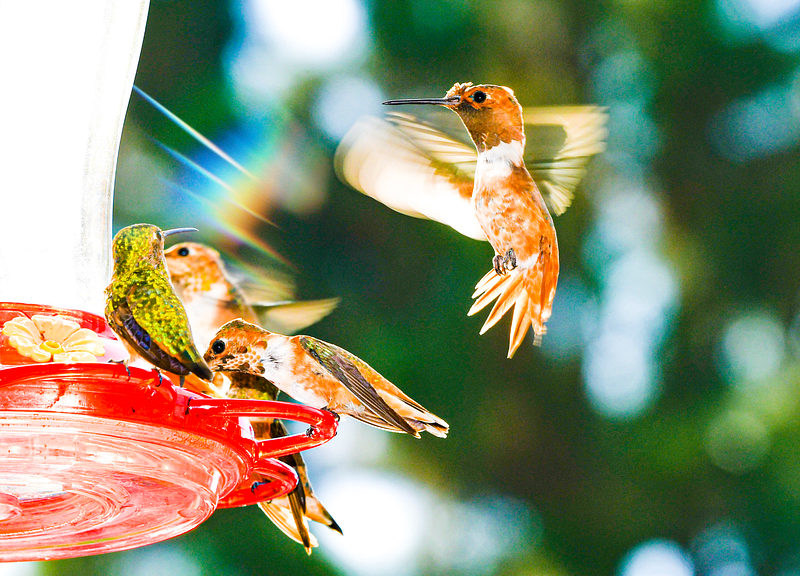
Ravenous from their long journey, they show up ready to battle it out for control over the feeders. I have six “jumbo” feeders set up for the hummers, and this time of year, almost all of them need to be refilled every single day. I wake up to the wooshing sound of tiny wings and the fierce clicking “alarm calls” of the males every morning. If a feeder is empty, pandemonium reigns until I refill it and return it to its spot.
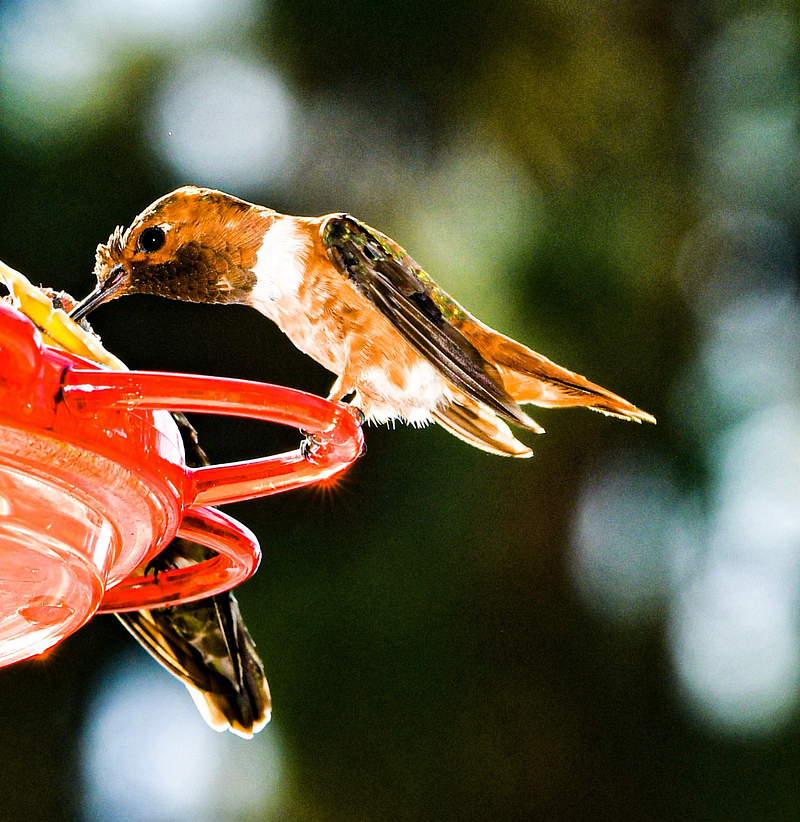
And when I do bring the feeders back up to my balcony, I love to stand, still as a statue, and watch the birds show up. They are pretty used to me now, so they let me get quite close. Yesterday, a little male hovered about a foot from my face, tilting his head back and forth, as if to ask, “Are you the Nectar Goddess?”
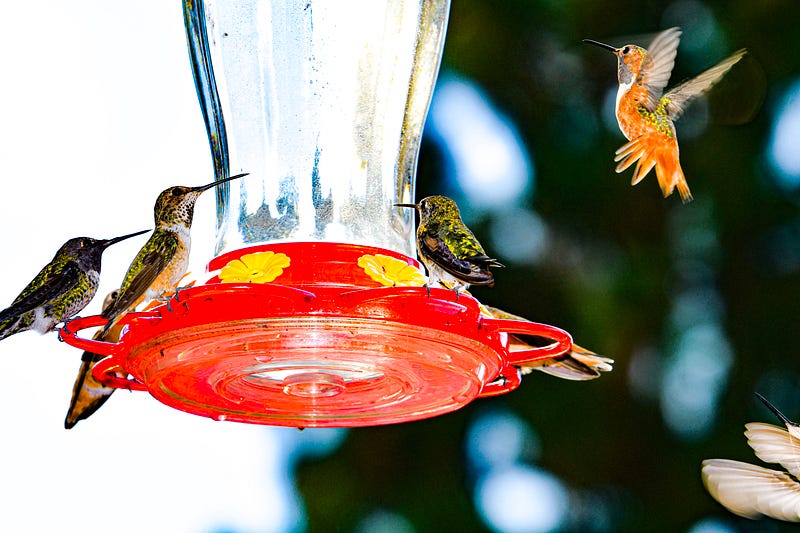
This little one already had his fill of sugar water (1:4 sugar to water — please do not put red dye in the water as it can give them throat cancer), but he is still defending his spot.
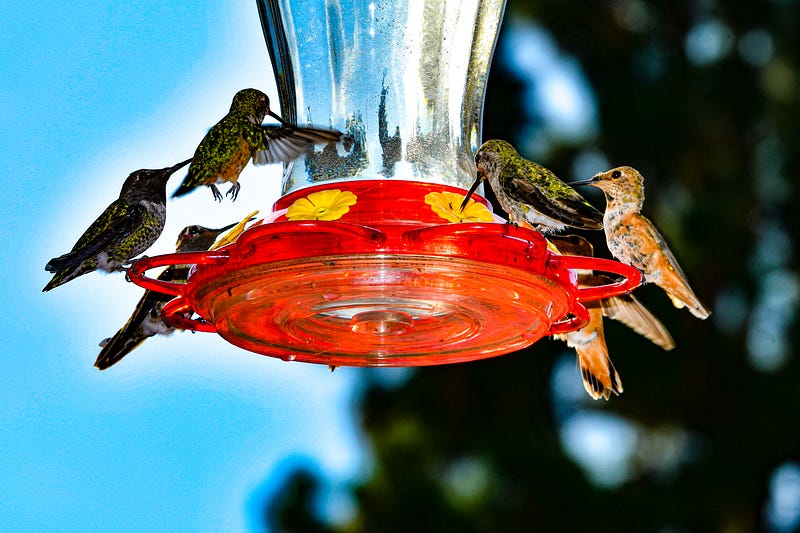
And while the males are busy chasing all the other boys away, the girls gather for a peaceful little gossip session for a few minutes. One the left, you can see “Mr. Blackchin.” He is older, and very mellow. He sits and sips and gazes off into the distance. I like to think he is meditating. But then, before you know it, a Rufous shows back up and everybody flutters off.
I hope you enjoyed this little glimpse into the world of my bird feeders. You might also like to read about the new bird that appeared in our yard a few weeks ago:
Or you might like to read about the “Baby Mountain Chickadee Rescue.”
Photos and story ©Erika Burkhalter. All rights reserved.photo


