
The New Arrival
Welcome to Our Yard
Perched on my little concrete bench, partially tucked behind a camellia bush, I waited, motionless, sweat trickling down between my shoulder blades, resisting the urge to scratch an itch on my arm. It always takes at least five or ten minutes before the birds show themselves, sometimes longer when I am equipped with my tripod and camera. But, patience is key when trying to step into their world for a few moments.
This is a daily practice for me, this time of immersion into nature. My spirit craves the connection to something bigger than the computer screen or the motions of daily life. This sense of being a part of the web of existence nourishes me, completes me. I need to hear the chirps and squawks of the birds, to feel the sun on my skin, and the earth beneath my feet.
The goldfinches, intrepid little explorers, always arrive first.
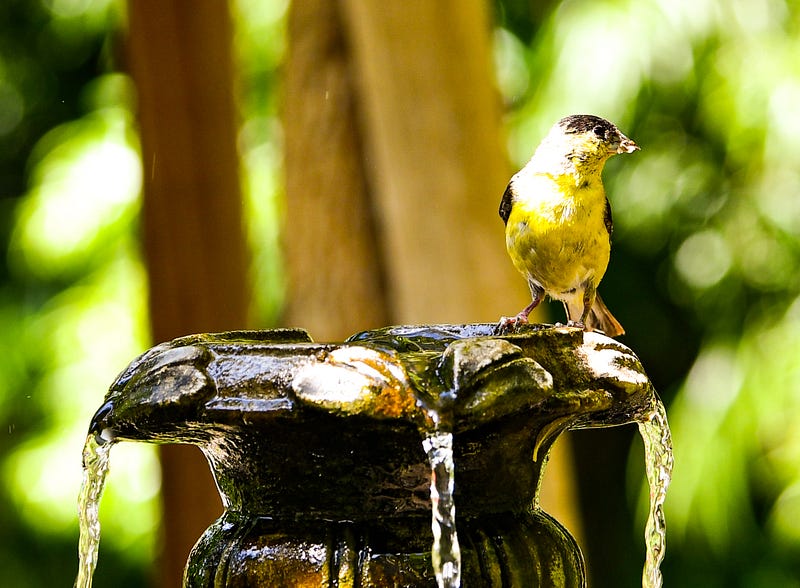
They love the feeder with the small grains, corn, and oiled sunflower seeds. And, they especially like to frolic in the fountain. Yesterday, two little females “faced-off” on this upper perch, heads low, beaks wide open, urgently communicating something to one another. Was it gossip? Or was one scolding the other. I’m not certain. But I was thrilled to be privy to the conversation.
The next to arrive are often the tiny Savannah Sparrows, pecking on the ground for the fallen offerings from the feeders.
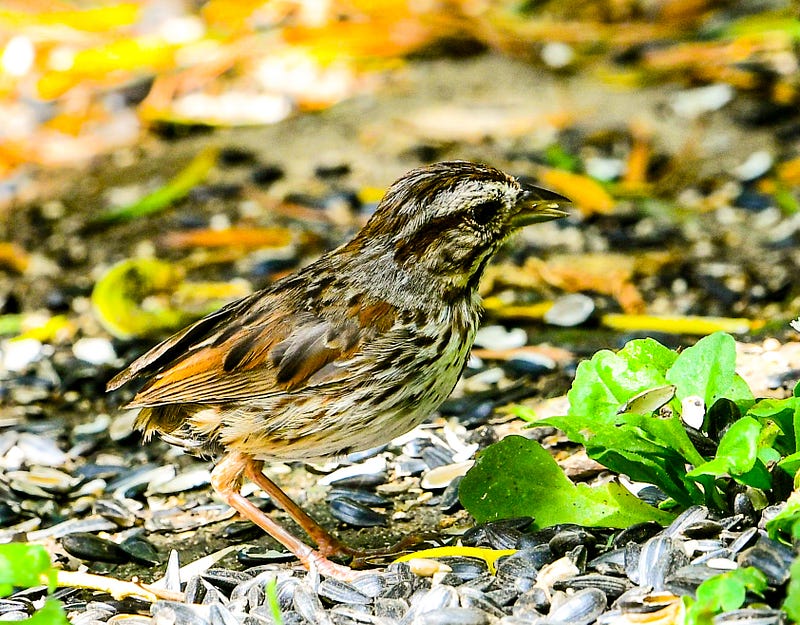
I love these little birds’ pink legs and their sharp “tip tsee” calls. They seem to be social eaters, often arriving in a stealthy gang, hopping across the ground, blending into the shadows.
The Mourning Doves, such characteristic birds of California, are quite often the next visitors. I never noticed, until I started photographing them, the pale blue ring around their eyes.
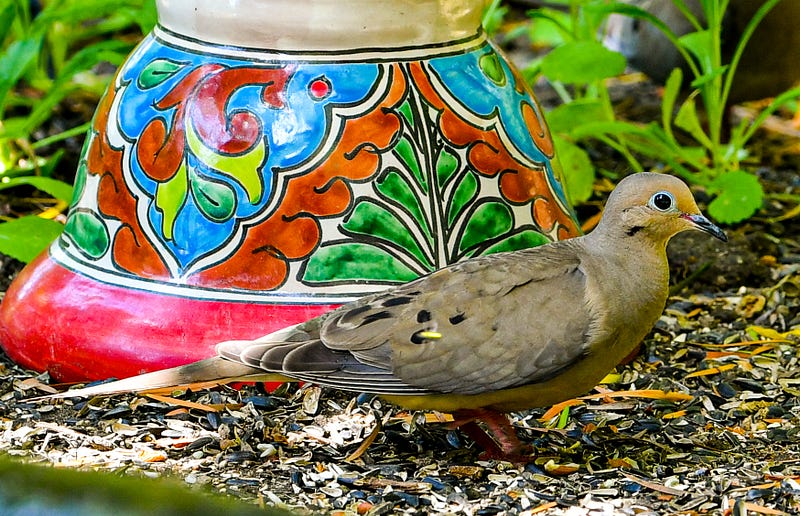
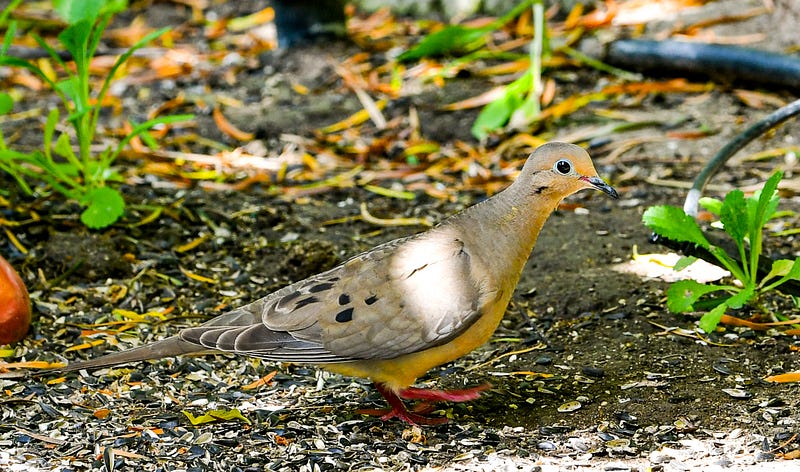
They call to one another in “cooing” croons and startle very easily. Sometimes, all in a flurry, they suddenly fly off, scaring all of the other birds momentarily.
This year, we were graced with a little family of Mountain Chickadees. They seem to be a little out of their territory, but I think they like our hilly area and tall pine trees.
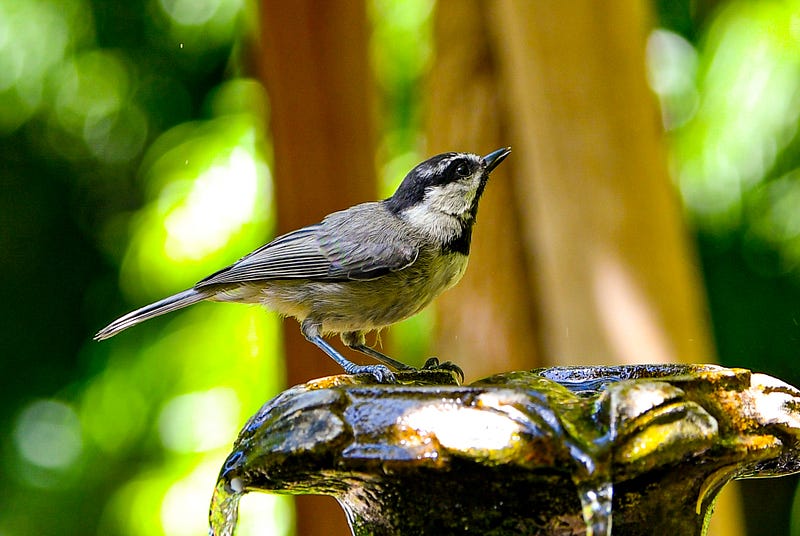
They relish freeze-dried mealworms in a basket (some birds prefer more open eating areas, like this).
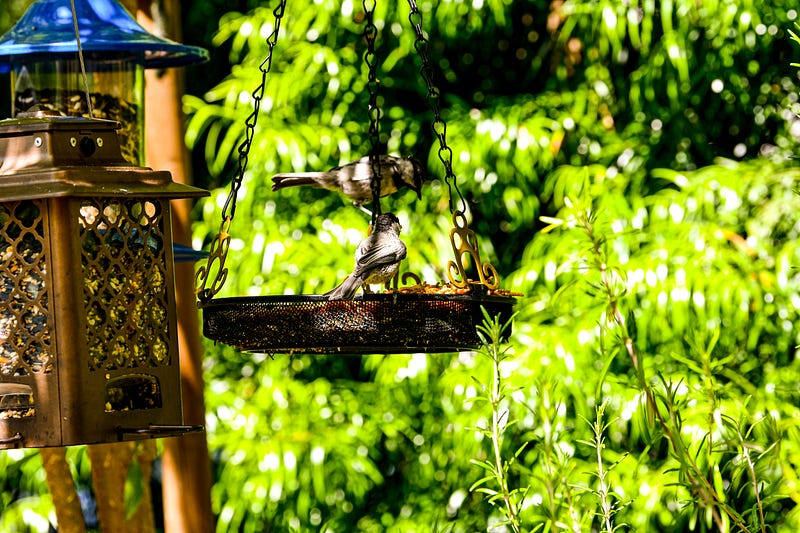
We rescued a tiny baby Mountain Chickadee about two months ago from the clutches of our cat. I held the startled youngster in my hands for about a half an hour before it flew off for what might have been one of its very first flights. And ever since then, the whole family seems to trust me completely, allowing me very close. The two fuzzy little ones have grown to almost full-size since then.
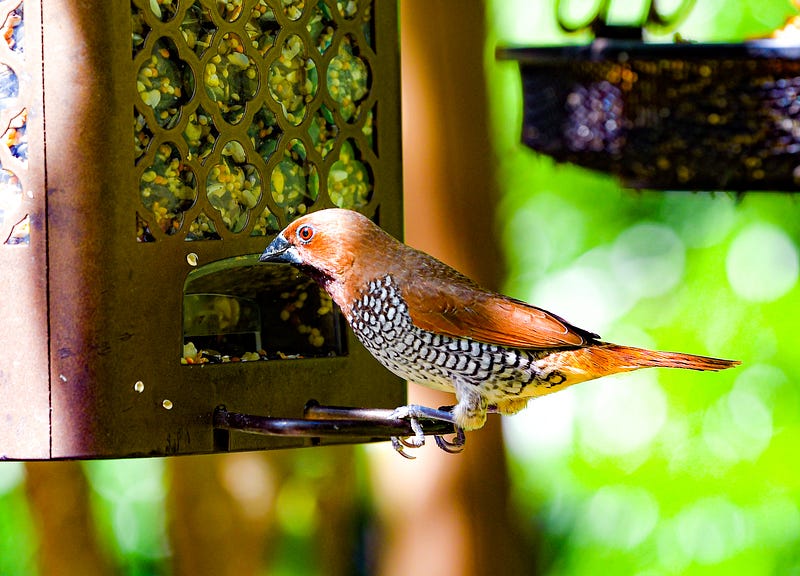
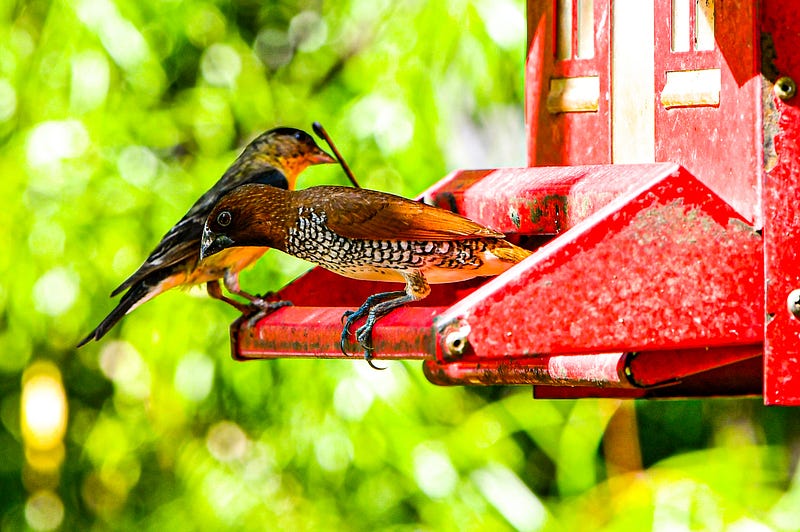
Last week, I spotted an entirely new species at the feeders. I had never seen a bird like this before and had no idea what it was. Its breast is almost “painted” with small black crescents and is “capped” with burnished coppery red feathers. I scoured my bird books and determined that it was a Scaly-Breasted Munia. We seem to have six of them. They, too, are very social, arriving in a pack and eating together. They get along well with the finches and I often spot them sitting next to one another on their perches.
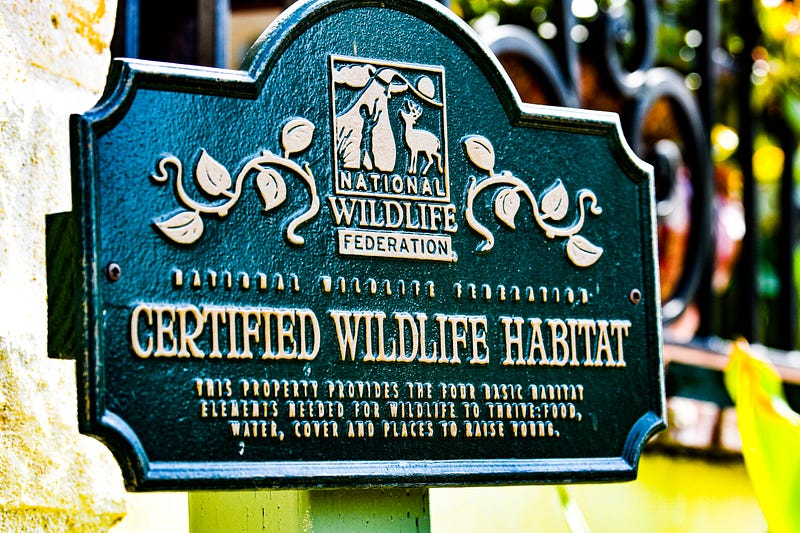
We provide several varieties of seed (some with nuts, some with fruit), mealworms, oiled sunflower seeds, moving and still water (fountains and bird baths), native plants, and safe areas to nest. It’s not difficult to establish a little sanctuary in your yard, and it provides endless delight to be able to commune with these gorgeous creatures. For more information on how to establish this environment, you can check out the National Wildlife Federation’s website.
I hope you enjoyed this glimpse into my backyard (and front yard!) birds. You might also like “A Morning at the Fountain” and “The Baby Mountain Chickadee Rescue.”
Photos and story ©Erika Burkhalter. All rights reserved.


