
Hobbies with hypertufa
I made these pots with my own hands, already a decade ago
Crafting for fun, with a purpose, and using simple materials.
I was watering plants here and there in the old house’s garden. I didn’t even remember about their existence, about my times playing to build them. Hence they surprised me.
I’m talking about pots, simply pots.
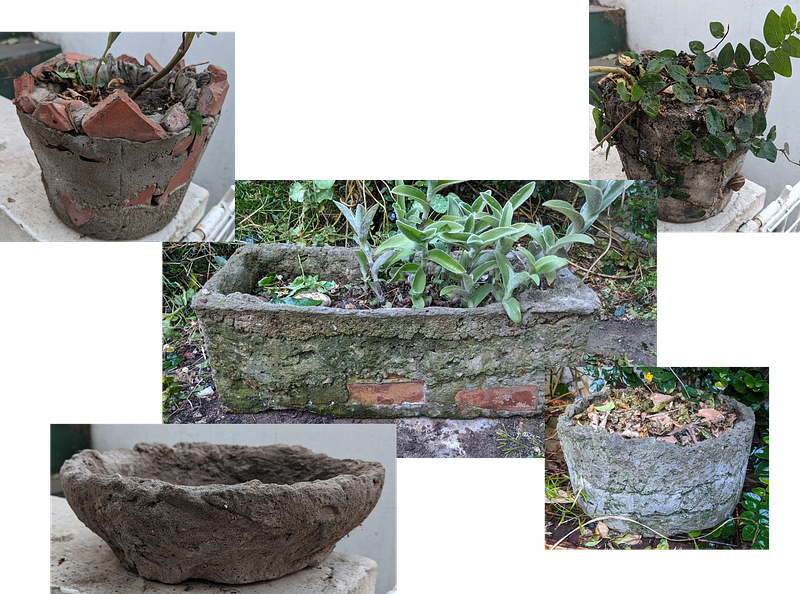
25% of my life ago, I decided to never again buy pots, as most were made of plastic, and those made of more friendly materials were quite expensive for my budget. Although overall, I failed to reach my resolution, I did grow the habit of looking for substitutes. And sometimes I even make my own pots!
Crafted from Portland cement mixed with sand, soil, and any other materials I would find, these pots hosted some of my beloved plants at the time. Now their original inhabitants are mostly gone, replaced by wilder species.
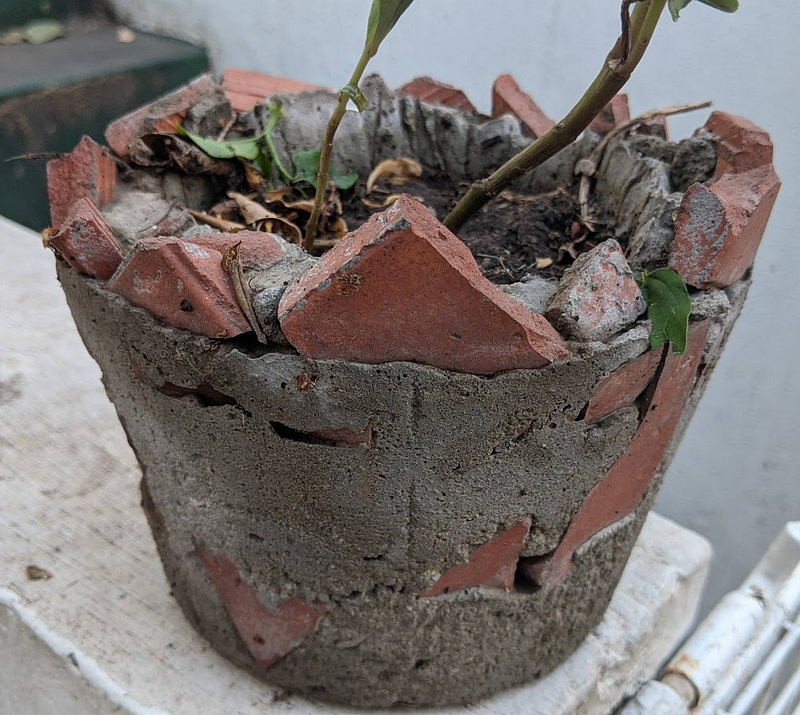
Over a decade lost around the garden, some of these pots were taken over by ivy-like climbing weeds and bugs of all kinds:
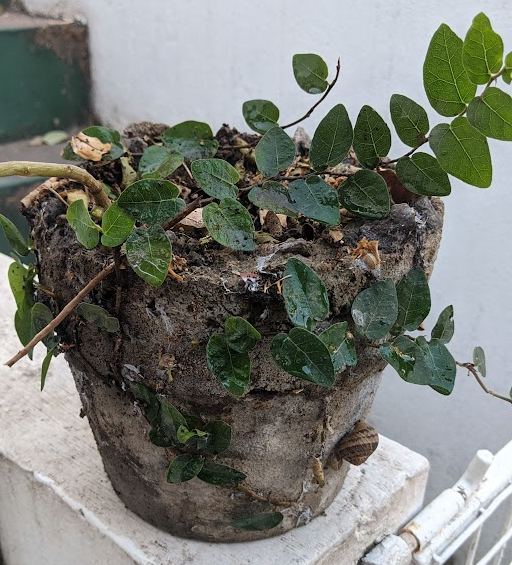
Some still have their original inhabitant, plus some guests:
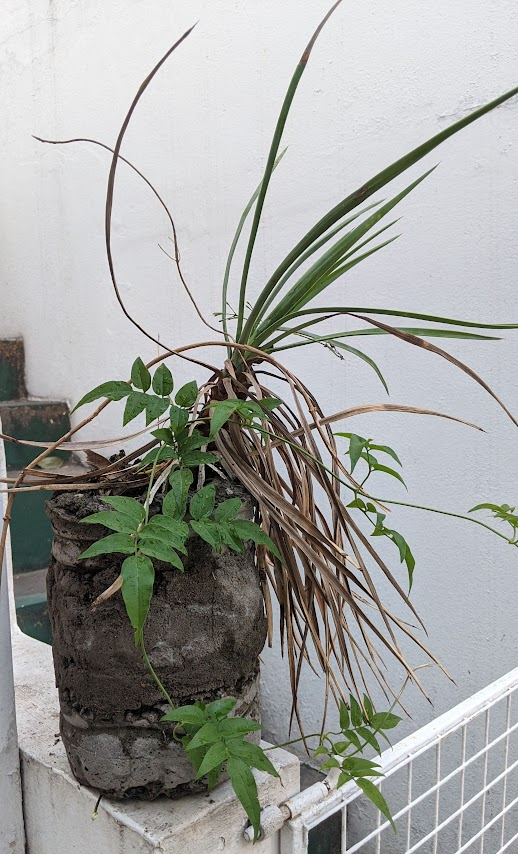
This next one has no big plants in it but was left under the shadow of a densely-leafed tree, so some moss is growing up:
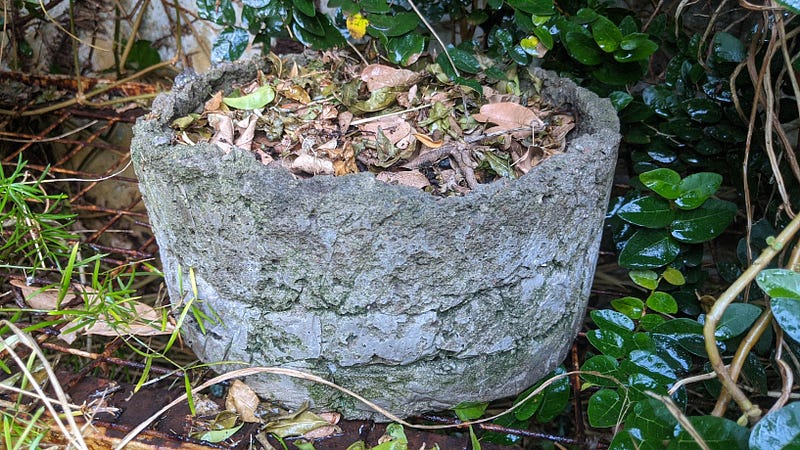
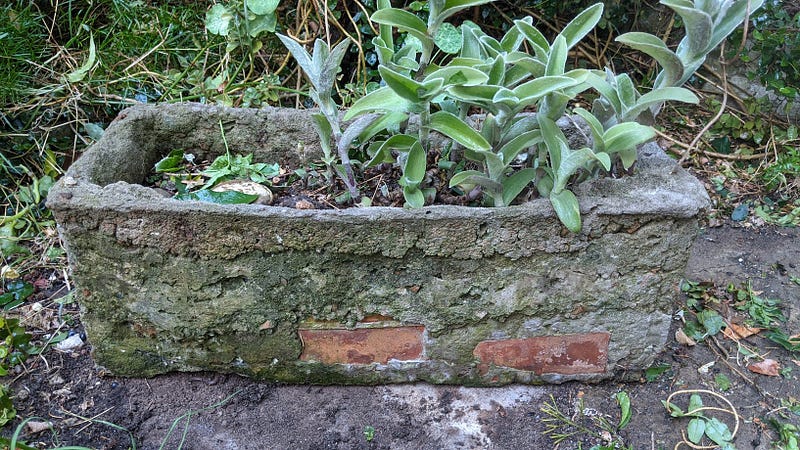
Moss also grew in this one, the largest pot I ever made at about 60 cm long:
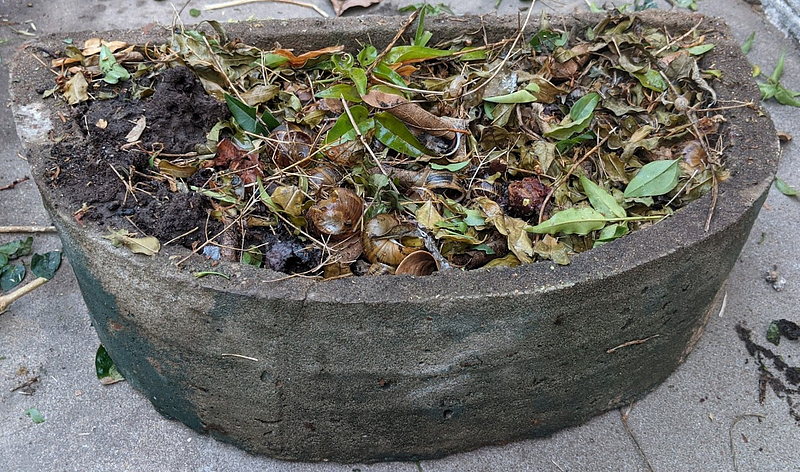
Another pot, crafted like a half-circle, was empty of plants but hosted several snails:
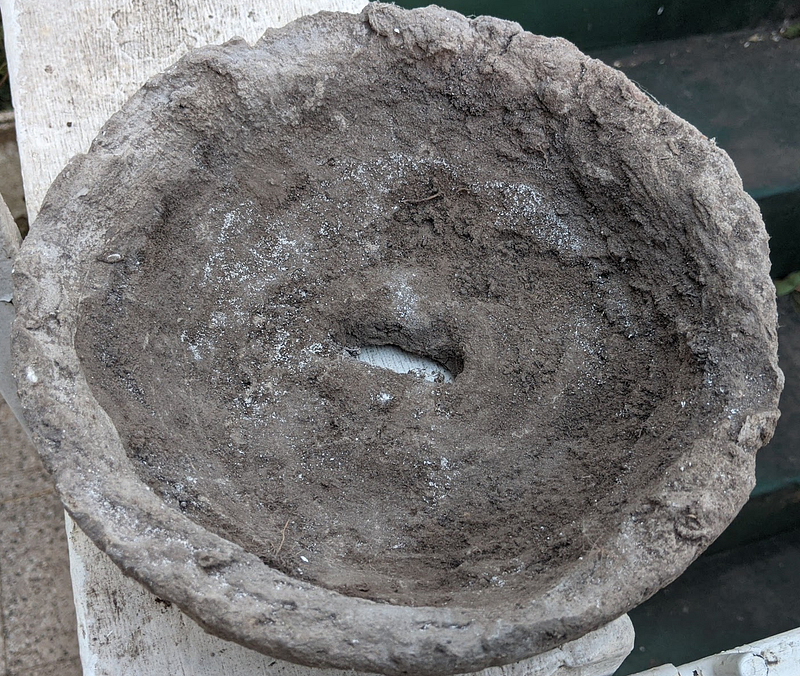
One last pot awaited somewhere else next to all the garden tools. This one’s empty and was in the dry, so it’s much better preserved:
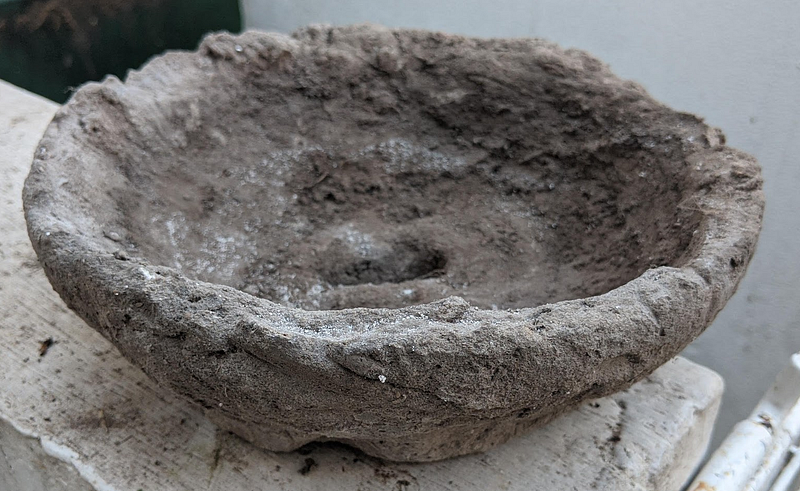
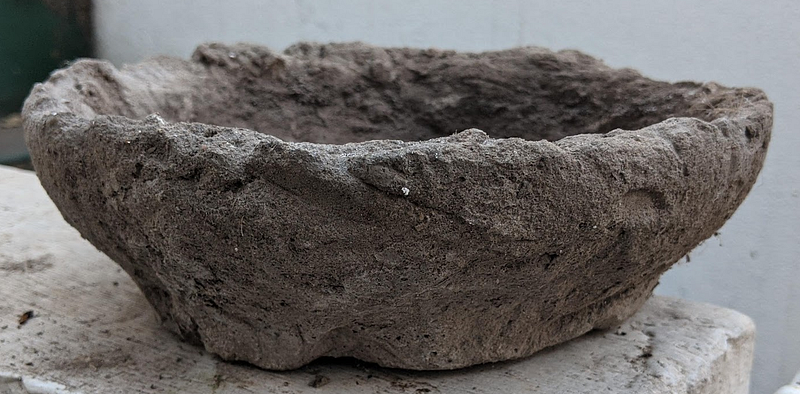
This hobby of mine from the early 2010s was reborn during the Covid19 pandemic, when I made a pot and its plate with cement, sand, and some shells among other hobbies I set to roll out:
Hypertufa?
Hypertufa is a kind of artificial rock made from various aggregates bonded together using Portland cement through a stage in which it is creamy and malleable. It is used to make garden ornaments, pots, and land forms, and is particularly popular for alpine gardens since it is relatively light and can withstand harsh winters.
The aggregates used can be as varied as moss, sand, perlite or vermiculite, soil, crushed particles, and sometimes also polymer fibers, liquid acrylic or fiberglass to confer more strength. To make hypertufa, the aggregates and cement are mixed with water and the resulting dough is packed into a mold and sealed or covered in plastic, then allowed to cure for several days. After it is cured, it is then exposed to the elements for several more weeks to reduce its surface alkalinity. Finally, it can be used to hold plants.
An example of a hypertufa mortar recipe is a 1:3 mix of Portland cement with aggregates, including sphagnum or coir, perlite, sand, soil, compost, crushed stones, and whatever you like -but I recommend you stay with small pieces so that they mix properly and then get solid together.
Try it out, it’s very fun working with hypertufa!
www.lucianoabriata.com I write and photoshoot about everything that lies in my broad sphere of interests: nature, science, technology, programming, etc. Become a Medium member to access all its stories (affiliate links of the platform for which I get small revenues without cost to you) and subscribe to get my new stories by email. To consult about small jobs check my services page here. You can contact me here.