
“I Love You, Dad” – Posthumously
Three words I have struggled to say all my life until now

It’s three simple words. “I love you, Dad,” are expressions that I have never said in my entire life. Then again, I have never been one to wear my emotions on my sleeve.
I am not alone. A Reddit survey about how often people have expressed their love for their dad showed the majority have said “never.” I was shocked that others, too, withheld their emotions from their fathers.
Love. It’s a small word with such big meanings. It’s easier for me to watch movie people on the big and tiny screens getting emotional and telling each other how much they love each other…truly, deeply.
Yet, I use the word “love” almost every day, but its meanings are tied to things related to the gastronomic variety.
I love ice cream.
I love that pasta.
I love this restaurant.
I also use the often-used term “love” to describe much-loved places I have visited.
I love Rome.
I love Hawaii.
Sometimes, the word compliments other people’s outfits, such as “I love that outfit that you are wearing” or “I love that hairstyle on yourself.”
Ironically, I couldn’t express my love for my Dad in phrases like “I love you.”
I tried to spend as much time with him in the last years of his life to show him how much I cared.
Every time I left him at his doorstep and later at the care home, I never told him that I loved him. But I tried to show my caring in different ways. Let’s start with why I ended up being reticent about expressing my emotions.
Growing Up
I grew up in a family of three other siblings. My Dad was an intelligent, busy entrepreneur. He immigrated from Guangzhou, China, when he was in his twenties. After marrying my mother in the late 50s, he went to work opening and running a grocery store.
I grew up never hearing words of endearment in our household. I never heard “dear,” “sweetheart,” or “love you” from any of my parents as we left for school in the morning.
My Dad showed his love for us in other ways. He allowed my three sisters and me to grow up surrounded by animals. Over the years, we owned cats, dogs, fish, and even pet rabbits.
My siblings and I helped out in the family business by stocking shelves, serving customers, and watering plants. Although we never received a salary, my Dad showed affection towards us in other ways, such as letting me and my mom take vacations to Hawaii and Mexico while he ran the store.
Concerned For Our Health
Some of my siblings were born with minor skin conditions, and he encouraged my siblings to take traditional medicines and drink traditional Chinese herbal soup, which acted as a tonic and was said to give us energy.
I Needed To Work On My Multiplication Timetable
When I was in the fifth grade, my Dad learned that my knowledge of the timetable was not up to snuff. I had to stay home, learn my timetable, and run the store with my mom while he took my siblings on a short day trip to a famous tourist attraction.
I know I got excluded, but I knew my Dad had my best interests at heart: He wanted me to learn my timetable, which I did.
Seeing My Dad Daily
Back then, going home from school and working in the family store was hard sometimes. Being shy and awkward, I was embarrassed when classmates came to the store and saw me there. I envied their freedoms and their chance to go out with friends.
But I could choose to eat (without paying)any candy or bag of chips, which I could indulge myself every day if I wanted to.
I see it as a blessing because I saw my Dad daily until well into my late twenties.
I often did my homework in the store. My Dad would always be nearby, smoking cigarettes and watching me closely while I served customers and bagged groceries.
He developed a daily habit of smoking cigarettes, which only ceased when he lived in a care home.
I told him often to stop smoking, and he would say, “Yeah. It’s not good.”
I never did pick up the habit.
The more I saw my family daily, the more I felt coddled and needed independence. One year, I moved far away to start a career. My phone calls with my family were brief, and they mainly centered on me talking on the phone to my mom. I wrote letters mainly to my mom and siblings.
I eventually returned home and tried to stay near my parents.
Twenty years ago, I met my husband, and we made it a regular thing to go out with my Dad for dinner every weekend, rain or shine. My Dad taught my husband how to eat Dungeness crab cooked in black bean sauce.
Intuitively, I knew my Dad was getting older and facing increasingly serious health issues. I was saddened, but despite my regular visits, I could never say, “I love you, Dad.”
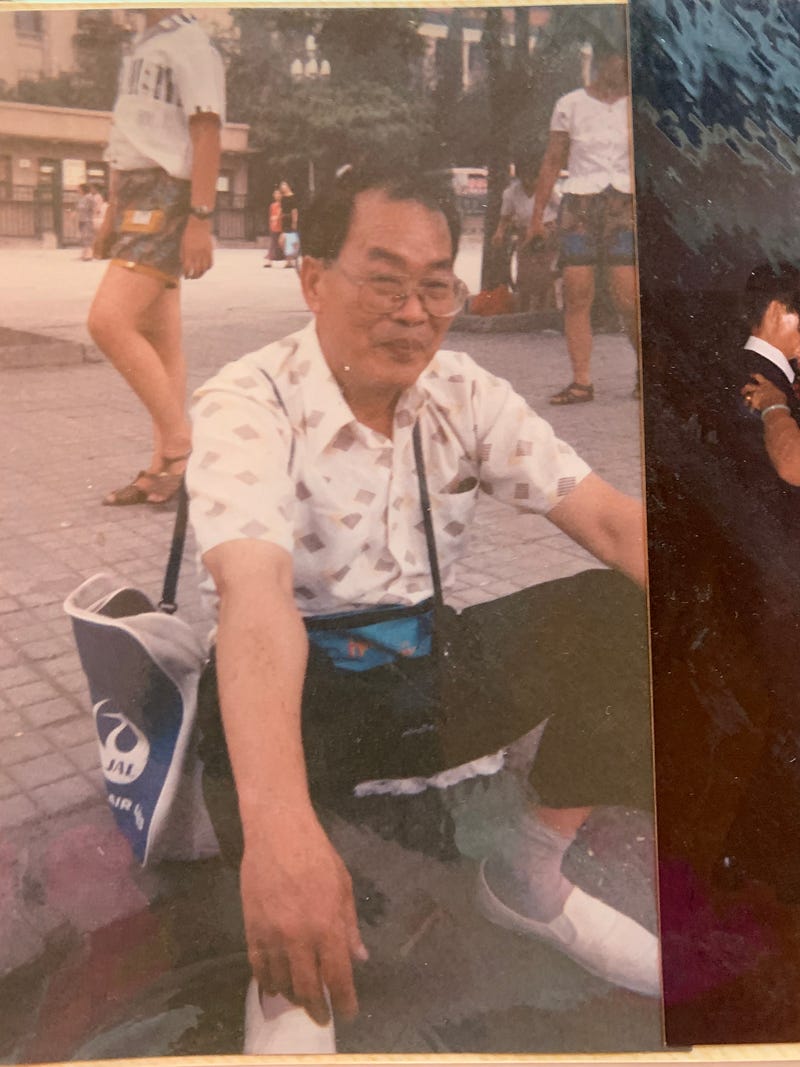
Above: my Dad loved travelling as a young man.
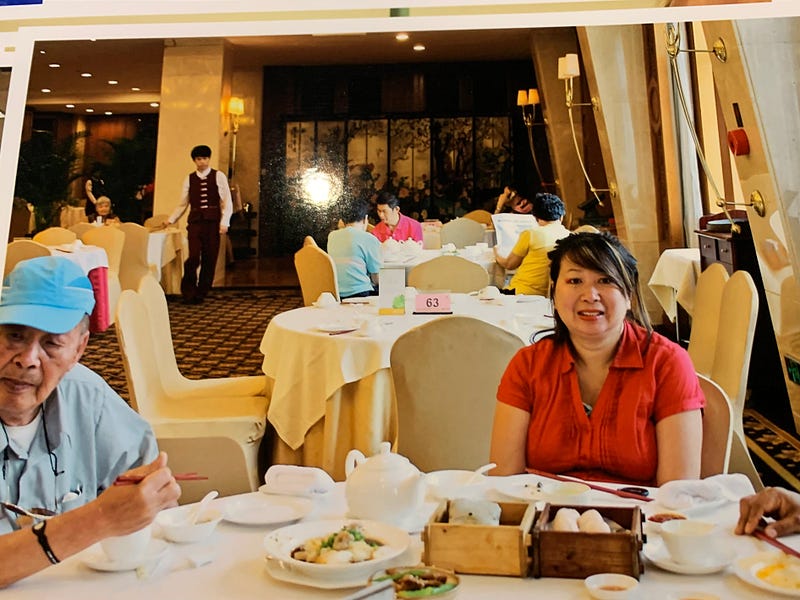
Above: me and my Dad. We visited China in 2013.
Love Means Being There
Although my Dad never verbalized his love for us, he expressed his caring in other ways.
He would always ask me, “Is everything okay?” He also expressed interest in my finances and helped me purchase my first condo.
Instead of saying, “I love you,” my Dad often asked, “Did you save lots of money?”
He reminded me that it was important to refrain from being extravagant and save for future retirement.
Remember that survey I wrote about at the beginning of this article, which mentioned that most people never tell their dad of their love for him? I don’t feel it’s good to be in that majority.
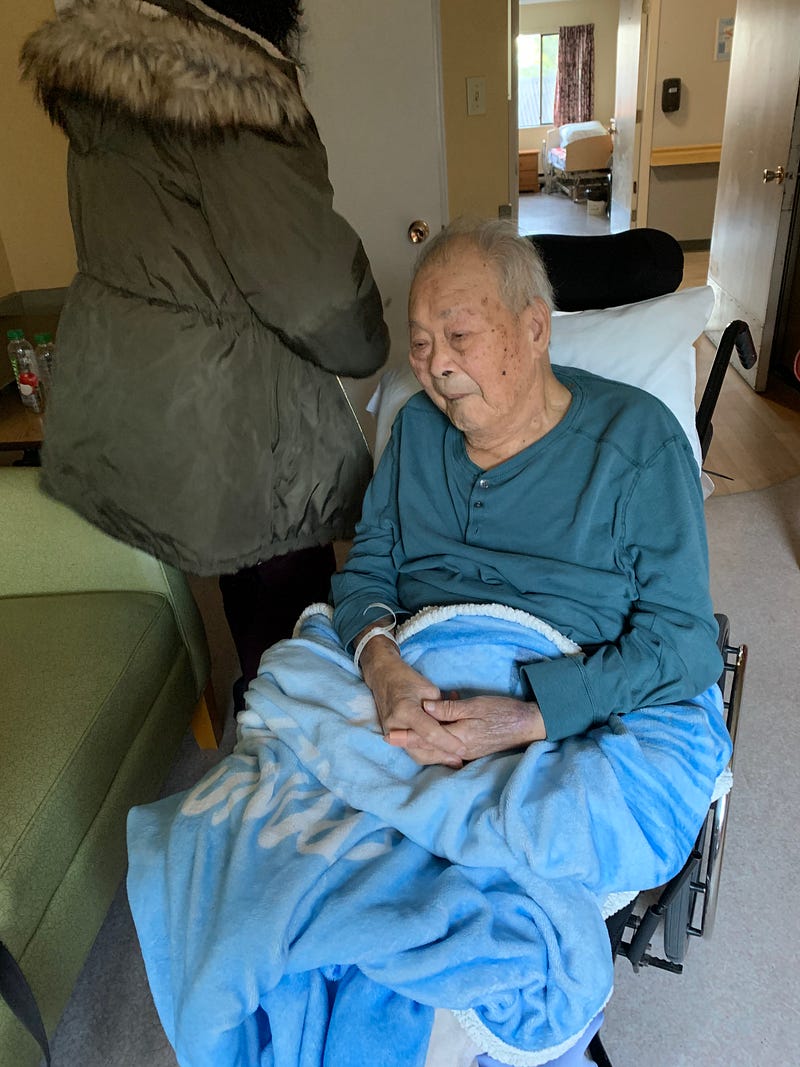
I should have tried harder to tell him I loved him while he was alive. All I knew was that I felt my actions were equivalent acts of love.
As I write this, I miss my dad. He passed away on January 4, 2022.
I hope it’s not too late to tell you this.
I love you, Dad.
I love you for always being there for me. I was too shy to say it then, but I deeply cared for you. I tried to show it by buying you clothes, calling you daily, taking you to medical appointments and fixing your television set when needed.
I hope that someday, when I meet you, I will say, “I love you, Dad,” in person.
Thank you for teaching me everything you knew about love. Love is about being there for someone. I hope I was there for you when you needed me.
That’s all today. Does this article resonate with you? How often do you verbalize your love with your parents? Thanks for reading this.
Don’t miss any of my stories, and if you are on Medium, subscribe to me via email here to get my latest articles. Follow this wonderful publication, Illumination, to get thought-provoking articles.
Check out my previous articles:


