
A Coconut Grove Memoir
I Lived the Gay Stereotype of the Boy Who Only Befriends Girls
“Please move Marvin’s seat away from the girls.”
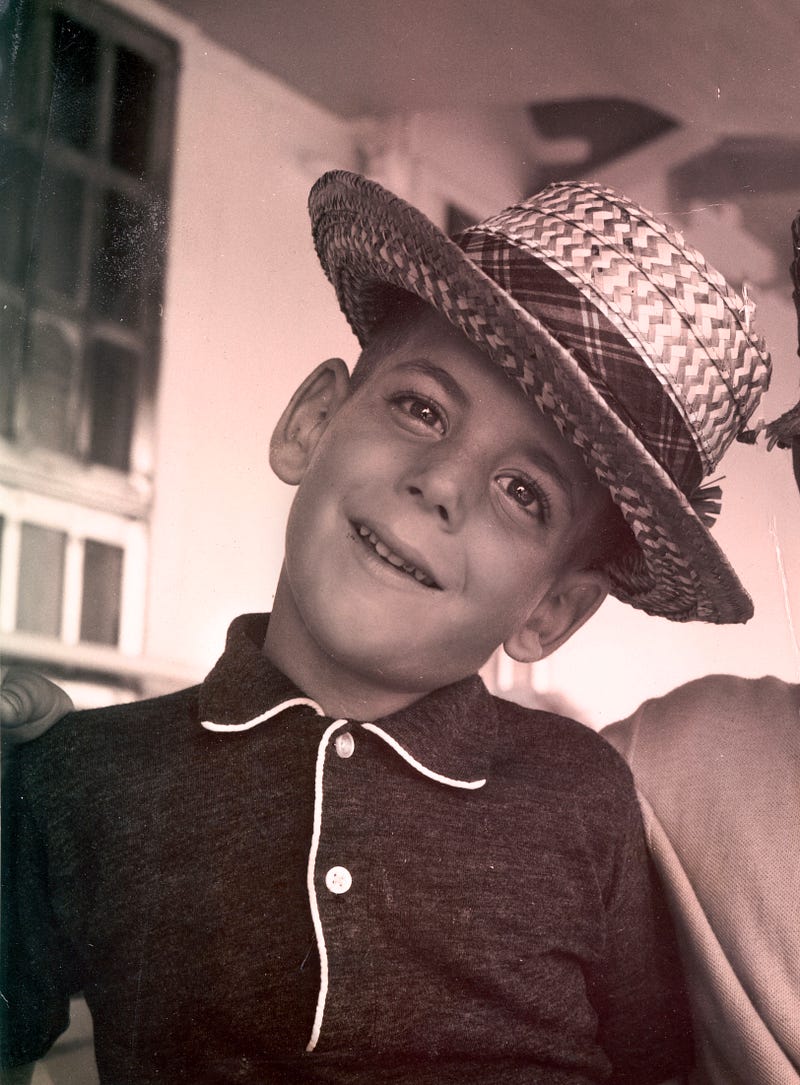
Stereotypes like “ boys who choose only girls as friends are likely to turn gay” have been around for eternity and continue today. The fact of the matter is that this type of behavior is just one type of GNC (Gender Non-Conformity), but the stereotype is sometimes true.
By age 2.5 to 3.5 years, children’s gender-typed behavior significantly predicts future sexual orientation. Children who exhibit more gender nonconformity in regard to toys, playmates, and activities are more likely to later report more same-sex and/or less other-sex sexual attraction and behavior
Being affected by such stereotypes can come close to home, sometimes entering it through the front door. Despite my old neighborhood, Coconut Grove, having a liberal reputation back in the 1960s, many families still stuck to old-line thinking. It still happens today.
Sunrise Harbor — Coral Gables Meets Coconut Grove
Biscayne Bay meets Miami on its western shores, where it also feeds the Coral Gables waterway. Sunrise Harbor is a mini Venice-like neighborhood of four canals each running west to east from the Coral Gables Waterway, which sits near the Coral Gables-Coconut Grove border.
The entire area had limited development; a house here and there but mostly vacant lots covered with Australian pines — perfect for building forts with friends — friends who were girls.
Girls were my favorite choice for befriending. Every chance I had, girls were near, from one to many. At the time, I thought they were the only ones who didn’t bully other kids, like most boys did to me.
The girls and I created a social life centered around fort building. After all, we needed a place of our own. We were around ten years old.
My mother, Eleanor, a social butterfly of a housewife, built a close relationship with a few of the single mothers in Coral Gables. One of her friends, a nurse called Jen, worked all the time, so her house was fair game for a hangout. Helpfully, her home was very close to Biscayne Bay, which was the perfect water playground for us kids.
I just about moved away from my house to be with two of Jen’s kids. Her two older girls, Roxanne and Harriet, became my best pals. I had little interest in befriending Jen’s son, because he frequently participated in football, not my forte.
I went to Roxanne and Harriet’s house whenever I wasn’t in school. They lived at the end of Battersea Road next to a sizeable chunk of vacant land on Biscayne Bay. Frequently I’d walk to their house by trotting through the grass and bushes between the neighbors’ houses for about a mile.
One time, on a cool Gables-Grove morning, I, barefoot, donned some long underwear to make the trip. When I arrived at the girls’ home, Jen stood there with a large frown. She was on the phone with Eleanor who let her know about my jaunt through Sunrise Harbor. When I walked in the phone receiver was handed over to me.
“This will be the last time you ever go to Jen’s without wearing any clothes. Do you understand me?” I nodded without saying a word. “Did you hear me…” she repeated. “I was wearing something,” I cried. She hung up.
Jen grabbed the receiver from me and directed me to the playroom where the girls were.
Every spare moment I could escape from my strict parents, I trotted through the yards to the girls’ house. Around 1966, we decided to build an elaborate fort on the vacant land adjacent to the girls’ playroom.
Our fort’s view changed every day with the condition of the sea in the bay, a tempo caused by the surface of the water and the friction of the moving air above. It varied from glassy on calm days to a light chop on days when a breeze fluttered, to waves slamming and flooding our fort when gales struck, at which point we had to move on.
One odd aspect of my personality was that I never mixed the girls I knew together. Each girl I saw as an individual. Like Eleanor, I had many inceptions, able to become a lizard changing the color of my personality according to which girl or girls I was with.
One girl that made a particular impression on me was Dominique, the love of my kid-life. Coming from Cuba, she was different from the other girls. She spoke Spanish… and English.
All the girls taught me about love and marriage, relationships with other boys, and surviving in school. They helped me to improve my appearance and taught me ways to stand up for myself. It was all about their extraordinary intuition.
Dominique even instructed me on the choice of places that you go when you die: purgatory, limbo and you-know-what. Hearing her Catholic ideas was like being read a story book.
As a classroom runt, I’d have never survived without the girls. They acknowledged me even though I was different — smaller, chubby, and with a head full of wiry Jewish hair, which they referred to as Brillo.
Brillo became my nickname as I accepted the girls’ teases. As I got older my hair turned ever more wiry. I imagined myself being able to apply Ajax to my head, turn a frying pan upside down and twist and turn it so I could watch the Brillo do its magic.
My father, Harry, believed that because I sat around a group of girls in class I would suffer academically from talking too much. His concern, as well as Eleanor’s, that I might be gay wasn’t verbally communicated. Their body language and a parade of grins expressed discomfort when they tried to devise language to disapprove of my friends only being girls.
One day, about the time I turned fourteen, Eleanor had a mango tree for me to plant out front — a job I was anxious to get done so I could meet Dominique at her family’s new-built home down the street. I liked that place because they didn’t strip the land of the Australian pine trees, instead building the home around them.
After I planted the mango tree, I went inside to let Eleanor know I was going over to Dominique’s house. It was then she asked me about the “girl thing.” I told my mother, straight on, that I loved girls: I liked the way they moved; I liked their bodies; I even liked playing with their hair, combing and teasing it into a 1960s bubble-flip hairstyle. I told her that maybe I wanted to be a hairdresser when I got older.
“Over your father’s dead body,” she said. “You meet boys and make something of yourself, join the chess club or a sports team. You make some new friends. You hear me?”
I was distressed.
I was shocked.
I was mad as hell.
I was depressed.
When I met Dominique at her brand new organic-looking home I mentioned how my parents wanted me to have boys as friends. “You mean they want you to be gay?” she said. That was it. End of conversation. From that point on I learned that some conversations are so confusing that it’s best to keep it to yourself.
On my walk home after visiting with Dominique, I had a sense of déjà vu.
One morning before school in fifth grade, my father, Harry, scribbled on my report card in the parent comments section, shoved it in my chest, and walked out the front door of our house, slamming it as he left.
I stopped for a moment to read the notes scratched with a ballpoint pen: “Please, move Marvin’s seat away from the girls.”
I stopped in my tracks on my way to catch the bus. I froze as if we were in the Arctic.
“No parent ever writes in that space!” I squeaked and stuttered aloud. I stuck the note between my bundle of books wrapped together with a bungee cord. Flustered, I trotted to Sunrise Park to the horrible lemon school bus.
When I arrived home I went straight into my bedroom, lay face down, and thought about boys in a different kind of light.
Takeaway
This story illustrates only one example of GNC behavior. There are likely many similar ones. The point is that in order for GNC children to be psychologically well-off, parents must deal with accepting GNC children for who they are. Parents can inflict emotional damage to children when they are castigated, or scold GNC children for their behavior.
Thus,
GNC appears to be a risk factor for poorer psychological well-being for children outside of clinical samples, which is likely a broader issue than previously assumed. Subsequent analyses revealed that poor peer relations, gender-stereotypical parental attitudes toward child-rearing, and less willingness to provide a secure base for the child had a negative impact on gender-nonconforming children’s psychological well-being. As such, the present the findings indicate that a lack of social tolerance and support of GNC places their psychological well-being at risk.
Any type of “pink” male behavior or “blue” female behavior is up for the chopping block. Linda Caroll makes this very clear in her story about the second most banned book in America, “All Boys Aren’t Blue.” It’s one of many kids’ books that supports GNC behavior and LGBTQ+ rights.
I wasn’t an all-pink boy, yet I wasn’t all-blue either. I was just who I am and fight like hell today for the freedom boys and girls have in the United States to express the gender characteristics they possess in new and creative ways.
Wrapping kids up in a straight jacket to prevent the flow of genders among them results in you-throw-like-a-girl misogyny and folks-supporting-gay-people-are-groomers homophobia in a country focused on an us-vs-them mentality. Sharing my experience as a pinkish-bluish boy, an experience shared by many humans, shouldn’t get me banned.
Writer note: This story is only one of over a dozen personal creative narratives that I plan as publishing as a memoir.