
The Rollercoaster In The Cosmos
A morning that tests which is stronger, an earthquake or a poem?
I live on bedrock.
That won’t mean anything to you unless you live near the edges of the tectonic plates that cover our shifting earth.
After the Loma Prieta earthquake that rocked the San Francisco Bay Area with a 7.1 temblor, when I also lived on bedrock, but not by design, I vowed to never live on earthquake jelly, no matter how charming the digs or enticing the view.Think the Marina and Richmond Districts.
Before 5 pm or thereabouts, on October 29, 1989, I greeted earthquakes with interest, if not glee. To me, they resembled roller coaster rides, of which, as a child, I could not get enough. Nor could I find enough friends or adults to accompany me on the breathtaking rides at Rockaway and Coney Island.
The occasional shaking of the earth when I moved from New York to California after high school had to suffice for my carnival thrills.
But then came the big one. I’d just turned fifty, at the height of my powers. I remained calm, led panicked co-workers out of our 30-story building to the shocking destruction of our city. Fires, shattered glass from the fallen windows of skyscrapers in the financial district, the collapse of the Bay Bridge and freeways, buildings shorn in half.
Thirty years later, any slight rocking of the floor beneath me sends my pulse racing, as it did this morning at 5:41 when an earthquake hit Muir Beach, approximately five miles from my apartment.
Two sharp jolts filled my mind with a thousand thoughts as I waited. Would there be another shake? Was it over, or would this be the really big one? Would the glass above the homeless sleeping across the street fall and crush them?
I’d woken early and clicked on an excellent piece by Maria Popova from the archives in her fabulous blog Brainpickings.org about New Year’s Resolutions. She recommended rereading the resolutions of fifteen of our great thinkers and lamented that we are too busy doing instead of being. An apt lesson in a year that has stripped so many of us of our comforting mantle of productivity that keeps us from examining the meaning of our lives.
It was at that moment, deep in thought about the meaning of my own life, that the earth moved, and not in the way Hemmingway would have lauded.
As adrenaline pumped through my system, and I worried if my building might come crashing down on me, I thought about the film I’d watched before I went to bed last night–Vice, about George W. Bush’s VP, Dick Cheney.
It wasn’t a flattering portrait, nor was it meant to be.
As the earth settled, for the moment, and my pulse returned to near normal, I came face to face with the fragility of life.
I was lying in my bed as my building stopped rocking, acutely aware now that I was hurtling through space at frightening speeds on a sphere that could break apart on Nature’s whim.
This planet was ruled by men with frightening egos like Dick Cheney and Osama Bin Laden who mastered frightening power, without even the merest recognition of the damage they do in the name of their self-interest.
I thought again of the admonition by the thinkers in Maria Popova’s article to give up doing in favor of being. And of the past ten months that I’ve been cloistered in my apartment to protect myself from a deadly virus. And here was one of my worst fears, a geologic event out of my control, that should my building give way to possible intense shaking, send me out into the streets to mingle with people who could kill me because of their reckless disregard of minimal protections that could have minimized the reach of coronavirus.
So much for the illusion of control.
Sad to admit, but I am one of those people, though in many ways confident, also plagued by bouts of recriminations. During my quarantine, I’ve dwelled too much on my flaws, my insensitivity to others, my lack of ambition, my lack of productivity when it flagged this summer.

I’m a stop and start housekeeper. One of my thoughts as my apartment shook, was do I have enough time to do my dishes from last night? My fear is that when I finally croak, the Grim Reaper will catch me on the day I haven’t made my bed or done my laundry, letting me sail through my life during the weeks nobody pays attention when I’ve kept everything tidy.
But if my building collapses around me, will anyone notice as they search through the rubble whether my sock drawer was organized or I had held on to far too many out of date issues of Bon Appetit?
Yes, I often worry about the wrong things. But then I can count on earthquakes and films and Twitter to right my head.
After I got out of bed, I decided to put these thoughts in an article for Medium. But before I started writing, I clicked on Twitter, one of my dirty secrets. I found a post that listed the tweeter’s books read in December, instantly putting me to shame. I haven’t read that many in all of 2020. But what interested me was that someone noticed a book she had written in the pile.

It’s always been my dream to ride on a bus and see someone reading a book I’ve written, but alas, not yet.
So, I clicked on her profile, intending to read her book and saw she’d recommended a poem that was new to me. I found it on the internet and read it with a detached interest. Perhaps you know it. In Lampedusa.
The poem speaks about refugees who perished on their way to freedom. I knew the story. We all do, so I proceeded to enter the poem from a comfortable emotional distance.
And then a line hit me that spoke of the cruelty and suffering and random violence this world can inflict. I cried out with a sob, my defenses against the pain it described shattered. It was a few moments before I could read any further. The poem broke me for quite a while until my sprinting (writing) partner texted she was ready to work.
The poem brought together everything I’d been thinking, the lessons of the Brainpickings piece that we must spend more time contemplating life and less effort avoiding its lessons.
So much more to say, about the art of the poet surely. Their ability to bring into relief with a few stark images of our shared humanity.
But as I think about the few moments this morning that shook my world, the forces swirling around me, the power of people and nature to crush me against my will, my vulnerability in this difficult life, I have only one thought as I move into the next unknowable year.
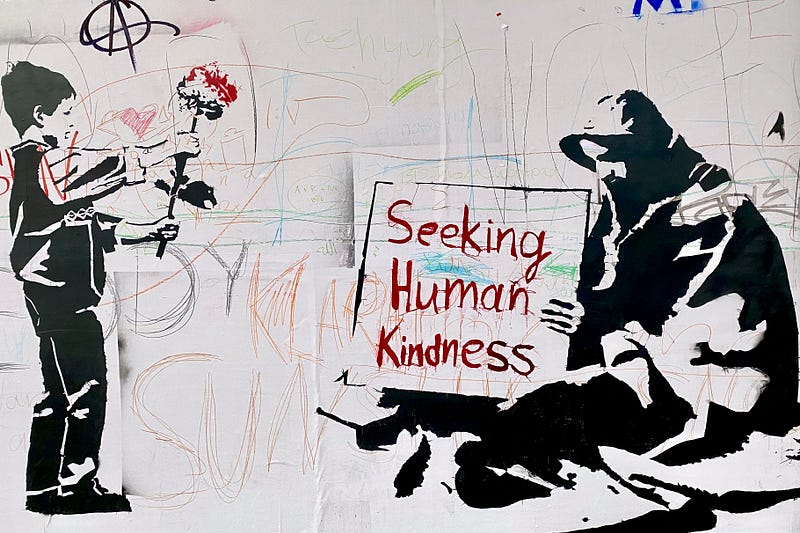
It is where I started. The fragility of life, but also our strenght. Knowing how vulnerable we are to the uncertainty and dangers that this year has made manifest, have we learned how we must treat each other? It is with the utmost, relentless kindness. Our one power to help us survive.