I Feel Sorry for People Who Read Books or Watch Films Only Once
Why “I know what’s going to happen” is an absurd reason not to revisit a classic.
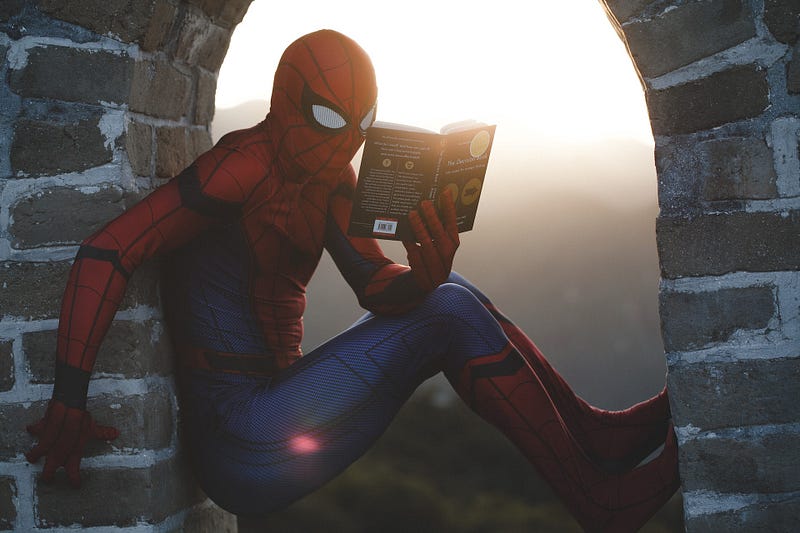
I have never been able to understand those individuals who insist a great book or film should only be read or viewed once. The reason they invariably give is: “I know what’s going to happen, so what’s the point?” More than anything, such opinions always make me feel pity.
Obviously, each to their own. Reasoning of this kind is a product of personality, temperament, and other factors. Nonetheless, I cannot overstress how much this statement depresses me. To me, it’s like saying I don’t want to eat a strawberry because I know what it tastes like, or I don’t want to have sex because I already know how it feels. Or arguing Paul Combs should never listen to Bruce Springsteen’s Born to Run again, because he’s already heard it. In short, this absurdly reductive viewpoint entirely overlooks the experiential element of consuming art.
To be fair, there are certain great books and films I never want to read or see again. No matter how brilliant James Joyce’s Ulysses might be, I can’t face trawling through it again. Nor do I want to revisit a number of brilliantly scripted, acted, and directed films that only a critic could love — think Amour, Foxcatcher, or Son of Saul. I’m very glad I read or watched these, and agree they are great, but nothing could ever induce me to do so again, as they aren’t experiences I care to repeat. However, the films and novels I love are a different matter entirely.
More than just whodunnit
Sometimes “I know what’s going to happen” appears valid, for example in the case of a whodunnit. But again, it depends on the whodunnit. A film like Gosford Park merits rewatching not for the whodunnit, which quite honestly is the least interesting aspect of the narrative, but for the endlessly rewarding, finely observed subtlety and wit in the performances of Robert Altman’s stellar cast, depicting the upstairs/downstairs culture of an English country mansion circa the 1930s. Frankly, it gets better with every viewing.
Then again, what of the traditional whodunnit? I may know the denouements of all the major Agatha Christie novels, and I’ve read every single one of Arthur Conan Doyle’s Sherlock Holmes adventures, but I still like to read them time and time again. Why? For a start, they are brilliantly written. The Hound of the Baskervilles is one of the most atmospheric gothic novels of all time, and the prose is exquisite.
Furthermore, these kinds of stories provide a comfort of sorts, despite being tales of murder and mayhem. The term “cosy mystery” is kicked around a lot in literary circles these days, but I also enjoy my “cosy gothic horror”; a term also applicable to the many Hammer horror pictures, from which I derive endless pleasure despite having seen them countless times. Let’s face it, you can never have too much Christopher Lee or Peter Cushing.
Nostalgic experiences
That isn’t to say one should exclusively gorge on previously discovered artistic treasures. I believe in a finely balanced diet of new and old. Yet it galls me whenever I come across someone who cannot enjoy the pleasures of rediscovering an old favourite.
During my childhood, our family wasn’t well-off enough to own a VHS recorder, so I was dependent on TV broadcasts or visiting friends who had recorded favourite films (or rented them). A part of me always died inside when I went round to a friend on a rainy afternoon and asked if we could watch Star Wars or Raiders of the Lost Ark, only for a dull parent to say: “We’ve already seen it, so we recorded over it.” Their house, their rules, obviously, but I inwardly vowed this would never happen in the Dillon Empire once we were wealthy enough to obtain a VHS recorder. (My parents, perhaps aware of my state of mind on such matters, never recorded over anything once they did finally obtain one, when I was fourteen).

Children seem far more inclined to revisit favourites over and over again. Whilst it is important to encourage children to branch out in their literary and cinematic interests, some adults lose the desire to repeat such pleasures, which as far as I’m concerned is a tragedy. Books and films, like music, are inextricably linked with the time and context where we first discovered them, like a time machine. A film like E.T. The Extra-Terrestrial may be objectively great, but for me, whenever I revisit it, I’m seven years old again, watching it for the first time in the cinema. For me, that film is akin to an out-of-body experience. “But you already know what happens” is a truly ridiculous reason for not viewing again, given the sheer exhilaration and high that film gives me. I feel the same way about all my favourite films, which is why I rewatch them regularly.
Perhaps that just makes me sentimental and nostalgic, but I’d rather that than go through life thinking there’s no point revisiting a story because I know what happens. I’ve probably reread The Lord of the Rings more than any other novel, and know my way around Middle-Earth better than I know my way around where I live, in southwest England. Why? Because whenever I read it, I feel like I’m visiting old friends. I experience the same thrill, the same fear, the same amusement, and the same bittersweet melancholia in the finale.
Terrors and tear-jerkers: Repeated catharsis
The experience of the first time with a great novel or film can never be repeated, but an entirely different, arguably superior experience sometimes occurs with repeat readings or viewings. The masochistic catharsis of a great horror film like The Exorcist is a good example (I wrote about my wildly differing experiences of that film at different points of my life here). Speaking of masochistic catharsis, I also believe a good tear-jerker is the flip side of the horror coin, as poignant tragedies like Brief Encounter or The Remains of the Day provide a similar encounter — again, regardless of how many times they are seen or read before. I’m a big fan of extreme emotions when it comes to art. They make me feel alive. Great novels or films provide that pleasurable repetition over and over again without diminishing effect, regardless of narrative familiarity.
Vertigo’s slow burn
In closing, I’d like to point to what is perhaps the ultimate example, in my experience: Alfred Hitchcock’s Vertigo. When I first saw this, at the age of sixteen, I could see it was a masterpiece, but it was a film I admired rather than liked. I much preferred other Hitchcock films like North by Northwest or Rear Window. However, as the decades wore on, I regularly revisited Vertigo. It gradually climbed in my affections, as I came to appreciate the nuances inherent in this existentially and emotionally terrifying tale of romantic obsession.
The mystery at the heart of Vertigo is revealed one hour and fifteen minutes into the picture. At first, I couldn’t understand why Hitchcock let the cat out of the bag. Indeed, some accounts of the film’s post-production claim Hitchcock wanted to remove this scene, but the studio overruled. Yet if that story is true, I’m glad the studio stepped in, as the film plays far better on repeat viewings with this knowledge. Otherwise, sympathy for James Stewart’s pathologically obsessed protagonist may have shifted until the very end (for reasons I won’t spoil for the uninitiated). For me, Vertigo has a magical quality. It has now ascended to the exalted position of my all-time favourite Hitchcock film, and simply writing about it here makes me want to give it another look.
I daresay I’ve made (and probably laboured) my point. But what do you think? Do you like to revisit old favourites? Or are you someone who adheres to a once-only philosophy? No judgement from me if you are the latter, but I can’t help feeling more than a bit sorry for you.
If you enjoyed this article, please consider supporting my writing by offering a tip via Paypal (see tip button below). Better still, if you want unlimited access to my writing on Medium (and that of many other talented writers), click here to upgrade to full Medium membership. This is an affiliate link. I receive financial incentives for new referrals.
For more about me and my writing on Medium, please click here. For information on my writing outside Medium, please click here. For a list of my published novels and other works, please click here.


