
I Don’t Believe in Making Loads of Money But I Do Believe in Getting Rich
What is the difference
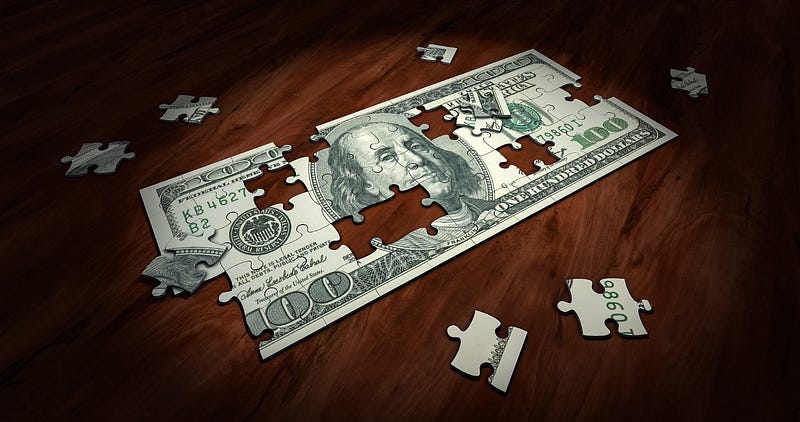
“There is a gigantic difference between earning a great deal of money and being rich.” — Marlene Dietrich
The first and most critical issue to resolve when it comes to money management is your perception and attitude toward this elusive and troublesome commodity. The love of money will set you up for failure. But a healthy respect for money and its primary purpose, may not make you a billionaire, but it will make you rich.
Fortunately, I learned this early in life before I wasted years pursuing the wrong avenue to riches. Choosing to build strong relationships over monetary wealth has given me a sustainable pile of riches that I enjoy each day without guilt or regret.
At the same time, I watch many of my contemporaries cope with failed marriages, children in crisis, and mental and emotional distress due, in part, to their focus on material wealth at the expense of the more important things they could have focused on.
Let me share the fundamentals that I built for understanding and using money — the principles that kept my sometimes wayward desires in check.
Get the basic foundation right.
“Know what you own and know why you own it.” — Peter Lynch
Do you know who you are? I don’t mean your name, current address, or physical attributes. I mean, do you know who you really are gut-deep? Do this small exercise and you might be surprised.
- List your three biggest dreams
- List your three primary life goals
- List three things you’re willing to sacrifice to achieve your dreams and goals
- List your three most valuable possessions
- List three things you’re willing to sacrifice to keep your most valued possessions
Take some time to meditate on your answers to these questions. What do they tell you about yourself?
I made sure to do this periodically over the years just to make sure I wasn’t drifting toward the allure of recognition, fame, or the false validation that monetary wealth can give.
If fame and fortune top your list of dreams and goals, you’re already on slippery ground. Why? Because those things are often rooted in a ruinous mindset — the love of money.
Let me set your mind at ease. Money isn’t a bad thing. It’s a necessity of life. The problem lies in our attitude and perception of money. Many people see money as the ultimate goal in life because they believe it will open the gates to everything that will make them successful and happy. For sure, it does have the ability to open doors of opportunity. But it also has another side…
“It’s good to have money and the things that money can buy, but it’s good, too, to check up once in a while and make sure that you haven’t lost the things that money can’t buy.” — George Lorimer
Put money in your toolbox — not your heart.
“Wisdom is for a protection the same as money is for a protection; but the advantage of knowledge is that wisdom itself preserves alive its owners. ~Ecclesiastes 7:12
Changing your perspective of money will change your ability to use it successfully. Get rid of the emotional attachment or love of money. Instead, learn to view money as a valued tool, one that you’re determined to master. A tool is only as good as the skill of the person using it. Become a skillful money manager so that if you have a little or a lot, it’s working for your benefit.
I found that keeping money in my toolbox instead of my heart acted as a safety switch. Every time I thought of money, I thought about how I would use it. If it didn’t act like a tool, I knew something wasn’t right. A tool is used for a specific job and then put back into the toolbox. If I couldn’t put it away, so to speak, I was becoming too attached and needed to rethink its purpose.
Become skillful with your money.
We are more likely to fail as craftsmen due to our inability to organize obsession than because of our lack of ability. ~Richard Sennett
Let’s examine three basic skill learning steps.
Earn it
This is a no-brainer. You need to work to earn money. Don’t fall for the get-rich-quick trap that will suck up your money, time, and energy with little or no return. Be diligent but not obsessive about earning.
Save it
It takes self-discipline to save money. Saving money so that you have options when problems arise will save you money in the end. Money in hand can make more money or save the money you have from disappearing. Saving money is the first skillset you’ll need to master
…saving money is important because it helps protect you in the event of a financial emergency. Additionally, saving money can help you pay for large purchases, avoid debt, reduce your financial stress, leave a financial legacy, and provide you with a greater sense of financial freedom. The Importance of Saving Money
Spend it
Make a plan. Make a plan. Make a plan.
Know what you want to do with your money and why. Distribute and allocate wisely in close harmony with your defined plan. Adjustments can be made to your plan when needed — but stick with the plan. One way to do this is to design a budget that fits your income, one that’s realistic and actionable.
Learn to adapt, modify, or completely change your way of doing things to stay within your budget. For example, you might want to take your friends out to dinner but your allotted budget for entertainment is depleted for that month. Don’t take money allotted to groceries, utilities, or medical expenses. Simply make different arrangements that fit with your planned budget.
Money is only a tool. It will take you wherever you wish, but it will not replace you as the driver.” — Ayn Rand
Getting rich…
“Wealth is not about having a lot of money; it’s about having a lot of options.” — Chris Rock
When you replace the obsession with money with the skillful use of money, riches flow in from many unexpected directions.
- Your skillful use of money will get you where you want to go in life.
- How much you have or how much you spend will no longer be driven by a need to impress others. Those things do not define who you are. Money is a tool in hand, not a certificate of achievement or worth.
- Your skillful use of money will give you more time to pursue other interests in life. It can facilitate a more balanced lifestyle with less stress and anxiety.
Think about the times in your life when you’ve felt rich, happy, secure, and satisfied. What were you doing? Who were you sharing those times with? What lasting memories did they create? Where were you?
Some of the riches times in my life were spent covered in dirt as my husband and I planted our first vegetable garden or built our backyard patio. Foregoing overtime pay to take the family camping on the weekends. Deciding to keep our modest home when we could have afforded an upgrade and spent that money on family vacations and helping friends in need. All these things stay deposited into my wealth account and I can draw on the memories at any time.
If your whole life could reflect that type of richness, would you still need to pursue monetary wealth?
Takeaway
There are people who have money and people who are rich. – Coco Chanel
Success lies in knowing the difference…