
I Didn’t Know I Was Annoying
AKA the subtle art of masking and how the internet brought me hope
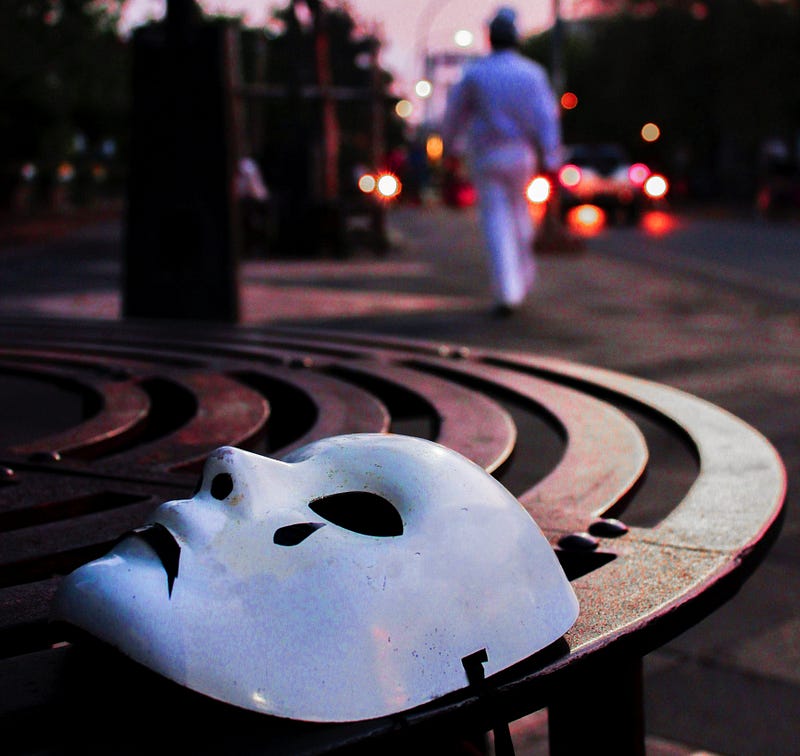
What kind of movie is this?
I’m autistic.
Amongst other things, this means that social interactions are kind of awkward for me.
Also, there have been times when I have said inappropriate things. I mean, they weren’t inappropriate to me, but based on the reactions I got, I can tell they were for other people.
I didn’t always know I am autistic. For most of my life, I just thought I was…peculiar.
Typical human interactions can be confusing to me. I just don’t understand why people lie so much. In my mind, if we all just said what we actually mean, life would be way easier. But no: people build layers of hidden concepts, secret ideas behind everything they say. It’s like a code.
For example, when someone says, “I can’t do this thing you are asking of me, because (insert X reason),” I can tell they are lying. There’s just something about the tone, the way their eyes move…they are lying. But, at the same time, I can perceive they don’t want to hurt my feelings or are just plain uncomfortable with what I’m asking but can’t get themselves to say it. Sometimes I push, wanting to know the real reason. But they keep on lying.
It has become simpler to accept the lie.
It’s as if people were playing a role in a movie, as if they were following a script and had to stick to their lines.
But they are just pretending.
This is one of the reasons I don’t like Christmas and other festivities; because they require people to repeat specific premade phrases. Phrases without actual meaning.
This is what happens: all around, you have people saying, “Merry Christmas! I wish you the best.” It feels like a bunch of bad actors just repeating their lines. When they say it, there’s no emotion in their eyes. It’s pretty rare to find someone who actually means it.
And me? I’m in the movie too, playing a role like everybody else, but I never got a copy of the script, so I have to improvise. I don’t always get it right, although, with practice, I can now at least pretend I know what I’m doing. I pay attention to everybody’s body language, to the way they move their hands, their eyes. I do my best to memorize what some of the scripted phrases are supposed to mean.
Also, I have identified a few people who are willing to coach me when I face social situations I’m not sure how to manage. I have gotten advice on how to conduct myself at funerals, weddings, office parties, and so on.
Things get even weirder when I’m the one expressing emotions. Most of the time, I’m what people call “dry.” I know it because they have told me to my face. But, from time to time, I express a lot. Guess with me it is either hot or cold. When I’m happy or excited about something, you will know it. The fun part? People can’t deal with it. I have caught them interchanging nervous glances, like “what’s wrong with her?” or pointing out how weird it is that I’m expressing excitement or that I’m expressing it in a way that’s not “the right way.”
For example, sometimes, I find myself laughing when others would cry. Or crying when others would scream in anger. Or outright rejecting something I can’t deal with at the moment, saying, “No!” in a firm, perhaps too loud way. I can’t always turn on my filters.
It is in situations like this when things get awkward. It seems like the way I express emotion comes across as “too passionate or aggressive,” as one teacher once said about me.
What am I supposed to do? Pretend I’m excited when I’m not? And then hide my emotions when something really gets to me?
I wouldn’t know how to do that. Not that I haven’t tried.
Fitting in…kind of
Throughout my entire life, I have tried to fit in.
“But, Gaby, that’s not right. You have to be yourself.”
On paper, that’s great advice. In the real world, it isn’t.
Here’s something I discovered since I was a little girl: it is not safe to be the odd one. It will get people to mock you, threatened you, isolate you, or just plain attack you.
My “weirdness” was the cause for people giving me the silent treatment or sabotaging me. Since I liked to walk alone in the schoolyard, some older girls would get together to corner me. I would be there, in the middle of a circle of 5 to 6 girls, listening as they discussed the things they would do to me. They really enjoyed listing the different ways in which they would torture me, although they never really got to do it. In time, I have come to realize it probably was because I would just look at them, zero emotion in my face. Guess it’s not fun when the victim doesn’t plead for compassion.
All because I was “weird.” All because I did certain things. Or I did them in a way different from everybody else.
For example, I used to hum. I had melodies in my head all the time. I liked them, so I would hum them. I would do it until I got stuck on something that didn’t work. When that happened, I would repeat the melody until I found a way to fix it. However, if you go around humming songs no one knows, they tend to look at you in a peculiar way. My own father told me: “stop humming. It makes you look crazy.” So, yeah, I stopped.
I also like to create stories in my head. You can give me a topic, and, in a few minutes, I’ll create a whole adventure. I’ll build an entire world and characters that live in it. I’ll dress them and give them a voice. I even know what their house smells like and if it’s warm or cold in there. You can also give me a word (or I’ll pick up one myself) and write you a poem. I know that, as long as I focus, I can do it. When I was younger, I used to write a lot. That got me a nickname: “poem girl.” And it was not a compliment. People would throw the word at me, laughing. Some of my fellow students would ask me why I wanted to be the center of attention. “That’s why you do it, right? The writing thing.”
To make things worse, I loved to read. Since the moment I learned, reading has been, to paraphrase Mario Vargas Llosa, one of the most important things in my life. There are very few things I like more than reading. One of them is sharing what I have learned (maybe that’s why I’m a teacher?). The problem: not everybody wants to hear what I have to say.
I learned this when I was about 12 years old. I was at school, and the teacher had asked a question. As usual, I raised my hand. I did not only answer the question, but I also talked about a particular article I had read that fully explained my point. Then the teacher made a face (a face I have now become familiar with): a face of annoyance. It lasted a microsecond, but it was unmistakable. She then composed herself and said to the rest of the class: “Guys, remember that when Gaby shares with us what she has read, it’s because she finds it very interesting and wants us to know too.” I then looked at my classmates.
Oh, my! Their faces! That’s when I knew it: I was annoying. All of my book-talk was irritating. No one cared. Not one bit. I have to say, lots of things made sense at that moment. I finally understood why some of my classmates flat out rejected me.
I swear, I didn’t know I was that annoying. I thought everyone wanted to know everything there was to know about the world and all the things in it.
They don’t.
I wear my mask
Enter masking.
Also, know as camouflaging or “compensating,” it is:
“the processes contributing to improved behavioral presentation of a neurodevelopmental disorder, despite persisting core deficit(s) at cognitive and/or neurobiological levels.”
In other words: masking is doing everything you have to do to appear “normal.” It’s not just about being polite. It goes way beyond that: it means hiding your passions, so others won’t think you are overdoing it. It implies accepting physical contact (such as hugs), even when what you really want is to go home and hide under the bed. It means keeping yourself from what soothes you, like spinning, walking in circles, rubbing your face, or rocking back and forth (activities known as “stimming”).
Masking can be exhausting. After all, you are living a double life.
In my case, I taught myself to adapt to as many given situations as possible. Basically, I enter and read the room. I asses whether it is best to be quiet, cheerful, assertive…I can’t help myself. It’s a mechanism that has helped me be safe.
But I wonder: what does this say about me? Heck, who is the real me?
I have spent so much time trying to be someone I’m not. Hiding what I really care about. Was this the reason for my depression? For my struggling with eating disorders?
Here’s the thing: if it weren’t because my son was diagnosed as autistic when he was 3 years old, I would have never realized I’m autistic too. I would have never researched this topic; therefore, I would have never understood what was behind my need to hide the actual me.
I had assumed I was abnormal. That I had a problem understanding people.
Now I see that, even though I do have a problem, it’s not what I thought it was: I do understand people. The issue is, I understand them too well.
People think autism is about a lack of empathy. I’m in no position to speak for the entire autistic community, but I can tell you that, for me, autism is quite the opposite: it’s an overwhelming emphatic experience. If I’m caught off guard, if I don’t take my time to build my walls, if I don’t protect myself, I will feel everything: their hatred, their sadness, their annoyance.
It hurts.
So, don’t judge me, but most of the time, it’s safer to wear my mask, to pretend I’m someone else. Someone who fits in.
But I’m tired of it.
Bless the internet
And then, mercifully came the internet.
It’s true what they say: you can find anything online.
You can find books, porn, all kinds of supplements…and you can find your tribe.
When you have the whole wide world at your fingertips, it becomes easy to find those who know what you are going through. Those who want to see you.
You, without the mask.
It’s no wonder the internet has become such a safe place for autistic people. It makes it so easy to find people who are just like you, or who care about the same topics as you do. You can join forums, Facebook groups, or use tags.
Also, you can indulge in the things you are obsessed with, and people won’t call you crazy. They will call you passionate. You can go to YouTube and make a video or write a blog post. People who care will find you and listen to you. And those who don’t? They will simply scroll down and forget about you. Yeah, there might be a few occasional trolls, but after having faced so many IRL, honestly, I find them rather amusing, not terrifying.
I know it is kind of sad that I have to come to a platform like this to be myself without fear of being ostracized, but, at the moment, this is my reality.
Nowadays, I’m kind of grateful I wasn’t diagnosed when I was a kid. Think things are tough for autistic people now? Back then, a label would have meant condemnation. Most people wouldn’t have seen me, they just would have seen “that autistic kid.” Heck, who knows if I would have been allowed to attend a regular school.
However, I’m hopeful. Every day, more and more, the word autistic is said without pity, without judgment. Bit by bit, people educate themselves. Perhaps soon, we will move beyond simple awareness and manage to reach acceptance.
Perhaps soon, I’ll be able to drop my mask.


