
I Cannot Move Mountains — Only Admire Their Magnificence
Crushed between Mother Earth’s tectonic plates, they rise to inspire us
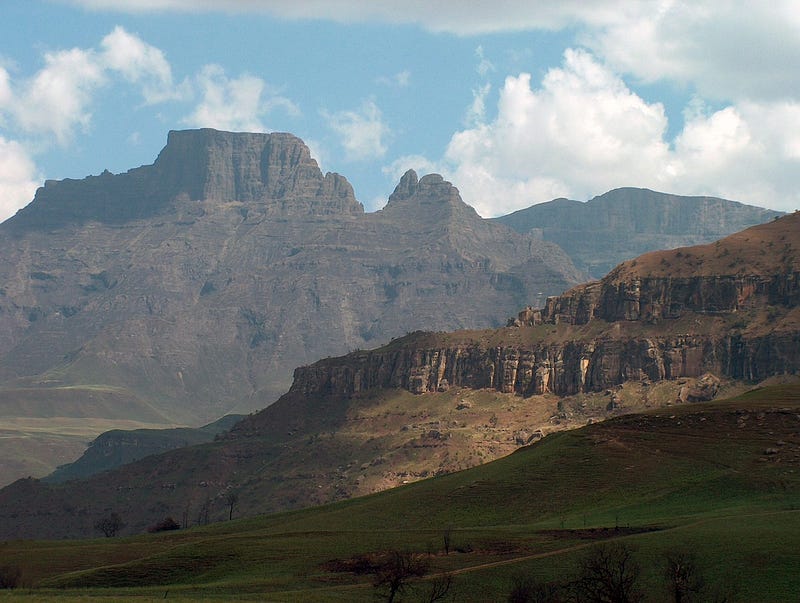
I first learned about mountains in school through the story of how the Carthaginian general Hannibal crossed the Alps with the help of elephants and horses to attack the Romans in 218 BC.
However, my first sighting of a genuine mountain was in 1958, when the passenger liner transporting us from Southampton to start a new life in South Africa arrived in Cape Town harbour.
There stood Table Mountain, embracing the city with a cloudy tablecloth on top. I’d seen pictures in magazines before we left the UK, but seeing her in real life was awe-inspiring. We couldn’t linger as we had to catch the Blue Train to Johannesburg within hours of disembarkation, but I kept twisting my neck to catch as many glimpses of her as I could before we boarded the train.
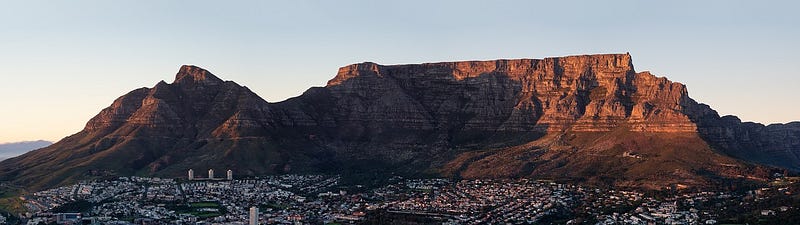
I’m delighted we didn’t have time to go on the aerial cableway or I would have discovered I’m afraid of heights!
That revelation only came the following year, when a friend from boarding school who lived in Lesotho — the mountain kingdom — invited me and another classmate to spend our school holiday with her. (Lesotho was formerly Basutoland, a British Protectorate.)
I had to catch a flight to Durban to meet up with everyone before we set off to drive to the eastern side of Lesotho. Another first, as I’d never flown before — it wasn’t a jet plane but a DC-3 Dakota with propellors. I closed my eyes as the plane took off — too scary watching the ground retreat beneath me! I relaxed once we were high in the sky and enjoyed the three-hour journey.
Moira and her dad collected us from the airport in a Land Rover. This was another first and smacked of adventure into rural Africa. Us nine-year-old girls were full of excitement as we travelled in the back of the Land Rover on tarred roads through Pietermaritzburg to Underberg.
The next leg of our journey was to climb the Sani Pass, a gravel road with hairpins and precipitous drops and one of the most dangerous mountain passes in the world.
Good thing I didn’t know that then!
As we ascended, the other girls squealed and pointed out the incredible view.
One look at the steep inclines so close to the edge of the roadway, and my head started spinning. I scrambled back into the section nearest the driver’s cabin, said I was tired, and squeezed my eyes shut, hoping to fall asleep — but I didn’t.
The pass is only a 9 kilometres journey but takes 3–4 hours to traverse — it felt a lot longer!
Once we arrived in Mokhotlong, I forgot about the terror and enjoyed a two-week holiday. I could forget about the terror and enjoy the elevated view of the Maluti mountains range assembled around us.
I have never overcome my fear of mountain passes.
However, nothing can compare to the peace-filled silence and majesty of mountain ranges. I embrace their tranquillity with my heart and soul.
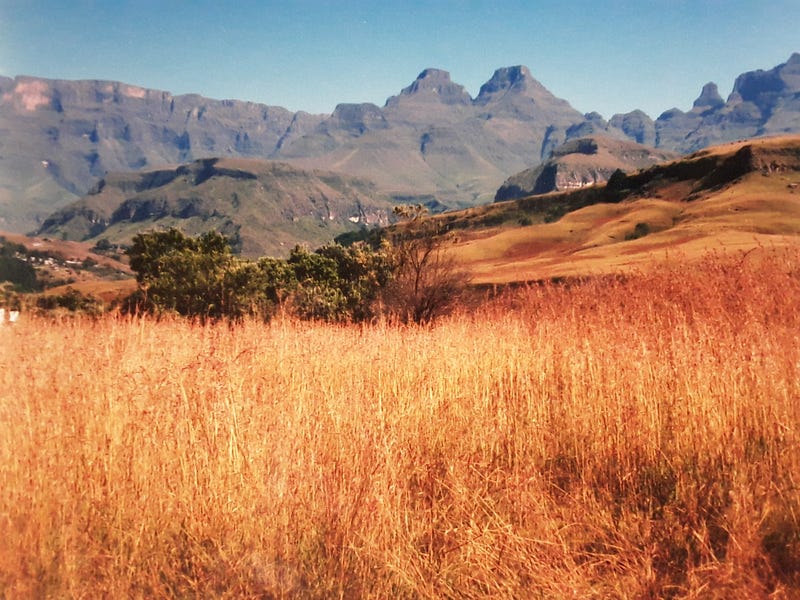
My first encounter with mountains, apart from that brief glimpse of Table Mountain, was that holiday in Lesotho many decades ago, where the Maluti range forms part of the Drakensberg system. (Declared a World Heritage Site in 1999.)
The Drakensberg is called Ukhahlamba in Zulu — the barrier of spears.
I have visited several times. My favourite memory of the Drakensberg is a long weekend we spent at a meditation retreat shortly after I’d recovered from my third bout of depression. The wild beauty tugged at my heartstrings and calmed my inner self — an incredibly healing experience.
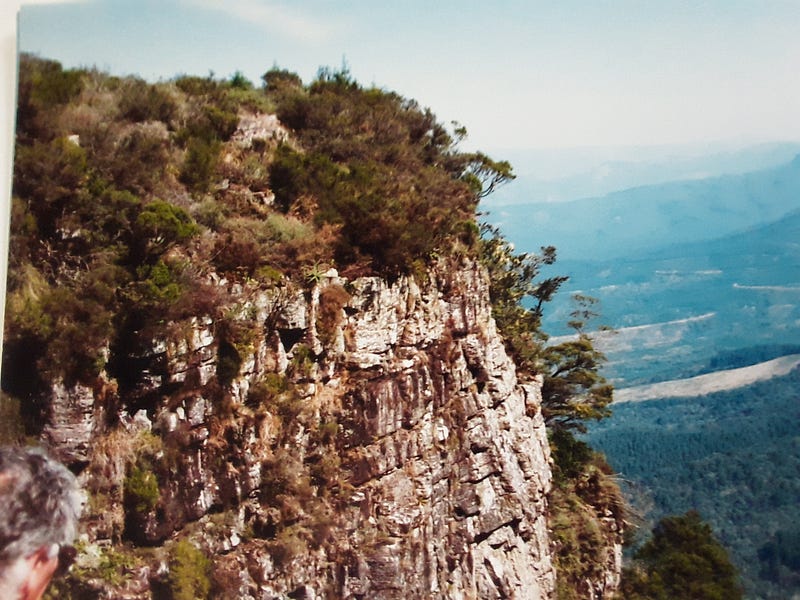
We’ve also travelled to Graskop, in Mpulalanga province, to see the majesty of the Blyde River Canyon and mountains — the north-eastern section of the Drakensberg escarpment.
I was always careful to stay away from the edge of the viewing platforms whenever we stopped to admire the view — I was relaxed provided I didn’t look down!
South Africa is the location of three of the five oldest mountain ranges in the world!
The Barberton Greenstone Belt, or Makhonjwa Mountains, lie across the borders of Mpumalanga province in the north-east and eSwatini (formerly Swaziland) and are 3.6 Billion years old!
The Waterberg range in North Limpopo Province is 2.7 billion years old.
I haven’t visited these mountains, and it’s unlikely I ever will as we can’t travel because of hubby’s mobility issues — and we don’t have a car, anyway.
However, we are content to be living on the southern slopes of a mountain in North-West Province that forms part of the Magaliesberg range — only 2.3 billions years old.
The Cradle of Humankind World Heritage Site is near to our location.
The region includes the Sterkfontein Caves, which we have visited. Significant fossil finds on the site include “Mrs Ples”, 2.3 million years old, and “Little Foot”, who is much older at 3.67 million years.
By comparison, I feel very young — you can’t call me an old fossil!
“We are now in the mountains and they are in us, kindling enthusiasm, making every nerve quiver, filling every pore and cell of us.” — John Muir
I leave you with a mountain song and thank you for being here.
Please forgive me Dr. Preeti Singh for this late response to your inspiring Nature prompt for the first week of November.
My title is apt as I couldn’t move mountains of challenges. Stormy weather and weak broadband signal caused by power interruptions slowed my writing output.
Despite the mountain I had to climb, I continued reading and responding to other stories, two of which I feature here: