
I Am Worth Every Penny
Why investing in yourself is necessary
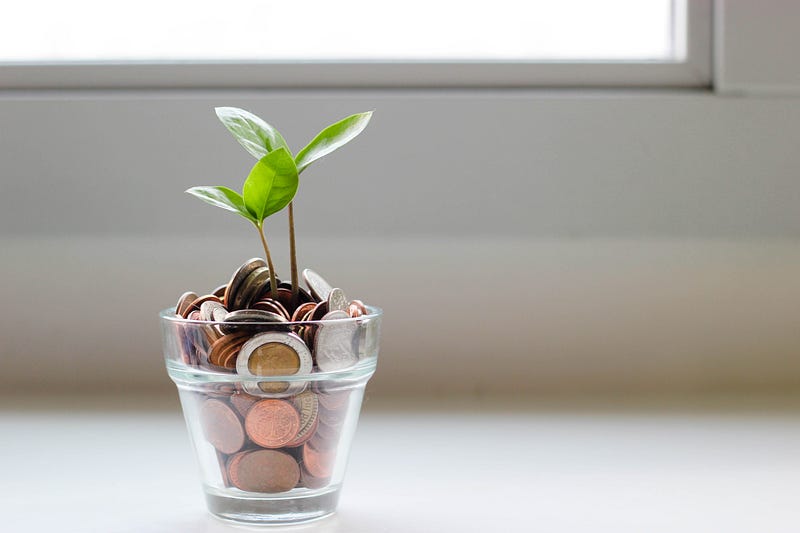
What does it mean to ‘invest in yourself’? Immediately, most people think it means just going back to college, working toward a degree. For some, yes. For others, not so much.
What I have learned over the years by ‘investing in yourself’ is that it is not always about going back to school. It is not always about earning a college degree. But it is about willingness to learn and be teachable.
Investing in yourself is so much more than a college degree. Allow me to explain…
Investing in yourself means you want to learn more. It means you believe in yourself to make choices and take risks that most people would otherwise not do themselves. It means following your inner voice, and not the outside world.
It can mean honing your current skills and knowledge to help you to become an expert or master within your field. This can take you to the next level, and potentially higher if you are willing to put in the work.
It can also mean starting all over from scratch and learning something completely brand new, regardless of your age.
It can mean looking deep within, finding what you love and are good at, and chasing down your dreams.
Investing in yourself means surrounding yourself with like-minded individuals and learning from their successes.
It means you have realized you are good enough to deserve the very best and want to set yourself apart from others.
What does it look like to invest in yourself?
This is something that is very unique to each individual, much like we all have distinctive fingerprints only to ourselves. How you invest in yourself is your personal preference.
Some people will take extra courses to become certified within their careers (like a certified financial planner, or a certified nurse, or a certified fitness coach, etc). This tells others you have taken extra steps above and beyond your base knowledge requirements to obtain expert-level knowledge. It means you wanted more than the basics.
Some people want to learn more about investing money (this seems to be a very popular topic in today’s world). So what will they do to learn more? Some will become finance majors in college. Some will study and read from those who are most successful in investing, without going to college. Some will take an independent online course in investments. Some will watch YouTube videos.
While some people invest their monies into learning new skills and topics, it is not always about money. You can honestly invest in yourself without having to spend a dime (depending upon who you are learning from, and how far you want to go with your skillset). In most cases, there will be some type of expense involved.
But there is one thing that is required to invest in yourself. And whether or not you know it, we all have it. And we all have the same amount of it. Have you guessed it yet?
Here’s the answer: It’s TIME.
In order to invest in yourself, you need to make the time. If you want to grow and develop your skills, your knowledge, your talents and abilities, your business, whatever is deep in your soul… you need to also invest in time.
The benefits of investing in yourself
When you invest in yourself, you are saying you are worthy of the time it takes to get you to where you want to go, so you can achieve your dreams.
For example, I want to be a great writer and piano player. So I am investing in the time it takes to achieve both those goals by practicing every day. I am honing and fine-tuning my skills and my mindset each day. For piano, I invest in private lessons. For writing, I’ve invested in a mini online writing course, as well as reading various books. I am continually learning and putting into practice the new skills I learn.
By investing in yourself and continually learning you are stretching your mind and using your brain. This is very healthy! Your brain will not become stagnant, instead it will grow. It will process faster and become more efficient.
I recently wrote an article about how learning something new can help your brain. You can click here to read it.
You are doing what others are perhaps failing to do. Even when you think the time and money you have invested in yourself isn’t paying off… in some way, shape, or form, it really is.
Amazing results are not the product of sub-standard work. Think of the professional athlete. They have not risen to the level of performance by not investing time and training into themselves. They work hard every single day to stay at peak performance.
This applies to anything in life… a professional athlete, musician, world-renowned speaker, or author, a scientist. It doesn’t matter the profession.
You can rise to the level of greatness by investing time in yourself.
“Your time is limited. Don’t waste it living someone else’s life”. — Steve Jobs
If you wisely invest in yourself, you are investing in your future. By investing in your future, many positive things can happen:
- Performing at a higher level (also known as ‘peak state’)
- Better income potential
- A higher level of gratitude in your achievements
- A higher level of satisfaction in life
- Healthier relationships
- A winning attitude and outlook
Once you invest in yourself, nobody can take that knowledge or potential away from you.
The cost of not investing in yourself
The cost of not investing in yourself has a steep price. It is one of loss and something that is oftentimes unable to be recovered.
By not investing in yourself, the following bad outcomes can happen:
- You remain stagnant and underdeveloped
- You remain stuck and unteachable
- You lose opportunities
- Your income potential does not increase
- a negative outlook can set in
You are not honoring yourself and your talents by not investing.
If you are listening to outside voices, honestly, you are not doing yourself any good by giving attention to those naysayers. After all, who’s living your life?
Think of a cost-benefit analysis. In simple terms, what is the benefit of the cost to invest in yourself? What is the cost of not investing in yourself? Here’s a great graphic to explain:
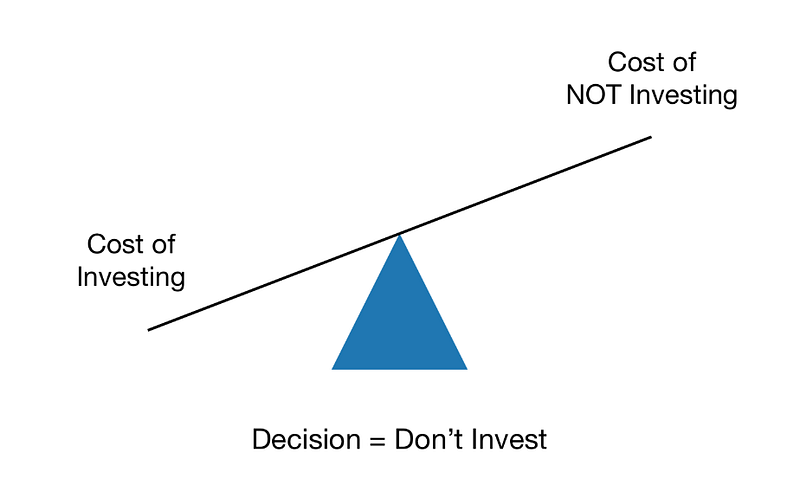
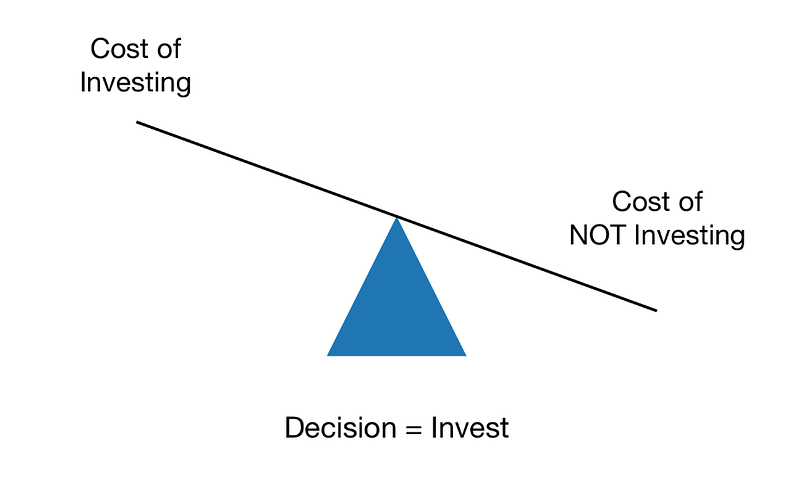
You can see the difference in the graphic of not investing versus investing in yourself. When you don’t invest in yourself, the cost is greater. But the same holds true for when you do invest in yourself, the cost is greater and you reap more benefits.
So why wouldn’t you invest in yourself?
Conclusion
Regardless of what you do, investing in yourself is the greatest honor and present in which you can reward yourself. By investing time and maybe some money, you are giving yourself permission to learn and experience new opportunities.
You can grow and develop, and become a better person. You may even become unrecognizable. You just might surprise yourself. You may even become an expert or master, and teach others about your successes and failures along the way.
These investment opportunities can shape and create the future you want and dream of. But only you know exactly what that looks like.
By not investing time and maybe some money in yourself, you increase your risk of remaining stuck in old patterns. You run the risk of not creating the income you want. And you potentially will not be living the life you were meant to live.
Ultimately, you are the creator of your future by self-investing.