
Sleep | Health
I Am A Health Coach And I Struggle With My Sleep
How to sleep better during the pandemic with these 7 evidence-based tips
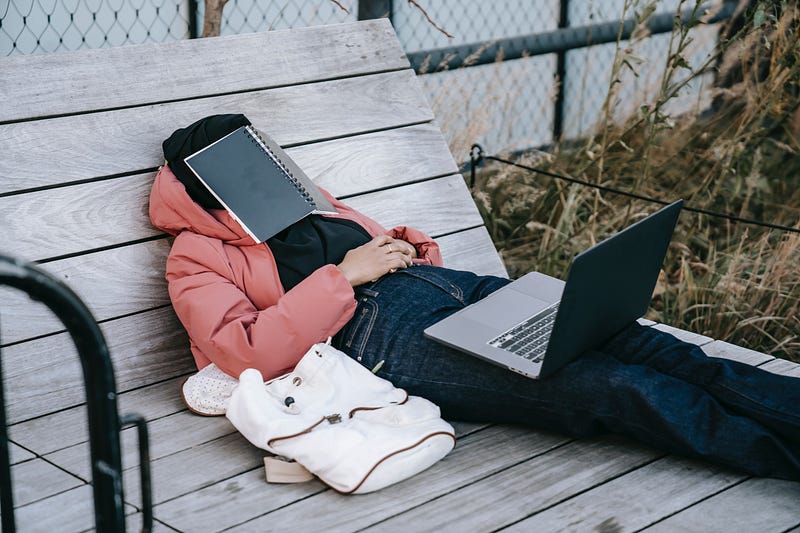
I am an integrative health coach and I know the importance of good sleep, and heck, even “should” practice a good sleep routine, but all the attempts of adopting the usual good pre-sleep habits, that we have repeatedly read in various articles or being nagged at by doctors, such as cutting off-screen time and blue light 1–3 hours before bed which means no TV or Netflix, reading a nice book before bed, doing a nice relaxing yoga routine, removing all tech devices in bedroom or turning off the Wi-Fi router at home (THIS IS NOT PRACTICAL FOR ME SINCE I DON’T STAY ALONE), seem to be futile in these current pandemic times.
After all, many of these strategies may not be that straightforward to apply anymore, given that they are suggested for a somewhat-more-normal life, where we aren’t in constant lockdowns, or having to wear face masks or to practice social distancing for prolonged times.
19th March marks World Sleep Day for 2021. An annual global awareness event founded by the World Association of Sleep Medicine and World Sleep Federation. This day aims to bring a spotlight for everyone on the importance of healthy sleep. It also strives to share the latest research, education, and practices on sleep health and sleep disorders to the world, including for the lesser developed societies.
We all know the influence of sleep on our body and mind, how it affects our physical, mental, and emotional health, which can impact our daily productivity and output. Since 2020, needless to say, the year has been nothing short of stressful, influencing all of us one way or another. Our sleep has, no doubt, been affected too.
Expectedly, most struggle with getting in quality restful sleep mainly due to pandemic anxieties, financial worries, and pressures of keeping up with domestic chores. Surprisingly though, a handful, usually the introverts, have reported they have the best sleep of their lives in ages, says Rafael Pelayo, M.D., who practices at the Stanford Hospital and Clinic and is a clinical professor at the Standard Center for Sleep Sciences and Medicine.
For few others like myself, we have “our dreams come true” (pun unintended) of sleeping more and longer.
At one point I found myself sleeping 16 hours a day for 60 days straight, to cope with the pandemic stress, while trying to get my circadian rhythm in order. If you think that this is a positive trait, it could be so if the body actually needs it.
However, too much sleep, especially coupled with poor sleep practices, may actually backfire, depending on any underlying physical or mental health issues, which can lead to psychiatric diseases and a higher BMI, or it can also be a sign of depression and sets off the vicious cycle of prolonged fatigue.
SCIENCE OF SLEEP
Sleep impacts our circadian rhythm, hormonal and metabolic systems. It, in turn, affects our sympathetic/parasympathetic system, aka our “fight-or-flight” response to anything our body perceives as “stress”. It may also affect our sex drive and performance, our mental focus and cognitive processes, and our body’s preference on where to store body fat. (Notice how the more sleep-deprived one is, one tends to store fats around the “trouble spots” mainly the lower abdomen or belly, aka visceral fat).
Poor sleep also affects overall growth and development and metabolic changes in children too. These are not surprising, since poor sleep whether in quality or quantity, tells the body that it is not getting enough rest for cellular repair, and in turn sends signals to the brain that it is under a “dangerous” environment. This stimulates the adrenals to pump more cortisol into the bloodstream to primarily the skeletal muscles, getting ready for contractions to “flee”. At the same time, the higher amounts of cortisol now released will stimulate the shutting down or slowing down of any other biological processes that may prevent the body from “this flight”.
“A good laugh and a long sleep are the two best cures for anything.” — Irish Proverb
Almost 3 months into the new year, my sleep has been deeper and better, from a 16-hour reduced to a 10 to 12-hour sleep per 24-hour period. However, my current sleep pattern has still been erratic. Some days I will sleep at 8 pm, others I will sleep at 9 am. Is this erraticism due to an underlying emotional turmoil or the flare-up of my chronic lower back pain or perhaps both?
Either way, when my sleep is affected, I could feel my cortisol level or hypothalamus-pituitary-adrenal (HPA) axis are having a roller coaster ride. And these aren’t ideal for my long-term health as I usher into my peri-menopausal years. (Yes, I just hit past my mid-30s and far from the actual menopause but that’s not to say I should wait till it’s too late to buffer my body against the effects of a naturally changing female hormonal system. Hormonal resilience is the key here.)
For the sake of my wellbeing and sanity, over the past 3 months, I decided to experiment with a few lesser-known strategies and integrate them with other existing methods as described above.
To help me snooze better, I have started applying some of these 7 evidence-based tips to my routine in this pandemic.
1. Play “brain music” a.k.a. binaural beats or ultra-low frequencies
Although the research on the effects of binaural beats on the brain to induce sleep states is still not yet extensive and conclusive, there have been promising reports that low frequencies binaural beats, particular the delta (1–3Hz) and theta (4–8Hz) range to have positive effects on insomnia and on sleep quality. Personally, I dislike sleeping with Bluetooth headphones or earbuds as it is uncomfortable for my head when I sleep sideways.
Instead, I play them through my Sleep Phones (more on it in point 3) or via a JBL speaker connected to my laptop (with my Flux screen so that it doesn’t emit too much blue light. Sometimes I may even cover my laptop screen since blue light does really affect the body’s melatonin production.)
2. Use blackout curtains
In a very small sample-sized 2003 study on young Japanese men, it has been reported there seems to have significant positive effects on their sleep-wake habits.
And in another 2004 study, interestingly, blackout curtains seem to work better in elderly females compared to males in sleep quality and general wellbeing.
Personally, this just works wonders for me all the time. And if you can’t install blackout curtains, get cheap thick towels and clip them up on your window.
3. Cover up with a sleep eye mask
I don’t mean the facial eye mask but an actual eye sleep mask like the ones you get onboard any flight.
Sometimes, I will use these Sleep Phones ™ that come with a 48” long audio cord and standard audio jack to plug into my phone for the binaural beats. This is perfect for me as I get my eyes comfortably covered while my ears connected to the music, and still have my phone away from arm’s length as I sleep. However, a recent 2020 study conducted on 17 ICU patients using earplugs and eye masks reported an insignificant reduction in arousal index. So, whether this works for you or not, it may be worth a try.
4. Get “heavy” with a weighted blanket and a bolster
I love the feel of a weighted blanket. It gives me comfort and security knowing that I am “safe”, just like a parent would swaddle an infant wrapped like a burrito. This actually mimics the womb environment where the infant has spent nearly 36 weeks in gestation. As an adult, feeling this sense of safety and security also lowers cortisol which in turn helps in getting much deeper sleep. Hugging a bolster is akin to cuddling someone if you don’t have a plus one, also may cause a release of the oxytocin, “love hormone”. The bolster or hip pillow may also help to relieve some lower back/hip pain as it provides cushioning and keeps the pelvis as level as possible.
This might be exceptionally useful for many of us who have been working from home and may start to experience some increased lower back pain.
5. Apply essential oils to your night routine
Oh, how I enjoy the aroma and sensation of applying essential oils to either my soles, wrist or behind the neck to prepare my mind to sleep. Occasionally, I may drop a few drops around my pillow too. A caveat though, if you have sensitive skin or nose, please be careful which oils you are using, as they may cause allergic reactions.
Typically, lavender has been the quintessential oil for relaxing and sleep as reported in this 2015 JACM study for college students and ICU patients who typically have trouble sleeping due to perceived stress and pain.
Additionally, this 2019 JACM study also indicates positive results on sleep quality for cardiac patients when using ylang-ylang and bergamot. In another 2017 study, it suggests that there was some improvement in sleep quality for elderly with dementia when they use essential oils that contain piperonal, santalol, linalool, or cedrol. These alcohols are typically found in true lavender, cypress, cedarwood, and some blends that contain sweet orange and pine oil. However, the abovementioned oils have not been studied extensively over a larger sample size to determine full efficacy.
6. Take a warm shower before bed
To prepare the body to sleep, taking a warm shower around 1–2 hours before bed may help, according to this 2019 study.
How warm is warm? This same study indicates a 104 -108F (40–42.5 Celsius) does the trick. Ouch. Tad warm for some perhaps? Personally, I will shower as per normal and end the bath with a quick 10 seconds of a higher temperature than my body feels soothed.
Why does it work? According to science, that’s because when the skin is exposed to a higher temperature, through the body’s natural thermostat, whereby a higher rate of blood circulates from the internal organs outwards to the skin, thereby lowering your body’s temperature. This primes the body to fall asleep faster and deeper. Now some of you may be confused with new research that says a cold shower helps with stimulating our vagus nerve, which in turn reduces our stress-related symptoms. So when do we shower hot and cold? Well, depending on where you live and the season of the year, tapping into your intuition and adjust accordingly.
Perhaps for sake of getting to sleep, try a warm shower before bed; and in the morning, run the body through a cold shower for the vagal tone benefits.
7. Eat small amounts of carbs for your last meal
This has been pretty controversial over the years to eat or not to eat before bed. If you are finding it hard to really fall asleep or have uninterrupted sleep, it’s probably best to eat a very small amount of carbohydrates. In fact, a 1984 research shows the relationship between intake of any carbohydrate, except fructose (fruit sugar), and production of serotonin. Serotonin is the hormone responsible for bringing you to a calm lullaby so that you can sleep easily and soundly.
The key, however, is not to mix with too much protein or fats not just to prevent weight gain, but to not stunt the production of serotonin from the process described above. So yea, no chips, ice cream or cookies and alcohol too. A small bowl of oatmeal or toast with a little bit of jam may just be what you need to have that restful sleep.
I have been more deliberate in having small amounts of carbs at my last meal, knowing that I am doing justice to my hormonal system and also to help me sleep better. No more feeling guilty.
Conclusion
If all else fails, sometimes all there is to do is to go cold-turkey on all the devices, TV shows or anything that we might know intuitively is preventing us from sleep. And if it’s an emotional-related issue, there is no shame in seeking professional help from a certified counselor or therapist to talk things through. Our minds and hearts will thank us for it.
If you need to talk to someone, reach out to a trusted friend or family member, join one of those online groups to share experiences, or well, leave a note here, we can chat too. No spam of course.
Let us all be Sleeping Beauty tonight or tap into our inner Snorlax to ride this “corona-somnia” away. Our immune systems will reward us for it, perhaps thanks to melatonin.
Hello there, Thanks for reading. I am honored and grateful for your time. I don’t claim to know everything, but I will always strive to share every single bit of truth with thought and humility.
If you like to read more of my stories and be inspired along the way, Let’s connect. One real story at a time, one practical move at a time.

You just read another post from In Fitness And In Health: a health and fitness community dedicated to sharing knowledge, lessons, and suggestions to living happier, healthier lives.
If you’d like to join our newsletter and receive more stories like this one, tap here.


