avatarJillian Enright

Free AI web copilot to create summaries, insights and extended knowledge, download it at here

932

Abstract

e here:</h2><div id="42fe" class="link-block"> <a href="https://readmedium.com/explaining-autism-to-kids-e79373c656b3"> <div> <div> <h2>Explaining Autism to Kids</h2> <div><h3>If you’re not autistic, learn from autistic adults</h3></div> <div><p>medium.com</p></div> </div> <div> <div style="background-image: url(https://miro.readmedium.com/v2/resize:fit:320/1*km-Fe2rEVsz0p6De7w3LIg.png)"></div> </div> </div> </a> </div><figure id="64d0"><img src="https://cdn-images-1.readmedium.com/v2/resize:fit:800/1*6-2cLvj1EW3nutYb4C3CRA.png"><figcaption></figcaption></figure><h2 id="b0f8">References</h2><p id="988b">Martens, G., & Van der Gucht, L. (2022). All to No A Veil: Crip Humour and Neurodiversity in David Foster Wallace’s Infinite Jest. In D. de Muijn

Options

ck, J. Jumpertz, R. Schneider, & T. Turnbull (Eds.), <i>Poetics of Disturbances: Narratives of Non-Normative Bodies and Minds</i>. Leiden: Brill. <a href="http://hdl.handle.net/1854/LU-8760869">http://hdl.handle.net/1854/LU-8760869</a></p><p id="11f5">Ostrolenk, A., d’Arc, B. F., Jelenic, P., Samson, F., Mottron, L. (2017). Hyperlexia: Systematic review, neurocognitive modelling, and outcome. <i>Neuroscience & Biobehavioral Reviews, 79</i>, 134–149. <a href="https://doi.org/10.1016/j.neubiorev.2017.04.029">https://doi.org/10.1016/j.neubiorev.2017.04.029</a></p><p id="04b1">Wei, X., Christiano, E. R., Yu, J. W., Wagner, M., & Spiker, D. (2015). Reading and math achievement profiles and longitudinal growth trajectories of children with an autism spectrum disorder. <i>Autism, 19</i>(2), 200–210. <a href="https://doi.org/10.1177/1362361313516549">https://doi.org/10.1177/1362361313516549</a></p></article></body>

Hyperlexia in Autistic Kids

Commonly co-occurring, but not mutually inclusive
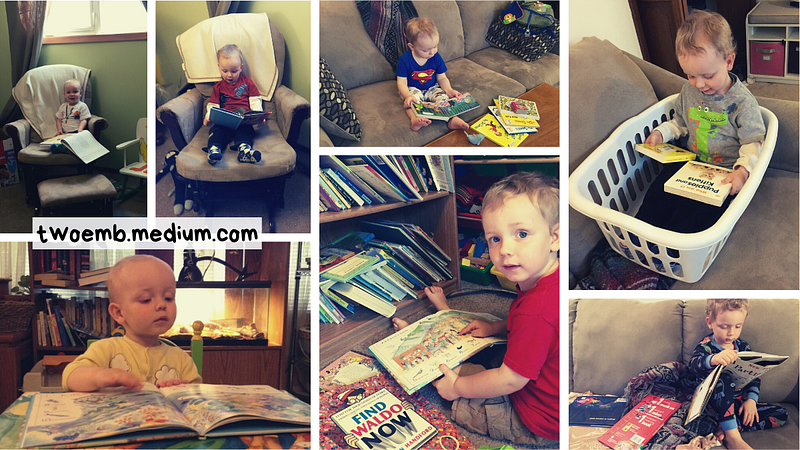
Photos by author

Hyperlexia

Hyperlexia is advanced and unexpected reading skills and abilities in children way beyond their chronological age.

Hyperlexia is most common in, but not exclusive to, Autistic children.

Approximately 84% of hyperlexic kids are also autistic.

A child can be one and not the other, however; approximately 9–14% of autistic children are hyperlexic.

Learn more here:

References

Martens, G., & Van der Gucht, L. (2022). All to No A Veil: Crip Humour and Neurodiversity in David Foster Wallace’s Infinite Jest. In D. de Muijnck, J. Jumpertz, R. Schneider, & T. Turnbull (Eds.), Poetics of Disturbances: Narratives of Non-Normative Bodies and Minds. Leiden: Brill. http://hdl.handle.net/1854/LU-8760869

Ostrolenk, A., d’Arc, B. F., Jelenic, P., Samson, F., Mottron, L. (2017). Hyperlexia: Systematic review, neurocognitive modelling, and outcome. Neuroscience & Biobehavioral Reviews, 79, 134–149. https://doi.org/10.1016/j.neubiorev.2017.04.029

Wei, X., Christiano, E. R., Yu, J. W., Wagner, M., & Spiker, D. (2015). Reading and math achievement profiles and longitudinal growth trajectories of children with an autism spectrum disorder. Autism, 19(2), 200–210. https://doi.org/10.1177/1362361313516549

Autism
Hyperlexia
Neurodiversity
Parenting
Children
Recommended from ReadMedium