
“Hundred Flowers” Campaign: Communist China’s Deadly Flirtation with Free Speech
When China’s emblematic communist leader Mao Zedong invited criticism
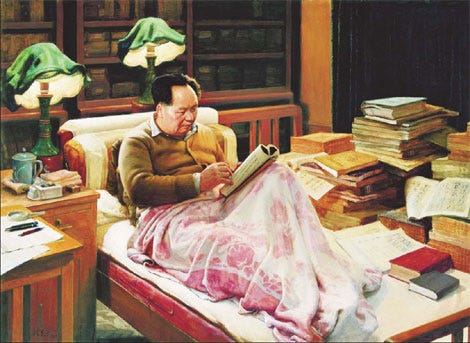
In 1956, the Chairman of the Chinese Communist Party Mao Zedong was not having the best time. For the past 7 years, he had been pushing aggressively the collectivization of agriculture. His regime gradually took away private property from farmers, forced them to work in state-operated communes, and implemented high production quotas. Mao had a grand vision of a booming economy and strong trade relations with the Soviet Union.
Melting Everybody Into One
The collectivization plan wasn’t concerned only with farming. Mao wanted to eradicate all traces of any pre-existing culture and have his people embrace the new communist doctrine. He banished all religious and spiritual gatherings and expressions, put restrictions in inter-state travel by re-instating internal passports, and worked to end many old traditions and rituals across the country. He wanted everyone unified under one identity.
But it wasn’t working. The quotas could barely be met, so local authorities manufactured a surplus by claiming more and more of the harvest. A mass famine was averted in 1956 by allocating food supplies to the mid-Yangazi, but such an approach of putting out fires was not sustainable.
Members of Mao’s party started voicing their concerns. They argued that the party is taking most of the harvest, leaving the farmers too dependent on it for food supplies. At the same time, the final output of this grand collectivization plan was minimal. China had nothing to show for it.
Inviting Critics
Mao, who until now had been a forceful leader who pushed his vision and doubled-down no matter the obstacles, now took a different approach.
He announced the “Hundred Flowers Campaign.”
“The policy of letting a hundred flowers bloom and a hundred schools of thought contend is designed to promote the flourishing of the arts and the progress of science.”
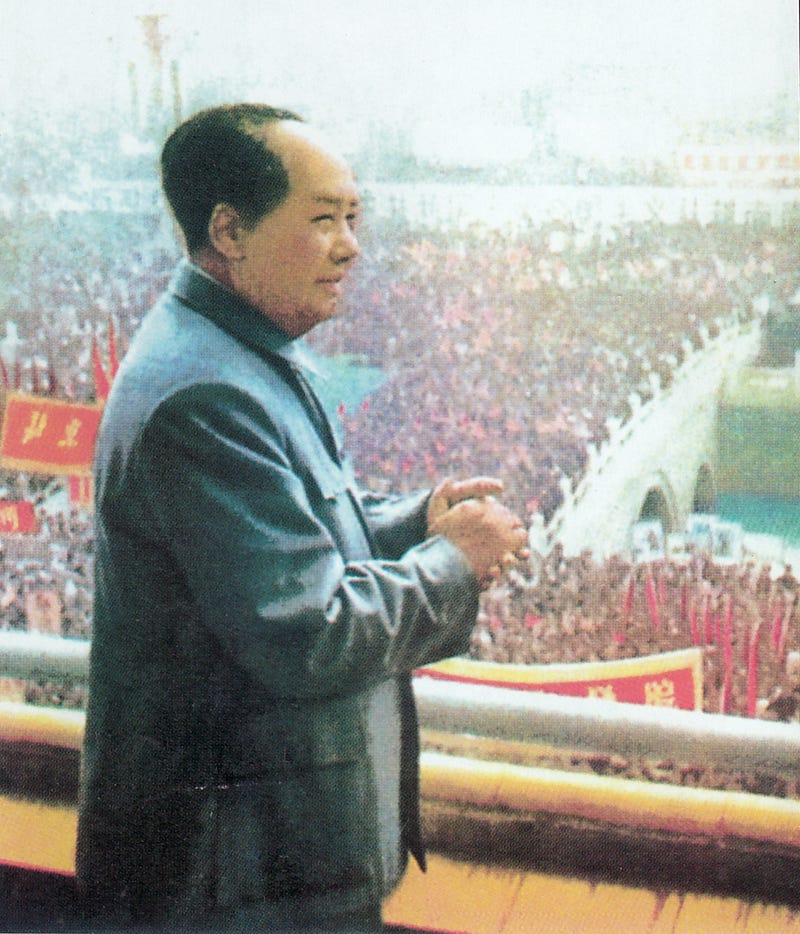
Mao was now opening his arms to all points of view and all kinds of criticism. He talked about how in ancient China numerous schools of thought clashed and how strong ideologies (Taoism and Confucianism) were forged in the fire of debates. He wanted the same for Communism.
He was fully expecting that all the heated debates by intellectuals will inevitably lead to them realizing that the communist ideology is the superior one among all the rest.
The campaign launched in late 1956 to a slow start. Few letters trickled down to the government and not many of those contained criticism. Mao was advised that perhaps the intellectuals might need a little more encouragement.
So he encouraged them.
In February 1957, he gave a strong speech insisting that constructive criticism is welcome by the party and can only lead to positive progress.
“Our society cannot back down, it could only progress…criticism of the bureaucracy is pushing the government towards the better.”
Then he started applying pressure on intellectuals to send criticism to the government. Finally, in May 1957, the floodgates opened.
The Wave
For just over one month — from May 1st until June 7th — millions upon millions of letters from intellectuals descended upon the government offices.
But the critics didn’t stop there.
They published magazine articles. They put up posters on prominent buildings. They rallied in the streets.
The very foundation of the policies of China’s Communist regime was picked apart by the critics. They revolted against the low standard of living, of the innumerable privileges of party members, of tyrannical mass campaigns in recent years, of the censorship of foreign literature, and the blind allegiance to the Soviet Union.
In July 1957, Mao terminated the campaign.
The Aftermath
Mao was left feeling less stable in his position of power following the “Hundred Flowers” campaign. It also happened to coincide with the Soviet Union’s denunciation of Stalinism and pledge to live in peace with the West. Mao saw this as a sign of threat to his dear communist ideology. So he, again, doubled down on defending it.
What followed the “Hundred Flowers” campaign was the historic “Anti-Rightist” movement in China targeting enemies of the party. Intellectuals, dissidents, students, and artists were persecuted, detained, sent to forced labor camps, and sometimes executed.
Individual rights diminished. No public criticism was voiced against the Chinese Communist Party until decades later.
Mao not only rejected the act of criticism but completely denied the merit of what his critics were saying. Just one year after the short-lived “Hundred Flowers” campaign, Mao launched the Great Leap Forward: an aggressive collective industrialization program that ended up killing 30 to 55 million people.
The fate of the “Hundred Flowers” was so strange in its birth and tragic in its end that to this day historians are debating Mao’s true motives. Did he truly believe that by inviting criticism, people will naturally embrace his communist ideology? Or did he launch this campaign to bring his enemies out in the light and then eliminate them? Whatever the answer, the result was the same: Mao ended up cementing the tyranny of the Communist Party over China’s people.
