
How You Can Cosplay a Popular Black Character Without Terror
We can cosplay without disrespecting others
When someone cosplays, they want to portray a character for the world to see. They usually select a famous personality, recognizable to their friends and perhaps fans. Sometimes they put their creative spin on a real-life celebrity while other times they dress up as a fictional character. Both options can lead to fabulous pictures, excitement, and adoration. While the goal of cosplay is to honor a personality, people may have questions about how to cosplay a character of a different race. It is essential to understand that we can honor characters of different racial backgrounds without disrespecting them.
First, you should pick a character you want to portray and feel confident in pulling off the look. Remember that the individual can look very different, but you are on the right track as long as you like their personality. Next, you should cruise the internet for the best costume options. Be sure to look at the characters’ accessories, hairstyles, and distinguishing marks. Lastly, get dressed and enjoy your look. Choose a platform to share your pictures on, or if you are reading this after COVID, you may find yourself planning to attend a party.
Now, as America finds itself amid a racial reckoning, it is a perfect time to discuss cross-racial cosplay. Every Halloween, without fail, some white people decide to wear Blackface as part of their costume. This practice should stop because Blackface has an ugly history. In the 19th century, many white people participated in Minstrel Shows, in which they painted their faces Black, using shoe polish, mocking Black people’s mannerisms in a dehumanizing forum.
Blackface costumes play on these historical relationships. They make the Black body property to be appropriated and discarded. They portray Black people as thugs, worthy of death, or make Black people’s bodies into a spectacle. They celebrate the dehumanization of and disregard for Black people (Howard, 2020).
These shows helped to solidify harmful stereotypes that still plague our society today. White people should understand that there never is a proper time or way to wear Blackface. Every time someone does this, it is an act of overt racism. Pretending that they mean to honor the Black person by wearing Blackface is disingenuous.
Blackface is still disrespectful and racist whether they’re dressing up as historical figures or not. If I, as a black woman, want to dress up as Audrey Hepburn for Halloween, I don’t paint my face white. I put on a tiara and little black dress— Kay, U.S.A. (Harris & Tarchak, 2019).
The goal of cosplaying is to portray a character, but we do not need to change our skin color for our friends and family to recognize which persona we chose. When white people feel the need to wear Blackface, they participate in racism. In doing so, they also reveal they do not truly understand their selected persona. If you know a character’s unique features and personality, you can achieve your goal without feeling terrified of offending others.
My skin is not your costume
While many people want to dress up as Indigenous or Black people, they should realize that our skin is not a costume. Unfortunately, many people still culturally appropriate when trying to cosplay. While we can find many of these costumes online or in local Halloween stores, people need to take responsibility for their choices.
One of the major misconceptions is that Blackface and cultural appropriation is acceptable when children wear it. That is not the case. When white parents paint their children’s faces brown or black, they teach them that mocking people of color is socially acceptable.
Some people think that this practice is not racist if they feel they are doing it with ill intent. However, Black people and people of color have expressed clarity on this issue over the years. Wearing Blackface, Brownface, or culturally appropriating people is a cruel practice.
Imagine the stress a Black child endures when they see your child in this manner. Since the behavior causes great pain to others, it is best not to let children learn these racist habits. Instead, try painting their face with distinguishing marks. Perhaps you could use a makeup pencil to draw a mole, dimple, or shapely eyebrows. Parents play a significant role in shaping the future through their children. Even if you grew up thinking it was okay, you have the freedom to change.
In many ways, dressing up is like playing charades. The goal is for someone to identify you without you saying who you are. If the color of someone’s skin is the only way you can portray the character, chances are you should learn more about them. I once dressed like my mom for Halloween, and my costume consisted of a suit, high heels, and lipstick. Choosing a character means you get to use your creativity. I tried to identify defining characteristics. Even though I could not imitate her height or swagger, I had fun, and my friends guessed correctly.
While outrage over Blackface generally centers around an individuals’ behavior, we should consider the social dynamics that make some white people engage in these behaviors. Throughout American history, white people maintained control of the government’s levers and possessed the most wealth. Even impoverished white people live in a country where privilege protects them from the discrimination Black people experience. For example, white people are less likely to be stopped by police officers or become expelled from school. Because of years of discriminatory redlining practices, most of America remains racially segregated. These circumstances leave many white people socially isolated from the lived experiences of Black people. Because of this cultural divide, many white people remain culturally insensitive.
The social framework is shifting underneath our feet. Many more white people are waking up to the social inequities that Black people endure. In the absence of real-life experiences, white people often hold harmful stereotypes about minorities. Thus, white people need to expose themselves to Black culture. While anyone can download a rap song, not many will attend a local concert with most Black people. If you are not a music lover, perhaps you can think of some hobbies you enjoy. Try branching out to participate in multicultural activities, along with your family. Only through increased exposure to diverse cultures will white people learn why Blackface is harmful.
Once white people really see it, they would not be able to abide it in any form — the mocking of people’s skin color, mannerisms or cultural differences. They’d become sick of it, at the stupidity of it, of the terrible cost and waste of humanity. And it would become very clear that anyone who thinks Blackface is entertaining is not only tone deaf, but truly racist — Mary Traina, New York (Harris & Tarchak, 2019).
Instead of normalizing disrespectful behaviors, we should acknowledge that cultural appropriation makes us more divided as Americans. Black and Indigenous people will not enjoy Halloween celebrations when white people use the holiday as an opportunity to culturally appropriate en masse.
Making excuses normalizes cultural appropriation
In times of celebration, we are marred with memories of overt racism. To create a different culture, white people have to stop making excuses for those who participate in Blackface, Brownface, and cultural appropriation. Saying that the person did not know any better is gaslighting. If we are serious about creating an inclusive country, we need accountability.
When white people make excuses, it normalizes systemic racism. Even if the person doing it is your mom, dad, grandma, grandpa, uncle, or another family member, their actions hurt people. Unless the person is a child, they knew better. If a child does it, you should take issue with their parents’ failure to consider how this costume impacts people.
The practice of Blackface started as a way to mock and taunt Black people. Throughout American history, white people always made Black people the butt of their jokes. Halloween presents itself as an opportunity for white people to engage in racist behavior while claiming that it was all a joke. The truth is, finding this comical makes it no different from the old Minstrel shows.
Dehumanization is a significant part of white supremacist ideology. Black people are not snowflakes for wanting respect and dignity. Our skin is not a costume, and feigning ignorance does not hold water in the 21st century. When white people make excuses for cultural appropriation, it prevents us from having meaningful conversations about what we can do differently.
Normalizing racist behavior is what leads to centuries of oppressive statutes and laws and, of course, the carrying out of vigilante justice like lynchings and castrations. I shudder when I read many of the comments here because I realize that much really hasn’t changed and that those postcards from the past of black men burned, castrated and swinging, surrounded by the faces of white men, women and children smiling gleefully, might be passed off as a harmless prank (Harris & Tarchak, 2019).
Some examples of black women cosplaying
Now that we reviewed how your Black cosplay can go wrong let’s talk about how you can get it right. Not all white people set out to hurt Black people. However, biases are so ingrained in our system that makes it hard to break free. One of the most important steps is to pick a character that you respect. Even if this person is a comedian, make sure that you are not making fun of them. Instead, dress to honor them.
Now that you have someone in mind think about why you like them. Does the character run exceptionally fast, achieve something you admire historically, or is it the individual’s attire that attracts you the most? Once you find out what you like, design your costume to exemplify the character you want the best.
I dressed as Princess Leia in 2018. Because I loved her iconic hairdo, I arranged my dreadlocks in two large buns. The costume came with fake hair, but I decided to do it without the wig. Your goal should be to look like yourself, pretending to be them instead of a direct copy. I had fun trying to put the wig on my dog, but she did not want to cooperate. While I did not attend any costume contests, I felt ready for one. I am curious whether or not you think I pulled off the look.
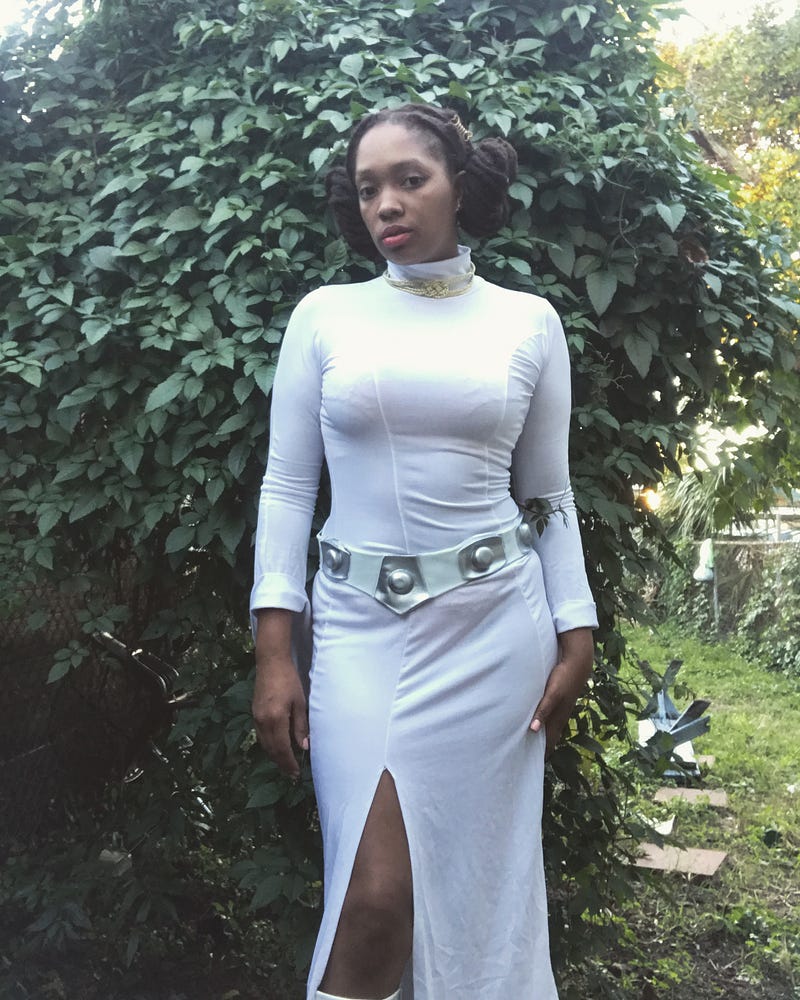
Notice that I did not paint my face white to accomplish this look. If I had, I think it would have distracted from the character representation rather than improved it. It never crossed my mind to do so. However, I think this gives a decent example of how you can honor a character without mocking them.
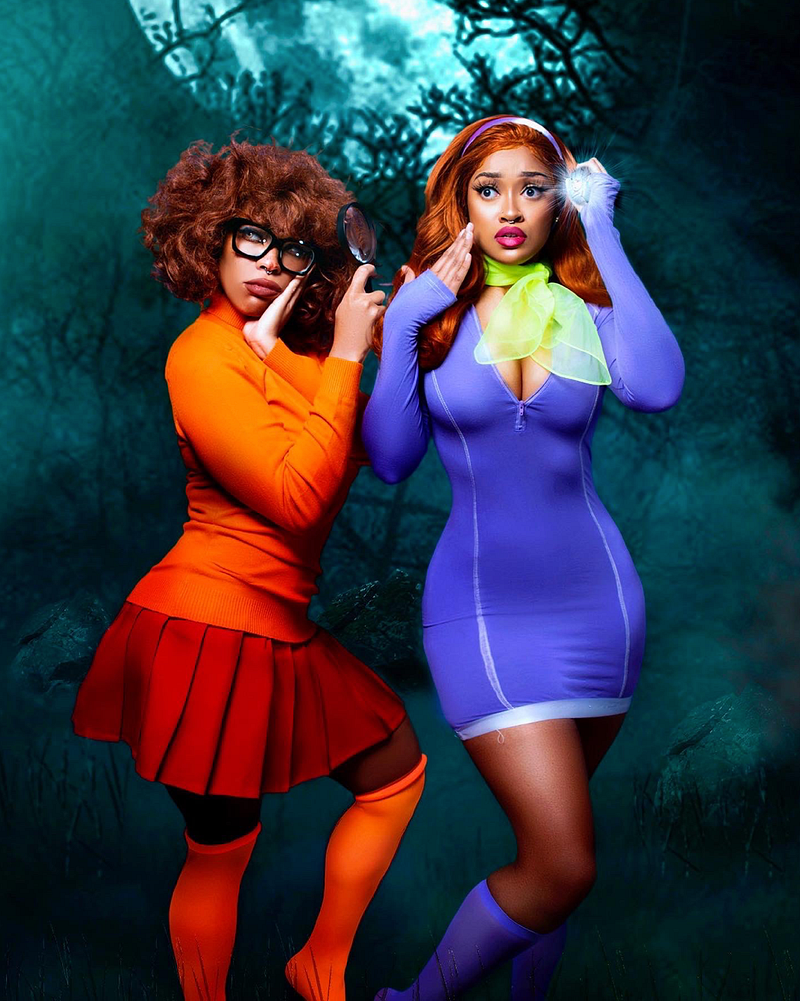
At the beginning of this story, you may have noticed the initial picture shows two Black women’s cosplaying as iconic Velma and Daphne. I think they did a fantastic job of capturing their sense of fashion and personality. However, Daphne did put on a sultry look we do not typically see on the character. I think it adds a new layer of interest to the image.
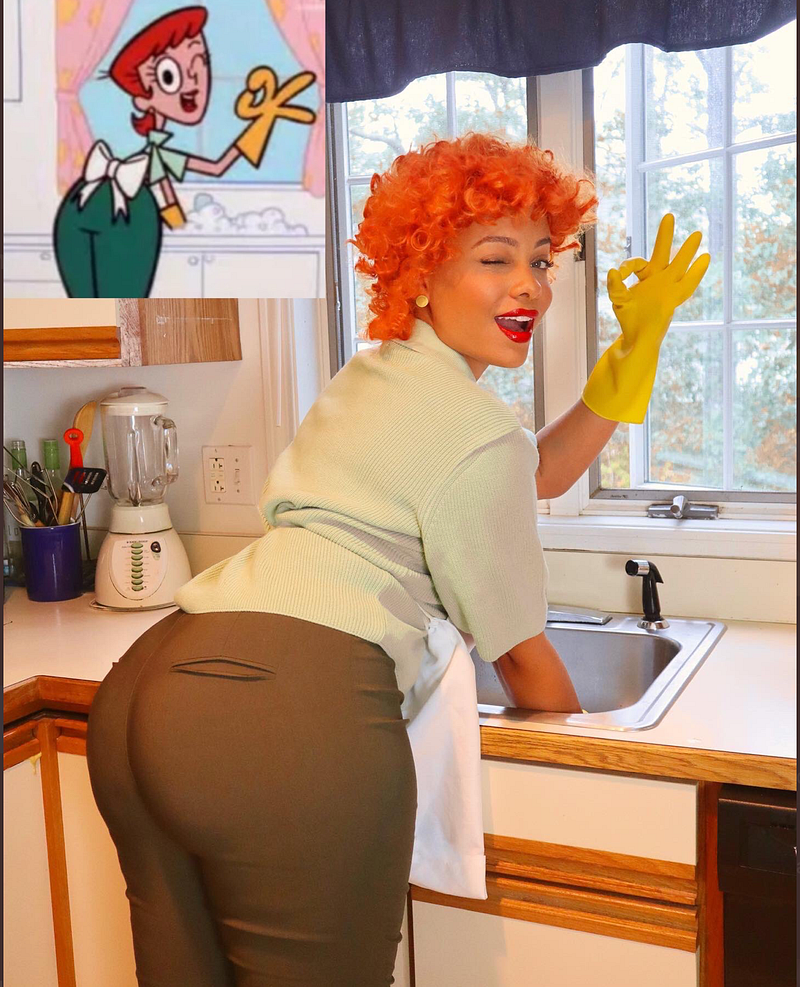
Next, we should assess Dexter’s Mom costume. Notice how she used the type of pants, gloves, and hair color to match her persona. The wink is a bonus. She did not need to change her skin color for most of Dexter’s Laboratory fans to recognize her. This costume comes off as fun and fits nicely into the stay-at-home theme of 2020.
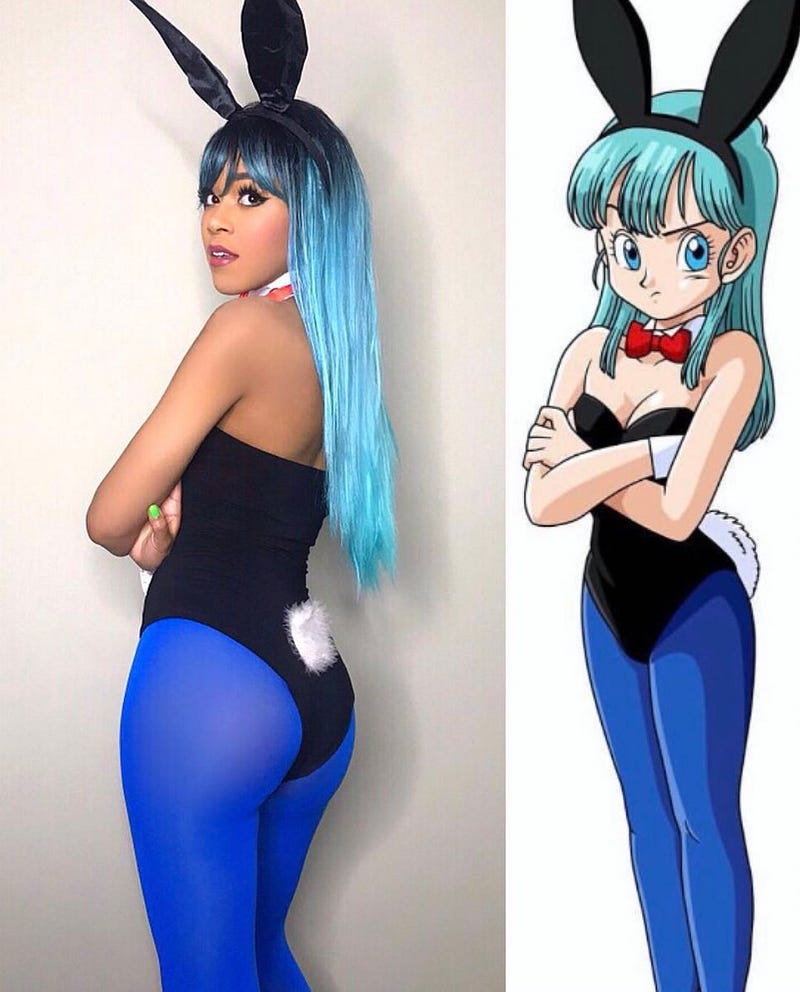
You may recognize the next costume from the world-renown anime, Dragon Ball Z. Her character’s name is Bulma, and she enjoys going on adventures with her friends as they try to save the world. If you watched the show, you would know that she is considered one of the most intelligent people. On top of that, she designed a device that can geographically locate dragon balls. In this costume, the woman used the same blue tights, black bodysuit, and puffy whitetail. The look on her face seals the deal as Bulma is known for her attitude.
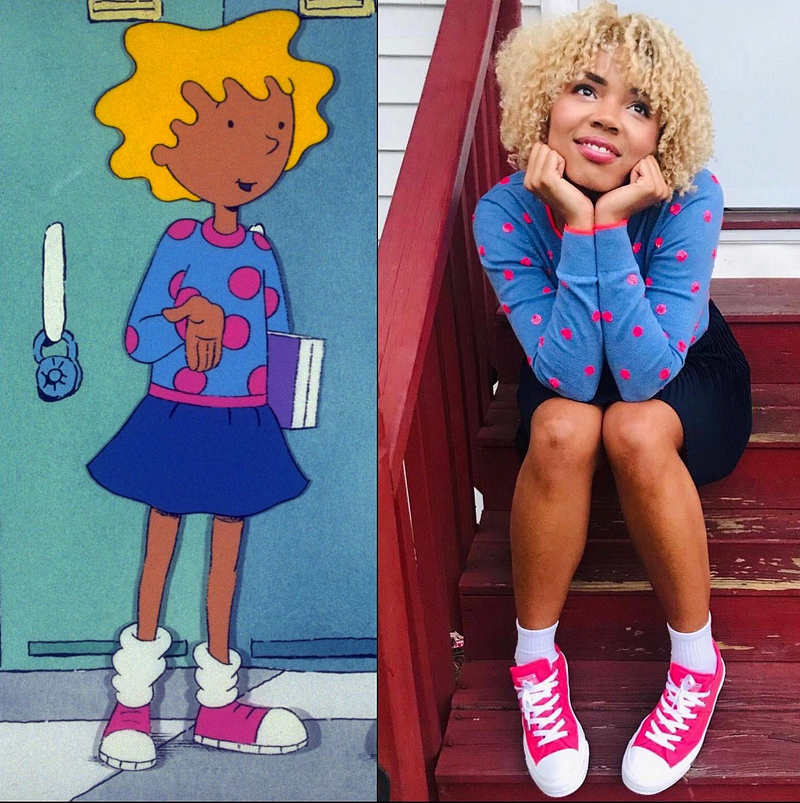
Lastly, we can observe this cosplayer’s version of Patty from the hit series Doug. While she seems similar in skin tone to Patty, I think it’s essential to learn how she accomplished this look. Her shoes, skirt, sweater, and hair color make this cosplay a whole meal.
As a Black woman, I felt it would help to show you how we accomplish cosplay without culturally appropriate others. I hope these examples prove useful as you broaden your horizons. These women pulled off these looks so well that they make my point for me. We do not need to change the color of our skin to absolutely nail a cosplay.
Looking ahead
Our goal when dressing up is to have fun. While we should feel free to express ourselves, we should not make our jokes at the expense of marginalized groups. Black and Indigenous people feel tired of enduring the mockery. If you consider yourself an ally, then act in kind. It takes more than not committing the fallacy yourself. It would help if you also took this conversation to your friends, family, and colleagues. If they show you a picture of themselves disrespecting other people’s cultures, let them know you disapprove. We need to push the momentum forward.
These costumes aren’t funny and harmless; cultural appropriation isn’t senseless outrage. It’s a painful, dehumanizing attack on their culture, their history, their very existence. And it should have no place in our society — at Halloween and beyond (Andrews, 2017).
This cultural phenomenon is not happening in the Black community, so there is only so much we can do to set things right. While some white people may fear offending others, they should put in the work to ensure that they don’t. When your joke is at someone else’s expense, they land in poor taste. We should move on past excusing these indiscretions because turning a blind eye to bigotry weakens our communities. You can cosplay as a charcater of a different race without terror when you understand which behaviors offend.
Curated Articles about Race, Equality, Women, and History:
References:
Andrews, J. (2017, October 25). Watch 6 Women Destroy Your Culturally Appropriative Halloween Costume. Retrieved October 31, 2020, from https://www.teenvogue.com/story/cultural-appropriation-halloween-costume-video
Harris, R., & Tarchak, L. (2019, February 14). ‘Race Is Not a Costume.’ Retrieved October 31, 2020, from https://www.nytimes.com/2019/02/13/opinion/blackface-northam.html
Howard, P. S. (2020, August 12). If you’re thinking of doing Blackface for Halloween, just don’t. Retrieved October 31, 2020, from https://theconversation.com/if-youre-thinking-of-doing-blackface-for-halloween-just-dont-105620


