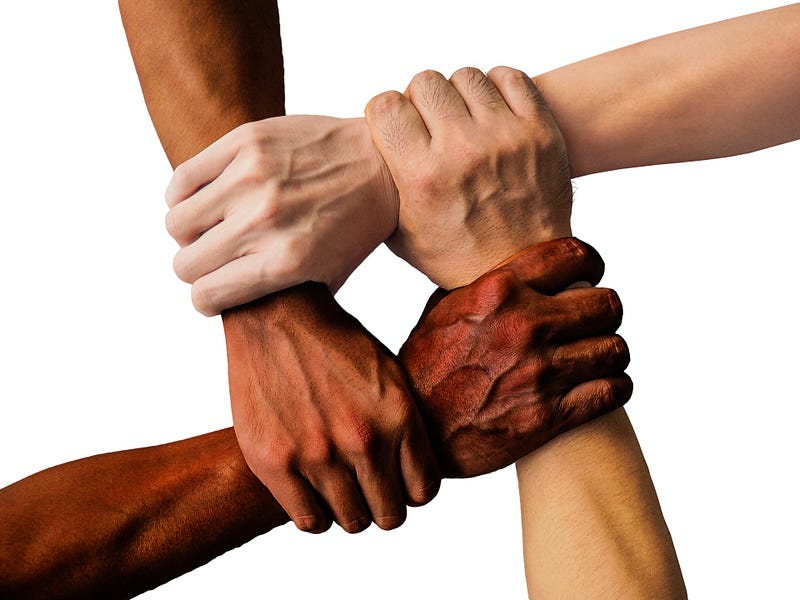
How we can Create The Common Space for Racial Tolerance
Living in Harmony Regardless of Race, Language and Religion
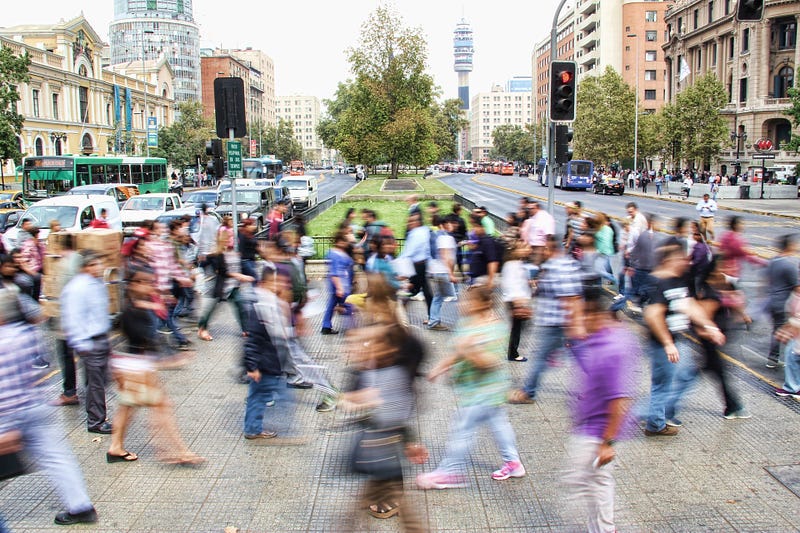
African-Americans or “Blacks” are less than 14% of the general United States (US) population. They now dominate nearly 99% of the US news and social media cycles. Triggered by the tragic deaths of George Floyd and Rayshard Brooks by White police officers, massive civil disobedience protests erupted with pockets of violence, arson and property destruction. Even the “takeover” of at least 3 blocks (from the original 6 blocks) of downtown Seattle to form a “new country” called Chop.
Actually, the calls for police reforms as well as closing of police departments have very little supporting factual basis in the face of overwhelming “black-on-black” deaths and more “unjustified” shootings of whites than blacks by police. Facts however do not matter when contradicted by deep-rooted legacy feelings and emotions.
Behind the “Black Lives Matter” (BLM) facade of racism and racial injustice rages the real battle for respectful social engagement and community space perceived by Blacks to be dominated by White Americans. In their minds, African Americans are trapped and languishing in their own self-perception of a persecuted people who were freed from plantation slavery just to be quickly enslaved by the larger White society, and confined to the iconic “urban ghetto” created in White-dominated Hollywood movies.
In the White Americans’ socio-spatial imagination, American society is divided into “white”, “black” and “cosmopolitan”, according to Yale Professor Elijah Anderson in his book The Cosmopolitan Canopy.
“White” areas are anywhere and everywhere that White Americans live, play and work. These are privileged social and mental space, not necessarily confined to the physical, where they could fully exercise their divinely given, self-evidential rights as the true, natural citizens of the USA (United States of America). They are protected by the full measure of the American Constitution, whose artificial assertion of equality and justice was never originally intended to include other non-White persons, like the native American Indians or Chinese or Mexicans, when it was first written entirely by White American politicians.
“Black” areas are anywhere and everywhere socially, physically and mentally that African Americans should confine themselves to live, play and work. In White America, “that’s their place and space” basically. This notion reinforces what their earlier chattel slavery of the Blacks have determined; that the Black person is at the bottom of the “divine” American racial superiority order with the white-skinned at the very top as the most superior, trailing far down by different shades of brown, bronze, yellow and the bottom-most social status is occupied by former slaves (and their descendants) with charcoal-Black ebony skin.
“Black” areas are iconic ghettos which stigmatise Black Americans by associating them with poor hygiene, unhealthy, danger, crime and poverty, essentially an impoverished place and den of immoral, uncivilized iniquity where all manners of violence and perversions are perpetuated among the Blacks by Blacks themselves; and where no resident should be trusted unless they abide by the “natural” White American racial order.
To gain trust and be accepted by White Americans, Black African Americans are expected to demonstrate that the ghetto stereotypes do not apply to them. Such behaviors usually include dressing and speaking in an educated manner like Whites or producing personal identifications or driving licence in situations which were never demanded of White Americans. And they must accept unquestionably the White American racial order where Whites are dominant and superior over all non-Whites deemed inferior who must and should be their subordinates.
The cognitive dissonance encountered by White Americans today is when affluent Upper-class and Middle-class Black Americans are no longer confined to live only in “Black” areas or “urban ghettos” but many now work in modern offices and live among White Americans in luxurious homes, apartments and neighbourhoods, which the vast majority of Whites cannot afford. The Black Upper and Middle-class do not feel obligated to stay in historically “Black” spaces.
Poorer Blacks continue to reside in “Black” communities which also have well-educated Black professionals like doctors and teachers, as well as supportive social structures with a strong focus on propriety and decency.
White Americans usually avoid “Black” spaces, and African Americans are required to navigate the “White” spaces carefully in accordance with “White” laws, regulations and “common” protocols as a condition of their existence.
Over recent decades, Black Americans are found at all levels of American class and occupational structure. Many attended the best schools, become members of top prestigious professions like doctors, accountants, pilots, teachers and the military. Many also occupy or were elected to various positions of power and privileges.
In the book, The Truly Disadvantaged by William Julius Wilson, a Harvard sociologist studying upward social mobility among African-Americans, he also found remarkably significant income gains among more affluent blacks; the percentage of black Americans earning at least $75,000 more than doubled from 1970 to 2014, to 21%. And those making $100,000 or more almost quadrupled to 13% (in contrast, white Americans saw a less striking increase, from 11% to 26%).
A 2014 study by Credit Suisse and Brandeis University further confirmed that the concentration of wealth, as opposed to income, by the top 10% of African-Americans in 2009 accounted for 67% of the wealth held by all African-Americans, up by 8 points from 59% in 2005. In contrast, the top 10% of whites owned 51% of all white-owned wealth, up from 46% in 2005.
Granted, there however remained a wide disparity in absolute income levels between Black and White Americans. In 2014, only 8% of Black households had incomes of $100,000 or more when compared with 14% of White households.
White Americans are generally confused and baffled by what they see as Black “intrusions” into “White” areas in violation of the White American racial superiority order. For most Americans, their dissonance translates and creates active resentment which manifests as racism or racial remarks or plain racial discrimination.
For as long as the mindware of White racial superiority remains in the White American psyche, African Americans will never escape the ghetto stereotype and background which shape the conception and prevent the respectful acceptance of Black Americans in a “White” America.
The 6 Characteristics of Cosmopolitan Areas or Common Space
“Cosmopolitan” areas or “common” space refer to a few scattered virtual pockets or islands of racial civility located in the vast American sea of racial segregation. They hold the key to winning the American Race against Racism by empowering racial tolerance, respect for diversity, integrity, social justice and equality.
There are 6 things which characterise an enlarged “cosmopolitan area” or “common space”:
(1) It is not neutral space. One does not have to be everything or nothing in order to enter the common space.
(2) It is not exclusive space. One does not have to switch on and off their ethnic, racial and religious identities to fit the context or social situation.
(3) It is not necessarily a secular space. While society may be secular by constitutional definition, most people living in it are not secular by nature. Many do desire to profess their respective choice religion, faith or belief.
(4) It is togetherness. People living in the common space have a common identity, has a common understanding and share a common “bond” that binds them through various traditions and rituals. The call for more common space demands that we emphasise our “cosmopolitan” mindware or “common-ness” more than our respective uniqueness or differences.
(5) It is owned by all. There must be emotional bonds created by definitive experiences eg. Schools, social events, sports, conflicts with outsiders, responses to threats ….etc that would build a deep, profound sense of nationhood, patriotism and ownership of “our” Common Cosmopolitan Space that binds us together and defining that which makes us “same”. It is our capacity to share our unique and different values, customs and beliefs that ultimately opens up more common space for all.
(6) It is community building. A community may be defined as a group of people who share a common space. The desire for mutual identification with each other necessarily challenges us to muster the courage to remove the mental and physical “partitions” that reduce our common spaces.
Using a house for example, eliminating the “walls” of kitchens, guest rooms, family rooms, kid’s playroom, exercise room, dining rooms and laundry rooms ….etc will expand common space. We can still do all these things, in the same but one bigger room.
“Cosmopolitan” area or “Common” space is formed, created and expanded in the imagined social spaces defined by shared interactions and identities. It requires us to openly define that which could hurt or offend us collectively eg. Racism, Intolerance, Terrorism, Racialism, Exclusivism …etc. These repeated acts of self-definition declare and define the identity of our group membership as a community.
Like the house, the common space of the mind can be expanded by first expanding the open space in our hearts. We will have to reshape and reconfigure cultural norms about space, place and identity, so as to free up opportunities to appropriate and reorganize community spaces to blur the boundaries between individual, private and customary common space.
A community is more than just having the feelings of connectedness, mutual identification, belonging and having a shared geographical place. It is also where we can express freely and without reservations the longing and aspirations of our ideals, be they political, philosophical or religious.
The common space is where we can bring all that we have, be ourselves and share them so as to build better mutual understanding, and agree to disagreed at times without acrimony because there exists a bond of respectful mutual acceptance of who we are.
The acid test of our common cosmopolitan space is whether we would feel comfortable letting our young children interact freely with one another unaccompanied by adults.
Just as it takes a village to raise a child, there is no village without the open and common space where children and parents can play and interact together without having to give up what we are nor require to be whom we are not, in order to become what we can be together.
For America in the wake of the recent racial riots, you can make and remake your own multi-racial and multicultural identities, as you simultaneously re-constitute and create a truly American community, and expand the abundant “cosmopolitan” area or “common” space where all can enter and breathe the common air, regardless of race, language and religion.
The awesomely simple truth is that more “cosmopolitan” areas and “common” space can be created, expanded and multiplied as we begin to share the space that we have already occupied.