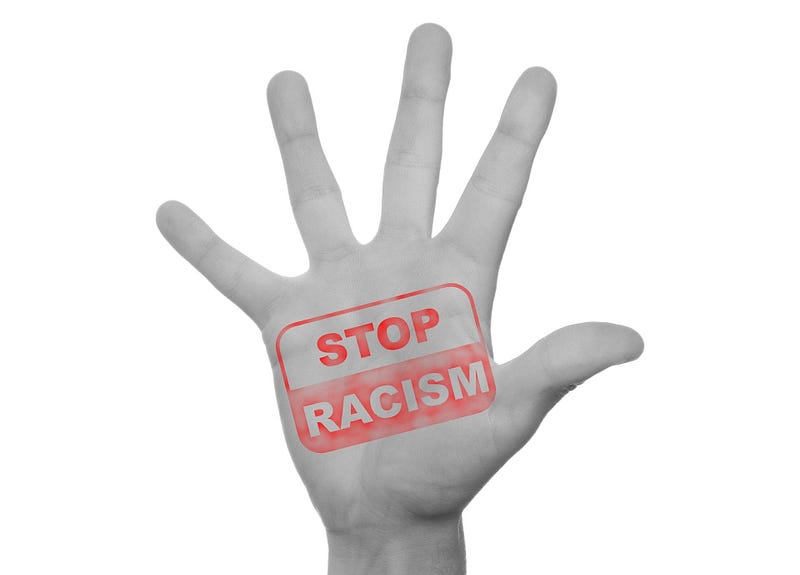
Is the United States losing the Never-Ending Race Against Racism?
The Future of American Race Relations

Over the past weeks, US race relations continue to run full steam ahead towards her racist past into the future. However, the never-ending race against racism does not end there.
The Minneapolis police arrested a 46-year old black man, George Floyd, after a convenience store employee called 911 and told the police that Floyd had bought cigarettes with a counterfeit $20 bill. Seventeen minutes later, Floyd was video-taped pinned on the ground and held in that position with a police officer’s knee on his neck for more than 8 minutes which rendered him unconscious after he repeatedly shouted “I can’t breathe”. He was already dead for more than 4 minutes when the ambulance finally arrived.
Exactly 4 years ago in 2017, Minneapolis police shot dead a black man after being pulled over while driving and which was captured in a video viewed by millions of people, after a similar incident in Louisiana. The latest George Floyd killing and the previous police shootings in Louisiana and Minnesota are grim reminders of the consequences of losing the never-ending race against racism in a modern and, arguably, civilised human society.
In a direct response 4 years ago, a black sniper-shooter killed 5 white police officers in another distant city of Dallas in Texas. He was eventually killed by a bomb dispatched against him by the police. Ironically, Dallas is probably a showcase of successful police-community relations in the US with one of the lowest white-on-black killings, including the wrongful killings of innocent blacks by police officers.
About the same time, protests erupted in Charlotteville, Virginia, over the city’s plans to remove a statue of Confederate Gen. Robert E. Lee from a downtown park. As white supremacists’ groups protested the removal, they clashed with their opponents in favour of removal. Protests turned violent as white supremacists clashed with counter-demonstrators, and a car ploughed into the crowd of anti-racist and anti-fascist protesters. In the end, 3 persons died and more than 30 persons were injured.
The recent George Floyd incident rekindled the simmering anti-white resentments of pro-black sentiments personalized by the “Black Lives Matter” (BLM) movement who led and organised demonstrations and civil disobedience riots across major US cities, and even across the Atlantic Ocean into the city of London in the United Kingdom, who also harbored her own brands of racial discriminations and inequality in Britain.
America’s failures in her race relations are not amenable to easy or comprehensive understanding and analysis. No pretension is attempted here to have the solutions to end endemic racism in America.
Nothing in this Article is intended to condone the senseless death of George Floyd and other victims of racial riots as well as the burning of private and public property and wanton violent protests. There is no justification whatsoever for maiming and killing during violent undemocratic protest actions. And no senseless deaths of innocents could ever be condoned by any decent human being in the world, as with other racially-motivated, barbaric and murderous killings of many others who have fallen victims to racist acts through the centuries.
The “Black Lives Matter” (BLM) cry is inherently racist because it elevates the importance of the life of one group above others. The support of BLM, even by the former US President Barack Obama, is unfortunate and regrettable because it makes the race against racism in the US ever more daunting. The President for all Americans should have advocated, legislated and led real policy actions in support of an “All Lives Matter” national movement instead.
In the weeks following George Floyd, the US race against racism veered off its future destiny of true freedom and equality to run forward towards her bigoted Jim Crow past.
Granted disruptive violence can have its place, albeit only temporarily, in the social adaptation process of diversity and differences in order to obtain social justice. The sustainable victories for equality and social order have always belonged to non-violence. For example, British colonialism — that great racist scourge of modern civilisation — was defeated by a non-violent movement led by a puny short Asian Indian lawyer called Gandhi. Likewise, slavery in the US was ended by a simple political proclamation even though it was protested by years of civil war before reason and sensibility finally returned without any recrimination or revenge.
White American racism against Blacks in particular was thoroughly cooked and boiled in the living hell of her past institution of chattel slavery from 1619 to the 1865 Presidential Emancipation Proclamation that freed more than 3 million Black slaves, lasting about 246 years. Their hard-earned freedom was however followed by more than 150 years of systemic and continuous social discrimination and exclusion, as manifested in the George Floyd and the earlier Louisiana, Minnesota and Dallas killings.
To be fair, American race relations have in fact improved significantly since the 1960s. Many Black Americans indeed have moved up the social mobility ladder through education and achieve prosperous careers as entertainers, doctors, lawyers, accountants, businessmen, politicians, professionals … etc. A Black President in the White House for 2 terms of 8 years, before current President Donald Trump in 2016, should have convinced Black Americans of the abundance in life and social opportunities awaiting them that they have access to. For many Black Americans, these are simply not enough.
Black Americans at 13% is the largest racial minority, compared with 77% of racial majority Whites Americans. Hispanic and Latino Americans together amount to 17% of the population, making up the largest ethnic minority. Asian Americans at 5.6% are at a far distance, but more than the 1.2% Native Americans.
Many Black Americans believe that they are singled out for systematic discrimination by social institutions and by the law-and–order systems.
Their proportion in prison far exceeds their proportion in over 20 states. On the whole, they made up more than 30% of prison inmates. Another study some years ago concluded that at the time of his birth, a Black American has a 33% chance of going to prison during his life-time.
During the 8 years of previous US President Barack Obama, a Black man himself, Black unemployment and Black on Black violent crimes reached unprecedented levels, increasing the Black prison population, with millions more Blacks entering the food coupon registry, even as Black Universities saw their government grants support drastically reduced.
Black Americans appeared to be trapped and languishing in their own self-perception of a persecuted people who were freed from plantation slavery just to be quickly enslaved by the larger White society. Poverty, unemployment and incarceration reinforced inherently low self-image and perceived lack of economic progress when compared with other better-off non-White Americans like the Chinese, Koreans, Vietnamese, Hispanics and Latinos, many of whom were recent immigrants only in the last 50 years.
No wonder White Americans’ stereotypes of Black Americans are reinforced concerning the capability and suitability of the Black man to live and work in the civilized modern American society of law. This sad state of mutual misunderstanding affects and retards any significant progress in their race relations, and can be attributed to the absence of courageous visionary leadership in the US Presidency, both Houses of Congress, Community and Social Leaders, Black and White Influencers and Business Leaders.
Leadership failure by both Black and White leaders is culpable and responsible for the American race against racism taking off on a momentum with racism in the lead far, far ahead.
Know that American society was created with white racism. The earliest white God-fearing Christian settlers in the New World deployed racism as their weapon of choice, alongside firearms, to expropriate Native American Indians of their legacy ancestral lands as a matter of their self-assumed divine entitlement in order to create their own colonies.
Early American colonies, formed about the 1600’s, have a disdain for non-White immigrants who were not, like themselves, from countries like England, Ireland, France, Holland and Sweden. That racism was nurtured and systematically developed by the early and subsequent colonies is baffling since they had escaped to the New World to escape religious persecution and social ostracism. The Colonists had in fact flourished with accommodation by and assistance from Native Americans, before being slaughtered by the new settlers in their greedy binge for land and resources. Deprived of their birthright, the descendants of Native Americans tribes now live in respective “Reservations” which are often desolated properties on mere fractions of the greater American plains which once belonged to their fathers and ancestors.
Another case-in-point is the Chinese who first came to America in the 1850s in search of gold and silver fortunes and who later helped built the Great American Railroads. Like other non-White settlers, the early Chinese in the US also encountered systemic White racism in the forms of legal and extralegal discrimination in daily living. Considered “the dregs of Asia”, they were prohibited from public schools, from voting, from citizenship and from testifying in courts or legal access. They were instead however legally liable to pay school, property, water, hospital taxes as well as a “permission tax” for gold and silver mining activities.
The Chinese were only allowed US citizenship in 1943; Asian Indians from 1946 followed by Japanese and other Asians in 1952. With citizenship rights came the right to vote, or so it seemed. It is not until the 1965 Voting Rights Act which banned discrimination against voters belonging to language minority groups and provided critically important protections to these and other minority Americans.
Even though Section 203 of the Act mandated the provision of bilingual ballots and language assistance to Asian American voters, it was however not until as recent as 13 October 2011 that Section 203 was officially enforced with the provision of bilingual ballots and language assistance in 22 cities, including New York, Los Angeles, Chicago and Michigan, over 11 states and in 6 Asian languages including Chinese, Filipino, Vietnamese and Korean.
Truly, the USA became a relatively young modern democracy only in 1965 using the universal franchise measure for democracy.
Singapore actually preceded the USA as a democracy since we achieved the benefit of one-man-one-vote universal franchise and democratic self-government in 1959, before the USA who is often regarded, factually incorrectly, as the greatest democracy of our time.
Racism has neither a white or back face. Racism is an evil that has neither colour nor face. The NAACP (National Association for the Advancement of Colored People) preoccupation with Black American issues is disingenuous. The “C” in NAACP stands for “colored”, and black is technically not a colour — physically, black is factually the absence of colour.
Racism is learnt. We learn it from our parents. We teach it to our children. The motivation to teach racism to our children arises out of our own fear. We fear what we do not understand what or whom looks different from us. Our natural reaction to the irritating uncomfortable fear is to retaliate, to defend, to eliminate and to remove the source of the discomfort by causing pain and possibly its death. Racism counters such fears by concealing these fears.
The fear that Blacks can do what Whites do invokes such paranoiac fear from the thought that Blacks could actually be better than Whites in the things that they should not possibly have the genetics and aptitude for. For example, Blacks were not selected for fighter pilot training during World War 2 because it was believed, without scientific basis, that they lacked the aptitude for flight controls. Racism, where it exists, usually rests upon the phony and baseless notion of inherent racial superiority.
Using pride in our own cultural heritage as a cover, one is easily tempted to wear it all the time to compensate perhaps for an inadequate sense of self-esteem and self-worth.
Racial bias may seem natural and innate in many of us. We need to take off our masks of racism. Unconsciously, it gets the better of even the most “enlightened” among us who proclaim to be “colour blind”. We are in fact blinded to our own racism which resonates in our unconsciousness.
We must first face and admit the racism within ourselves. Black and White Americans must learn to discard, unlearn and scrub the baggage of their racist and bigoted history. Unhelpful history is best archived into irrelevance and possibly oblivion. New chapters must be written inclusive of all Americans, and not just between Blacks and Whites.
Racism becomes systemic and institutionalised as it is inserted and embedded in the DNA of the economic and power interest structure of society. Malaysia’s official racism policy supported by racially-based politics is a good example of what is happening to American society at the unconscious level. Systemic racism can only be destroyed by re-constructing the society itself. It begins with education and succeeds only when parent can let their children play with children of another race without their supervision.
Racism feeds on a dangerous diet of contaminant ideas and lies regarding race and racial superiority, and regarding the inferiority of other races along various dimensions. Read for example, the Malaysian Myth of the lazy Malay and the divisive bogus notion of Chinese privilege in racially harmonious Singapore.
In George Floyd, I think, American racism has finally come a full circle to arrive at the homes of White Americans. His tragic and unnecessary death, like others in Louisiana, Minnesota and Dallas, should stir much righteous anger and activate White, Black and All Americans into audacious and bold actions to eliminate and remove the evil of racialist thought. “All Lives Matter” should rightly replace (only) “Black Lives Matter”.
In Minneapolis last week, BLM was glorified by its Black Mayor and reduced to street art by being painted on a major road; ironically to be driven over repeatedly by mostly White and non-Black motorists! The White Mayor of New York is also planning to paint the same (well-intentioned but misguided BLM humiliation) in all its 6 Boroughs.
The race against racism is long and never-ending. We need to conquer the lingering racism in ourselves. The imperative is to race towards and beyond the front of our own racial prejudices. Some may believe that we cannot live without racism; for sure, we cannot live within it. To win the race against racism, we have to “first conquer ourselves” (Chinese philosopher Lau Tzu).
Yes, it is OK to ignore the things we disagree and focus on those we do, especially that which unite us. Social harmony does not require consensus or standardisation or assimilation. Harmonious co-existence in race relations needs only the respectful tolerance of differences without discrimination or recrimination. A strong united community can embrace diversities of practice and opinions to allow the innovations of thought and ideas to make for a better future society. Singapore is a worthy learning model.
Only the end of racism will inject real meaning to the artificial truths of self-evidential natural freedom and equality envisioned in the US Constitution. True freedom will bring responsibilities. These responsibilities include inclusiveness, justice, equality, sharing, opportunities, compassion, empathy, and condemning bigotry in any expressions.
After Floyd, can America run and stay increasingly way ahead in her race against racism? Only your readiness in truly acting out these responsibilities can begin the end of the long, long race against racism.
The recent weeks have reminded Americans once again that the megathon race against racism is far from slowing down … or over. The endless race against racism threatens to overtake America to await her in her future.