
How Understanding Your Child’s Stress Response Can Unlock Your Parenting Skills
Every once in a while, my husband would walk by, grab my foot, crack my toes, and I would scream in pain.
“That doesn’t hurt!” he would yell. And he would crack his own toes in demonstration.
But it did hurt. It hurt quite a bit. And it took me YEARS to figure out how to explain it to him.
His feet are ridiculously flexible. And mine, despite years of ballet training, are not. If I had walked up to him and yanked his legs apart in a split, he too would scream in pain (and probably not be able to walk right for weeks). But I could easily do a split and say, “It doesn’t hurt … see?” My toes simply couldn’t bend as far as they needed to in order to crack, and to do it, caused pain.
Which brings me to an important point. When someone tells you something hurts them, you don’t get to tell them it doesn’t.
This applies to both mental and emotional pain.
We Don’t Get To Tell Them It Doesn’t Hurt
I haven’t always been good at realizing it, myself. Once, when I clapped my hands to praise my three year old daughter, she yelled: “Ow! Mommy, don’t clap. It hurts my ears!” Naturally, I told her she was silly and clapping didn’t hurt anyone’s ears. Yet still, whenever she’s about to show someone something she can do, she always prefaces it with: “please don’t clap.”
When we were at a wedding, I spent the entire time with her in the hotel lobby while she covered her ears. The other kids were all having a blast on the dance floor. The next day we went to the store and bought her noise reducing headphones. Just because it didn’t hurt everyone’s ears, doesn’t mean it didn’t hurt hers.
Honestly, she has been like this since she was an infant — and not just with noise.
When she was eleven months old, she was completely immobile. She wouldn’t roll. She wouldn’t move from a laying to a sitting position. She wouldn’t rock or crawl, and she certainly couldn’t walk. Where you put her is where she stayed. We called Early Intervention and they confirmed a gross motor delay.
We employed the services of a physical therapist, and within three weeks she was not just rolling and crawling, she was walking and climbing stairs. It was never that she wasn’t developmentally able to do it. She just wouldn’t do it.
She just needed extra help to show her that she could. She needed guidance through her failure. Once she failed at something, she was very unlikely to try it again. She is still like that to this day.
Sometimes I get frustrated with her. If she can’t get her shirt off the first time, she will scream in anger and refuse to do it. “You do it,” she demands. I tell her how other four-year-olds can dress themselves. But, does that matter? Do I really need to make her feel less-than?
Orchids and Dandelions
She is highly sensitive to many things. Noise is one. Failure is another.
My other (younger) child is completely different. She will try something hundreds of times and is completely undeterred by failure. If anything, it strengthens her resolve.
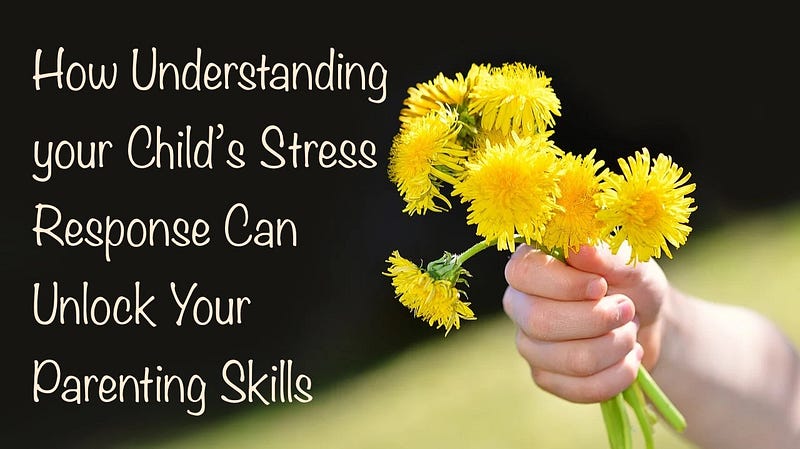
My youngest is a dandelion child. She is persistent. My oldest, is what Dr. Thomas Boyce calls an Orchid Child. According to Boyce, who has studied stress response in children for over 40 years:
“most kids tend to be like dandelions, fairly resilient and able to cope with stress and adversity in their lives. But a minority of kids, those he calls “Orchid Children,” are more sensitive and biologically reactive to their circumstances, which makes it harder for them to deal with stressful situations.”
Some kids have a harder time handling things that cause them stress. Additionally, some things cause them stress that wouldn’t normally cause stress in others. That doesn’t mean we as parents or caregivers should make them feel less-than because of it. It is our responsibility to help them recognize and overcome their reactions to stressors.
These differences are actually rooted in the chemical processes in their brain. Monitoring the cortisol system and the autonomic nervous system, Dr. Boyce and his team found that “Orchid Kids” had very different biochemical responses in their brains In fact, 15–20% of children are born with a nervous system that is hyper sensitive to external stimuli. Just like cracking my toes caused me physical pain because my feet weren’t as flexible as my husband’s, sensitive kids feel things that others may not because of actual physical reactions in their brains and bodies.
So I’ll say it again. Just because we don’t feel the same response as our children — doesn’t mean they aren’t feeling it. We shouldn’t tell them something “doesn’t hurt.”
So What Can We Do?
Given the right environment, Orchid Kids can thrive and become beautiful flowers. Because they have a sharpened sense of awareness, they are often gifted in other areas both intellectually and creatively (see Your Weakness Is Your Superpower).
It’s not easy. Helping an Orchid Child involves a balancing act. You want to push them to try new things, but not so much that it overwhelms them and they shut down. (Then, your help is actually counter-productive). On the other hand, you don’t want to overprotect them, and completely shield them from their stressors. I sometimes wonder if we hadn’t sought outside help if my child still wouldn’t be walking to this day.
Instead, we can recognize when they are having a negative stress response to something, and we can be supportive instead of judgmental. That, is the most important first step. Maureen Healy of Psychology Today offers a number of other strategies to help:
- Understand sensitivity is a gift. Many famous achievers we know today were considered highly sensitive, including Abraham Lincoln. Focus on your child’s strengths, and accept that they are sensitive.
- Partner with your child. Ask your children to do things and work with him or her. Understand what will set them off, and use avoidance if you can. If you can’t, help provide them with tools to calm themselves. Harsh discipline can often backfire.
- Create safe spaces. Orchid Children are highly impacted by their environment, so have a space where they can be calm. You can use lighting, colors, and comfort objects to help them feel calm and “destimulate.” (Yes, I made up that word). You can also foster a sense of safety by connecting them with likeminded children.
- Practice positive parenting and gentle discipline. For me, this has been key in my own strategy. We can give them boundaries (and they need them just like every other child) while still treating them with respect. I admittedly use story-telling to encourage my kids to make good choices (and scaring them with a good story can be quite beneficial).
Understanding where your own child falls on the Orchid to Dandelion spectrum can help you adjust how you both react and proactively deal with outbreaks and stressful situations. I’ve said it before and I’ll say it again — parenting is messy and complicated. There are no right answers, and no single strategy will work with every child. The more we stock our toolboxes, and the more we learn, the better we can do.


