avatarAlexa Velinxs

Free AI web copilot to create summaries, insights and extended knowledge, download it at here

4405

Abstract

er based on the prompt “A Dan Flavin art of a rabbit”.</figcaption></figure><p id="2b9b">It’s a beauty. Simple, poetic, surprising. The reference to Dan Flavin creates an atmospheric, illuminated render of the rabbit. I could see this as a piece in my own space.</p><p id="16cf" type="7">“An Isamu Noguchi art of a rabbit”</p><figure id="8d22"><img src="https://cdn-images-1.readmedium.com/v2/resize:fit:800/1*gj4fxhoA7HyROuRpYyb8Ig.png"><figcaption>A DALL-E render based on the prompt “An Isamu Noguchi art of a rabbit”.</figcaption></figure><p id="113c">Stunning. There is a bit of surrealism in the form itself, but it’s an impressive concept of a rabbit.</p><p id="03ce" type="7">“A Barbara Hepworth sculpture of a rabbit”</p><figure id="4eee"><img src="https://cdn-images-1.readmedium.com/v2/resize:fit:800/1*7LOC2oigQDzizr7kBf2stg.png"><figcaption>A DALL-E render based on the prompt “A Barbara Hepworth sculpture of a rabbit”.</figcaption></figure><p id="7855">This render looks right out of the imaginary sculpture park itself. The texture is amazingly realistic, the composition is dynamic. In its poise, the rabbit displays a big personality.</p><h1 id="830a">Defining the three-prong prompt: A sculptural reference, persona, and an action</h1><p id="5b77">Now that we’ve explored a basic static DALL-E render of a sculptural reference, we can expand the prompt with a third contextual element, <b>action</b>.</p><p id="56be">We’ll ask for the rabbit to be active, jumping, or leaping.</p><figure id="3b09"><img src="https://cdn-images-1.readmedium.com/v2/resize:fit:800/1*lYLI6loWGLuEmEit8uZNKw.png"><figcaption>Adding ‘action’ to the initial prompt. This defines the 3-prong approach for the prompt.</figcaption></figure><p id="2f0c">Defining an action for our persona will add fluidity and spatial aspects. We can describe the action as leaping, or jumping through the air.</p><p id="360c">The prompts for DALL-E are thus:</p><p id="e870" type="7">“A Dan Flavin art of a rabbit leaping through the air”</p><figure id="a91c"><img src="https://cdn-images-1.readmedium.com/v2/resize:fit:800/1*OhgL44MaPkgu2NcnBBcPwA.png"><figcaption>A DALL-E render based on the 3-prong prompt “A Dan Flavin art of a rabbit leaping through the air”.</figcaption></figure><p id="1c1b">DALL-E rendered this beautifully based on the 3-prong input. The image has a cinematic, ethereal quality. While we’re not sure where this narrative is going, it can be the take-off point for the rabbit hero story.</p><p id="ac7b" type="7">“An Isamu Noguchi sculpture of a rabbit jumping through mid air”</p><figure id="5b4e"><img src="https://cdn-images-1.readmedium.com/v2/resize:fit:800/1*-tfcnwiVkpOpni9ziPb53Q.png"><figcaption>A DALL-E render based on the 3-prong prompt “An Isamu Noguchi sculpture of a rabbit jumping through mid air”.</figcaption></figure><p id="9b64">In this DALL-E image, the hero, the rabbit is taking on a playful personality, jumping into the air, escaping the picture, leaping into his freedom. Action here defines the hero as having energy and aspirations.</p><p id="6506" type="7">“A Barbara Hepworth sculpture of a rabbit jumping”</p><figure id="60fc"><img src="https://cdn-images-1.readmedium.com/v2/resize:fit:800/1*tn92Rom8N8RRMEy5-MTVvg.png"><figcaption>A DALL-E render based on the 3-prong prompt “A Barbara Hepworth sculpture of a rabbit jumping”.</figcaption></figure><p id="c4a3">This DALL-E rabbit seems to be dancing on his concrete cube, excited to be in this park-like environment. The action here adds delightfulness and subtlety.</p><h1 id="0612">Defining the four-prong prompt: The sculptural reference, persona, action, and environment</h1><p id="600e">We can expand a 3-prong set-up to include any other attribute. We can set the stage by defining the surroundings, colors, expression, background, textures, and so many other aspects.</p><figure id="44e0"><img src="https://cdn-images-1.readmedium.com/v2/resize:fit:800/1*_LiLU-WRYZnBBdfaLNyXCQ.png"><figcaption>An illustrative outline of a 4-prong approach to crafting the prompt. This includes the sculptural style reference, the hero (rabbit), the action, and the environment.</figcaption></figure><p id="b24a">For this exploration, we define the environment on the Barbara-Hepworth-inspired dancing rabbit.</p><p id="5bd8" type="7">“A Barbara Hepworth sculpture of a rabbit diving into a big swimming pool”</p><figure id="cc8

Options

f"><img src="https://cdn-images-1.readmedium.com/v2/resize:fit:800/1*VM3eVfQ3YmXeriXWTUAQBA.png"><figcaption>A DALL-E render based on the 4-prong prompt “A Barbara Hepworth sculpture of a rabbit diving into a big swimming pool”.</figcaption></figure><p id="0744">It’s a nice rendering, although it took a few rounds to get a render of the rabbit’s entire body. The form of the sculpture is lovely, smooth, and artistic. I could see this sculpture in someone’s swimming pool.</p><p id="3c60">This can become an idea for a prototype. Or it can be a visual cue for a story that yet has to be written.</p><p id="58a0">Expanding on the prompts can add interesting dimensions, although it will take several tries before DALL-E can loosely match one’s expectation, even on a rudimentary level.</p><h1 id="f09d">Learnings and takeaways</h1><p id="e758">DALL-E renders take time (and money). They need a meaningful prompts to make a render valuable to the designer.</p><p id="ea35">Crafting a prompt takes a conceptual input. We need to define our expectations of a DALL-E render. (Randomness is fine, but unsurprisingly, the outcome is unpredictable).</p><p id="4faf">It is important to know the artistic style references well. Read up about artists’ and their work and look images of their oeuvre. Delve into their universe that took them decades to create.</p><p id="6c89">Study art history, visit museums, attend art lectures, research art movements. It will come in handy when you need to write design inputs.</p><p id="47f6">Keep being amazed by what you see around you and make a note of it.</p><p id="2ce2">Experiment with the prompt, but don’t ask for the impossible. Remember, DALL-E pulls from open source databases. DALL-E doesn’t have the human ability to bend its mind around corners.</p><p id="5f04">Remain humble and always remember, DALL-E does not replace the human imagination and creative mind. DALL-E is a tool. We can use it to explore.</p><p id="bd7b">Above all, enjoy the journey into AI.</p><p id="87ca">And then, take a break from it all.</p><p id="734f"><b>Interested in learning more about UX design, AI, design tools & trends, and art? Join Medium with <a href="https://evaschicker2012.medium.com/membership">this link</a>, and support my future writing. Thank you! </b>✍️🧡</p><p id="7ff8"><i>All images created with DALL-E ©Eva Schicker 2023.</i></p><p id="be5c">Read more about AI and design:</p><div id="f8f5" class="link-block"> <a href="https://evaschicker.medium.com/applying-abstract-art-references-to-dall-e-as-stylistic-concepts-55a000660f8c"> <div> <div> <h2>Applying abstract art references to DALL-E as stylistic concepts</h2> <div><h3>5 explorations on how DALL-E’s AI is interpreting modernist art styles</h3></div> <div><p>evaschicker.medium.com</p></div> </div> <div> <div style="background-image: url(https://miro.readmedium.com/v2/resize:fit:320/1*FJxhtMEaieIBKV-Tqsu18w.jpeg)"></div> </div> </div> </a> </div><div id="144e" class="link-block"> <a href="https://evaschicker.medium.com/how-to-explore-the-golden-ratio-in-design-and-typography-b124331ba378"> <div> <div> <h2>How to explore the golden ratio in design and typography</h2> <div><h3>The secret lies in 1.61803398875</h3></div> <div><p>evaschicker.medium.com</p></div> </div> <div> <div style="background-image: url(https://miro.readmedium.com/v2/resize:fit:320/1*6VIjPYDeIFm-JvSKNYg50g.jpeg)"></div> </div> </div> </a> </div><div id="770e" class="link-block"> <a href="https://evaschicker.medium.com/creating-steam-in-css-d8641ba7525c"> <div> <div> <h2>Creating steam in CSS</h2> <div><h3>Think hot, delightful, freshly brewed coffee</h3></div> <div><p>evaschicker.medium.com</p></div> </div> <div> <div style="background-image: url(https://miro.readmedium.com/v2/resize:fit:320/1*VuQaTsutYWfyUueWNHz2aQ.gif)"></div> </div> </div> </a> </div><p id="0bce">Thank you.</p></article></body>

How to Write Punchy and Skyrocket Your Conversion (and Reads)

Learn the secrets of Top Copywriters

Let’s Get Punchy

In a world drowning in words, punchy writing isn’t just a style; it’s a survival skill. Let’s explore why it’s so persuasive and how you can master it. Trust me, you’ll want to read this.

Why? Because in the next few minutes, you’re going to learn how to make every word you write hit like a sledgehammer.

Photo by krakenimages on Unsplash

What is Punchy Writing?

What’s punchy writing? Simple. It’s writing that gets to the point. Fast. No meandering sentences, no jargon, no fluff. Just raw impact.

Active Voice: “She runs” not “She is running.”

Vivid Verbs: “Sprint” instead of “go quickly.”

Zero Jargon: Say “help” not “facilitate.”

Let’s compare two slogans:

  1. “Just do it.”
  2. “Please consider the possibility of doing it at your earliest convenience.”

Which one sticks? Exactly. The first one. It’s short, impactful, and unforgettable. That’s punchy writing for you.

The Psychology of Persuasion

Our brains are wired for simplicity. Punchy writing is persuasive because it’s easy to digest and hard to forget.

Cognitive Ease

Ever notice how you’re more likely to trust something that’s easy to read? That’s cognitive ease at work. Your brain loves it when things are simple. Punchy writing delivers that simplicity on a silver platter.

The Power of Now

Why say, “At this point in time,” when you can say “now”?

Immediate language triggers immediate action. It’s the psychological nudge that turns readers into doers.

Emotional Resonance

Punchy writing isn’t just short; it’s emotionally charged. “Win” feels better than “achieve a victory,” doesn’t it? That emotional kick amplifies the persuasive power of your words.

The Stickiness Factor

Remember that catchy jingle from a decade ago? Short and sweet sticks. The same goes for punchy writing. It’s the kind of writing that readers remember long after they’ve moved on to something else.

The Elements of Punchy Writing

Mastering punchy writing is like cooking a gourmet meal. You need the right ingredients, and you need to know how to use them.

Short Sentences

Think Hemingway, not Dickens. “The sun rises. We feel warm.” Short sentences pack a punch. They’re easy to read and hard to forget.

Active Voice

Passive voice is a momentum killer. “She scored the goal” has more energy than “The goal was scored by her.” Keep the subject up front and center.

Concrete Nouns and Vivid Verbs

Use words that paint a picture. “Devour” is more evocative than “eat.” “Glimmer” beats “shine.” Make your reader see, feel, and experience your message.

Rhetorical Devices

Alliteration, anaphora, and assonance aren’t just for poets. “Peter Piper picked a peck of pickled peppers” is memorable for a reason. Use rhetorical devices to add rhythm and flair.

Eliminate Filler Words

“Actually,” “basically,” and “really” dilute your message. Cut them out. Be ruthless in your editing.

The Power of Three

“Life, liberty, and the pursuit of happiness.” Groups of three are inherently satisfying and memorable. Use this to your advantage.
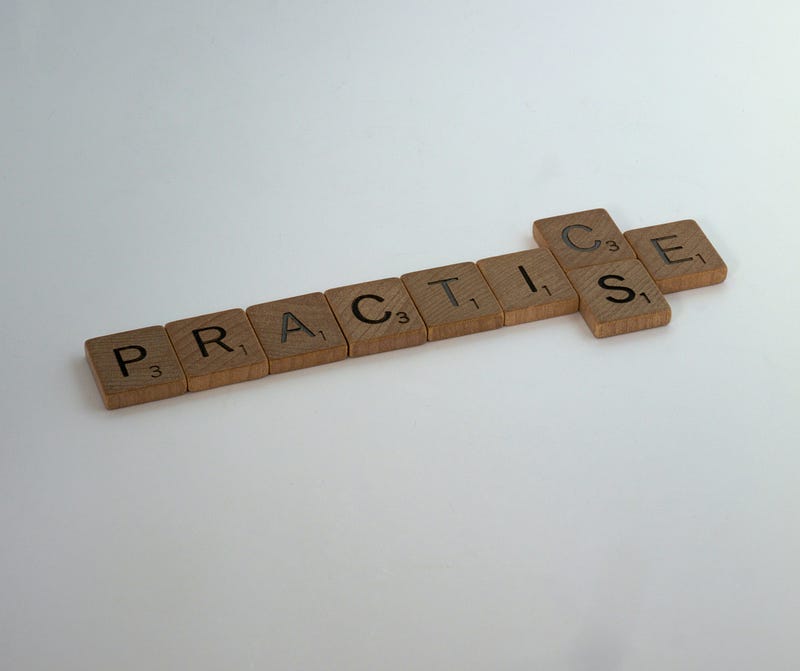
Photo by Brett Jordan on Unsplash

Practical Tips and Exercises

The One-Sentence Challenge

Take a paragraph — any paragraph — and distill it into one punchy sentence. It’s harder than it sounds but incredibly rewarding. You’ll quickly learn what’s essential and what’s fluff.

Kill Your Darlings (Cut the Fluff)

We all have phrases we love, but they might not serve your message. Be brutal. Cut out any word that doesn’t add value. Your readers will thank you.

The Active Voice Swap

Take a piece of your writing and circle all the instances of passive voice. Now, rewrite them in an active voice. Feel the difference? That’s the power of punchy writing.

The Verb Upgrade

Find all the generic verbs in your writing — like “go,” “do,” “make” — and upgrade them. “Go” becomes “sprint,” “do” becomes “execute,” “make” becomes “create.” Instant punchiness.

The Rhetorical Remix

Pick a paragraph and add some rhetorical devices. Throw in some alliteration or anaphora. It’s like adding spice to a dish — it makes everything more flavorful.

Bonus Tip: Read It Aloud

Your ears will catch what your eyes miss. If it sounds smooth and impactful when spoken, you’ve nailed the punchy style.

Turn Your Words Into Conversion Magnets

Why is mastering the art of punchy writing so essential? Because in a world saturated with words, it’s not just about what you say; it’s about how you say it. Punchy writing cuts through the noise.

It grabs attention, holds it, and most importantly, it persuades. It’s not just a writing style; it’s a tool for effective communication.

So, if you want your words to hit like a sledgehammer in a world full of feathers, punchy writing is your go-to tool. Start practicing today and make every word count!

Photo by Sarah Cervantes on Unsplash

If you found value in this article, don’t keep it a secret! Share it with your network, your writing groups, or anyone you think could benefit from the power of punchy writing.

Drop a comment below to share your thoughts or your own tips for writing with impact. Together, we can make the world a punchier place.

👉 Follow Me on Medium

Writing
Tips
Medium
Marketing
Copywriting
Recommended from ReadMedium