
How to Write Headlines Your Readers Love or Hate To Boost Your Views
Writing great headlines and subtitles are among the best ways to make your content shareable, get found on search engines, and grow your audience.
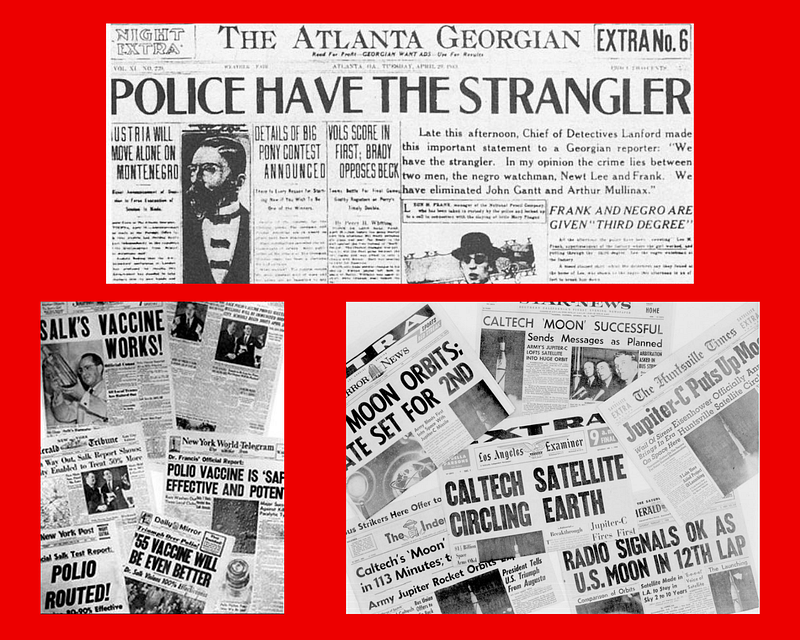
Before we get started, lets do a quick pop quiz. Don’t worry, it’s just for illustration purposes. You’re not being graded. Or if you’re still hyperventilating, just think of it as a survey. (Perhaps I should have put a trigger warning at the beginning for content that might cause a flashback to high school calculus.)
Okay, here we go.
An Informal Ungraded Survey For Your Eyes Only
Rank the following titles from 1 to 5 with 1 being the title least likely to catch your attention and make you want to read the article and 5 being the most likely.
- Great Men and Women Aren’t Born Great They Grow Great _____
- Small Business Line of Credit — Is It Right For You? _____
- 12 Tips for Better Writing _____
- Emotional Headlines Get Shared More on Social Media Period _____
- The Importance of Setting Goals and Not Reaching Them _____
How to Write Effective Titles
I played around with the title for this article for a while to improve it. Before a few months ago, I would have written a title that I thought worked. Often it was one that made sense to me but wouldn’t necessarily to the reader until they’d read some of the article. I thought this was being provocative. In reality, I was simply being ineffective.
How to Write Effective Headlines
I played around with the title for this article for a while to improve it. Before a few months ago, I would have written a title that I thought worked. Often it was one that made sense to me but wouldn’t necessarily to the reader until they’d read some of the article. I thought this was being provocative. In reality, it was simply being ineffective.
The best headlines are those that appeal to something that will elicit a strong reaction in your readers leading to them being unable to turn away from the rest of your content. This might be through emotions or curiousity or because the headline promises that a question they have will be answered in the article. A title that suggests the content will be moderately interesting isn’t enough to get readers to engage with your work. Regarding the reaction, both positive and negative reactions will result in article engagement.
Another component in creating great titles is making sure they include important keywords that people in your audience are searching for. The best headlines include a primary keyword and ideally a long tail keyword. Every great headline focuses on a keyword. The long tail keyword for the title for this post is “how to write headlines.”
Once you have your working title, though, there are ways to evaluate it to see how effective it will be in attracting views and converting views to reads. One of the best ways to evaluate your headlines is by analyzing what is called Emotional Marketing Value.
Use Emotional Market Value (EMV) to Improve Your Article’s Performance
Emotional headlines have been shown to result in greater content engagement. That is because emotions drive actions.
Research has shown that there are basic underlying sound constructions in language that result in the same emotional reactions. While dictionary definitions can be misunderstood, the harmonics are always perceived the same way from an emotional point of view. This means that emotional language leads to a predictable response.
There are several free tools that can be used to analyze the EMV of your title. My favorite, due to it’s simplicity is the Advanced Marketing Institute’s Headline Analyzer. With this tool you simply paste in your title, and it gives you the percentage of EMV words it includes . It states that most professional content writers’ headlines have 30% — 40% EMV words while really gifted ones have 50% — 75% EMV words in their titles.
Some of the words that research has demonstrated as having a high EMV score are free, remarkable, obsession, new, special, improved, immediately, powerful, big, exclusive, how to, genuine, simplistic, reduced, survival, exciting, urgent, latest, proven, exploit, last chance, quality, odd, bottom line, zinger, monumental, strange and unparallele,d among many others.
When working on the title for this piece, I began with, “Make Readers Love or Hate Your Headlines to Get More Views” which had an EMV score of 27.27%. I added “how to”, and the title became, “How to Make Readers Love or Hate Your Headlines to Get More Views,” which raised the score to 30.77%.
While this one met the 30% cutoff, I still wasn’t satisfied, so next I tried, “Write Headlines Your Readers Love or Hate To Boost Your Views,” which increased the EMV score to 36.6%. Finally, I added “how to” and the title became,“How to Write Headlines Your Readers Love or Hate To Boost Your Views.” This title had an EMV score of 38.46% which I was satisfied with.
Pop Quiz Answers Ranking Titles According to EMV Percentages
Thought I forgot about it, didn’t you? Here are the rankings for the titles from the pop quiz based on EMV scores. See how well they match up with the way you ranked them.
“Great Men and Women Aren’t Born Great They Grow Great” __2__ (10%)
“Small Business Line of Credit — Is It Right For You?” __3__ (18.18%)
“12 Tips for Better Writing” __1__ (0%)
“Emotional Headlines Get Shared More on Social Media Period”__5__ (44.44%)
“The Importance of Setting Goals and Not Reaching Them” __4__ (22%)
How to Turn Weaker Titles Into Stronger Ones
Let’s take a look at how we might go about changing the titles below 30% EMV into stronger titles and examine what makes them stronger
“12 Tips for Better Writing EMV” 0%
“12 Easy to Follow Tips For Better Writing” 37.50%
“12 Easy to Follow Tips to Help You Write Better” 50%
What’s the difference? The second one says, “These tips not only strengthen writing but they are easy to follow.” So, it’s a win-win scenario. The third one strengthens it even further however, by personalizing the message saying, “The tips are easy to follow and will help me improve my writing.”
“Great Men and Women Aren’t Born Great They Grow Great” 10%
“Great Men and Women Don’t Always Start Off Great” 22.22%
“Don’t Worry Great Men and Women Aren’t Always Born Great” 40%
[“Don’t Worry Great Men Aren’t Always Born Great”] 50%
Both the second and the third versions of the title are extremely positive and emotional, suggesting that there is hope for everyone to become great no matter where they are starting from. However, the third one is more personally directed as beginning makes the reader feel that they are being spoken to directly.
A note about preferences: You can increase the EMV ranking for this particular headline to 50% by shortening the title to “Don’t Worry Great Men Aren’t Always Born Great” if you are comfortable with using the word “men” to mean all of mankind.
“Small Business Line of Credit — Is It Right For You?” 18.18%
“Is a Small Business Line of Credit Right for You?” 20%
“How Do You Know A Small Business Line Of Credit Is For You?” 30.77
Compared to the first version, the second version is easier to read. Hyphens often make titles seem awkward. But the third version is even better because in addition to being easy to read it attaches itself to the readers own worries and fears, by suggesting there are some people who this line of credit would be inappropriate for. It says that the article will help prevent you from making a costly mistake.
“The Importance of Setting Goals and Not Reaching Them” 22%
“Reaching Our Goals All of the Time is Not So Important” 27.27
“You Shouldn’t Always Reach Your Goals” 50%
The second version of the title is better but still not great because sounds more like a justification for not achieving our goals. Also by saying it is not so sound like it’s still somewhat important. The third version though, makes the reader feel better about sometimes failing to live up to their goals. Since this validates them by suggesting that something that could be viewed as a weakness is actually a good thing, they will be sure to read and share the story.
So, is the last headline good enough or can we make it even better? I played around with this one a little more than the others to see if I could fine tune it enough to raise the score.
“Emotional Headlines Get Shared More on Social Media Period” 44.44%
“Emotional Headlines Get Your Articles Shared More on Social Media Period” 45.45%
“Using Emotional Headlines Get Your Articles Shared More on Social Media Period” 50%
“Use Emotional Headlines to Get Your Articles Shared More on Social Media” 50%
“Emotional Headlines Absolutely Get Your Articles Shared More on Social Media Period” 58.33%
The key factors here seem to be personalizing it by adding your, and adding another power word absolutely.
Take Away
Writing catchy, effective headlines takes practice and intentional effort. You might even spend as much time working on your title and subtitle as you do on writing your article. But learning to create headlines that catch readers’ attention and encourage them to read the article can increase your overall traffic and engagement, translating into increased earnings.
It comes down to a balance between personalizing the title, using as many high power EMV words as possible and keeping the title as short as possible. When you master these three elements, you’ll be able to write titles that are guaranteed to attract visitors and turn them into readers.
The more you play around with different headline formats and versions, evaluating each for EMV with a headline analyzer, the better you’ll get at crafting effective ones. This will allow you to reach your audience in a deep and meaningful way.

If you enjoyed reading this article, you might also like these:
You can follow me and find links to all of the articles, essays, fiction and poetry I publish on Medium here. Thanks for reading!