How to Write - 8/4: Setting Smart, Achievable Goals (But Aim HIGH, Very HIGH) - Part 4

Chapter 9: Embracing the Writer’s Journey
9.1 The Never-Ending Road of Learning
Always Growing, Always Learning
Writing is not just about putting words on paper; it’s a journey that never really ends. Every story you tell, every article you write, is a step forward. Imagine you’re walking a path that keeps going — you’re always moving, always seeing new things. And just like in life, you keep learning and growing.
You don’t need big, fancy words to be a great writer. What you need is a hunger to learn, to get better every day. Think of it like playing a game where each level teaches you something new. You don’t just jump to the end; you play each part, learn new tricks, and get better as you go.
Let’s say you’re writing a story about a boy and his dog. First, you learn to describe them — the boy’s mischievous smile, the dog’s floppy ears. Then, you learn to show their friendship — how the boy shares his ice cream with the dog, how the dog wags its tail when the boy comes home. Step by step, you’re not just telling a story; you’re painting a picture that feels real.
9.2 Cheering for Every Small Win
Every Word Counts
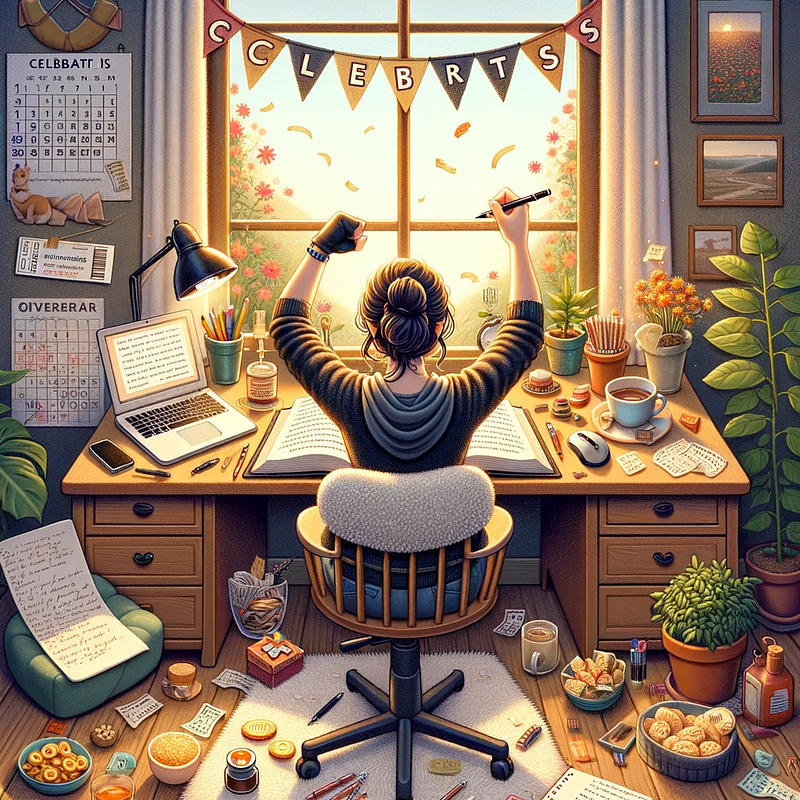
In writing, every word you write, every sentence you finish is a big deal. It’s like building a bridge — every brick matters, and you’re the builder. So, when you write a sentence that makes you smile, or finish a paragraph that sounds just right, give yourself a pat on the back.
It’s important to set up little celebrations for yourself. Finished a page today? Treat yourself to your favorite snack. Wrote every day for a week? Maybe watch that movie you’ve been putting off. These small rewards keep you going, make you feel good about your journey.
Think of writing like planting a garden. Every word is a seed. Some days you plant one or two, some days a whole handful. But each one matters. And just like watching a garden grow, there’s joy in seeing your story take shape, bit by bit.
Recognizing the Joy in the Journey
Remember, writing is not just about the book or story you finish. It’s about the journey — the late nights, the early mornings, the moments of frustration, and the bursts of inspiration. It’s about the feeling you get when words flow just right, or when you find the perfect ending to your story.
It’s like going on a long hike. Yes, reaching the top of the mountain is great, but think about the hike itself — the cool breeze, the sun peeking through the trees, the sound of birds. That’s what writing is about. Enjoying every step, every word, every moment.
So, embrace this journey. Be proud of every step you take, every word you write. Be curious, always ready to learn something new. And most importantly, find joy in the process, not just the goal. Because being a writer isn’t just about what you write; it’s about who you become along the way.

Chapter 10: Navigating the World of Publishing and Sharing
10.1 Understanding the Publishing Landscape
Choosing Your Path in the Publishing World
So, you’ve written something you’re proud of, and you’re thinking, “What’s next?” Let’s talk about getting your work out there. The world of publishing might seem big and a bit scary, but don’t worry. I’ll make it simple for you.
There are mainly two ways to publish: the traditional way, where a publishing company does a lot of the work, and self-publishing, where you’re in control. Both have their good points and not-so-good points.
In traditional publishing, you send your work to a publisher or an agent. If they like it, they’ll help you edit it, design it, and sell it. The tough part? It can be hard to get their attention. But if you do, they take care of a lot of stuff for you.
Self-publishing is when you do it yourself. You write your book, then you can use online platforms to publish it as an ebook or a print book. The cool part? You have all the control. The hard part? You have to do everything yourself — editing, designing, and selling.
Setting goals here is important. Think about what you want. Do you want to see your book in a bookstore? Try traditional publishing. Happy to do it yourself and reach readers online? Go for self-publishing.
To access my other articles in the ’How to Write’ series, you can explore my list below:
Pros and Cons: Make an Informed Choice
Each path has its ups and downs. Traditional publishing can take a long time, and it’s not easy to get accepted. But if you do, you get professional help and your book gets more chances to be seen.
Self-publishing is quicker, and you make all the decisions. But, you also have to do all the work — like making the book look good and finding people to read it.

10.2 Sharing Your Work: Blogs and Beyond
The Digital World: Blogs, Articles, Social Media
Now, let’s talk about sharing your writing online. You’ve got blogs, articles, even social media — all great ways to get your words out there.
Blogging is like having your own little corner of the internet. You can write about whatever you like — your life, your thoughts, your stories — and share it with the world. Setting goals here could be writing a post every week, or getting a certain number of people to read your blog.
Article writing is more about sharing knowledge or opinions. Think about writing for websites or online magazines. Your goals could be to write about topics you care about and reach people who are interested in those things.
And don’t forget about social media. It’s a quick way to share little pieces of your writing, get feedback, and talk to other writers and readers. Maybe set a goal to post a short story on Twitter once a month, or share a poem on Instagram every week.
Building an Audience: Engage and Grow
No matter where you share your writing, it’s about connecting with people. You want readers who wait for your next post or story. Start by just sharing your work regularly. Then, talk to your readers — reply to their comments, ask them what they think, and thank them for reading.
Use their feedback to make your writing even better. If they love a certain type of story, write more of those. If they have ideas, think about using them. It’s like having a conversation through your writing.
In Conclusion…
Whether you choose traditional publishing, self-publishing, or sharing your work online, it’s all about getting your words out there. Set clear goals for what you want to achieve, and remember, every step forward is a win. So, go ahead, share your stories with the world, and enjoy every moment of this amazing journey! Happy writing and sharing!

Chapter 11: The Mental and Emotional Aspects of Writing
11.1 Writing and Mental Health
The Link Between Writing and Your Mind
Writing is more than just words and ideas. It’s deeply connected to how you feel and think. You might not realize it, but the way you write can affect your mental health, and your mental health can affect your writing.
Sometimes, writing is like a friend who listens without judging. It can be a way to let out what you’re feeling or thinking. But, it can also be tough. You might feel stuck or get anxious about whether your work is good enough.
Tackling Emotional Hurdles
Ever faced writer’s block? It’s like hitting a wall, and it happens to everyone. The key is not to let it get you down. Set small, easy goals. Maybe today, just write a sentence. Tomorrow, maybe two. It’s okay to take baby steps.
And then there’s anxiety. You might worry about whether people will like your writing or if it’s any good. Here, goals can help too. Set goals that focus on the process, not just the final piece. Enjoy the act of writing itself, not just finishing a story or a blog post.
Remember, it’s okay to take a break. If writing feels too hard one day, step back, do something fun, and come back to it when you feel better.

11.2 The Emotional Journey of Writing
Riding the Emotional Rollercoaster
Writing is full of ups and downs. Some days you feel great about what you’re writing; other days, not so much. That’s totally normal.
When you’re on a high, ride it. Write as much as you can, let the ideas flow. But when you’re feeling low, don’t push too hard. Take it slow, write a little, and be kind to yourself.
Using Emotions to Enhance Your Writing
Your feelings can actually make your writing better. Happy, sad, angry, excited — all these emotions can show up in your stories and make them more real, more alive.
Say you’re writing about a character who’s going through a tough time, and you’ve been there too. Use what you felt to show what the character is going through. It can make your writing more powerful, more true to life.
Keeping Yourself Balanced
Writing is just one part of your life. It’s important to keep a balance. Make sure you’re taking care of yourself — eat well, sleep well, talk to friends, do things you enjoy.
And don’t let writing take over everything. It’s a part of who you are, but not all you are. Set goals for your writing, but also set goals for other things in your life. Like maybe learning to cook a new recipe, or spending time outdoors.

To Wrap It Up…
Remember, writing is a journey, not just of words and stories, but of emotions and thoughts. It’s about expressing yourself, but also taking care of yourself. Set goals that challenge you, but also bring you comfort. Embrace the ups and downs, and let your emotions flow into your writing. And most importantly, look after yourself on this journey. Happy writing, and happy living!
To access other articles in the ’How to Write’ series, check out the links below:
Current article: How to Write - 8/4: Setting Smart, Achievable Goals (But Aim HIGH, Very HIGH) - Part 4
If you found this article helpful, consider leaving me a tip! Your support helps me continue to create valuable content. To leave a tip, click here to securely process your payment through Stripe. Thank you for your generosity!
Click here to get an email whenever Zoran Rogic publishes: https://medium.com/@Zokimaster/subscribe
#ContentWriting, #WritingTips, #NextTopWriter, #BloggingTips, #ContentStrategy, #CreativeWriting, #WritingGoals, #DailyWritingPlan, #InspiredWriting, #ResilientWriter, #CreativeRevision, #FeedbackMatters, #MentorshipInWriting, #WritingCommunity, #WritingGrowth, #OvercomeChallenges, #WritingSuccess, #EmbraceFeedback, #CreativeJourney, #WritingPassion, #CraftingWords, #WriterInspiration, #WritingResilience, #WritingJourney, #RevisionProcess, #WritingFeedback, #CreativeGrowth, #WritingChallenges.


