
How to Use Pareto Distribution in Management: Optimizing Resources for Success

Welcome to my article on Pareto distribution in management. Here, I try to share my firsthand observations on applying the Pareto principle to improve efficiency, decision-making, and overall performance.
Let’s start with basics, what is the Pareto principle, or Pareto distribution. The Pareto principle, also known as the 80/20 rule, is a simple yet powerful concept that states that 80% of the effects come from 20% of the causes. In other words, a small number of factors (the “vital few”) account for the majority of the results, while the rest (the “trivial many”) have little impact. Although these numbers are not exact, but it provide a simple framework to think about distribution of impacts made by population of actors or actions.

While this principle was originally discovered in the context of wealth distribution, later it has been observed that it is more prevalent and ubiquitous. In this article, I focus on its different form of manifestation and impact in the management field. The argument that I try to clarify and shed more lights on is that by focusing on the most critical issues and opportunities, managers can allocate resources more effectively, make better decisions, and achieve greater impact. The underlying assumption of this principle is that the relationship between effect and results is not linear and it follows a Pareto distribution. So, you might not like it, but I argue that instead of fighting with reality, let’s embrace it and see how you can use this revelation and using it for better management and resource allocation.
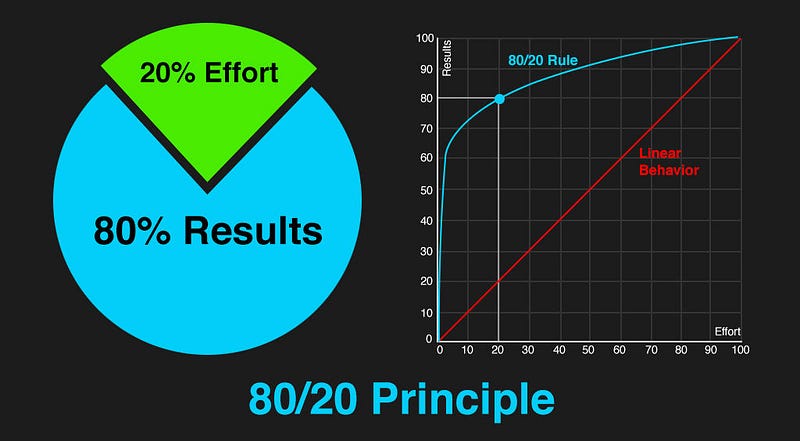
Moreover, I am going to explore the benefits and limitations of using Pareto distribution, and provide case studies and examples to illustrate its impact.
Applications of the Pareto Principle in Management
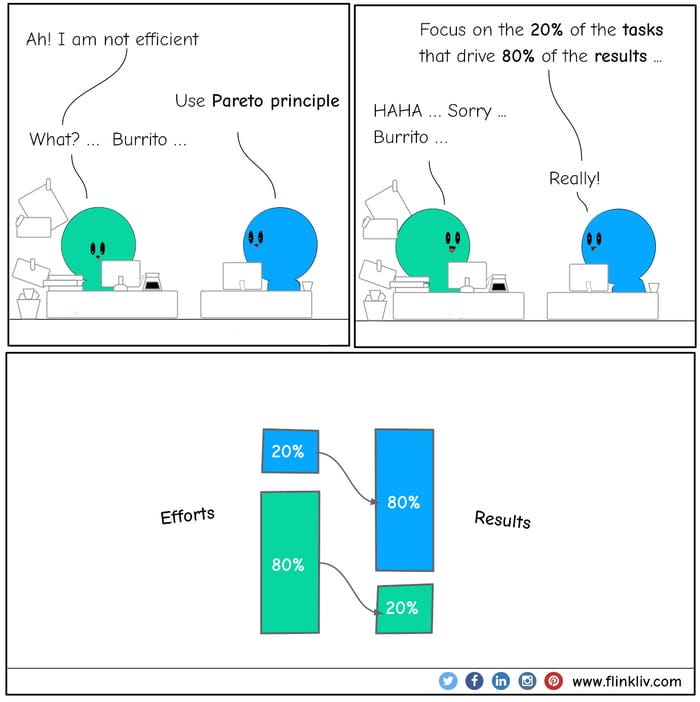
Let’s take a closer look at what this principle actually means for management. As I described earlier, this principle in essence suggests that focusing on the most critical 20% of issues or opportunities can yield 80% of the results and this distribution has a number of practical applications in management, including:
- Pareto Analysis: This involves identifying and prioritizing the most critical issues or opportunities by analyzing data on their frequency, impact, and root causes. By focusing on the most significant factors, managers can allocate resources more effectively and address the most pressing issues first. Obviously you might not call it Pareto analysis, but if you are aware of the concept, you can use it as a tool for prioritization.
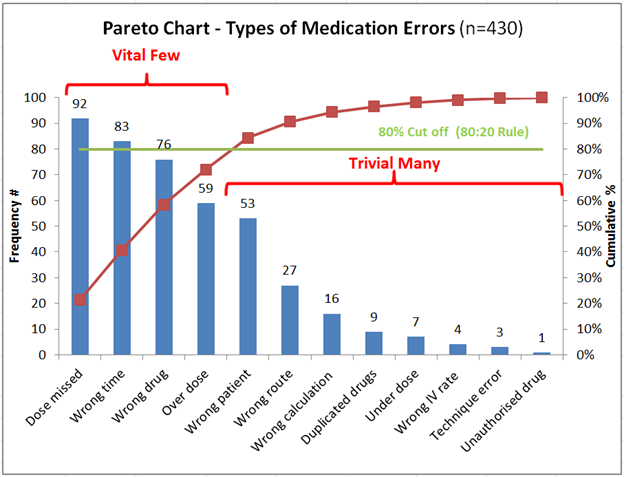
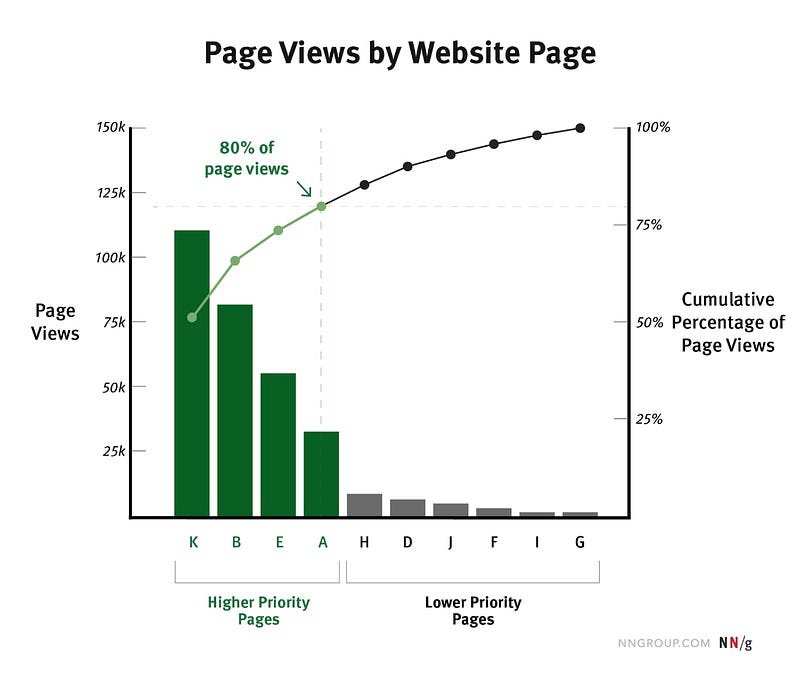
- Pareto Charts: This is a visual tool that helps managers understand the frequency and impact of various factors. Pareto charts are typically used to analyze data on defects, customer complaints, or other quality issues. By plotting the data in descending order of frequency or impact, managers can identify the “vital few” issues that account for the majority of the results.
- Pareto Improvement: This involves implementing changes to address the most critical issues or opportunities. By focusing on the “vital few” factors, managers can make targeted improvements that have a significant impact on overall performance. Basically, this is a next step of using Pareto analysis and Pareto charts.
- Pareto Efficiency: This involves maximizing results with limited resources by focusing on the most critical areas. For example, if a team has limited time or budget, they may choose to focus on the 20% of tasks that are most important rather than trying to do everything.
Overall, the Pareto Principle is a powerful tool for management that can help teams prioritize, focus, and achieve better results. However, it’s important to remember that the Pareto principle is not a one-size-fits-all solution and should be used in conjunction with other management tools and techniques. In the next section, I am going to explore its benefits and limitations.
Benefits of Using Pareto Distribution
Now that we have covered the applications of the Pareto principle in management, let’s take a closer look at its benefits. Obviously as I said earlier, this distribution makes a lot of people uncomfortable as it runs against the fairness and equality principles, but it’s been observed consistently in real life and it’s better to embrace it and even think about its benefits. How can you use it to do your job better. Let’s dig into that.

Here are some of the main advantages of applying Pareto distribution in management:
- Improved decision-making: By identifying the “vital few” factors that have the most impact on overall performance, managers can make more informed decisions about where to allocate resources and which issues to address first.
- Increased efficiency: By focusing on the most critical areas, managers can reduce waste, streamline processes, and eliminate unnecessary tasks. This can lead to significant improvements in productivity and overall efficiency.
- Enhanced problem-solving: Pareto analysis can help managers identify the root causes of problems and address them more effectively. By focusing on the most significant factors, managers can make targeted improvements that have a bigger impact on overall performance.
- Better resource allocation: By focusing on the most critical areas, managers can optimize resource allocation for maximum impact. This can help teams achieve better results with limited time, budget, or other resources.
In addition to these benefits, using Pareto distribution in management can also help teams prioritize, communicate, and collaborate more effectively. By focusing on the most critical issues or opportunities, teams can align their efforts and work together more efficiently.
However, it’s important to keep in mind the limitations and criticisms of Pareto distribution as well. For example, the Pareto Principle assumes that the distribution of causes and effects follows a specific pattern, which may not always be the case. In addition, it does not provide guidance on how to address the “trivial many” factors that may still be important for overall performance.
Overall, the benefits of using this principle in management outweigh the limitations, but it’s important to use it in conjunction with other management tools and techniques to achieve the best results. In the next section, I am going to explore case studies and examples of the impact of Pareto distribution in management.
Case Studies and Examples of the Impact of Pareto Distribution
By looking at real-world examples of how Pareto distribution has been applied in various industries and contexts, we can gain a better understanding of its potential impact and benefits.
One example is in healthcare. Hospitals and healthcare organizations have used Pareto analysis to identify the most common causes of patient complaints or medical errors. By focusing on the most significant factors, healthcare providers can make targeted improvements that have a big impact on patient satisfaction and safety. For example, in the below chart, you can see that majority of medication complications are cause by a few causes.
Another example is in manufacturing. Many manufacturers use Pareto charts to analyze quality data and identify the most frequent causes of defects or other quality issues. Pareto distribution has also been applied in project management. For example, project managers can use Pareto analysis to identify the tasks or activities that are most critical to the success of a project and allocate resources more effectively and reduce the risk of project failure.
Another example is in supply chain management. A manufacturer used Pareto charts to analyze data on their suppliers’ delivery times. By focusing on the most significant factors, the manufacturer was able to identify the suppliers that were causing the most delays and work with them to improve their delivery times. This led to significant improvements in the manufacturer’s supply chain efficiency.
Pareto distribution has also been applied in marketing. A marketing team used Pareto analysis to identify the most profitable customer segments. By focusing on these segments, the team was able to allocate their marketing resources more effectively and achieve better ROI on their marketing campaigns.
Also in technical fields, for example, a data warehouse engineer sees that majority of expenses is because a few expensive queries, so he can spend most of his time tuning those queries. Or a tech lead might notice that majority of bugs points to a few issues in the code repo and spending time to refactoring it can save team a lot of time.
In the next section, I am going to dig deeper into the limitations and criticisms of using this principle in management, and provide recommendations for how to use the tool effectively.
Limitations and Criticisms
While Pareto distribution is a powerful tool for prioritizing and focusing on the most critical issues, it’s important to keep in mind its assumptions and limitations.
One of the main criticisms is that it assumes a specific distribution of causes and effects, which may not always be the case. For example, in some situations, the distribution may be more evenly spread out, with no clear “vital few” factors. In these cases, using Pareto distribution may not be the most effective approach.
Another limitation is that it does not provide guidance on how to address the “trivial many” factors that may still be important for overall performance. For example, while it may be tempting to focus solely on the most critical issues, neglecting other factors can lead to unintended consequences or missed opportunities.
Despite these limitations, Pareto distribution can still be a useful tool in management. In the next section, we will provide some recommendations for how to apply Pareto distribution in management effectively.
Recommendations for Applying Pareto Principles in Management
Here, I try to provide some recommendations and best practices for applying this principle in management effectively.
- Start with clear goals: Before applying it, it’s important to have clear goals and objectives. This will help you identify the most critical issues or opportunities that will have the greatest impact on achieving your goals.
- Collect and analyze data: Pareto distribution relies on data analysis to identify the most critical factors. Make sure you collect accurate and reliable data and use appropriate tools and techniques to analyze it.
- Verify the assumptions of Pareto distribution: As I mentioned earlier, it assumes a specific distribution of causes and effects. Before starting anything, verify that the distribution follows this pattern, otherwise, the results may not be accurate.
- Identify the “vital few”: Use Pareto analysis or Pareto charts to identify the most critical factors that account for the majority of the results. This will help you prioritize your efforts and focus on the most significant factors.
- Don’t neglect the “trivial many”: While it’s important to focus on the most critical factors, don’t neglect the other factors that may still be important for overall performance. Addressing both the “vital few” and the “trivial many” can lead to better results.
- Make targeted improvements: Use Pareto improvement to implement targeted changes that address the most critical issues or opportunities. By focusing on the most significant factors, you can achieve bigger and more impactful improvements.
- Monitor and measure results: Make sure you monitor and measure the results of your efforts to ensure you are achieving the desired outcomes. This will help you make informed decisions and adjust your approach as needed.
Conclusion
While Pareto distribution is not a perfect tool, it has been proven to be effective in a wide range of industries and contexts. By focusing on the most critical issues or opportunities, managers can achieve better results and improve overall performance.
However, it’s important to keep in mind the limitations and criticisms of Pareto distribution. Managers should not rely solely on Pareto distribution and should use other management tools and techniques to achieve the best results. Additionally, managers should be aware of the assumptions of Pareto distribution and verify that the distribution of causes and effects follows the expected pattern before using it.
Despite these limitations, Pareto distribution can still be a valuable tool for managers. By applying Pareto distribution effectively, managers can prioritize, focus, and make targeted improvements that have a significant impact on overall performance.
More resources on the topic of management
- Group Dynamics: Understanding the Complexities of Group Behaviors (link)
- Becoming a Thought Leader: A Technical Approach to Personal Branding (link)
- Slide deck vs. Amazon 6-pager Narrative (link)
- The Company Culture Blueprint: A guide to creating a positive and productive workplace (here)
- Mentorship 101: A Guide to Finding, Building, and Benefiting from a Mentor-Mentee Relationship (link)
- Breaking the Burnout Cycle: Strategies for Managing Stress in the Workplace (link)
- Managing a Toxic Employee: Strategies and Best Practices (link)
- Diffusing Tensions: A Guide to Conflict Resolution in the Workplace (link)
- Teamwork Makes the Dream Work: Tips for Building a Strong Team (link)
- From Hire to Higher Productivity: The Role of Onboarding in Employee Success (link)
I hope you enjoyed reading this 🙂. If you’d like to support me as a writer consider signing up to become a Medium member. It’s just $5 a month and you get unlimited access to Medium 🙏 . Before leaving this page, I appreciate if you follow me on Medium and Linkedin 👉 Also, if you are a medium writer yourself, you can join my Linkedin group. In that group, I share curated articles about data and technology. You can find it: Linkedin Group. Also, if you like to collaborate, please join me as a group admin.