
How To Think Like Aristotle And Elon Musk
Examining your life with first principles.
I think it’s fair to say that Elon Musk is one of a kind. What else can you call someone who sells flame throwers, creates underground highways, builds his own rockets to go to Mars, and creates an electric car that doesn’t resemble a golf cart?
While he may be unique, his style of thinking is not. In fact, it’s quite ancient.
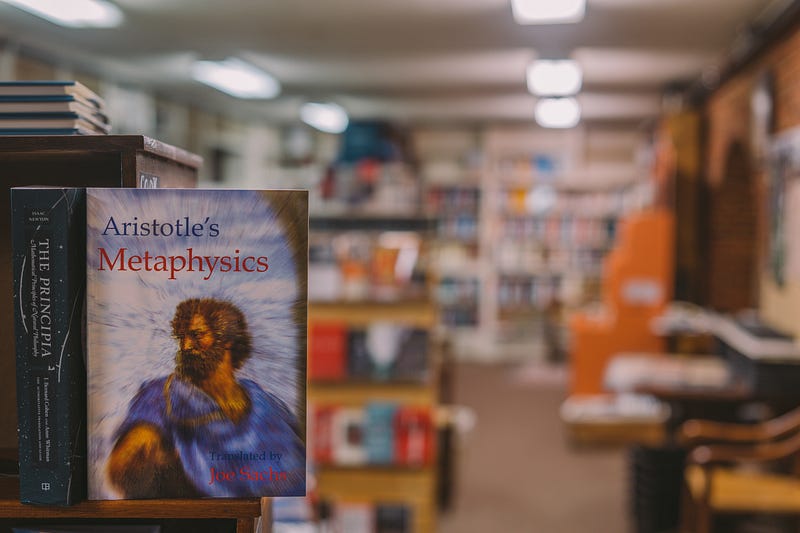
Musk is a huge proponent of “first principles” thinking. This is the mental thought process created by Aristotle and shared in his book “Metaphysics” in the first century BC. The philosopher describes the principle as “the first basis from which a thing is known”.
When you use this principle, you cut away the non-essential. Doing so gives you the building blocks necessary for developing a new idea. Musk explains how this line of thinking helped create his company SpaceX.
As Ozan Varol in his book “Think Like A Rocket Scientist” recounts, Musk would originally try and purchase existing rockets and soon find they were prohibitively expensive. This wouldn’t stop him though; he’d apply first principles in search of an answer.
What is a rocket? It’s mainly aluminum, other light alloys, and engines. Musk checked the price of these components and found they cost 2% of the price of the rocket itself. If Musk could figure out how to build his own rocket the cost-savings would be enormous. So that’s what he did.
According to Varol, he’d hire the talent needed to make just about everything. At SpaceX, you’ll find them building near 80% of the rocket components themselves. This is first principles thinking in action.
Application Of First Principles To Thinking
Author James Clear explains how first principles thinking helped Johannes Gutenberg create the printing press and change the world. He did this by looking at two base elements for existing technologies — movable type and a screw press for creating wine.
His creation was just combining the two. Similarly, Clear explains the suitcase had existed since Roman times and hadn’t really changed much. Slight improvements were made over the years, but luggage was still carried by human or animal muscle as the Romans did.
In 1970 Bernard Sadow would challenge the fundamental understanding of luggage by adding wheels to the bottom. Wheels aren’t a new invention by any means, even the Romans had them. But, through all this time no one effectively came up with an idea to put them on luggage and change the status quo.
“I think generally people’s thinking process is too bound by convention or analogy to prior experiences. It’s rare that people try to think of something on a first principles basis…Look at the fundamentals and construct your reasoning from that, and then you see if you have a conclusion that works or doesn’t work, and it may or may not be different from what people have done in the past.”
— Tim Urban interview with Elon Musk, Wait But Why Blog
The examples above are what Musk would call “thinking by convention or analogy”. No one challenges the concept of luggage because that’s just the way it’s always been done. No one thinks to use technology from the wine industry and apply it to printing because it goes against convention.
These inventions could have come before but had to wait for someone to challenge common assumptions. As Clear mentions, this thought by analogy can act as a barrier against creativity.
Now, we’ve established first principles thinking is good for business ideas and solving problems. However, what about you? Can you apply this thinking to your life in general?
Application Of First Principles To Your Life

The answer to that question is a resounding yes. Although there are some modifications you’ll have to make. In Tim Urban’s blog, he mentions that,
“There are no axioms or proofs in science because nothing is for sure and everything we feel sure about might be disproven…Instead of proofs, science has theories. Theories are based on hard evidence and treated as truths, but at all times they’re susceptible to being adjusted or disproven as new data emerges…In our lives, the only true axiom is “I exist.” Beyond that, nothing is for sure. And for most things in life, we can’t even build a real scientific theory because life doesn’t tend to have exact measurements.”
Shane Parrish believes, like Musk, we’re often bound by analogy. We’re taught this at an early age by the phrase, “Because I said so”. He says this is the general response we get when we ask too many questions or question something people believe is fundamentally obvious.
Being shut down like this has a way of discouraging questioning and creativity. It keeps us carrying the suitcase instead of wheeling it through the airport. So, what do we do?
Since there is no axiom for life, Parrish thinks systematic Socratic questioning can guide us in applying first principles to our lives. We must become that annoying kid in class who asked an endless stream of questions.
- Why do I believe what I believe?
- What evidence is there?
- Is there an alternative way or explanation?
- What if I’m wrong?
- How could I prove I’m right?
The ancient school of philosophy called Skepticism employed similar tactics. Likewise, Ozan Varol believes our thoughts and ideas should be like hypotheses we attempt to disprove in a nature close to science.
While it’s true our lives may not be as quantifiable as mathematics or have statistics like science, we can apply first principle thinking to ourselves.
You can only do this by continually questioning what you believe to be true and the general conventions around you. Once you’re in a place where you can stop thinking by analogy, you’ll be able to isolate the base elements of your life and build upon them like Musk did to create SpaceX.
Mind Cafe’s Reset Your Mind: A Free 10-Day Email Course
We’re offering a free gift to all of our new subscribers as a thank you for your continued support. When you sign up using this link, we’ll send you tips on how to boost mental clarity and focus every two days.