avatarDarlene Lancer

Free AI web copilot to create summaries, insights and extended knowledge, download it at here

2746

Abstract

a href="https://readmedium.com/how-to-escape-the-grip-of-obsession-c5b7d56b8e3e">obsession</a>, <a href="https://readmedium.com/wheres-the-line-between-caring-and-codependency-269a2420894e">self-sacrifice</a>, <a href="https://readmedium.com/6-keys-to-being-assertive-e761cf9cbba4">nonassertive</a> communication, and <a href="https://readmedium.com/power-vs-control-77925f29d4d8">control</a>, which are both self-destructive and hurtful to others. They’re often abusive or allow themselves to be abused.</p><figure id="a9a4"><img src="https://cdn-images-1.readmedium.com/v2/resize:fit:800/1*dJkMrpD-TFL1x8YK9lntag.png"><figcaption></figcaption></figure><h1 id="f898">Codependent Couples</h1><p id="bf3f">Codependent couples are usually out-of-balance. Frequently, there are struggles for power and control. There may be an imbalance of power or one partner has taken on responsibilities for the other. They’re <a href="https://readmedium.com/the-biggest-cause-of-anxiety-81d267967f90">anxious</a>, <a href="https://readmedium.com/anger-and-resentment-relationship-killers-f03467fe3ff9">resentful, </a>and feel <a href="https://readmedium.com/how-undeserved-self-blame-can-paralyze-us-57996d01df44">guilty</a> and responsible for their partner’s needs, feelings and moods, and even at times, behavior. Then they try to control one another to feel okay and get their own needs met.</p><p id="a08f">Rather than respect each other’s separateness and individuality, they can’t tolerate disagreement and appease or blame one another without taking responsibility for themselves. Often, what they dislike in their partner is the very thing they can’t accept in themselves. Despite their pain, they can feel <a href="https://readmedium.com/feeling-trapped-in-a-relationship-75ed6c1e02ca">trapped in the relationship</a> because they fear that they can’t function on their own. Some codependent marriages are cooperative and not abusive.</p><p id="38b4">Generally, one or both spouses are tip-toeing around the other. There may be abuse and and emotional conflict or no drama, and no passion either, because real intimacy is sacrificed. Their mutual codependency and insecurity creates intimacy issues and make intimacy threatening, since being honest and known risks <a href="https://readmedium.com/recovery-from-rejection-and-breakups-b14f374135e4">rejection</a> or dissolution of their fragile self.</p><p id="b692">Like the Aspen trees, on the surface each may appear to be physically and even mentally and emotionally independent, yet, at an unconscious level, they’re two insecure adults dependent upon each other to express a whole.</p><p id="608e">For instance, a woman who has trouble expressing anger marries an angry man who expresses it for h

Options

er. Or a man who is extremely closed and shy marries a woman who’s emotionally open and gregarious. They need each other to express their full humanity. In other cases, it’s more obvious that one partner needs the other for emotional stability, as in the case of alcoholic relationships.</p><p id="39e6">Financial dependence doesn’t necessarily create codependence, where the dependent partner has good self-esteem and emotional support outside the marriage. Even spouses who appear more capable and stronger may be equally dependent on the relationship. They need someone to care for in order to feel needed, worthwhile, and not alone, while their other partner feels valued by receiving. Successful narcissists can be very dependent. They need someone to adore and look up to them.</p><h1 id="d73a">Interdependent Couples</h1><p id="b6c0">What makes interconnections healthy is <i>interdependency</i> — not codependency. Paradoxically, interdependency requires two people capable of <a href="https://readmedium.com/what-it-takes-to-be-your-own-person-cf716c3bdf29">autonomy</a> — the ability to function independently. When couples love each other, it’s normal to feel attached, desire closeness, be concerned for one another, and to depend upon each other. Their lives are intertwined, and they’re affected by and need each other. However, they share power equally and take responsibility for their own feelings and actions and contribution to the relationship.</p><p id="f5ee">Because they have <a href="https://readmedium.com/healthy-vs-low-self-esteem-the-cause-and-impact-on-relationships-and-5-tips-to-raise-yours-4d4d7db7b592">self-esteem</a>, they can manage their thoughts and feelings on their own and don’t have to control someone else to feel okay. They can allow for each others’ differences and honor one another’s separateness. Thus, they’re not afraid to be <a href="https://readmedium.com/6-keys-to-being-assertive-e761cf9cbba4">assertive</a> and honest. They can listen to their partner’s feelings and needs without feeling guilty or becoming defensive. Since their self-esteem doesn’t depend upon their partner, they don’t fear <a href="https://readmedium.com/the-courage-to-connect-how-intimacy-feels-and-what-it-takes-1998b52bde7a">real intimacy,</a> and independence doesn’t threaten the relationship. In fact, the relationship gives them each more freedom. There’s mutual respect and support for one another’s personal goals, but both are committed to the relationship.</p><blockquote id="b2c0"><p><i>Read <a href="https://readmedium.com/4-signs-of-codependency-recovery-f51820ea1743">signs</a> of not being codependent and codependent recovery.</i></p></blockquote><p id="9eaa">© Darlene Lancer 2012</p></article></body>

How to Tell if You’re Codependent or Interdependent

I was surprised to learn that this grove of Aspen trees is actually one organism, sharing one root system. Each of us also is an interconnected community of 70 trillion cells. Biologist Bruce Lipton believes that together we’re “one collaborative superorganism.” I love that the Internet allows us to connect one-to-one all over the planet.

Society is highly specialized and interdependent, so that few of us would know how to survive without running water, electricity, and a supermarket. We’re also dependent upon our personal relationships. Human brains aren’t fully developed for 18 years, and psychological and financial independence from our parents takes even longer.

Moreover, as adults we depend upon others to fill sexual, social, and emotional needs, such as friendship, communication, nurturing, appreciation, learning, love, and touch. The closer a relationship, the more we’re interconnected.

The Debate

Many claim that because we’re wired for dependency and that“codependency” is normal and shouldn’t be considered a problem to correct. They claim it’s not only natural, but healthy and beneficial to be dependent upon an intimate relationship. They blame the codependency movement for breaking up marriages and people’s loneliness. I agree that we all have dependency needs and that healthy relationships can meet those needs and greatly benefit us.

However, codependency’s detractors don’t understand — probably from lack of personal experience — that codependents don’t reap those relationship benefits. Often they’re in unhealthy or even toxic relationships, and they relate to others in dysfunctional ways with patterns of obsession, self-sacrifice, nonassertive communication, and control, which are both self-destructive and hurtful to others. They’re often abusive or allow themselves to be abused.
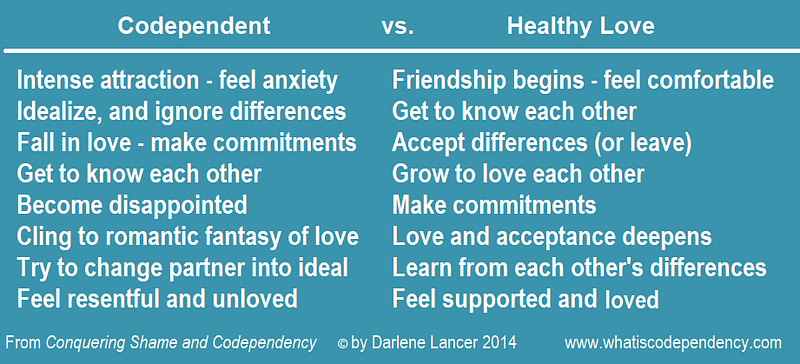
Codependent Couples

Codependent couples are usually out-of-balance. Frequently, there are struggles for power and control. There may be an imbalance of power or one partner has taken on responsibilities for the other. They’re anxious, resentful, and feel guilty and responsible for their partner’s needs, feelings and moods, and even at times, behavior. Then they try to control one another to feel okay and get their own needs met.

Rather than respect each other’s separateness and individuality, they can’t tolerate disagreement and appease or blame one another without taking responsibility for themselves. Often, what they dislike in their partner is the very thing they can’t accept in themselves. Despite their pain, they can feel trapped in the relationship because they fear that they can’t function on their own. Some codependent marriages are cooperative and not abusive.

Generally, one or both spouses are tip-toeing around the other. There may be abuse and and emotional conflict or no drama, and no passion either, because real intimacy is sacrificed. Their mutual codependency and insecurity creates intimacy issues and make intimacy threatening, since being honest and known risks rejection or dissolution of their fragile self.

Like the Aspen trees, on the surface each may appear to be physically and even mentally and emotionally independent, yet, at an unconscious level, they’re two insecure adults dependent upon each other to express a whole.

For instance, a woman who has trouble expressing anger marries an angry man who expresses it for her. Or a man who is extremely closed and shy marries a woman who’s emotionally open and gregarious. They need each other to express their full humanity. In other cases, it’s more obvious that one partner needs the other for emotional stability, as in the case of alcoholic relationships.

Financial dependence doesn’t necessarily create codependence, where the dependent partner has good self-esteem and emotional support outside the marriage. Even spouses who appear more capable and stronger may be equally dependent on the relationship. They need someone to care for in order to feel needed, worthwhile, and not alone, while their other partner feels valued by receiving. Successful narcissists can be very dependent. They need someone to adore and look up to them.

Interdependent Couples

What makes interconnections healthy is interdependency — not codependency. Paradoxically, interdependency requires two people capable of autonomy — the ability to function independently. When couples love each other, it’s normal to feel attached, desire closeness, be concerned for one another, and to depend upon each other. Their lives are intertwined, and they’re affected by and need each other. However, they share power equally and take responsibility for their own feelings and actions and contribution to the relationship.

Because they have self-esteem, they can manage their thoughts and feelings on their own and don’t have to control someone else to feel okay. They can allow for each others’ differences and honor one another’s separateness. Thus, they’re not afraid to be assertive and honest. They can listen to their partner’s feelings and needs without feeling guilty or becoming defensive. Since their self-esteem doesn’t depend upon their partner, they don’t fear real intimacy, and independence doesn’t threaten the relationship. In fact, the relationship gives them each more freedom. There’s mutual respect and support for one another’s personal goals, but both are committed to the relationship.

Read signs of not being codependent and codependent recovery.

© Darlene Lancer 2012

Relationships
Dating
Relationships Love Dating
Self
Personal Development
Recommended from ReadMedium