avatarDark Energy Articles

Free AI web copilot to create summaries, insights and extended knowledge, download it at here

2079

Abstract

the better the photovoltaic cells will work. Unfortunately, such a way of powering the lander has no chance of success. The same thing would happen to the panels that would threaten them on Earth if they were submerged 1.5 km below the surface of the water —<b> they would be crushed</b>. The heat, in turn, means that powering with a radioisotope thermoelectric generator — often used as propulsion in space probes — on Venus would be problematic.</p><p id="9ff6">In this situation, designing and building a device that would break the Venera 13 record is a challenge. NASA has just announced that it has taken the first step to meet it. In collaboration with Advanced Thermal Batteries (ATB), its engineers have developed a prototype of the first battery that would be able to operate in Venusian conditions for as many as 120 Earth days. That is, half a day there, lasting 243 Earth days.</p><p id="8c78">If the timing of the landing was right, it would give a chance to stay on Venus from dawn to dusk there.</p><figure id="ffea"><img src="https://cdn-images-1.readmedium.com/v2/resize:fit:800/1*d7qOGjYf7VMQllxPg7y3qg.jpeg"><figcaption>Venus — Eistla Regio — [Photo: Magellan Team (NASA — Jet Propulsion Laboratory), Public domain, via <a href="https://commons.wikimedia.org/wiki/File:PIA00233-_Venus_-_3D_Perspective_View_of_Eistla_Regio.jpg">Wikimedia Commons</a>]</figcaption></figure><h1 id="ef10">From the military to Venus</h1><p id="7d4a">The prototype battery uses solutions used in modern rockets. It consists of seventeen cells. Scientists have improved the battery’s architecture, used specially designed materials and achieved a low self-discharge rate.</p><p id="42c2">After preliminary tests, the battery was found to cope with ultra-high temperatures. It could therefore be used for missions to Venus, as well as to other regions of the Solar System.</p><blockquote id="a475"><p>“This is a great achievement, which many people thought impossible until now,” said Kevin Wepasnick of ATB.</p></blockquote><h1 id="16c2">What to charge on Venus?</h1><p id="9533">

Options

The work on the new type of battery is part of a larger NASA project. It involves building a small lander called the Long-Lived In situ Solar System Explorer (LLISSE). In a conceptual graphic shown by the agency, it looks like a cube with a flat disc with an antenna attached at the top.</p><p id="d695">LLISSE is expected to be small for the devices we send beyond Earth’s orbit. Its weight should not exceed 10 kg. It will be equipped with sensors measuring temperature, pressure, radiation, chemical composition of the atmosphere, wind speed. And also in a communication system, sending all this data to the orbiter above the atmosphere. However, the entire research apparatus needs a powerful battery to operate. The LLISSE mission is based on the assumption that the lander will be able to operate on Venus for a minimum of 60 days.</p><blockquote id="8aeb"><p>“We expect the finished prototype of the Venusian thermal battery to be unveiled within the next 18 months,” NASA wrote in a statement.</p></blockquote><div id="043f" class="link-block"> <a href="https://readmedium.com/a-lost-palace-of-the-oldest-known-civilization-has-been-found-the-discovery-could-change-history-956b288db09b"> <div> <div> <h2>A lost palace of the oldest known civilization has been found. The discovery could change history</h2> <div><h3>Scientists from the British Museum have made a groundbreaking discovery in Iraq. There they found a Sumerian lost…</h3></div> <div><p>medium.com</p></div> </div> <div> <div style="background-image: url(https://miro.readmedium.com/v2/resize:fit:320/1*JKhM8XcPsHid31HZUfwI1Q.jpeg)"></div> </div> </div> </a> </div><p id="fe30"><b>Cool that you made it to the end of this article. I will be very pleased if you appreciate the effort of creating it and leave some claps here, or maybe even start following me. It would be nice if you also left a tip! Thank you!</b></p></article></body>

How to survive a day on Venus? The lander needs brand new batteries for this, which NASA is working on

NASA wants to build an entirely new type of batteries that can operate at ultra-high temperatures. They will make it possible to land on the surface of Venus and survive a Venusian day, which — from dawn to dusk — lasts 120 Earth days.

[Photo: NASA, Public domain, via Wikimedia Commons]

127 minutes — that’s how long the Venus probe Venera 13 worked on the surface of Venus. This is a record for the duration of operation of any terrestrial device on this planet. It was set in 1982, and so far it has not been beaten. Why?

Venus is the closest planet to Earth. It is also the closest in size to our globe. At one time it may have had Earth-like conditions, but later the temperature on Venus increased dramatically. Today its surface averages 450 degrees C. At this temperature, lead melts.

Thus, on Venus the heat can kill. And not only biological life, but also any mechanisms that humans could send there. And if the heat were not enough, the pressure, as much as 90 times greater than on Earth, will do its job. This is the result of the existence of a 250-kilometer layer of clouds consisting of sulfuric acid droplets that envelops Venus.
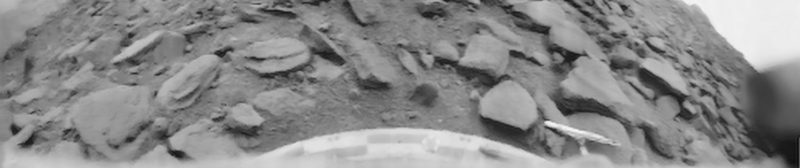
Venera 9 on Venus — [Photo: Ted Stryk, Public domain, via Wikimedia Commons]

How to survive on Venus?

Venus is separated from the Sun by an average of about 108 million kilometers. It would seem that the closer to the Sun, the better the photovoltaic cells will work. Unfortunately, such a way of powering the lander has no chance of success. The same thing would happen to the panels that would threaten them on Earth if they were submerged 1.5 km below the surface of the water — they would be crushed. The heat, in turn, means that powering with a radioisotope thermoelectric generator — often used as propulsion in space probes — on Venus would be problematic.

In this situation, designing and building a device that would break the Venera 13 record is a challenge. NASA has just announced that it has taken the first step to meet it. In collaboration with Advanced Thermal Batteries (ATB), its engineers have developed a prototype of the first battery that would be able to operate in Venusian conditions for as many as 120 Earth days. That is, half a day there, lasting 243 Earth days.

If the timing of the landing was right, it would give a chance to stay on Venus from dawn to dusk there.

Venus — Eistla Regio — [Photo: Magellan Team (NASA — Jet Propulsion Laboratory), Public domain, via Wikimedia Commons]

From the military to Venus

The prototype battery uses solutions used in modern rockets. It consists of seventeen cells. Scientists have improved the battery’s architecture, used specially designed materials and achieved a low self-discharge rate.

After preliminary tests, the battery was found to cope with ultra-high temperatures. It could therefore be used for missions to Venus, as well as to other regions of the Solar System.

“This is a great achievement, which many people thought impossible until now,” said Kevin Wepasnick of ATB.

What to charge on Venus?

The work on the new type of battery is part of a larger NASA project. It involves building a small lander called the Long-Lived In situ Solar System Explorer (LLISSE). In a conceptual graphic shown by the agency, it looks like a cube with a flat disc with an antenna attached at the top.

LLISSE is expected to be small for the devices we send beyond Earth’s orbit. Its weight should not exceed 10 kg. It will be equipped with sensors measuring temperature, pressure, radiation, chemical composition of the atmosphere, wind speed. And also in a communication system, sending all this data to the orbiter above the atmosphere. However, the entire research apparatus needs a powerful battery to operate. The LLISSE mission is based on the assumption that the lander will be able to operate on Venus for a minimum of 60 days.

“We expect the finished prototype of the Venusian thermal battery to be unveiled within the next 18 months,” NASA wrote in a statement.

Cool that you made it to the end of this article. I will be very pleased if you appreciate the effort of creating it and leave some claps here, or maybe even start following me. It would be nice if you also left a tip! Thank you!

NASA
Space
Science
Technology
Life Lessons
Recommended from ReadMedium