avatarDark Energy Articles

Free AI web copilot to create summaries, insights and extended knowledge, download it at here

2381

Abstract

ormation about the ancient city.</p> <figure id="bc6c"> <div> <div> <img class="ratio" src="http://placehold.it/16x9"> <iframe class="" src="https://cdn.embedly.com/widgets/media.html?type=text%2Fhtml&amp;key=a19fcc184b9711e1b4764040d3dc5c07&amp;schema=twitter&amp;url=https%3A//twitter.com/RobGMacfarlane/status/1626809485603016705%3Fs%3D20&amp;image=https%3A//i.embed.ly/1/image%3Furl%3Dhttps%253A%252F%252Fabs.twimg.com%252Ferrors%252Flogo46x38.png%26key%3Da19fcc184b9711e1b4764040d3dc5c07" allowfullscreen="" frameborder="0" height="281" width="500"> </div> </div> </figure></iframe></div></div></figure><h1 id="0ba5">Researchers discovered a temple known only from Sumerian myths</h1><p id="6c82">What’s more, the researchers also found the main shrine of the god Ningirsu, which was previously known only from Sumerian chronicles. It is to him that the city owes its name, and it was here that his main center of worship was located. He was the god of war and hunting. The Sumerians believed that he was merciful and just, but severely punished those who opposed him.</p><p id="8330">Most of the information about <b>Nigirsu </b>is found on the “vulture stele” and in the inscriptions of Gudea, the Sumerian ruler of Lagash. It was Gudea who initiated the expansion of E-nnin, or the temple complex at Girsu. The temple appears in the “Myth of the Anzu Bird,” among others.</p><p id="854b">Girsu was the first Sumerian city to be discovered by archaeologists at the turn of the 20th century. It is not known exactly when it was built, but scientists estimate that it was built between 3500–2000 BC.</p><blockquote id="68d0"><p>“Our knowledge of Sumerian civilization is still limited. However, the excavations at Girsu and the discovery of a lost palace and temple are shedding new light on the history of this ancient people. This is another step towards understanding the culture and traditions of the Sumerians,” says Hartwig Fischer, director of the British Museum.</p></blockquote> <figure id="465c"> <div> <div> <img class="ratio" src="http://placehold.it/16x9"> <iframe class="" src="https://cdn.embedly.com/widgets/media.html?type=text%2Fhtml&amp;key=a19fcc184b9711e1b4764040d3dc5c07&amp;schema=twitte

Options

r&url=https%3A//twitter.com/nrken19/status/1626701157031718913%3Fs%3D20&image=https%3A//i.embed.ly/1/image%3Furl%3Dhttps%253A%252F%252Fabs.twimg.com%252Ferrors%252Flogo46x38.png%26key%3Da19fcc184b9711e1b4764040d3dc5c07" allowfullscreen="" frameborder="0" height="281" width="500"> </div> </div> </figure></iframe></div></div></figure><h1 id="e66c">Who were the Sumerians and what did this civilization achieve?</h1><p id="5de0">The Sumerians are not as well known as the ancient Egyptians, Greeks or Romans. It is not known exactly where this people came from, but historians have no doubt that at the end of the 4th millennium BC they created a highly developed civilization in the region of southern Mesopotamia, then called Sumer. Two thousand years later they were conquered by the Amorites and absorbed into the newly formed Babylonia.</p><p id="14fd">However, Sumerian culture flourished for four thousand years, and their discoveries and inventions had a huge impact on later civilizations. It is to the Sumerians that we owe the invention of cuneiform writing, irrigation canals and plows. The people of southern Mesopotamia were able to build temples using silt bricks. They manufactured them using a technique that was previously unknown in the region. In addition, the people contributed to advances in astronomical and mathematical research.</p><div id="4caa" class="link-block"> <a href="https://readmedium.com/the-silent-killer-a-deadly-fungus-takes-over-california-d37190ac40a2"> <div> <div> <h2>The Silent Killer: A Deadly Fungus Takes Over California</h2> <div><h3>America has seen an invasion of the world’s most poisonous fungus. The death cap has invaded California, producing an…</h3></div> <div><p>medium.com</p></div> </div> <div> <div style="background-image: url(https://miro.readmedium.com/v2/resize:fit:320/1*QIX_evAqd70Ywljdzt_joA.jpeg)"></div> </div> </div> </a> </div><p id="579d"><b>Cool that you made it to the end of this article. I will be very pleased if you appreciate the effort of creating it and leave some claps here, or maybe even start following me. It would be nice if you also left a tip! Thank you!</b></p></article></body>

A lost palace of the oldest known civilization has been found. The discovery could change history

Scientists from the British Museum have made a groundbreaking discovery in Iraq. There they found a Sumerian lost palace of rulers from 4,500 years ago. Experts say it holds the key to understanding this ancient civilization.
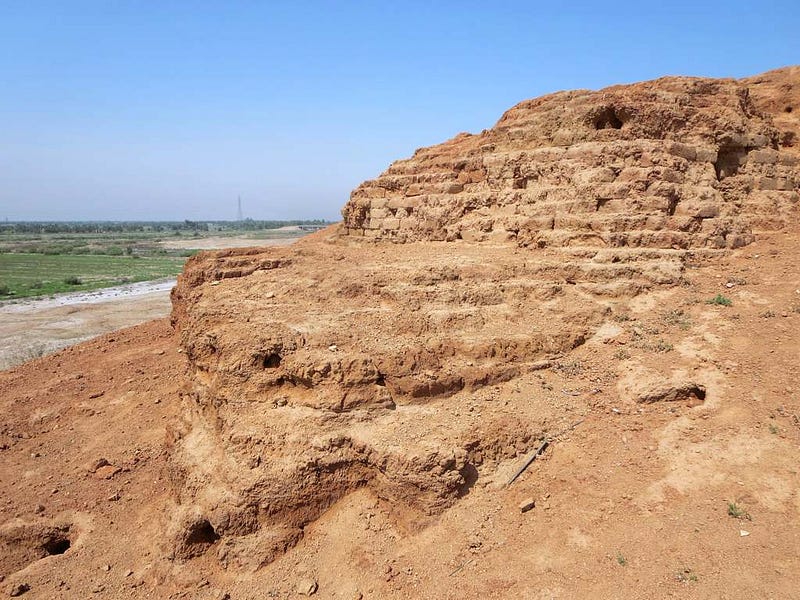
[Photo: David Stanley from Nanaimo, Canada, CC BY 2.0, via Wikimedia Commons]

A team of scientists from the UK and Iraq has been excavating the ancient Sumerian city of Girsu for several months. The archaeological site is now known as Tall Luh and Tello. It is one of the oldest known cities founded by the Sumerians. It was discovered 140 years ago and revealed the existence of the earliest known civilization in the world. Now scientists have made a discovery that could change the course of history.

Discovery holds key to understanding Sumerian civilization

Archaeologists have found the ruins of the lost Sumerian Palace of the Kings. A study by radiocarbon dating has shown that the building was constructed about 4,500 years ago. Researchers say it holds the key to understanding the history of a people from southern Mesopotamia who invented cuneiform writing and had a significant impact on the development of agriculture, architecture, mathematics and astronomy.

“It is one of the most fascinating sites I have ever seen. At first I was told I was wasting time and money on this excavation, but our discovery is proof that the work made sense,” says Dr. Sebastien Rey, the archaeologist who led the research.

Last year, scientists conducted surveys using the latest technology to locate the remains of Girsu, which were beneath the earth’s surface. It was then that they came across the first traces of the Palace of the Kings. The following months were devoted to excavating and securing the ruins. Archaeologists also found more than 200 clay tablets that contain administrative information about the ancient city.

Researchers discovered a temple known only from Sumerian myths

What’s more, the researchers also found the main shrine of the god Ningirsu, which was previously known only from Sumerian chronicles. It is to him that the city owes its name, and it was here that his main center of worship was located. He was the god of war and hunting. The Sumerians believed that he was merciful and just, but severely punished those who opposed him.

Most of the information about Nigirsu is found on the “vulture stele” and in the inscriptions of Gudea, the Sumerian ruler of Lagash. It was Gudea who initiated the expansion of E-nnin, or the temple complex at Girsu. The temple appears in the “Myth of the Anzu Bird,” among others.

Girsu was the first Sumerian city to be discovered by archaeologists at the turn of the 20th century. It is not known exactly when it was built, but scientists estimate that it was built between 3500–2000 BC.

“Our knowledge of Sumerian civilization is still limited. However, the excavations at Girsu and the discovery of a lost palace and temple are shedding new light on the history of this ancient people. This is another step towards understanding the culture and traditions of the Sumerians,” says Hartwig Fischer, director of the British Museum.

Who were the Sumerians and what did this civilization achieve?

The Sumerians are not as well known as the ancient Egyptians, Greeks or Romans. It is not known exactly where this people came from, but historians have no doubt that at the end of the 4th millennium BC they created a highly developed civilization in the region of southern Mesopotamia, then called Sumer. Two thousand years later they were conquered by the Amorites and absorbed into the newly formed Babylonia.

However, Sumerian culture flourished for four thousand years, and their discoveries and inventions had a huge impact on later civilizations. It is to the Sumerians that we owe the invention of cuneiform writing, irrigation canals and plows. The people of southern Mesopotamia were able to build temples using silt bricks. They manufactured them using a technique that was previously unknown in the region. In addition, the people contributed to advances in astronomical and mathematical research.

Cool that you made it to the end of this article. I will be very pleased if you appreciate the effort of creating it and leave some claps here, or maybe even start following me. It would be nice if you also left a tip! Thank you!

History
Science
Culture
Life
Life Lessons
Recommended from ReadMedium