
How To Sit For The Meditation?
Suitable sitting positions for practitioners who are just starting to meditate or who want to deepen their practice
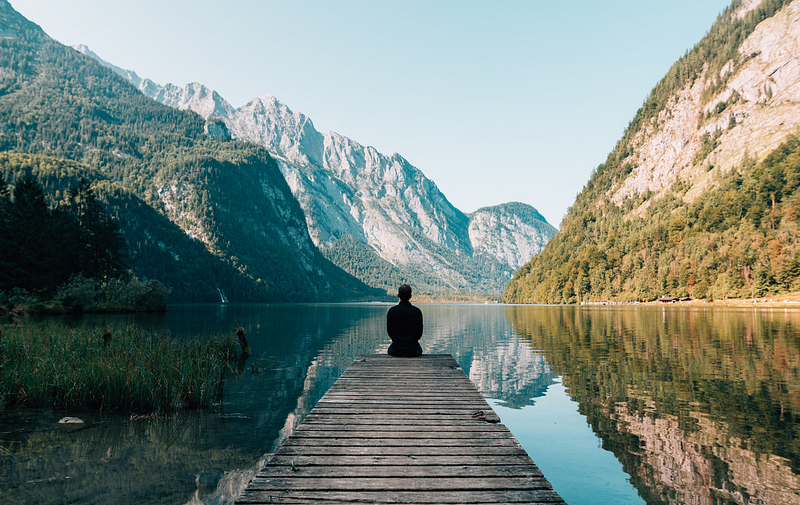
There are many variations and techniques for meditation, and people can confuse how to start it. But you do not need to read a book or join retreats to learn meditation. What’s important is getting started. Just stay in silence, lie down or sit back, relax, and breathe. It can be done anytime, anywhere, and for a length of time.
If you want to deepen after your meditation experience increases, you may need to pay attention to your sitting posture. Since the body and mind are connected, they affect each other simultaneously. The stance you take during meditation supports your concentration or may discomfort you that you make constant adjustments to relieve. The physical tension or point pains do not allow you to enjoy meditation practice. Therefore, the posture must be comfortable to be able to meditate for a more extended period.
So the principles to set up a suitable meditation posture that you feel not only relax and comfortable but also remain alert and aware. It is also important to sit with a steep spine while meditating, not to compress the lungs, diaphragm, and abdominal muscles that are effective during breathing.
The Universal Meditation Postures
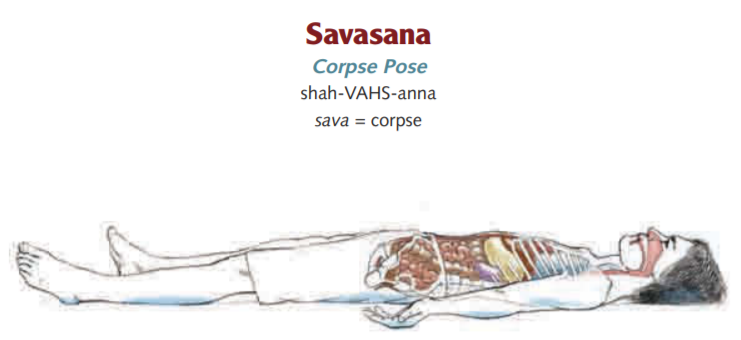
Corpse (Savasana) position
Savasana pose helps you to root. It is one of the poses that your body has the most contact with the ground among yoga poses. You may find it easier to relax and release tension if you lie down. This way, your body is supported.
You might think that the best way to meditate is lying down like Savasana. However, too relaxed postures lower of your attention, you can even fall asleep, especially beginners sleep a lot in this position. At this point, I can suggest that you can meditate in this pose when you think you sleep well and are not tired.
Chair Pose
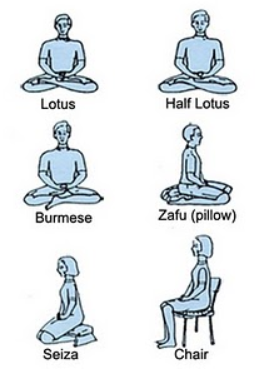
It is an ideal pose if you do not want to sit on the ground or who do not have a place to lie down. Especially people with a low knee and hip flexibility can easily apply. The best part of this pose is that it can be done anywhere. Just be sure to sit away from the back of the chair with an upright spine and place your feet firmly on the floor, aligned with your hips.
Seiza and Zafu
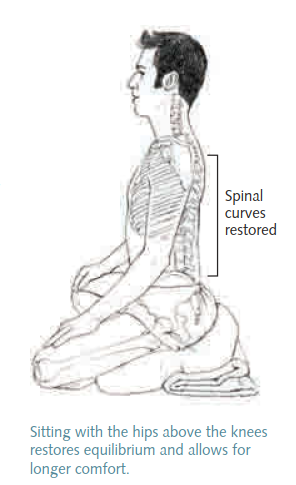
Seiza is a traditional formal way of sitting on the heels in Japan. Instead of sitting with your legs crossed, you can also kneel. If your upper leg muscles(quadriceps) and knees do not allow you to sit properly without pain, you can sit in a seiza pose using a meditation stool. If you want a slightly softer surface, you can take a yoga mat between your legs and sit on it, and then the name of this pose will be Zafu
Burmese
There are various cross-legged seated positions, and Burmese is the simplest of them. Your legs are crossed, and both feet and knees rest on the floor. Since your legs are not very flexible at the beginning, it may not allow the knee to meet the ground, but over time your knee will touch the ground as your muscles relax. Make sure that your spine is straight and keep your body upright.
Half Lotus
This pose is a bit asymmetrical. It is a preparation pose for the full lotus. The right foot is placed up onto the left thigh, and the left leg is tucked under or visa versa. Again, the spine should remain in a straight line.
Lotus
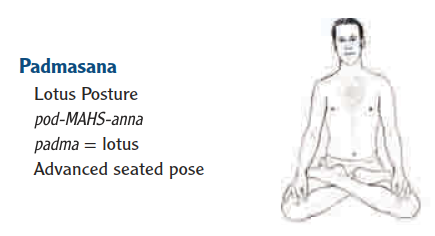
It is the most symmetrical and stable pose where each foot is placed upon the opposite thigh. It requires severe hip, knee, and muscle flexibility. It is not a pose that anyone can easily do. Besides, if you are not an experienced practitioner, the lotus is also not a pose to sit for a long time.
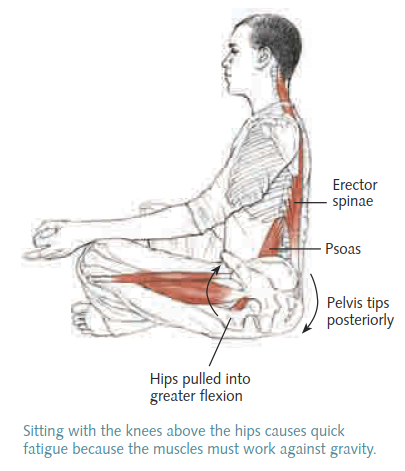
Tip: You can get support by putting a yoga mat or a yoga block under your hip to protect your spine upright in all cross-legged poses.
Finally, you may think it looks cool to sit cross-legged, but if you don’t have the flexibility, it makes you suffer and distract your meditation practice. Try to make it easy on yourself. Accept yourself as you are and try to focus on meditation itself. Choose a posture that is right for you. You’re welcome to adjust anything that doesn’t work for you. Nobody expects you to be perfect. Everything you experience during meditation will pass through your filters and perception, so it is unique for you.
Namaste.
More related articles:


