How to say what you’re thinking, when you really need to
I walked away from that meeting, and going through my mind were 5 different responses, questions and arguments to that one thing they said. I didn’t have the perfect response right then, the facts didn’t quite clear up in my mind in time. It made me angry that I didn’t say what I needed too. I replayed that conversation in my mind a few times, turning it over and trying to work out when the right time would have been to state my point. I realised that I’d missed my chance, and that the meeting wasn’t as good as it could have been because of it. I also felt like I had somehow ‘lost out’.
What I needed were some words that allowed me to talk through the messy stuff in my head. To be able to open a dialogue with them on the issues I had with what they were saying, without being confrontational. To use a term borrowed from Brene Brown, I needed some rumble words…
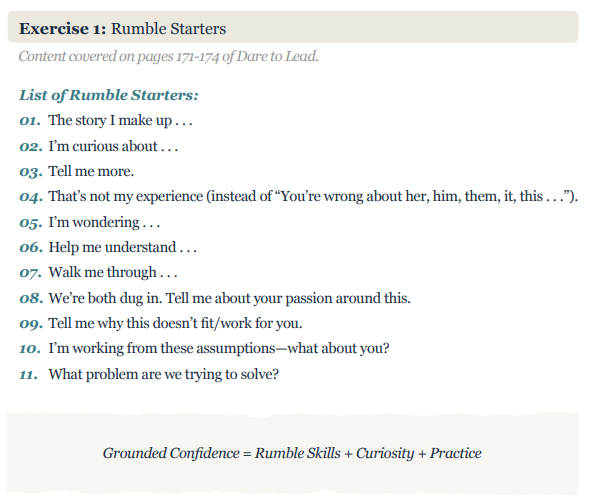
Rumble words are something I have introduced into my language; the concept of rumble words is from Brene’s work “Dare to Lead”(there is an attached extract from the Dare to Lead workbook at the bottom of the document, this book is worth your time) and identifies that you need a way to navigate the difficult conversations. The most challenging part to navigating a difficult conversation is the start, and then ensuring that you do not uncontrollably escalate it. You know when you should start that conversation, you can feel it, but you put it off because you can’t work out how to start. Plenty of people have spoken about how to work through it, but I find it useful just to have somewhere to start, just to let the first words out, knowing that you aren’t going to start a fight or put someone offside.
The one I use the most is…
“When you said that, the story that went through my mind is”
When I use this, I have just given myself permission to ramble the story that was triggered by their comment. I have to take care to make it about the story in my head, not about them, but it helps to have a place to start. It can also be about how you interpreted their actions, their behaviour, their email — but it has to be how it triggered the thoughts or feelings in your mind.
Another one of my favourites occurs when I am having a conversation and someone is arguing against my position.
“I can see you are passionate about this — can you help me understand?”
If you become comfortable using these rumble starters, you can begin to navigate those conversations. Effective communication, especially in difficult situations, is the heart of good leadership. So, start practicing using them. Start as soon as you can, you all have a story running through your mind that you have wanted to get out. Or a position you want to understand but can’t engage on. Start now. You need to be courageous, and you need to be curious.
Stay safe and keep smiling,
Leon
[high-fives]