How to Repurpose Articles to Create Engaging Email Newsletters

A little trick I’ve learned is that repurposing content can boost viewership and make coming up with newsletter topics a breeze. If you utilize a newsletter for your blog subscribers to inform them about new posts and products or increase engagement, repurposing your blog’s articles will simplify this task.
Here is how to repurpose your articles to create engaging newsletters:
1. Create a spreadsheet in Google Docs
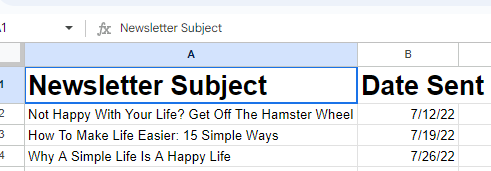
Similar to creating a pitching tracker or content plan, you can make a spreadsheet in Google Docs or use a program such as Trello to plan out your newsletter topics.
I set up my spreadsheet with the topic title and the date the newsletter is sent out. This way, I can track topics and avoid accidentally using the same one later.
2. Review past posts and create a newsletter posting schedule
Browse through your blog for topic ideas to create your newsletters. Choose a month or even two months’ worth of topic ideas and enter them into your spreadsheet or whatever program you use to plan content.
This way, you will have your ideas ready to write for each week.
3. Condense the content to contain key points
Now that you have your topics all planned out, it’s time to create a newsletter from your article. However, you need to condense it down considerably to ensure your subscribers will read it and not overwhelm them with a lengthy email.
According to an article by Constant Contact, the best length for an email newsletter is approximately 200 words or 20 lines of text. However, it may need to be longer in some instances.
It depends on the purpose of your newsletter and you want to ensure you include all of the key components which includes a call to action.
The call to action is what you want your readers to do. For instance, make a sale or drive traffic to your site.
So, you want the newsletter to be tight and actionable.
That means that your 1,500-word post needs to be condensed down to a couple of hundred words while offering value so it can generate results.
4. Send an email newsletter on the best day to ensure it’s read
Don’t let all of your hard work be in vain. A huge part of successful marketing via an email newsletter is sending on the day with the highest open rate. Which day is that? Well, according to data from sites such as ConvertKit, it is Tuesday at 10 a.m.
However, each platform varies a little bit, and you should customize it based on which you use. You can learn more from this article on ConvertKit.
Email newsletters are vital for keeping your subscribers engaged and keeping them updated with your brand. Plus, if you have products, services, or courses you sell, it can help promote them to boost sales so you can earn more money from your writing.
So, use your existing articles to make creating email newsletters a cinch!