
How to Reawaken a Growth Mindset in Your Distance Learning Child
Take advantage of this pandemic moment
By now, your children are likely knee-deep in some form or another of distance learning. If you feel like you’re sloshing along with them in the mud — but desperate for a solution — this article is for you.
As a 12-year homeschooling veteran and former public school teacher, I have realized a couple of things over the years about the nature of learning and how to let it flourish. Here you’ll discover my secret sauce for igniting learning in your kids — no matter the age.
Rest assured: It’s possible to get things on track so your kids are really learning — even during a pandemic with no end in sight. The key is creating space for your child to learn in. Not physical space (although this is important) so much as psychological space. With these tips, your child might actually not hate school — but actually learn something after all!
The problems with school
Mistakes — and the fear of failure that comes along with them — are major reasons why most kids dislike school. Although they may couch it in different terms, it often boils down to this.
For the popular kids, it’s not a real issue. They’re extroverted enough and well-liked by definition, so only the gravest errors could possibly embarrass them sufficiently or reduce their social standing significantly. These kids, by nature, relish the chance to speak in class.
It gives them an opportunity to say “Hey! Look at me.”
The problem is: Not every kid at school is popular. In fact, most are not. Your child is probably in the “average” or, heaven forbid, in the “victim of bullying” category.
For these students, volunteering an answer publicly is worse than death. So, they stay quiet and out of the limelight when all eyes are on them, ready to humiliate, possibly with snickers, giggles, and boos if their response is wrong.
In a Zoom or Google classroom, true enough, these kids are open to the same treatment and will probably feel as badly as they would in person. Maybe a little bit less because they’re not face-to-face with their detractors.
However, the major difference is that during remote learning, they’re on their own turf. They have the “home field advantage.” And they have you in their corner.
If you adopt the strategy of boosting (1) their growth mindset; and (2) their learning reserve, (that is, how much they absorb versus how much gets thrown at them), you have the power to change things around for the better. Remember — it’s a gradual process. Don’t expect a miracle overnight.
As the world is experiencing a third Covid-19 surge in most places, you have plenty of time at home to make it work — with nothing to lose, but everything to gain.
How to begin work on your child’s atrophied growth mindset
The tragic thing about schools is that they destroy the growth mindset that all children naturally have. They do this insidiously and (maybe) unknowingly, a little each day over the years. Before you know it, with fixed mindset teachers and strategies, developing an expansive growth mindset is practically impossible.
This is not natural.
Have you ever observed a 3- or 4-year-old? Or think back to when you enjoyed this time in your child’s life. The insatiable yearning to “find out what happens if I…” is never-ending. They jump at risk-taking. To their advantage, they’ll try anything once — often multiple times — until it’s mastered. No fear of being wrong, either.
The world is their laboratory!
By contrast, school doesn’t foster this natural inquisitiveness. The fear of failure most kids acquire at school engenders a monumental rejection of intellectual risk-taking.
So they don’t branch out. They stagnate.
Meeting the status quo, doing the bare minimum to get by, and not making waves become the unspoken school rules. A focus by teachers, administrators, and governments to get high grades and ace standardized tests turns schools into performance zones instead of learning oases.
Without embracing intellectual challenges, a child’s education is stymied. It becomes difficult to cultivate the hallmarks of what it means to possess a vast learning reserve: (1) a love of learning; and (2) a perpetual quest to discover more.
You have a real opportunity to reverse this downward spiral by reawakening your child’s growth mindset through distance learning. Here are three steps to restoring their school-atrophied growth mindset.
1. Shadow your child during distance learning
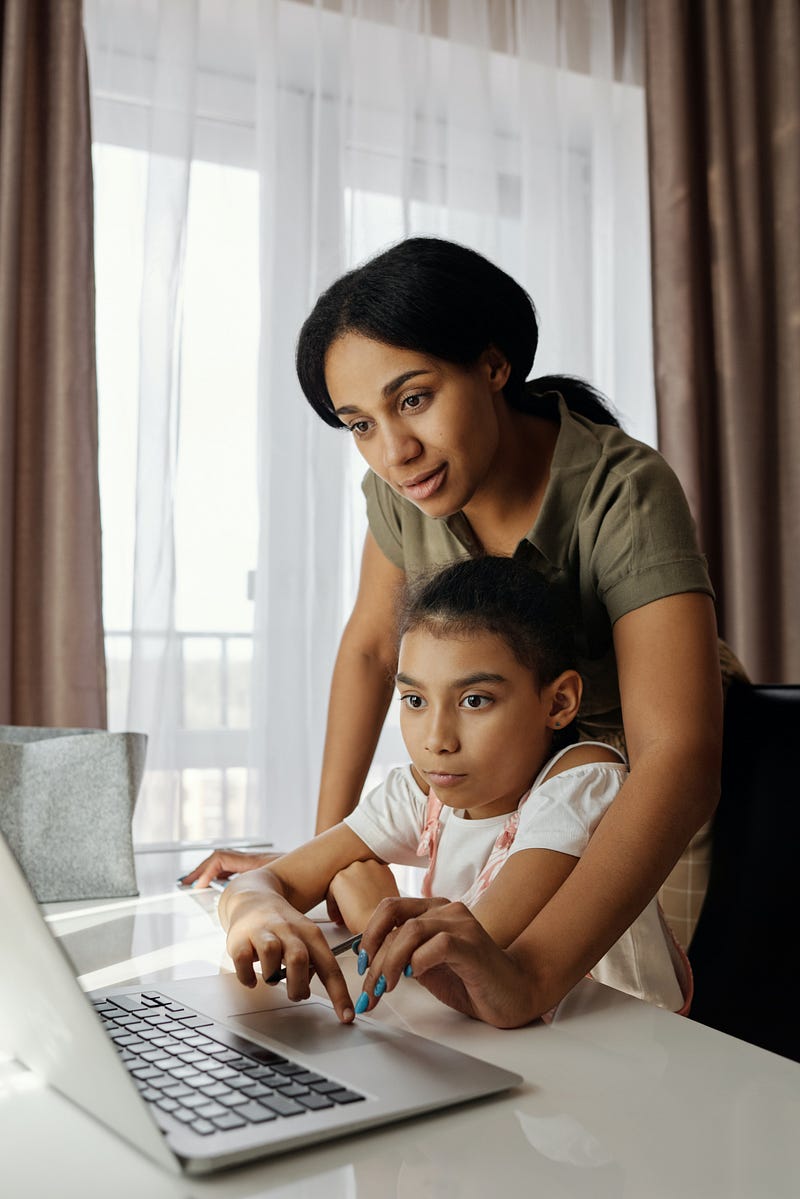
Sit right down next to your child during Zoom or Google classroom lessons while on mute. Say nothing. Listen attentively. Doing so sends the message that you are present for moral support. Show an interest in their lesson and in their learning it.
During this time, observe your child. Are they listening? Are they following along or do they seem lost? Maybe frustrated? Bored? Make mental notes to yourself (because your notes will determine how the next step proceeds).
2. Do a remote learning assessment
After the lesson, initiate a conversation with your child. (Take an exercise or snack break before you do to decompress first.) Get a sense of whether your opinion on how it went jibes with theirs. If your child expresses frustration, confusion, or lack of understanding, you need to do something like CPR for Zoom — learning excitement resuscitation (LER).
Ask questions like:
- How do you feel after that lesson? (Show some emojis to choose from if you’re getting blank stares.)
- How well do you understand it from 1 to 10?
- What do you think could help your understanding? (Suggestions may be needed.)
If you get silence, don’t be worried. You’re nurturing your child’s ability to self-reflect and self-assess. This may be totally new to them.
Suggest that watching it a second time (if recorded) would help in the case of poor understanding. Then do so with your child.
3. Ask your child to tell you what they’ve learned
The best way to tell if your child truly understands something is if they can explain it to you, a sibling, or even the family dog (with your verifying the explanation). In my own experience, I find the Feynman Technique is a great way to go about it. With a child, a few modifications are needed. Note: If your child isn’t having problems with every class, you don’t need to follow this protocol for every subject. Just where you think it’ll help.
First, give your child a chance to formulate their thoughts. If they’re not sure where or how to begin, suggest a lead-in question like: How did the lesson start? Follow up with What happened after that? or Then what? Finish up with: How did the class end? What final takeaways did you get?
If your child’s school is not recording the lessons, but you think it would help to be able to go back and listen a second time, request that your school record them. Or, ask for permission to record them yourself to help your child understand.
How to watch lesson recordings together
To get your child into a growth mindset groove while using the Feynman technique, watch the recording together. Pause the lesson at key points to check for comprehension. Do the check by asking your child to explain the lesson using different words or giving an example. Also, whenever the teacher stops to wait for a response, pause the recording. Turn to your child. Wait for an answer.
This is the moment when your child should feel freer to take a risk and make an educated guess even if they haven’t a clue. They’re home with you beside them. You’re giving them your full, loving attention. In a safe place. No chance of getting ridiculed if they make a mistake.
Moments like these are key opportunities to foster a growth mindset! Take advantage of them. If your child is still reluctant to try, put them at ease. Encourage a response — any response, calmly and giving plenty of wait-time. Suggest looking at a notebook, handout, or textbook for help if necessary.
Then, work with the response. Even if it’s completely wrong, point out that it shows they’re thinking. Learning is a process. Mistakes made with genuine intent to be right (not just random guessing) are a key part of learning. Mistakes are good!
If they’re partially correct, highlight the response’s good aspects. Then, revise it with your child. Prompt your child at each step of the process. You’re working on this together!
After a few times of working through responses like this, your child will find it easier. Watching recordings may no longer be necessary.
Your child may not be able to speak up in class at first. That’s okay. Next time, if it appears they know, but are hesitant for fear of failure, and you’re on mute, nudge them to tell you the answer. Write it down if you can. Then watch the class to see if you’re right.
After a few times of success, their self-confidence may be high enough to attempt a live response in an actual class. Don’t worry if this step doesn’t happen right away. If may not happen this school year. But, if your child becomes skilled at responding to you on mute during the class, view that as a huge step in the right direction. You’re on to something!
TIP: If your child repeats “I don’t know” or “I’m not good at this,” transform their comment to “I almost know it” or “I’m almost getting good at this.” Give it a positive spin to nurture growth mindset. Then follow up with a What’s next? to get them thinking more deeply about the topic as they offer an answer.
Finally, ask some open-ended questions that have no fixed answer that they’re trying to “get right.” Explore learning together with these questions! Take up with the discussion at a later time to reinforce the lesson and aid in retention.
Restore a love for learning while remotely learning (that is, raising their learning reserve)
During the past spring when schools were initially shuttered, and so far this year, you and your child have gotten used to “doing school” at home. It may still seem weird, but you’re surviving.
Unfortunately, you’re both probably feeling like there’s something missing from your day-to-day routine. Worse, you don’t know how to fill in the gap.
I’d venture to guess that you’re missing the enthusiasm and the excitement that naturally comes with real learning. Isn’t that what education should be about?
When school is all about points, getting good grades, and scoring high on endless standardized tests, no wonder your child may approach distance learning with a lackluster attitude, groans of discontent, and difficulty staying on task.
This is where you come in as a frustrated, stressed parent and default teacher.
Seize the Covid-19 opportunity to take back your child’s learning! It’s totally in your power to make learning fun again.
You know good intentions aren’t good enough. Sounds nice…but which actions will rekindle their native curiosity to explore and discover?
You don’t need a degree in education or a teaching certification to do this. Just think back to when your child was three years old. The joy of play, of movement, of new knowledge. Your child is older now, but these fundamental tendencies never die or go out of style. They’re just forgotten or dismissed in the push and hurry to cover all the curriculum before the next test.
So, introduce some play, movement, and new discoveries into your distance learning!
In an earlier article, I discussed the importance of taking frequent breaks during the endless hours of screen-based lessons. Scheduling in throughout the day a variety of physical outdoor exercises will let loose any pent-up frustrations, deliver some fresh air to the brain, and bring back focused attention. Ready to enter the Google classroom again.
Depending on how easy a particular subject is for your child, and how much patience they have to pay attention, you may pick and choose classes or parts of classes to miss and reduce your child’s time online in the class.
Now take it a step even further.
Here are three ways you can restore natural curiosity — a prerequisite for learning — in your child at any age.
Tip: To make the activities listed below “count” by your child’s school:
- Discuss them with your child’s teacher first. Email or a short Hangouts chat may be all that you need.
- Seek teacher approval first (unless your child really loves the idea and wants to do it whether or not they get “credit” for it).
- Take a photo and send to your child’s teacher of the actual doing or the final product (or both).
1. Activity add-ins for greater comprehension
Do you remember what it was like to be completely lost as a student? The teacher could have been speaking a language foreign to you. In one ear and out the other. Or way over your head.
Maybe your child is feeling the same way. On top of that, throw in virtual learning and you strike a death knell.
However, with a little research and imagination, you can fix this situation easily. Here are some tips:
- Look over your child’s lesson beforehand. Read the textbook or handout (if any). Sit in during the video class.
- If there’s an assigned activity that your child isn’t thrilled about doing, change it up in some way. To do this, start by asking your child if they have any suggestions to make it more interesting. When they “own” it, they’ll be more excited about it.
- If you’d like to do some internet research on the topic, give it a go! There are literally millions of websites and activity suggestions out there on every conceivable topic. Include your child in this investigation. Present it like a treasure hunt! Be sure to clock your time and let the teacher know. Use this occasion as an opportunity to teach internet research by doing it. Put your child in the driver’s seat in front of the computer, too, with full control of the mouse. You’re coach of the research process.
- Once you agree on an activity, send a link or a description (if it’s taken from a book or your own imagination) to your child’s teacher. Request that it count toward a grade or as extra credit.
2. Activity add-ins to fight boredom
At the other end of the learning spectrum, there’s boredom. It’s totally understandable that your child may feel uninterested. Hours of screen lessons just aren’t all that interesting — unless the teacher’s singing, dancing, twirling on one foot, or cracking jokes. Who has time or energy to do that?
The downside to boredom is that it leads to mind wanderings, daydreaming, etc. There’s certainly a time and a place for those — but not during a video lesson.
You can’t blame the teacher for this. They’re not supposed to be entertainers. In almost all cases, they must strictly follow a pre-set curriculum (which even they may not be thrilled about at times). Here are some tips on getting around this:
- Ask for more challenging activities, prompts, readings, etc. Be sure to promise your child that you’ll work with them to meet the challenge.
- If none are forthcoming, start sleuthing yourself! Presenting a topic as a problem to be solved will encourage a growth mindset. A child eager to learn more will jump at the chance to have a crack at it. A bored child will feel desperate to do something rather than just listen. Here’s your chance to meet their desire.
- Just like you did in the case of activity add-ins for greater comprehension (above), let your child’s teacher know what you’re up to and why. Put it out there — as a website link or as a brief email with the details.
- Once you agree, request that your child receive extra credit. Possibly, the activity could count as a substitute for one (or two, depending on complexity, time involved, etc.) graded assignment.
3. Personalized learning assessments
If you’re doing comprehension or boredom-busting activities, especially if you’re doing so instead of teacher-assigned homework and projects, it makes perfect sense to request that assessments be customized to “fit” with the activities you’ve been doing.
You could make a proposal or two — or turn the task over to the teacher. This is extra work for teachers and some may not relish it. Scope them out beforehand to find out what’s possible. You never know until you ask. (My guess is they’ll be thrilled that one of their students is actually learning and loving it. And it’s all because of you: observing your child, identifying needs, and thinking outside the box.)
Wrap up on making real learning happen during distance learning
Covid-19 serves up challenge after challenge. Teachers, parents, and children of all ages are struggling to keep up and stay engaged.
But it’s hard.
Parents — through working with their child’s teacher — can use the pandemic as an opportunity to restore what most children lose once they get to school: a fervent love of learning for learning’s sake.
Reawakening and nurturing a growth mindset that embraces learning as the foundation of all education takes time and effort. I suggest steps for how to succeed at it with details for each one:
- Shadow your child during distance learning
- Do a remote learning assessment
- Ask your child to tell you what they’ve learned
The best way to nurture a growth mindset in your child and ace all three steps above is by proactively raising their learning reserve (that is, what they absorb and make their own out of all the curriculum they’re exposed to). Creating or finding activity add-ins for greater comprehension or as boredom busters, then designing assessments that measure-match them, are ways to boost their learning reserve.
Distance learning may not be the ideal situation for most families. But viewing the pandemic as an opportunity to foster a growth mindset in your child will benefit them for life. Doing so with activities and assessments that elevate their learning reserve makes virtual learning a win-win for parents and kids alike.


