avatarRaphael Kim, PhD

Free AI web copilot to create summaries, insights and extended knowledge, download it at here

4672

Abstract

existence is overlapped with alternate microscopic worlds bustling with thriving microbial societies.</b></p></blockquote><p id="9bd5">This resulted in the following output:</p><blockquote id="fd0a"><p><b>AAGAAAGCCTATGGGATGTCCTTTATCCGATGCCATGGGAGCTGATACGAGTACCTTTATGCCATGTCAGCCTATACGAGTCGATGGGATGTC,AGGGTAGCTGAGTGTAGTACCTTTATACGAGGCTATGCCAGTCGATGACCTTTATCATATGCCAGTCGATACGAGTACATCGTAGGCTATGCCATGGGAGCTGCAGGT</b></p></blockquote><p id="8f53">A quick note: It seems like ChatGPT did not like working on large chunks of text (more than 100 words) at one time, producing errors. So I had to break the story into smaller portions. I am working on a way to train ChatGPT for a smoother experience of translating stories to DNA. Sharing of this result is already in my pipeline, so watch this space.</p><figure id="e040"><img src="https://cdn-images-1.readmedium.com/v2/resize:fit:800/0*ueeCAeA8R7TzGmIh"><figcaption>A typical DNA printer (Photo by <a href="https://unsplash.com/@nci?utm_source=medium&amp;utm_medium=referral">National Cancer Institute</a> on <a href="https://unsplash.com?utm_source=medium&amp;utm_medium=referral">Unsplash</a>)</figcaption></figure><h2 id="240d">Step 3: Print the DNA story</h2><p id="c555">Here, we will need to use a kind of DNA printer. It is also called a DNA synthesizer, and it is an automated instrument that facilitates the creation of specific DNA sequences. It operates on the principle of solid-phase synthesis, using a series of chemical reactions to build the DNA chain. Essentially, it starts with a solid support, often a resin bead, where the DNA sequence will grow. The process begins by selectively adding DNA molecules (also called nucleotides) — adenine (A), thymine (T), cytosine ©, and guanine (G) — in a predetermined sequence (in which case it will be the sequence coded by your Medium story). Each nucleotide is protected by a chemical group, allowing only the targeted nucleotide to react and attach to the growing chain. Through a series of cycles, these protected nucleotides are added one at a time, creating the desired DNA sequence. Clever chemistry and controlling the addition of these building blocks ensure precision in synthesizing specific DNA strands, which can be utilized for various research purposes in genetics, medicine, biotechnology, and beyond.</p><figure id="4773"><img src="https://cdn-images-1.readmedium.com/v2/resize:fit:800/0*DlcKHZEoSlteq7Yh"><figcaption>Photo by <a href="https://unsplash.com/@pietrozj?utm_source=medium&amp;utm_medium=referral">Pietro Jeng</a> on <a href="https://unsplash.com?utm_source=medium&amp;utm_medium=referral">Unsplash</a></figcaption></figure><p id="8910">You will also need to get a bunch of chemicals, which are as follows:</p><ul><li><b>Deoxyribonucleotides (dNTPs)</b>: These are the individual units or building blocks of DNA. They consist of adenine (A), guanine (G), cytosine (C), and thymine (T), each bonded to a deoxyribose sugar and a phosphate group.</li><li><b>DNA Polymerase:</b> This is an enzyme that catalyzes the formation of phosphodiester bonds between adjacent nucleotides during DNA replication. It helps in linking the nucleotides together to form the new DNA strand.</li><li><b>Primer</b>: Primers are short sequences of RNA or DNA that provide the starting point for DNA polymerase to initiate DNA synthesis. They are essential for the enzyme to begin adding nucleotides.</li><li><b>Magnesium ions (Mg²⁺)</b>: Magnesium ions act as cofactors for enzymes like DNA polymerase, supporting their activity in the replication process.</li><li><b>Buffer Solutions</b>: These solutions maintain the optimal pH and ionic conditions required for the enzymatic activity involved in DNA synthesis.</li><li><b>Energy Sources (ATP):</b> Adenosine triphosphate (ATP) serves as the primary energy carrier in cells. It provides the energy needed for various cellular processes, including DNA synthesis.</li></ul><p id="ad74">I understand that the list of chemicals and the DNA synthesizer process might seem overwhelming. I included them to highlight the complexity involved. It’s unlikely that you’ll have direct access to these chemicals or a DNA synthesizer, as they usually require specialized sourcing and facilitation. However, printing your freshly encoded DNA sequences into actual molecules can still be done, if you outsource it through various companies that would be willing to take an online order. There are several outlets available to the general public, <b>although it’s important to note that it can be costly</b>. Below is a list, and some precautions before approaching them:</p><ol><li><b>Integrated DNA Technologies (IDT)</b></li>

Options

<li><b>Thermo Fisher Scientific</b></li><li><b>Eurofins Genomics</b></li><li><b>Twist Bioscience</b></li><li><b>GenScript</b></li><li><b>Bio Basic</b></li><li><b>ATUM (formerly DNA2.0)</b></li></ol><p id="8a66">By the way, it’s crucial to ensure that the DNA sequences generated from the stories that you are ordering are not coded in a way that would translate into harmful pathogens or toxins in the biological context; intentional or not. The suppliers will screen your DNA story for this. To put it simply, toxic stories are a no-go.</p><figure id="eea5"><img src="https://cdn-images-1.readmedium.com/v2/resize:fit:800/0*BHb9G9AcCOGCMa_q"><figcaption>Photo by <a href="https://unsplash.com/@nci?utm_source=medium&amp;utm_medium=referral">National Cancer Institute</a> on <a href="https://unsplash.com?utm_source=medium&amp;utm_medium=referral">Unsplash</a></figcaption></figure><h2 id="82d4">Step 4: Archiving the Story</h2><p id="5e56">Upon completion, you’ll receive a vial containing DNA. It could arrive in the form of a test tube filled with liquid or a piece of card holding a dried spot of DNA liquid. Store it in a cool, dark place. To retrieve the story encoded within, you’ll need to engage another company capable of decoding DNA sequences (let me know if you want a separate story for this process).</p><h2 id="7334">The “Small Print”</h2><p id="6deb">As you might have guessed, <b>the caveat here lies in the accessibility of DNA data storage technology</b>, primarily due to its current high cost. Moreover, as data volumes increase and more functionalities (like previewing and random access memories) are required, the process becomes more technically intricate. This demands specialized expertise, not just for manufacturing synthetic DNA but also involving multiple companies. This complexity could limit accessibility even further. Encouraging open discussions about its development, especially on improving accessibility of this emerging technology — touched upon briefly in my article below — is crucial.</p><p id="4d1e">So, there you have it — taking your Medium stories and encapsulating them into DNA, the very essence of life itself. It’s like sending your words off on an intergalactic journey or planting them in the deepest roots of nature. While the idea is somewhat weird and alluring, getting down to the nitty gritty of DNA printing isn’t without its challenges. The accessibility and cost of this technology might currently pose hurdles for many enthusiasts. Yet, it’s heartening to witness the strides made by companies like Grow-Your-Own-Cloud (GYOC) and the innovative minds at ETH Zürich pushing the boundaries of DNA data storage.</p><p id="653a">I hope this brief foray opens the door to broader conversations about technology accessibility and the possibilities DNA holds for storing our stories for eons to come. And by the way, this rundown is concise and might have missed some finer details for brevity’s sake. If you feel anything important should be added or discussed further, please do mention it. I’m open to discussing any aspects you find worth exploring. Additionally, for any other challenges, opportunities, or insights stemming from DNA data storage technology, please drop a comment below. I’d be glad to delve deeper into these topics.</p><p id="13dd"><b>Also, more stories related to DNA data storage, are below:</b></p><div id="16c0" class="link-block"> <a href="https://readmedium.com/what-they-dont-tell-you-about-dna-data-storage-d2a33e424292"> <div> <div> <h2>What they don’t tell you about DNA data storage</h2> <div><h3>More needs to be done to ensure accessibility of the emerging technology</h3></div> <div><p>medium.com</p></div> </div> <div> <div style="background-image: url(https://miro.readmedium.com/v2/resize:fit:320/0*8R3qlFOAEkPlq-6D)"></div> </div> </div> </a> </div><div id="dfc9" class="link-block"> <a href="https://readmedium.com/your-next-car-could-evolve-from-synthetic-dna-molecules-3e049b88fd4a"> <div> <div> <h2>Your Next Car Could Evolve from Synthetic DNA Molecules</h2> <div><h3>Biodigital Convergence for the Survival of the Safest</h3></div> <div><p>medium.com</p></div> </div> <div> <div style="background-image: url(https://miro.readmedium.com/v2/resize:fit:320/0*qXTFQjkwZPhBdGQL)"></div> </div> </div> </a> </div></article></body>

How to Print Your Medium Stories in DNA

Using ChatGPT (and a bunch of chemicals)
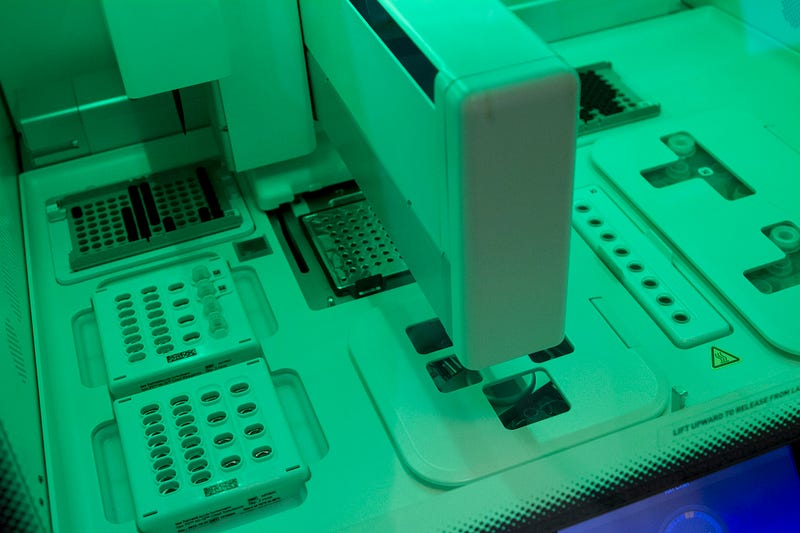
Photo by National Cancer Institute on Unsplash

Have you ever thought about doing something wild with your Medium stories — like printing and preserving them in DNA? Not only is DNA data storage designed to save tons of storage space, but it could also preserve the stories for up to a million years. Besides, once the story is stored in DNA, there are some cool things you could also do with it. For example, you could embed your stories in bacteria and plants, or to send them into outer space. After all, bacterial spores and DNA’s resilience to radiation means your Medium stories could potentially be decoded (and read and clapped) by extraterrestrial life forms. Meanwhile, companies like Grow-Your-Own-Cloud (GYOC) are already exploring the storage of data in plants, so that you can have your literal family tree one day, full of memories. And how about those researchers at ETH Zürich and its collaborators printing DNA stories into 3D models and everyday objects?

If you are curious about how to get started on this form of literary-based bio-digital convergence, here are some of the steps involved:

Step 1: Get Writing

So this is where the magic happens — or maybe the struggle, depending on how you feel about writing. In any case, to get started, you will need some text that you want to immortalize. Whether it’s Shakespeare-level eloquence or just your ramblings, DNA can handle it all.

Step 2: Translate Your Story into DNA

Now comes the biological part — translating your story into a DNA sequence. It’s a string that is comprised of the four organic nucleotide bases of DNA: Adenine (A), Thymine (T), Cytosine (C), or Guanine (G) molecules. There are multiple ways to do this, and you could even create your own unique way of translating. Currently, most folks are converting digital files into binary code (zeros and ones) and then translating that into DNA, and that’s what I will show you in this article.

I chose a Medium story I wrote a few days back, called Rotifer Farm, to illustrate the process:
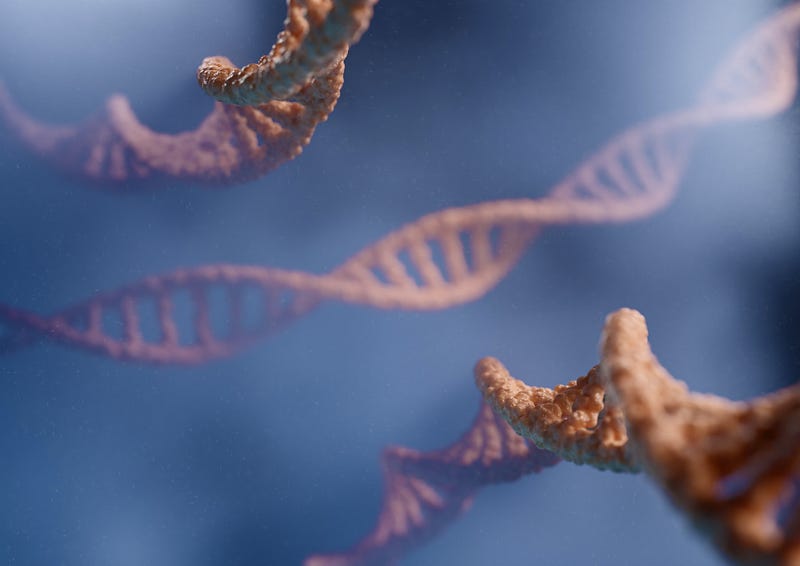
Photo by DIGITALE on Unsplash

ChatGPT as DNA-Encoder

To quickly convert the story into a DNA sequence, we can ask ChatGPT for a hand. Think of this AI tool, as a biologically-minded future Google Translator for the DNA realm, if you will. After playing around with it, I figured out a prompt that sort of worked. I told ChatGPT to convert the story text into binary form, based on the ASCII system, and then turn it into DNA sequences using the rule.

In goes the prompt:

Convert the following text into DNA sequence by first converting the text into binary format based on ASCII, and then to DNA sequences by assigning 01 as A, 00 as C, 11 as G, and 10 as T: (story text)

To show just the first sentence, the text that was converted was as follows:

Upon closer inspection, our existence is overlapped with alternate microscopic worlds bustling with thriving microbial societies.

This resulted in the following output:

AAGAAAGCCTATGGGATGTCCTTTATCCGATGCCATGGGAGCTGATACGAGTACCTTTATGCCATGTCAGCCTATACGAGTCGATGGGATGTC,AGGGTAGCTGAGTGTAGTACCTTTATACGAGGCTATGCCAGTCGATGACCTTTATCATATGCCAGTCGATACGAGTACATCGTAGGCTATGCCATGGGAGCTGCAGGT

A quick note: It seems like ChatGPT did not like working on large chunks of text (more than 100 words) at one time, producing errors. So I had to break the story into smaller portions. I am working on a way to train ChatGPT for a smoother experience of translating stories to DNA. Sharing of this result is already in my pipeline, so watch this space.
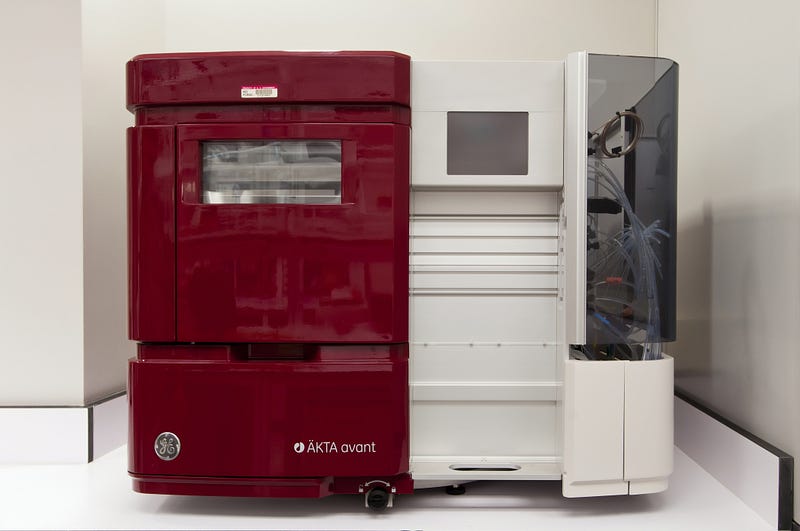
A typical DNA printer (Photo by National Cancer Institute on Unsplash)

Step 3: Print the DNA story

Here, we will need to use a kind of DNA printer. It is also called a DNA synthesizer, and it is an automated instrument that facilitates the creation of specific DNA sequences. It operates on the principle of solid-phase synthesis, using a series of chemical reactions to build the DNA chain. Essentially, it starts with a solid support, often a resin bead, where the DNA sequence will grow. The process begins by selectively adding DNA molecules (also called nucleotides) — adenine (A), thymine (T), cytosine ©, and guanine (G) — in a predetermined sequence (in which case it will be the sequence coded by your Medium story). Each nucleotide is protected by a chemical group, allowing only the targeted nucleotide to react and attach to the growing chain. Through a series of cycles, these protected nucleotides are added one at a time, creating the desired DNA sequence. Clever chemistry and controlling the addition of these building blocks ensure precision in synthesizing specific DNA strands, which can be utilized for various research purposes in genetics, medicine, biotechnology, and beyond.
Photo by Pietro Jeng on Unsplash

You will also need to get a bunch of chemicals, which are as follows:

  • Deoxyribonucleotides (dNTPs): These are the individual units or building blocks of DNA. They consist of adenine (A), guanine (G), cytosine (C), and thymine (T), each bonded to a deoxyribose sugar and a phosphate group.
  • DNA Polymerase: This is an enzyme that catalyzes the formation of phosphodiester bonds between adjacent nucleotides during DNA replication. It helps in linking the nucleotides together to form the new DNA strand.
  • Primer: Primers are short sequences of RNA or DNA that provide the starting point for DNA polymerase to initiate DNA synthesis. They are essential for the enzyme to begin adding nucleotides.
  • Magnesium ions (Mg²⁺): Magnesium ions act as cofactors for enzymes like DNA polymerase, supporting their activity in the replication process.
  • Buffer Solutions: These solutions maintain the optimal pH and ionic conditions required for the enzymatic activity involved in DNA synthesis.
  • Energy Sources (ATP): Adenosine triphosphate (ATP) serves as the primary energy carrier in cells. It provides the energy needed for various cellular processes, including DNA synthesis.

I understand that the list of chemicals and the DNA synthesizer process might seem overwhelming. I included them to highlight the complexity involved. It’s unlikely that you’ll have direct access to these chemicals or a DNA synthesizer, as they usually require specialized sourcing and facilitation. However, printing your freshly encoded DNA sequences into actual molecules can still be done, if you outsource it through various companies that would be willing to take an online order. There are several outlets available to the general public, although it’s important to note that it can be costly. Below is a list, and some precautions before approaching them:

  1. Integrated DNA Technologies (IDT)
  2. Thermo Fisher Scientific
  3. Eurofins Genomics
  4. Twist Bioscience
  5. GenScript
  6. Bio Basic
  7. ATUM (formerly DNA2.0)

By the way, it’s crucial to ensure that the DNA sequences generated from the stories that you are ordering are not coded in a way that would translate into harmful pathogens or toxins in the biological context; intentional or not. The suppliers will screen your DNA story for this. To put it simply, toxic stories are a no-go.
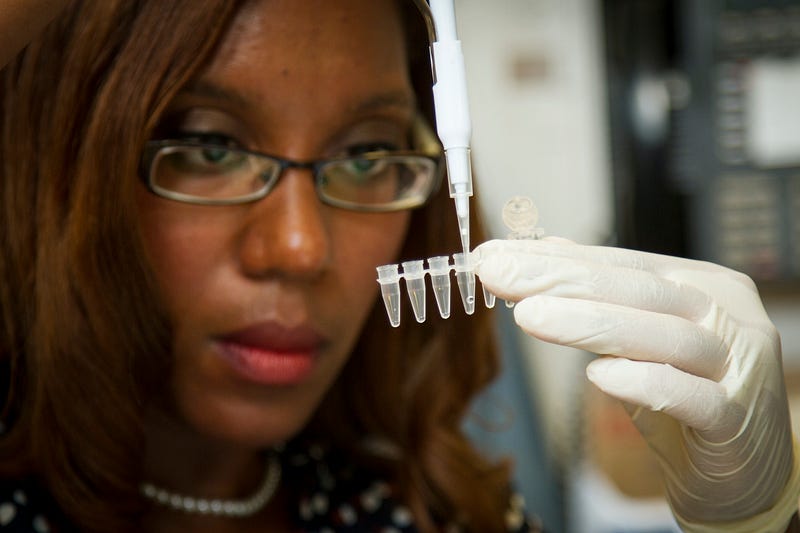
Photo by National Cancer Institute on Unsplash

Step 4: Archiving the Story

Upon completion, you’ll receive a vial containing DNA. It could arrive in the form of a test tube filled with liquid or a piece of card holding a dried spot of DNA liquid. Store it in a cool, dark place. To retrieve the story encoded within, you’ll need to engage another company capable of decoding DNA sequences (let me know if you want a separate story for this process).

The “Small Print”

As you might have guessed, the caveat here lies in the accessibility of DNA data storage technology, primarily due to its current high cost. Moreover, as data volumes increase and more functionalities (like previewing and random access memories) are required, the process becomes more technically intricate. This demands specialized expertise, not just for manufacturing synthetic DNA but also involving multiple companies. This complexity could limit accessibility even further. Encouraging open discussions about its development, especially on improving accessibility of this emerging technology — touched upon briefly in my article below — is crucial.

So, there you have it — taking your Medium stories and encapsulating them into DNA, the very essence of life itself. It’s like sending your words off on an intergalactic journey or planting them in the deepest roots of nature. While the idea is somewhat weird and alluring, getting down to the nitty gritty of DNA printing isn’t without its challenges. The accessibility and cost of this technology might currently pose hurdles for many enthusiasts. Yet, it’s heartening to witness the strides made by companies like Grow-Your-Own-Cloud (GYOC) and the innovative minds at ETH Zürich pushing the boundaries of DNA data storage.

I hope this brief foray opens the door to broader conversations about technology accessibility and the possibilities DNA holds for storing our stories for eons to come. And by the way, this rundown is concise and might have missed some finer details for brevity’s sake. If you feel anything important should be added or discussed further, please do mention it. I’m open to discussing any aspects you find worth exploring. Additionally, for any other challenges, opportunities, or insights stemming from DNA data storage technology, please drop a comment below. I’d be glad to delve deeper into these topics.

Also, more stories related to DNA data storage, are below:

Dna
ChatGPT
Biodigital
Technology
Data Science
Recommended from ReadMedium