
How to Preserve Muscle While Losing Body Fat
Go about this the wrong way and you will end up losing more muscle than fat

The first time I decided to lose fat and get ripped, I nosedived into an almost ascetic style of dieting and working out.
Goes without saying that it was a huge mistake.
Every time my progress stalled, I would further reduce my food intake and increase my physical activity.
Over time, I developed a sickly pallor, sunken cheeks, deep bags under my eyes, and felt extremely fatigued all day.
By the end, I was eating less than 1000 calories per day, cycling 10 km thrice a week, and working out in the gym for the remaining 4 days.
From 87 kgs to 63 kgs, I had lost 24 kgs in a span of 6 months — a lot of strength and muscle along with the fat.
Standing 6'1'’ tall and weighing only 63 kgs, I looked skinny and almost anorexic as opposed to ripped.
I have learned a lot since then and on subsequent cuts, I preserved and even built strength and muscle while losing body fat.
I want to share five things that you need to follow to preserve or even build muscle while losing fat.
Maintaining a high protein intake
In general, consuming adequate protein is important for a host of reasons:
- Protein is the building block of bones, muscle, cartilage, skin, hair, and even your nails.
- Hormone regulation especially during the transformation and development of cells during puberty.
- Building and repairing tissue.
- Digestion as protein is necessary to make enzymes that aid in digesting food.
- Oxygenation. Red blood cells contain a protein compound that carries oxygen throughout the body.
The Recommended Daily Intake (RDI) of protein.
The Academy of Nutrition and Dietetics recommends that the average individual should consume at least 0.8g per kg of body weight for general health.
Protein intake to maximize muscle growth
When it comes to optimizing the gain of muscle mass, studies have shown that a higher protein intake than the RDI is necessary.
A study published in the Journal of Sports Sciences found that a protein intake in the range of 1.5 to 1.8g/kg/day is optimal. Other studies have consistently shown similar results.
Preserving muscle while losing weight
But an even higher protein intake might be necessary to preserve muscle when losing weight.
A study by the Center for Human Nutrition, Washington University School of Medicine found the major mechanism responsible for muscle loss while losing weight is an accelerated rate of muscle breakdown and not suppressed muscle protein synthesis (MPS).
Studies published in The American Journal of Clinical Nutrition and Medicine And Sciences in Sports And Exercise recommend a high protein intake — 1.25–1.5 times the RDA for sedentary persons and >1.5 times the RDA for those who exercise.
This study by the School of Health Sciences of Eastern Michigan University and the Military Nutrition Division, U.S. Army Research Institute of Environmental Medicine (USARIEM) found that a protein intake of > 2 times the RDA to be optimal for muscle preservation while dieting.
The Takeaway
Based on the research, a protein intake of at least 2 times the RDA or 1.6 g per kg of bodyweight seems to be optimal to preserve muscle while losing fat.
Consume 1.6 to 1.8g of protein per kg of your body weight every day.

Tweaking your workout routine
When you are in a weight loss phase, your energy and recovery tend to be lower so slight tweaks to your workout routine might be necessary.
Continue to lift heavy
One of the biggest myths associated with “cutting” is lifting with “light weights and high reps” thinking this will give them a “toned” look.
No, all you will do is lose muscle not get “toned” that way.
You need to continue lifting heavy to preserve muscle. Muscle is a result of your body’s adaptations to increasing demands placed on it. By lifting light you literally “signal” to your body that you no longer need the muscle.
Reduce Volume
You might want to reduce the number of sets, especially on the compound movements since your rate of recovery and energy is lower.
I would recommend cutting down volume by 30–40%. So if you used to do 6 sets of barbell squats as your main movement on leg day, do 3 to 4 sets now but go just as heavy.
Increase Frequency
Frequency is basically how frequently you train a particular muscle group. Lowering volume and increasing the frequency will enable you to perform and recover better as the sessions get shorter.
The science isn’t very clear yet but so far a training frequency of 2–4 times per week has been found to be optimal to maximize muscle protein synthesis.
An illustrative example.
Let’s take legs as an example here.
This reminds me. Don’t skip leg day y’all
Previous routine (Monday, Thursday)
- 6 sets of barbell squats.
- 4 sets of Romanian deadlifts.
- 3 sets of leg extensions.
- 3 sets of lying leg curls.
- 4 sets of standing calf raise.
Changed routine (Monday, Wednesday, Friday)
- 3 sets of barbell squats
- 2 sets of Romanian Deadlifts
- 2 sets of leg extensions.
- 2 sets of lying leg curls.
- 2 sets of standing calf raise.
Observe that:
- The frequency has increased from 2X to 3X a week.
- The total volume has reduced from 40 weekly sets to 33 weekly sets.
- The time each session would take has been cut in half almost.
The Takeaway
Focus on the compound lifts, continue to lift heavy, reduce the volume and increase the frequency.
Don’t be aggressive with the calorie deficit
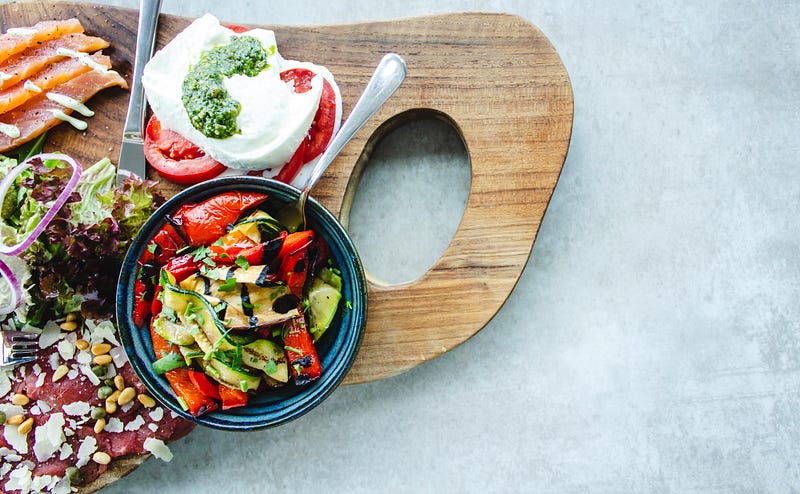
Severely restricting calories
Going aggressive with the calorie deficit to rush the process of weight loss isn’t a good idea.
The below article explains some of the downsides — lowered metabolism, bone density reduction, muscle-loss, disrupted hormones, etc.
Yes, muscle-loss.
In fact, you might even do more harm than good by severely restricting calories as what happened in my case.
This study published in the British Journal of Medicine found that an aggressive deficit accelerated muscle loss.
A small deficit isn’t optimal either
In a study conducted by the University of Jyväskylähey, they chose 20 to 35-year-old national and international level track and field jumpers and sprinters with low levels of body fat (at or under 10%) as their subjects and split them into two groups:
- A daily calorie deficit of 300 calories (about 12% below their total daily energy expenditure) and
- A daily calorie deficit of 750, with both groups following a high-protein diet.
After 4 weeks, the results were surprising:
- The 300-calorie deficit group lost very little fat and muscle while
- The 750-calorie deficit group lost, on average, about 4 pounds of fat and very little muscle.
The Takeaway
For most people, a deficit of 300 to 700 calories, and for really obese people, up to 1000 calories would be optimal.
In other words, use a calorie deficit of 15–20% of your TDEE
Don’t do too much cardio
Do you need cardio to lose weight?
One of the worst myths to plague the fitness industry is that “You need to do cardio to lose weight”.
No, you can lose weight through diet alone and doing ZERO cardio!
Research shows that just doing cardio guarantees little in the way of fat loss.
Too much cardio kills gains
The first time I went on a cut, I made the terrible mistake of prioritizing cardio instead of weight training. This played a major part in making me “skinny” instead of “ripped”.
Research shows that intense, prolonged endurance training is a particularly effective way to induce overtraining. You’re also more likely to experience an excessive metabolic slowdown, which can persist long after weight loss is stopped.
Cardio can burn calories but it can greatly impact recovery and can cause a metabolic slowdown.
Studies show that prioritizing resistance training and supplementing it with some cardio is the best way to lose fat without losing muscle.
How much cardio do you need?
As I said earlier, you don’t need any cardio but generating the deficit through diet alone means that you won’t get to eat a lot. Doing some cardio can let you eat a wee bit more.
Mike Matthews, a best-selling health and fitness author does and recommends only an hour or two of cardio per week.
Yes, not per day but per week.
The Takeaway
Prioritize resistance training and do cardio only such that it does not impair your recovery and training regime.

Prioritize sleep
Sleep, in general, is of paramount importance as this study published in Pharmacy and Therapeutics and aptly titled “The Extraordinary Importance of Sleep” explains.
As someone that has experienced insomnia, I can vouch for just how important sleep is.
The effects of sleep deprivation are debilitating:
- Affected cognition and brain functioning.
- A spike in blood pressure
- Increased risk of heart and chronic diseases.
- Disruption of hormones.
- Weight gain.
- And even death in extreme cases.
When looking to burn fat, the importance of sleep jumps up a lot of notches.
Sleep deprivation and muscle loss
This study published in the Annals of Internal Medicine compared the effects of 8.5 hours and 5.5 hours of sleep per night on weight loss keeping the other factors such as calorie deficit, exercise, etc. the same.
The results were astounding.
The 5.5 hours group lost 55% lesser fat mass and 60% more lean body mass than the 8.5 hours group.
The Takeaway
Sleep alone can make or break your fat loss regime.
Get in 8–9 hours of quality sleep every night for optimal results.
In a Nutshell
When looking to lose fat without losing muscle, it’s important to follow and keep these 5 things in mind.
- Consume 1.6 to 1.8g of protein per kg of your body weight every day.
- Focus on the compound lifts, continue to lift heavy, reduce the volume, and increase the frequency.
- Use a calorie deficit of 15–20% of your TDEE.
- Prioritize resistance training and do cardio only such that it does not impair your recovery and training regime.
- Get in 8–9 hours of quality sleep every night for optimal results.