
How To Optimise Pay-per-Click Advertising To Convert More Leads
Investing money into Google Ads is not cheap — having a strategy will get you better results.

The first place that many people search for information about a product, service, or brand, is an online search. Google.
We have access to all the information we will need from the convenience of our computers or mobile phones. If a business wants customers to find them online, it must optimise its search engines' presence to find them before competitors.
There are two ways to do this, SEO and pay-per-click ads.
Read on (or watch below) to learn how pay-per-click advertising works to optimise your strategy to achieve better results — more clicks and more conversions.
What Is Pay-per-Click (PPC) Advertising?
Pay-per-click advertising is a form of digital marketing initially developed to create revenue for search engines. Along with organic (non-paid) search results, paid ads make up a second results list.
Ads appear alongside the organic (non-paid) results on a search engine results page (SERP), with companies paying to their links displayed in this sponsored section.
You can think of it as buying visits to your site instead of earning those visits organically through search engine optimisation (SEO).
As the name suggests, Search engines only charge businesses for running the PPC ads when users click on their ad.
As explained above, there are numerous PPC ads, the most common being search engine advertising. Google Ads are by far the most popular, with Bing coming in a distant second.
Google Ads are the focus of this article.
Other types of PPC advertising include display advertising (banner ads) and remarketing, where people see an ad because they previously interacted with your company.
With display ads, a web page owner allows businesses to advertise on their website. Another name for display ads is contextual advertising because keywords in the web page content trigger the ads visitors see.
Businesses running ads are ongoing competition for popular keywords — the search engine subjecting ads to an ad auction.
Based on competition, advertisers bid on specific keywords for ad placement, and the search engine uses algorithmic calculations to determine which ads are displayed and in what order.
The cost-per-click bid (the highest amount an advertiser is willing to spend), the other factor determining the ad rank is the Quality Score assigned by Google.
I will discuss the quality score further later in the document.
“As PPC suggests, advertisers also have to pay for every click they receive via that sponsored link.” (Kritzinger & Weideman, 2013)
The Benefits of PPC
Because businesses the search engine only charges when a potential customer clicks on their ad, it is a pretty effective form of advertising. Imagine how many people would drive past a billboard and see it but never act.
Businesses can more objectively measure results.
Businesses also benefit by reaching potential customers at a price that fits their budget for the campaign.
There are far fewer PPC advertisements on a search result page than the organic results, so businesses better chance of being seen by internet searchers. It is also tough to rank in the first few results organically.
Usually, it is a large investment in SEO over a period that most businesses do not have the expertise to do themselves.
It is much easier to set up a Google Ad and rank — if you have the budget. Users of PPC ads choose the geographic areas they want to show their ads, so it is a powerful way to focus your advertising on the locations you are trying to target.
There are three beneficiaries with PPC ads.
- First, the website or search engine displaying the ads gets paid for the advertising space.
- Then, the advertiser attracts customers,
- Third, the customer receives relevant results for their search query.
Keywords ensure the ad should be just as relevant as the organic results.
“Google makes 99% of its profit through the PPC model of Internet advertising.” (Kapoor, Dwivedi, & Piercy, 2016)
Creating a PPC Campaign
First, create logically organised ad groups. An ad group has one or more ads sharing similar target audiences — it contains ads by theme. Next, research, select and organise closely related keywords into these ad groups.
Then, create ads for these ad groups. Each ad group should consist of a minimum of two ad variations.
A campaign has one or more ad groups. Ad groups should be as specific as possible to ensure they are relevant to customers.
Campaigns need a start and finish date. Before getting started, work out your daily budget based on the campaign length. Sometimes it can spill over budget slightly, so allow for around a 10% contingency — tell Google that your ad budget is approximately 10% less than it is, just in case.
Each keyword has an average cost per click depending on the competition, so calculate how much you can spend on your chosen keyword bids based on your overall budget.
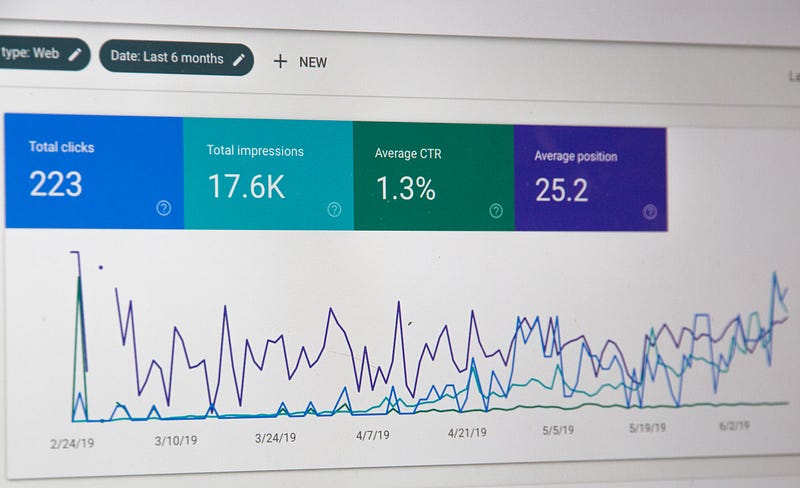
Analysing Your PPC Results
Spend money to test, learn from their results, and refine your ads to optimise your campaign results.
One of the advantages of digital marketing is the amount of data it creates, empowering businesses with information to improve their results.
You are continuously analysing your performance, allowing you to make minor adjustments at a time to optimise your campaigns.
Test
Test your campaigns and ad groups by spending money and testing variations of keywords, ad copy, and landing pages. Dedicate time and money to educating yourself on what works best for your business.
Start with more than one version of your ad. If we only run one ad, we have nothing to compare to see what could be improved. If the one ad we run is not very good, we blow our whole budget.
Learn
Learn by analysing your ads' results to provide valuable consumer feedback regarding their behaviour when exposed to your ads. Objective data improve your ads, and better understands the best keywords to use and how much to pay for each click.
Small business owners often overlook marketing research because of its complexities and cost, but the analytics available to digital tools users gives plenty of valuable data for free.
When we understand our ROI for different keywords, we can find expensive and under-performing keywords to remove. We can also see terms that we want to bid higher on, to achieve a higher ad rank and improve your quality score.
You can also identify negative keywords that you do not want to trigger your ads.
By checking search terms, you can see which words triggered your ads. It also helps to discover new keywords to add to your existing campaigns.
An impression is when people search using keywords that trigger your ad. Impression share is the total number of times searchers see your ads as a percentage of the complete search results in your market.
Other key metrics to monitor are page views per visit, time on site, and conversion rate.
Creating a UTM (Urchin Tracking Module) snippet tag for ads helps identify the Google Analytics link. This data allows you to determine what ad campaign was most successful and how visitors came to land on the landing page.
Optimise
Optimise your ads by refining them to modify what is not working. Make changes to your keyword lists, ads, and landing pages to find the formula and user experience that works best for your business.
“(PPC) allows advertisers to place bids on specific keywords or phrases and have their advertisements show up alongside the organic search engine results.” (Boughton, 2005)
Optimising Your Ads
To ensure we get the best return on investment from our PPC ads, we must optimise them to get the best result. Tools are available to analyse your ads, such as Wordstream's free AdWords Performance Grader. This section discusses four ways to optimise your ads: keyword relevance, Google's quality score, and creating more targeted ad copy and landing pages.
Keyword relevance
Build PPC campaigns around keywords. Keywords within a search query trigger the results that the searcher sees. Therefore, businesses need to know the standard terms their target customers use in their search.
Create tight keyword groups with a mixture of low-cost, highly relevant keywords and frequently searched terms pertinent to your business.
Include Long-tail keywords; these are more targeted search phrases that contain the more generic keywords (head) with modifiers that make it relevant to a more specific audience.
For example, instead of just 'marketing', use 'digital marketing strategy in Hamilton'.
Once you learn more about what is working and what is not, you can add negative keywords.
These are non-converting search terms that you can exclude from your campaigns to become more targeted by improving campaign relevancy and reducing the wasted budget by focusing on your best-performing keywords.
Google Keyword Planner is a great tool to help with keyword research. It highlights the search volume and cost per click for keywords and suggests relevant terms. Wordstream also provides a free keyword tool to help you find the most relevant keywords to use for your business.
Quality score
Quality score is the quality and relevance of your keywords, landing pages, and PPC campaigns. Better quality scores mean more ad clicks at lower costs.
Assigned independently by Google, the quality score includes:
- The historical clickthrough rate (CTR) measure of how convincing your ad is to your target audience (of the keyword and the matched ad)
- The CTR of all the ads and keywords in your account
- Landing page quality
- Keyword relevance to the ads in its ad group
- Keyword relevance to the matched ad and search query
- Account performance in the geographical region of an ad
Ad copy
Your ad copy should be relevant to the landing page where you send them. If it is not, this will affect your quality score. To test your ads, run two or three variations per ad campaign to test different titles and descriptions.
Your headline should not exceed 60 characters to optimise your ads, and your description should not exceed 80 characters.
However, Google does prefer longer headlines, as this is where information is most likely to be noticed. It would be best to communicate the most critical keywords in your ad copy.

Landing page
The landing page is where a person goes after clicking on an ad. Do not make the mistake of sending every ad directly to your homepage.
Send people directly to a custom landing page matching the ad content, optimised to minimise bounce rates and increase conversion rates.
The image above is an example of a landing page to sign up to receive a free eBook. You could create an ad to send people to this landing page to add relevant people to your database.
Content should be specifically tailored to the ad and have clear calls-to-action (CTAs) aligned with the search queries that would have triggered the ad.
Sending people to a general page means it might not be relevant to what they initially searched, and they might not find the information they require quickly.
People are likely to hit the back button or close the window/tab. Users are unlikely to navigate through additional pages to find what they need.
Conclusion
In summary, if you want to target strong customer leads and have a reasonable budget to do so, PPC ads could be an excellent option for your business — assuming that you have a website to direct them.
This article has explored PPC advertising and its benefits and given practical tips on how businesses can improve their PPC advertising results.
Thank you for reading. I hope you enjoyed this content about PPC advertising.
Dan
If you enjoyed the content, you might be interested in this article about email marketing.
Read as many articles as you like!
Non-Medium members can only read 3 articles a month — become a Medium Member for unlimited access.
If you liked the content and would like to read more articles like this, sign up to become a Medium member for only $5 a month.


